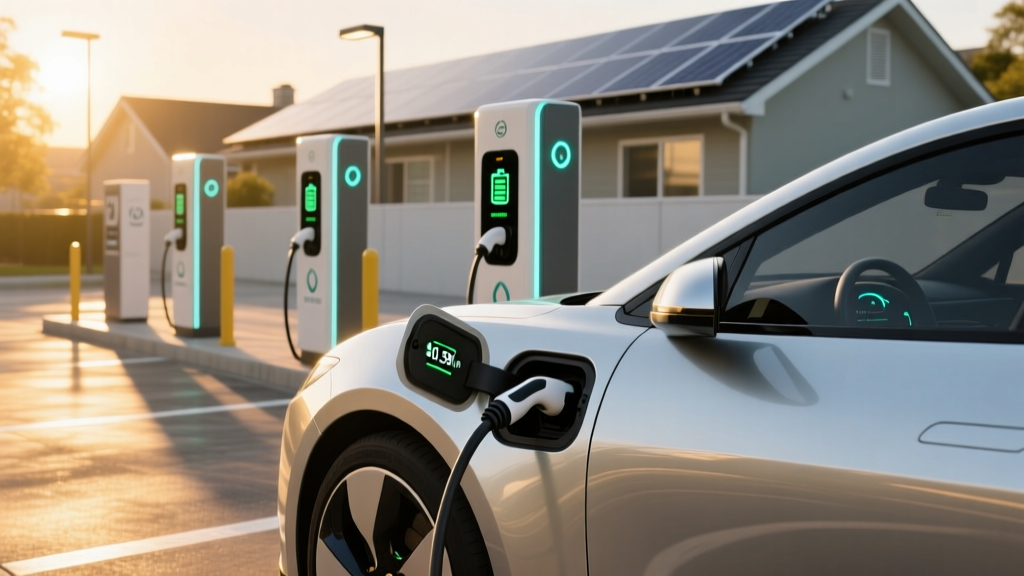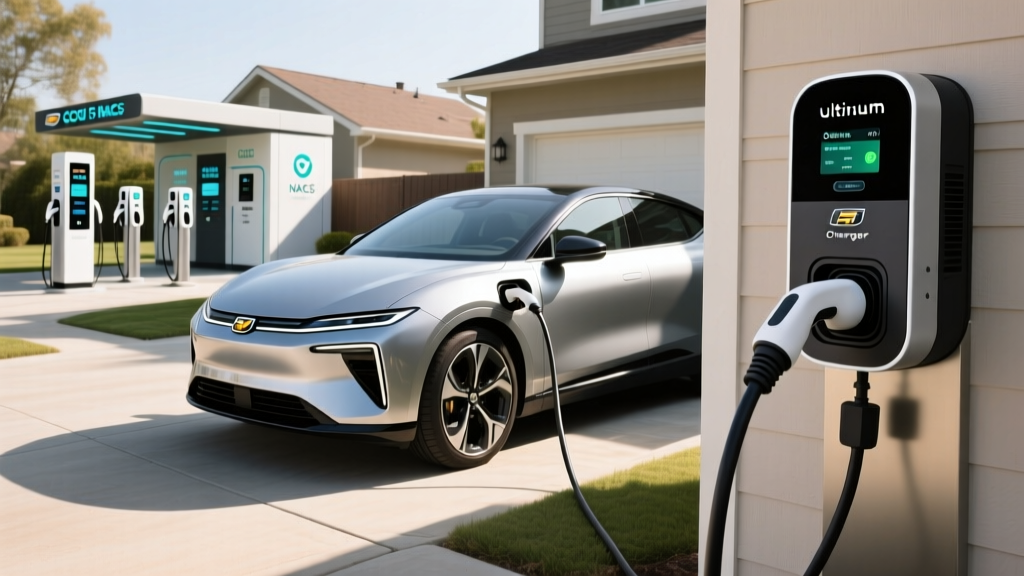
General Motors has made one of the most aggressive charging-infrastructure pivots in the industry. Starting with the 2025 model year and expanding through 2026, GM abandoned the CCS1 connector standard across its Ultium-based EVs — the Chevrolet Equinox EV, Blazer EV, Silverado EV, Cadillac Lyriq and Optiq, and GMC Sierra EV — in favor of the North American Charging Standard (NACS), the connector pioneered by Tesla. That single decision reshaped where, how, and how fast GM owners charge.
If you own or are shopping for a GM electric vehicle, this guide breaks down every layer of the GM charging ecosystem: what happens at home on Level 1 and Level 2, what to expect at public DC fast chargers, what connector you actually need, and what it all costs in real dollars per mile. All figures reflect 2026 model-year specs and current electricity rates.
How GM Charging Levels Work: Speeds, kW, and Miles Per Hour
The most common mistake new EV buyers make is confusing kW (kilowatts — the rate of power flow, like water pressure from a hose) with kWh (kilowatt-hours — the total energy stored in the battery, like the size of the tank). Charging speed is measured in kW; battery capacity is measured in kWh. A 11.5 kW Level 2 charger filling an 85 kWh battery will take roughly 7.4 hours from 0–100%, not including taper at the top of the charge curve.
| Level | Voltage / Amps | Power (kW) | Miles of Range Added Per Hour | Typical Use Case |
|---|---|---|---|---|
| Level 1 | 120V / 12A | ~1.4 kW | 3–5 mi/hr | Overnight top-off, emergency, low-mileage drivers |
| Level 2 (Home) | 240V / 48A | 11.5 kW | 30–37 mi/hr | Daily home charging, full overnight recharge |
| Level 2 (Public/Workplace) | 240V / 30–40A | 7.2–9.6 kW | 20–30 mi/hr | Destination charging, workplaces, malls |
| DC Fast (CCS1 legacy) | 400–800V DC | Up to 190 kW | ~150 mi in 10 min (peak) | Road trips via Electrify America, EVgo |
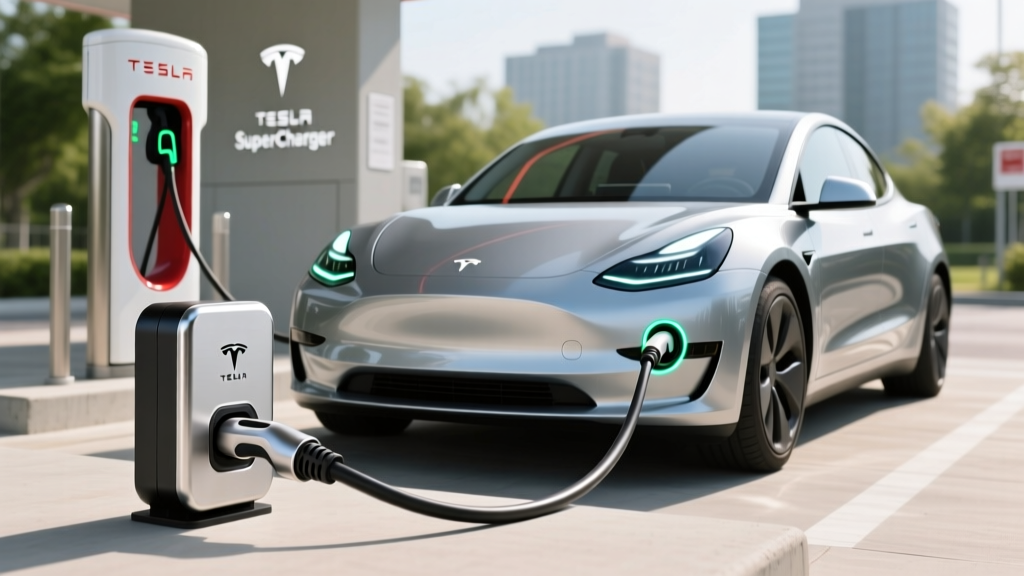
| DC Fast (NACS / Supercharger) | 400–800V DC | Up to 250 kW | ~200 mi in 15 min (peak) | Tesla Supercharger network, 2025+ GM EVs |
For context, a 2026 Chevrolet Equinox EV 3RS with its 85 kWh (usable) Ultium battery and 315 miles of EPA range will recover roughly 34 miles of range per hour on a properly configured 11.5 kW home Level 2 charger. That same vehicle on a Tesla V3 Supercharger at 250 kW peak can add approximately 70 miles of range in 10 minutes under ideal battery preconditioning, though real-world sustained rates taper significantly above 60% state of charge.
The GM Connector Transition: NACS, CCS1, and What You Need in 2026
GM's switch to NACS was one of the most consequential connector decisions in EV history. Here is where each GM model stands as of the 2026 model year:
| Vehicle | 2024 | 2025 | 2026 | Adapter Needed for Superchargers? |
|---|---|---|---|---|
| Chevrolet Equinox EV | CCS1 | NACS | NACS | 2024: Yes (GM-provided adapter); 2025+: No |
| Chevrolet Blazer EV | CCS1 | NACS | NACS | 2024: Yes; 2025+: No |
| Chevrolet Silverado EV | CCS1 | NACS | NACS | 2024: Yes; 2025+: No |
| Cadillac Lyriq | CCS1 | NACS | NACS | 2022–2024: Yes; 2025+: No |
| Cadillac Optiq | N/A | NACS | NACS | No |
| GMC Sierra EV | CCS1 | NACS | NACS | 2024: Yes; 2025+: No |
| Chevrolet Bolt EV/EUV (discontinued) | CCS1 | N/A | N/A | Yes (aftermarket CCS-to-NACS) |
If you own a 2022–2024 GM EV with CCS1, GM began shipping complimentary CCS-to-NACS adapters to registered owners starting in late 2024. These adapters allow access to Tesla Supercharger V3 stalls (up to 250 kW, though real-world throughput on adapted CCS1 vehicles typically peaks around 150–175 kW due to the vehicle-side charge controller limitation). For public CCS1 chargers — Electrify America, EVgo, and ChargePoint DC stations — your native port works directly with no adapter.
For 2025+ GM EVs with native NACS, the situation reverses: you plug directly into Superchargers with no adapter, but you will need a NACS-to-CCS1 adapter (sold separately, ~$200–$250) to use non-Tesla DC fast-charging networks. GM has committed to providing this adapter to early 2025 buyers, but 2026 model-year purchasers should confirm inclusion at point of sale.
Home Level 2 Installation: Electrical Requirements, Panel Upgrades, and Real Costs
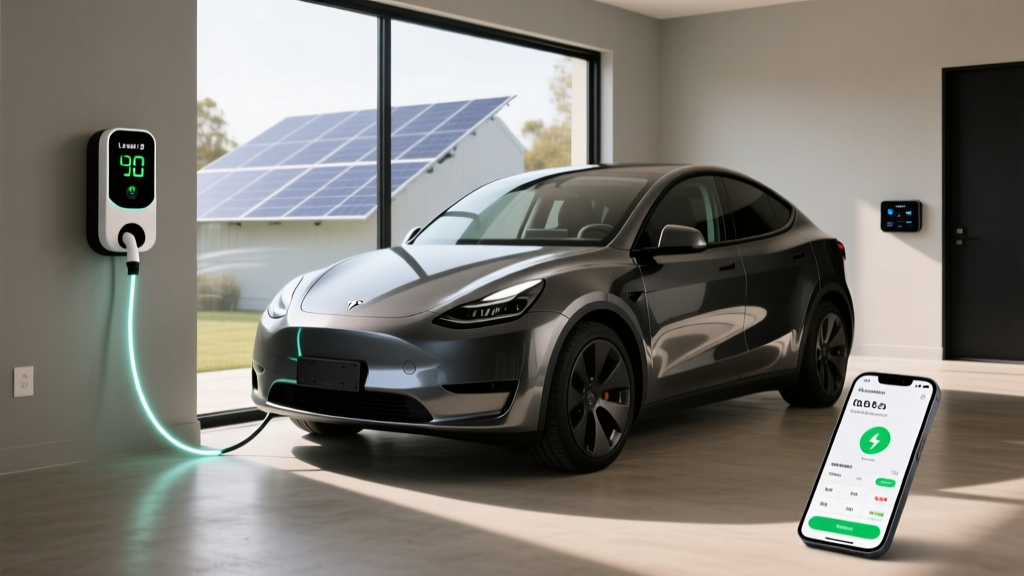
Home Level 2 charging is the backbone of practical GM EV ownership. The Ultium platform supports up to 11.5 kW AC charging on a 48-amp, 240-volt dedicated circuit. To achieve that rate, you need a hardwired wall connector rated for at least 60 amps (the National Electrical Code requires circuits to be rated at 125% of the continuous load, so 48A continuous draw demands a 60A breaker).
What Your Electrical Panel Must Support
Before purchasing any charger, have a licensed electrician perform a load calculation on your main service panel. Most modern homes with 200-amp service can accommodate a 60A EV circuit without a panel upgrade. Older homes with 100A or 150A service — common in pre-2000 construction — may require a panel upgrade to 200A, which is the single largest variable in installation cost.
GM's Ultium Home Charger (branded as the "Powerup 2" in some markets) is a 48A/11.5 kW unit designed specifically for GM EVs, but any quality NACS or J1772 (with adapter) Level 2 charger will work. The critical specs are: 240V, 48A continuous, hardwired or NEMA 14-50 receptacle, and a dedicated circuit.
| Component | Low End | Typical | High End | Notes |
|---|---|---|---|---|
| Level 2 Charger (48A) | $350 | $550 | $750 | ChargePoint Home Flex, Wall Connector, Ultium Home Charger |
| Electrician labor (standard install) | $400 | $800 | $1,500 | Short conduit run, panel nearby |
| Permit & inspection | $50 | $150 | $400 | Varies by municipality |
| Electrical materials (conduit, wire, breaker) | $150 | $300 | $600 | Longer runs and underground conduit increase cost |
| Panel upgrade (if needed) | $1,500 | $2,500 | $4,500 | 100A to 200A upgrade; not needed in most modern homes |
| Total (no panel upgrade) | $950 | $1,800 | $3,250 | |
| Total (with panel upgrade) | $2,450 | $4,300 | $7,750 |
The federal Residential Clean Energy Credit does not cover EV chargers as of 2026 (the Alternative Fuel Vehicle Refueling Property Credit, §30C, expired for residential use after 2032 in its extended form but has specific census-tract eligibility requirements — consult a tax professional). Some states and utilities offer rebates of $250–$1,000 for Level 2 equipment and installation; check your local utility's EV program page.
GM DC Fast Charging: Real-World Speeds on Ultium
GM's Ultium battery platform supports DC fast charging at up to 200 kW on most models (Equinox EV, Blazer EV, Lyriq) and up to 350 kW on the 800V-architecture Silverado EV and Sierra EV. However, peak kW is a headline number — what matters for road trips is the charging curve, or how quickly the vehicle sustains high power before tapering to protect battery health.
| Vehicle | Battery (kWh usable) | Peak DC Rate | 10–80% Time (Ideal) | 10–80% Time (Cold/No Precondition) |
|---|---|---|---|---|
| 2026 Equinox EV 3RS | 85 kWh | ~190 kW | ~28 min | ~42 min |
| 2026 Blazer EV RS AWD | 102 kWh | ~190 kW | ~34 min | ~50 min |
| 2026 Cadillac Lyriq | 102 kWh | ~190 kW | ~33 min | ~48 min |
| 2026 Silverado EV RST (800V) | ~200 kWh | ~350 kW | ~30 min | ~45 min |
| 2026 GMC Sierra EV Denali (800V) | ~200 kWh | ~350 kW | ~30 min | ~45 min |
Two critical factors affect these times. First, battery preconditioning: when you navigate to a DC fast charger using the GM infotainment system or the myChevrolet/myCadillac app, the vehicle actively warms the battery to the optimal temperature for fast charging. Skipping preconditioning — for example, driving to a charger without setting it as a navigation destination — can add 10–15 minutes to your session, especially below 50°F.
Second, the charge curve taper is steep above 80% SoC on Ultium batteries. Charging from 80–100% at a DC fast charger can take as long as the 10–80% session. For road trips, the optimal strategy is to charge to 80%, unplug, and drive. This is true of nearly all lithium-ion EV batteries but is particularly pronounced on GM's NMC-based Ultium packs.
Charging Cost Per Mile: GM EV vs Gasoline Vehicle
The economic case for GM EVs depends heavily on where and when you charge. Here is a realistic cost comparison using the 2026 Chevrolet Equinox EV 3RS (315 mi EPA, ~3.3 mi/kWh efficiency) versus a comparably sized 2026 Chevrolet Equinox gas AWD (28 MPG combined).
| Scenario | Rate / Cost | EV Cost Per Mile | Gas Cost Per Mile (28 MPG, $3.40/gal) | EV Savings Per Mile |
|---|---|---|---|---|
| Home Level 2 (off-peak utility rate) | $0.11/kWh | $0.033 | $0.121 | $0.088 |
| Home Level 2 (national avg residential) | $0.17/kWh | $0.051 | $0.121 | $0.070 |
| Public Level 2 (ChargePoint, Blink) | $0.30/kWh | $0.091 | $0.121 | $0.030 |
| DC Fast (Tesla Supercharger, avg) | $0.35/kWh | $0.106 | $0.121 | $0.015 |
| DC Fast (Electrify America, peak) | $0.48/kWh | $0.145 | $0.121 | −$0.024 (EV costs more) |
At 12,000 miles per year, home charging at the national average saves roughly $840 annually versus gasoline. But note the last row: peak-rate DC fast charging from certain networks can actually cost more per mile than gasoline. This is why home Level 2 access is the single most important factor in EV economics. Drivers who rely exclusively on public DC fast charging will see dramatically reduced savings — and in some cases, a cost penalty.
For the most accurate efficiency data on specific GM models, refer to the EPA's EV fuel economy database, which lists kWh/100mi and MPGe for every certified configuration.
Recommended Level 2 Chargers for GM EVs (2026)
With GM's NACS transition, charger selection now requires matching the connector to your model year. Below are proven Level 2 units compatible with GM Ultium vehicles, selected for reliability, power output, and smart features.
GM Ultium Home Charger (Powerup 2)
- Power: 11.5 kW (48A, 240V)
- Connector: NACS (native for 2025+ GM EVs)
- Cable length: 25 ft
- Smart features: Wi-Fi, myChevrolet/myCadillac app integration, scheduled charging, energy tracking
- Price: ~$625 MSRP
- Best for: Seamless GM app integration; 2025+ NACS vehicles
Tesla Wall Connector (Gen 4)
- Power: 11.5 kW (48A, 240V)
- Connector: NACS (native)
- Cable length: 24 ft
- Smart features: Wi-Fi, over-the-air updates, load sharing between two units, Powerwall integration
- Price: ~$450
- Best for: Mixed Tesla + GM NACS households; best value in NACS chargers
ChargePoint Home Flex
- Power: Up to 12 kW (50A, 240V) — configurable down to 16A
- Connector: NACS or J1772 (select at purchase; J1772 requires adapter for 2025+ GM)
- Cable length: 23 ft
- Smart features: Wi-Fi, ChargePoint app, Alexa, flexible amperage for older panels
- Price: ~$550 (NACS version)
- Best for: Homes with limited panel capacity (dial down to 32A/7.7 kW on a 40A circuit)
Grizzl-E Smart (NACS)
- Power: 10 kW (40A, 240V)
- Connector: NACS
- Cable length: 24 ft
- Smart features: Wi-Fi, OCPP-compatible, works with utility demand-response programs
- Price: ~$450
- Best for: Cold-climate durability (rated to −40°F), outdoor installs, budget-conscious buyers
For 2022–2024 GM EVs with CCS1 ports, any J1772 Level 2 charger works natively (CCS1 is J1772 with two additional DC pins, so the AC portion is fully J1772-compatible). You do not need an adapter for home Level 2 charging on a CCS1-equipped GM vehicle.
Safety, Electrical Code, and Installation Best Practices
EV charging is a continuous high-draw electrical load — the equivalent of running a large space heater for 8 hours straight. Cutting corners on installation creates fire risk. Here is what the National Electrical Code (NEC) and best-practice installation require:
- Dedicated circuit: Your Level 2 charger must be on its own dedicated breaker. Sharing a circuit with other appliances is a code violation and a fire hazard.
- Breaker sizing: NEC Article 625 requires the circuit to be rated at 125% of the charger's continuous draw. A 48A charger requires a 60A breaker. A 40A charger requires a 50A breaker.
- GFCI protection: The 2020 NEC and later require GFCI protection for outdoor receptacles used for EV charging. Hardwired installations are exempt from this requirement in most jurisdictions and are generally preferred for reliability (GFCI breakers can nuisance-trip on some EV chargers).
- Outdoor rating: If installing outdoors, ensure the charger carries a NEMA 4 or IP65 weather rating. All four units recommended above are outdoor-rated.
- NEMA 14-50 vs hardwired: A NEMA 14-50 outlet provides flexibility (take the charger when you move) but requires a GFCI breaker in most 2020+ NEC jurisdictions, adding $80–$150 to the install. Hardwired connections avoid the GFCI requirement and are more reliable long-term.
- Wire gauge: 6 AWG copper for 48A circuits; 4 AWG for 60A circuits with longer runs. Your electrician will size wire based on run length and local code.
Always pull a permit. An unpermitted EV charger installation can void home insurance coverage in the event of an electrical fire and will be flagged during a future home inspection. For detailed code guidance, the NHTSA EV resource page links to federal safety standards, while local AHJ (Authority Having Jurisdiction) determines final code enforcement.
Public GM Charging Networks: Where to Plug In
GM's public charging strategy now rests on three pillars:
Tesla Supercharger Network: The primary DC fast-charging option for 2025+ GM NACS vehicles. As of early 2026, Tesla operates over 6,500 Supercharger stalls in North America, including V3 (250 kW) and V4 (up to 350 kW) cabinets. GM EVs access these natively via the myChevrolet/myCadillac app or in-vehicle navigation. Pricing averages $0.28–$0.40/kWh depending on region and time of day.
Electrify America, EVgo, and ChargePoint: These legacy networks remain essential for CCS1-equipped GM vehicles (2022–2024 models) and for NACS vehicles equipped with a NACS-to-CCS1 adapter. Electrify America offers the widest 350 kW coverage; EVgo is strong in urban metro areas; ChargePoint dominates workplace and destination Level 2.
Ultium Charge 360: GM's branded charging-aggregation platform, accessible through the vehicle's infotainment system and the GM mobile apps, pulls availability, pricing, and routing from multiple networks into a single interface. It does not operate its own chargers (outside of a limited dealer-installed network) but simplifies discovery and payment.
For 2025+ NACS GM owners, carry a NACS-to-CCS1 adapter on road trips to ensure access to non-Tesla networks in areas where Supercharger coverage is sparse — particularly in the Mountain West and rural Midwest.
Frequently Asked Questions About GM Charging
How much does it cost to install a home EV charger for my GM electric vehicle?
A typical Level 2 home installation (48A charger, short conduit run, no panel upgrade) costs between $1,200 and $2,500 including equipment, electrician labor, permit, and materials. If your home requires a panel upgrade from 100A to 200A service, add $1,500–$4,500. Always get at least two quotes from licensed electricians who have specific EV charger installation experience.
How fast will each charging level add range to my GM EV?
Level 1 (120V standard outlet) adds approximately 3–5 miles per hour — enough for drivers who travel under 40 miles daily. Level 2 (240V, 48A) adds 30–37 miles per hour, fully recharging most Ultium batteries overnight in 7–9 hours. DC fast charging at 190 kW can add 100+ miles in roughly 10 minutes under ideal conditions with a preconditioned battery.
Which connector and charger are compatible with my GM EV?
2025 and 2026 GM EVs (Equinox EV, Blazer EV, Silverado EV, Lyriq, Optiq, Sierra EV) use the NACS connector natively. 2022–2024 models use CCS1 and require a GM-provided adapter for Tesla Superchargers. For home Level 2 charging, CCS1 vehicles use any J1772 charger without an adapter; NACS vehicles need a NACS-equipped charger or a J1772-to-NACS adapter.
How much does charging a GM EV cost per mile compared to gasoline?
Home charging at the national average rate of $0.17/kWh costs roughly $0.05 per mile in a 2026 Equinox EV — compared to $0.12 per mile for a 28 MPG gas Equinox at $3.40/gallon. That is approximately $840 in annual fuel savings at 12,000 miles/year. Public DC fast charging at $0.35–$0.48/kWh narrows or eliminates this advantage.
What electrical upgrades might I need for a home Level 2 charger?
Homes with 200A electrical service typically need only a new 60A breaker and conduit run — no panel upgrade required. Homes with 100A or 150A service may need a panel upgrade to 200A, especially if other high-draw appliances (electric range, dryer, HVAC) are already consuming significant capacity. A licensed electrician will perform a load calculation per NEC Article 220 to determine if your panel has sufficient headroom.
Can I use a Tesla Supercharger with my 2024 Chevrolet Blazer EV?
Yes, but you will need the GM-provided CCS-to-NACS adapter. With the adapter, 2024 CCS1-equipped GM vehicles can access Tesla Supercharger V3 stalls. Expect peak charge rates of approximately 150–175 kW (rather than the stall's full 250 kW) due to the vehicle-side charge controller and adapter throughput limitations.
Does GM's Ultium battery warranty cover charging-related degradation?
GM covers Ultium batteries with an 8-year/100,000-mile warranty that guarantees minimum 70% capacity retention. This warranty covers defects and excessive degradation regardless of charging method, including DC fast charging. However, consistently charging to 100% and using only DC fast charging may accelerate degradation — GM recommends daily charging to 80% for NMC Ultium packs and reserving 100% charges for road trips.