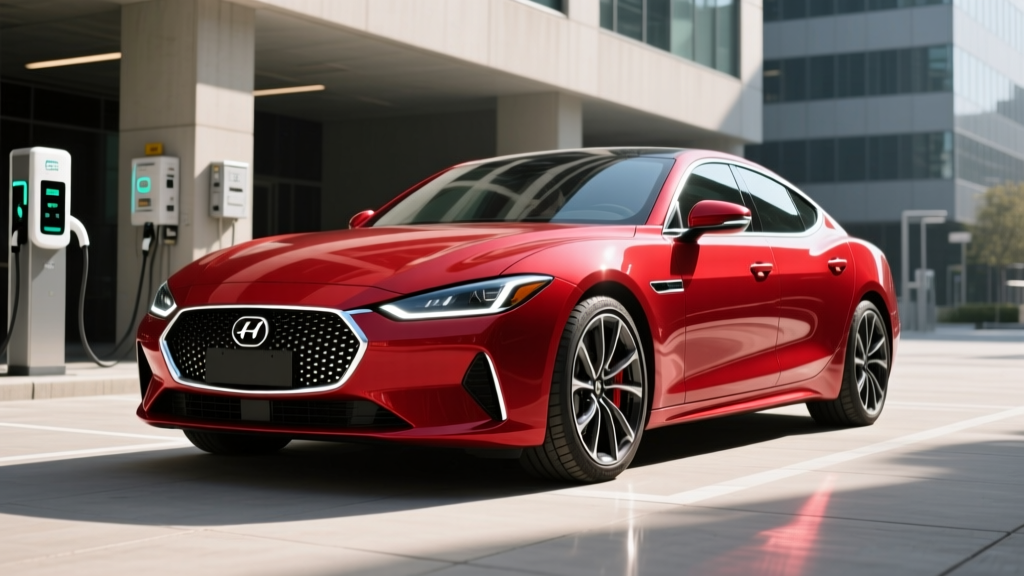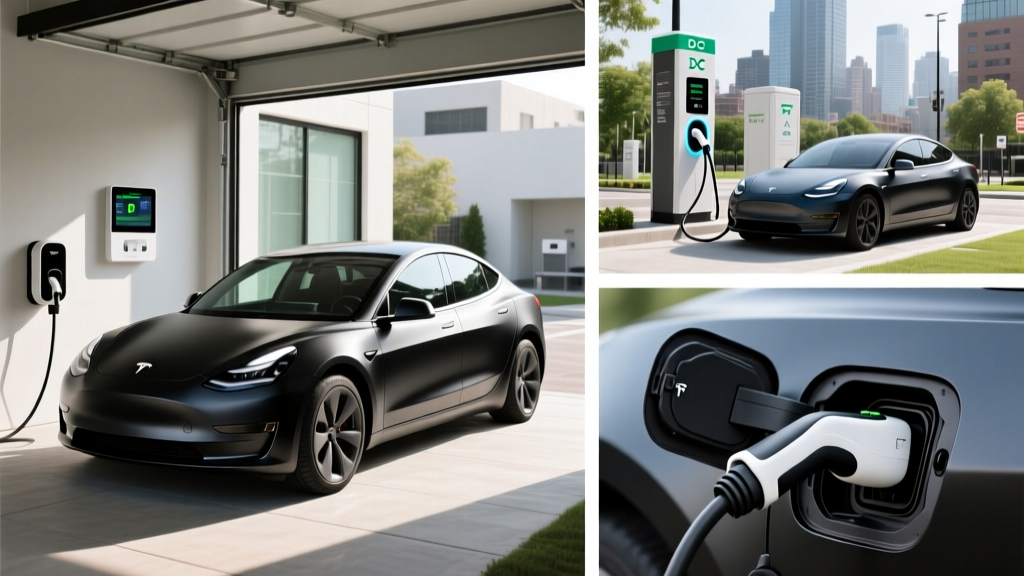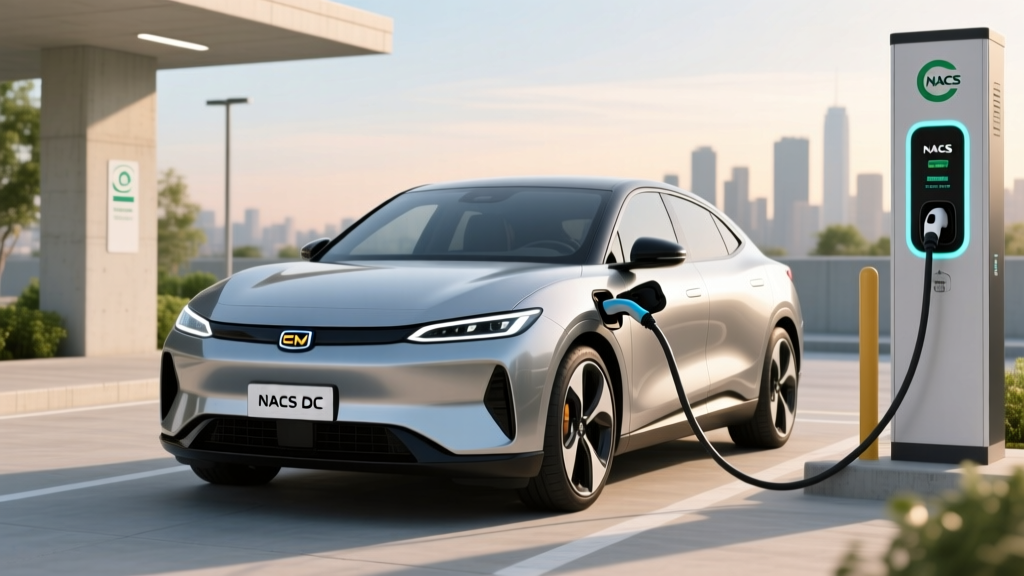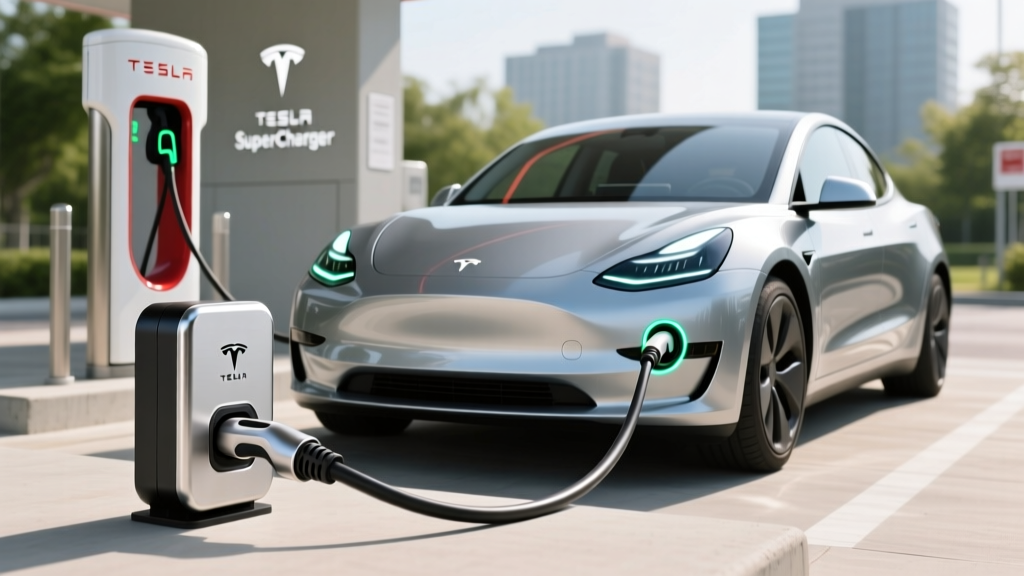
The North American Charging Standard (NACS) has won the connector war, but millions of CCS1-equipped EVs still need access to Tesla's Supercharger network. A CCS1 to Tesla adapter bridges that gap — letting non-Tesla vehicles charge at Superchargers that have opened to other brands under the NEVI program. This guide covers which adapters work, what speeds to expect, and how to set up a complete home and public charging strategy around your vehicle's native connector.
Why You Need a CCS1 to Tesla Adapter in 2026
Through 2025 and into 2026, nearly every major automaker — Ford, GM, Rivian, Hyundai, Kia, BMW, and others — transitioned new models to the NACS (Tesla) connector. But vehicles built between roughly 2015 and 2024 overwhelmingly shipped with CCS1 (Combined Charging System Combo 1) ports. That creates a practical problem: the largest, most reliable DC fast-charging network in North America — Tesla's Supercharger network, with over 30,000 stalls — was historically locked to Tesla vehicles.
Starting in 2024, Tesla began opening select Supercharger stations to non-Tesla EVs under the National Electric Vehicle Infrastructure (NEVI) program. As of early 2026, roughly 350+ Supercharger locations in the U.S. are accessible to non-Tesla vehicles. Most of these stations feature Tesla's "Magic Dock" — a built-in CCS1 adapter integrated into the Supercharger cable — so you may not need your own adapter at those locations.
However, Magic Dock availability is inconsistent. Many open Supercharger stations still require you to bring your own CCS1 to Tesla adapter. Additionally, third-party networks and destination chargers with Tesla-style connectors sometimes require an adapter for CCS1 vehicles. Owning a reliable adapter ensures you're never stranded.
| Connector | Native Vehicles (Examples) | DC Fast Networks | Adapter Needed? |
|---|---|---|---|
| NACS (Tesla) | Tesla Model 3/Y/S/X, 2025+ Ford F-150 Lightning, 2025+ GM Ultium vehicles, 2025+ Rivian | Tesla Supercharger, Electrify America (NACS stalls), EVgo | None on NACS networks; CCS1 adapter needed at legacy CCS stations |
| CCS1 | Hyundai Ioniq 5/6, Kia EV6/EV9, Ford Mustang Mach-E (pre-2025), VW ID.4, BMW i4/iX | Electrify America, EVgo, ChargePoint, Ionity (EU) | CCS1 to Tesla adapter needed for Supercharger access |
| CHAdeMO | Nissan Leaf (legacy), Mitsubishi Outlander PHEV | Shrinking network; some Electrify America legacy stalls | CHAdeMO-to-CCS adapters exist but are rare and expensive |
Charging Levels Explained: Speed, Power, and Range Added
Before selecting an adapter or home charger, you need clarity on the three charging levels. The critical distinction: kW (kilowatts) measures power — how fast energy flows into your battery. kWh (kilowatt-hours) measures energy — the total capacity of your battery. Think of kW as the flow rate of a hose and kWh as the size of the bucket.
| Level | Voltage / Power | Max kW | Miles of Range per Hour | Typical Use Case |
|---|---|---|---|---|
| Level 1 | 120V AC / 12-16A | 1.4–1.9 kW | 3–5 mi/hr | Overnight trickle; PHEVs; emergency top-ups |
| Level 2 | 240V AC / 16-80A | 3.8–19.2 kW | 14–75 mi/hr | Home daily charging; workplace; destination |
| DC Fast Charging | 400-900V DC / 50-400A | 50–350 kW | 150–1,300+ mi/hr (peak) | Road trips; highway corridors; rapid top-ups |
Real-world DC fast charging note: Peak kW rates are not sustained across the full session. A Hyundai Ioniq 5 with its 800V architecture may peak at 240 kW but typically sustains 150–180 kW from 10–50% State of Charge (SoC), then tapers sharply above 80%. Expect a 10–80% session on a 250 kW Supercharger to take roughly 22–28 minutes for a 77.4 kWh battery pack, not the theoretical minimum. Cold batteries (< 50°F) can add 5–15 minutes unless preconditioned.
Choosing the Right CCS1 to Tesla Adapter
Not all adapters are created equal. Here's what to evaluate:
Adapter Types Available
- Tesla Magic Dock (built-in): Available at select Supercharger stations opened under NEVI. No adapter purchase needed — the Supercharger cable has a built-in CCS1 collar that locks onto your vehicle's port. Check availability in the Tesla app before routing to a station.
- OEM CCS1-to-NACS adapters: Ford, GM, and Rivian sell or include official adapters for their CCS1-equipped vehicles (pre-NACS transition models). These are rated for up to 250 kW DC fast charging and are firmware-compatible with the vehicle's charge controller. Prices range from $100–$250.
- Third-party adapters (Lectron, A2Z, etc.): Aftermarket CCS1-to-NACS adapters are available for $130–$200. Look for units rated at a minimum of 250 kW / 500V DC, with UL or TÜV certification. Avoid unbranded adapters from marketplace sellers — thermal management and connector-locking reliability are critical at high power levels.
- J1772-to-Tesla adapter (Level 2 only): A separate, inexpensive ($30–$50) adapter for Level 2 AC charging. This lets CCS1/J1772 vehicles use Tesla Wall Connectors and Tesla Destination Chargers. Does NOT work for DC fast charging.
Power Rating Matters
When buying a CCS1 to Tesla adapter for Supercharger use, confirm the adapter's maximum DC power rating. A 150 kW-rated adapter will bottleneck a vehicle capable of 250 kW+ charging. For modern CCS1 vehicles like the Ioniq 5, EV6, or EV9 (which support 240–350 kW peak), insist on a 250 kW+ rated adapter. The adapter's internal bus bars and thermal dissipation must handle sustained high-current sessions without overheating or triggering a derate.
Home Level 2 Charging: Installation, Costs, and Equipment
Regardless of whether your EV uses CCS1 or NACS, a home Level 2 charger is the single most impactful ownership upgrade. Most EV owners do 80–90% of their charging at home. Here's what a proper installation requires.
Electrical Requirements
A Level 2 home charger requires a dedicated 240V circuit, similar to what an electric dryer or oven uses. Common configurations:
- NEMA 14-50 outlet: 240V / 50A circuit, delivering up to 40A continuous (9.6 kW) to the vehicle. Most common residential setup.
- Hardwired connection: 240V / 60A circuit, delivering up to 48A continuous (11.5 kW). Eliminates the outlet — reduces failure points and meets code more easily in some jurisdictions.
- Higher-amperage setups: Some chargers support 80A circuits (64A continuous, 15.4 kW), but this requires 2/0 AWG copper wire and a panel with sufficient spare capacity. Rare in residential settings.
Panel upgrade reality: Many homes built before 2000 have 100A or 125A main service panels. Adding a 50A EV circuit to an already-loaded panel may require a panel upgrade to 200A — costing $1,500–$3,500. A licensed electrician will perform a load calculation per NEC Article 220 to determine if your panel has headroom. Do not skip this step; overloaded panels are a fire risk.
| Component | Cost Range | Notes |
|---|---|---|
| Level 2 Charger (equipment) | $300–$750 | Varies by brand, power, cable length, smart features |
| Electrician labor (standard install) | $400–$1,200 | Depends on run length from panel to garage/carport |
| Electrical permit | $50–$200 | Required in most jurisdictions; varies by locality |
| Panel upgrade (if needed) | $1,500–$3,500 | 100A→200A upgrade; not always required |
| Conduit, wiring, miscellaneous | $100–$500 | Longer wire runs and outdoor conduit increase cost |
| Total (no panel upgrade) | $750–$2,150 | Most common scenario for modern 200A panels |
| Total (with panel upgrade) | $2,250–$5,650 | Older homes with 100A/125A service |
Source: National average estimates. Get 2–3 quotes from licensed electricians. Local utility rebates may offset $200–$500 of equipment/install costs.
Recommended Level 2 Home Chargers
Tesla Wall Connector (Gen 3)
- Power: Up to 11.5 kW (48A hardwired)
- Connector: NACS (Tesla); J1772 adapter included in some markets
- Cable: 24 ft
- Smart features: Wi-Fi, OTA updates, load sharing with 2nd unit, access control
- Price: ~$475
- Best for: NACS vehicles; CCS1 vehicles with J1772-to-Tesla adapter (Level 2 only)
ChargePoint Home Flex
- Power: Up to 12 kW (50A, configurable from 16A–50A)
- Connector: J1772 (CCS1 compatible)
- Cable: 23 ft
- Smart features: Wi-Fi, Alexa, scheduling, energy tracking, amperage DIP-switch configurable
- Price: ~$550–$650
- Best for: CCS1 vehicles; flexible amperage matching to panel capacity
Emporia Vue Level 2 Charger
- Power: Up to 11.5 kW (48A hardwired)
- Connector: J1772 (CCS1 compatible)
- Cable: 24 ft
- Smart features: Wi-Fi, solar integration, time-of-use scheduling, energy dashboard
- Price: ~$350–$400
- Best for: Budget-conscious buyers; solar-equipped homes
Safety and Code Considerations
Per the National Electrical Code (NEC), EV charging circuits must be dedicated (no shared loads), properly grounded, and protected by a correctly sized breaker rated at 125% of the continuous load. For a 40A continuous charger, that means a 50A breaker. Key safety requirements:
- GFCI protection: NEC 2020 and later requires GFCI breakers for outdoor EV outlets (NEMA 14-50). Hardwired installations may not require GFCI in all jurisdictions — confirm with your local AHJ (Authority Having Jurisdiction).
- Outdoor rating: If your charger is mounted outside, the unit must carry a NEMA 4 or IP55+ weather rating. All recommended chargers above meet this standard.
- Wire gauge: 6 AWG copper for 50A circuits; 4 AWG for 60A. Aluminum wire requires larger gauge. Your electrician will spec this correctly.
- Permit and inspection: Skipping the permit saves $50–$200 but voids homeowner insurance coverage for electrical fires originating from the unpermitted work. Always pull a permit.
Charging Cost Per Mile: EV vs Gas in 2026
One of the strongest arguments for EV ownership is lower per-mile fuel cost — but the savings depend heavily on where and when you charge.
| Scenario | Rate | Cost per kWh | Cost per Mile* |
|---|---|---|---|
| Home charging (off-peak TOU rate) | $0.08–$0.14/kWh | ~$0.11 avg | $0.033–$0.046 |
| Home charging (standard rate) | $0.14–$0.20/kWh | ~$0.17 avg | $0.050–$0.067 |
| Public Level 2 (ChargePoint, etc.) | $0.25–$0.49/kWh | ~$0.35 avg | $0.100–$0.163 |
| DC Fast Charging (Electrify America, EVgo) | $0.35–$0.56/kWh | ~$0.45 avg | $0.120–$0.187 |
| Tesla Supercharger (non-Tesla, open stations) | $0.38–$0.58/kWh | ~$0.48 avg | $0.130–$0.193 |
| Gas vehicle (28 MPG combined, $3.40/gal) | — | — | $0.121 |
*Based on an EV averaging 3.0 miles per kWh (≈100 MPGe equivalent). Actual cost varies by vehicle efficiency. Source: fueleconomy.gov for MPGe data.
The takeaway: Home charging at off-peak rates saves 60–75% per mile versus gasoline. Even public DC fast charging is roughly cost-competitive with gas on a per-mile basis — and significantly cheaper if your utility offers time-of-use (TOU) plans. The savings compound: a driver covering 12,000 miles/year at home off-peak rates spends roughly $400–$550 annually on electricity versus $1,450+ on gasoline.
Charging Time Examples for Common Battery Sizes
Charge times depend on battery capacity (kWh), charger power (kW), and the vehicle's charge curve. Here are realistic 10–80% estimates for popular battery sizes:
| Battery Size | Example Vehicles | Level 2 (11.5 kW) | 150 kW DCFC | 250 kW DCFC (Supercharger V3) | 350 kW DCFC |
|---|---|---|---|---|---|
| 58–65 kWh | VW ID.4 (Std), base Leaf | 3.5–4.5 hrs | 28–35 min | 24–30 min | 24–30 min* |
| 72–77.4 kWh | Hyundai Ioniq 5, Kia EV6, Tesla Model 3 LR | 4.5–5.5 hrs | 30–38 min | 18–25 min | 16–20 min |
| 85–100 kWh | Ford F-150 Lightning Ext., Rivian R1T, BMW iX | 5.5–7.5 hrs | 38–50 min | 25–35 min | 20–28 min |
| 115–131 kWh | GMC Hummer EV, Silverado EV Max | 8–10+ hrs | 55–75 min | 35–50 min | 28–40 min |
*Many 58–65 kWh packs are limited to 130–150 kW peak charge rate and cannot utilize 350 kW chargers at full speed. Always check your vehicle's max DC charge rate. Times assume a preconditioned battery at 65–80°F.
CCS1 to Tesla Adapter: Real-World Charging Strategy
If you own a CCS1 vehicle in 2026, here's how to integrate adapter use into a practical charging plan:
- Home Level 2 is your foundation. Install a J1772 (CCS1-compatible) charger like the ChargePoint Home Flex. Charge overnight at off-peak utility rates. This covers 80–90% of your driving for $0.03–$0.05/mile.
- Carry a CCS1 to Tesla adapter for road trips. Keep a certified 250 kW-rated adapter in your frunk or trunk. Before a trip, use the Tesla app or PlugShare to identify open Supercharger stations along your route. Stations with Magic Dock don't require your adapter, but having one ensures backup options.
- Download multiple charging apps. Tesla's app shows open Supercharger locations for non-Tesla vehicles. Also use PlugShare, A Better Routeplanner (ABRP), and your vehicle's native navigation for CCS-native networks (Electrify America, EVgo).
- Precondition before DC fast charging. Most CCS1 vehicles (Ioniq 5, EV6, VW ID.4) precondition the battery when you navigate to a charger. This warms the pack to optimal temperature, enabling peak charge rates. Without preconditioning in cold weather, expect 30–50% slower charging speeds.
- Don't charge above 80% on DCFC unless necessary. The charge curve tapers dramatically above 80% SoC — the last 20% can take as long as the first 70%. For road trips, charge 10–80% and move on. Reserve 100% charges for overnight Level 2 sessions.
Frequently Asked Questions
How much does it cost to install a home EV charger?
A standard Level 2 home installation (50A circuit, NEMA 14-50 outlet or hardwired, 20–40 ft wire run) typically costs $750–$2,150 including equipment, electrician labor, and permit. If your home's electrical panel requires an upgrade from 100A to 200A service, add $1,500–$3,500. Always get multiple quotes from licensed electricians and check for local utility rebates, which can offset $200–$500.
How fast will each charging level add range?
Level 1 (120V) adds roughly 3–5 miles of range per hour — adequate for PHEVs with small batteries but impractical for full BEVs. Level 2 (240V, 40–48A) adds 14–40 miles per hour depending on vehicle efficiency, fully recharging most EVs overnight. DC fast charging adds 150–1,300+ miles per hour at peak rates, enabling 10–80% charges in 18–50 minutes depending on battery size and charger power.
Which connector is compatible with my EV?
Check your vehicle's charge port. If it has five pins in a single oval shape, it's CCS1 (most non-Tesla EVs from 2015–2024). If it has a smaller, rounder port with five pins in a vertical arrangement, it's NACS (all Teslas and 2025+ vehicles from Ford, GM, Rivian, and others). CHAdeMO (Nissan Leaf) uses a large round connector with two heavy DC pins. A CCS1 to Tesla adapter allows CCS1 vehicles to charge at NACS-equipped Supercharger stations.
How much does charging cost per mile vs gas?
Home off-peak charging averages $0.03–$0.05 per mile — roughly 60–75% cheaper than gasoline at $3.40/gallon and 28 MPG combined ($0.12/mile). Public DC fast charging averages $0.12–$0.19 per mile, roughly comparable to gasoline. The economic case for EVs is strongest when you can charge at home on a time-of-use rate plan.
What electrical upgrades might I need for a home charger?
The most common upgrade is a panel replacement from 100A or 125A to 200A service, needed when your existing panel lacks spare capacity for a dedicated 50A EV circuit. Your electrician will perform a NEC Article 220 load calculation. Other potential upgrades include replacing a Federal Pacific or Zinsco panel (known fire hazards found in pre-1990 homes), upgrading the meter base, or running new service conductors. Budget $1,500–$3,500 for a panel upgrade if needed.
Are third-party CCS1 to Tesla adapters safe?
Certified third-party adapters from brands like Lectron and A2Z that carry UL, TÜV, or CE certification are generally safe for their rated power levels. Avoid unbranded adapters lacking independent safety testing. Look for a minimum 250 kW / 500V DC rating, built-in thermal protection, and proper connector locking mechanisms. OEM adapters from Ford, GM, or Rivian (for their respective vehicles) remain the gold standard for guaranteed compatibility and firmware integration.