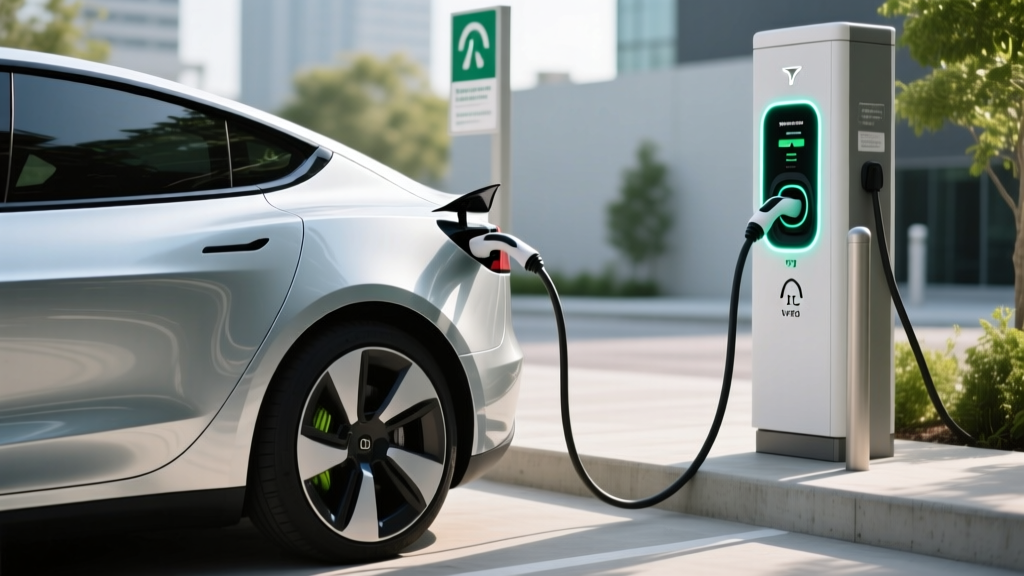
If you've ever pulled up to a Tesla Supercharger or an Electrify America station and wondered how the bill adds up, you're not alone. The question "how much does supercharging cost" is one of the most-searched EV ownership queries — and the answer depends heavily on where and how you charge. A 10-minute DC fast charge on a road trip might cost $15, while that same energy added overnight at home could cost $3. This guide breaks down every charging scenario with real 2026 pricing, installation costs, and per-mile economics so you can budget accurately.
Understanding EV Charging Levels: Speed, Power, and Range Added
Before comparing costs, you need to understand the three charging levels and what they deliver. The critical distinction: kW (kilowatts) measures power — how fast energy flows into your car. kWh (kilowatt-hours) measures energy — how much your battery holds. A 75 kWh battery charged at 11 kW takes roughly 7 hours; charged at 150 kW, it takes under 30 minutes to 80%.
| Level | Voltage | Power (kW) | Miles of Range per Hour | Best Use Case |
|---|---|---|---|---|
| Level 1 | 120V AC | 1.2–1.9 kW | 3–5 miles/hr | Overnight top-up, PHEVs, low-mileage drivers |
| Level 2 | 240V AC | 7.2–19.2 kW | 25–65 miles/hr | Daily home/work charging |
| DC Fast (incl. Supercharger) | 400–800V DC | 50–350 kW | 150–1,000+ miles/hr (peak) | Road trips, rapid top-ups |
Real-world charging times vary. A Tesla Model 3 Long Range (75 kWh usable battery, EPA 341 miles) charging from 10–80% at a V3 Supercharger (peak 250 kW) takes approximately 25–28 minutes. That same car on a 48-amp Level 2 home charger (11.5 kW) takes about 6.5 hours for a full 0–100% session. DC fast charging slows significantly above 80% state of charge (SoC) to protect battery health — the charge curve tapers, which is why most manufacturers and networks quote 10–80% times rather than 0–100%.
How Much Does Supercharging Cost? Public DC Fast Charging Pricing
"Supercharging" originally referred exclusively to Tesla's proprietary network, but the term is now used colloquially for any DC fast charging. Here's what you'll actually pay across major networks in 2026:
- Tesla Supercharger: $0.28–$0.42/kWh depending on location and time-of-use. Urban Superchargers in California can hit $0.48/kWh during peak hours. Non-Tesla vehicles using Magic Dock adapters typically pay a 10–15% surcharge unless they have a Tesla account with subscription.
- Electrify America: $0.36–$0.52/kWh at 150/350 kW stations. Pass+ subscribers ($4/month) receive 20% discounted rates.
- EVgo: $0.34–$0.46/kWh. EVgo Plus members get reduced rates.
- ChargePoint (DC stations): $0.30–$0.48/kWh, set by site host.
Let's run real numbers. A Hyundai Ioniq 5 (77.4 kWh battery, EPA 305 miles) charging from 10–80% needs roughly 54 kWh. At a Tesla Supercharger averaging $0.35/kWh, that session costs about $18.90 and adds ~215 miles of range. At an Electrify America station at $0.44/kWh, the same charge costs $23.76.
Cold weather and high battery states affect charging speed. In winter (below 40°F), expect 10–80% times to increase 15–30% as the battery thermal management system draws power to warm the cells. Always precondition your battery by navigating to a charger through the car's built-in navigation — this activates the heat pump and battery heater in advance, enabling faster charge acceptance.
Home Level 2 Charging: Cost Per kWh and Installation Breakdown
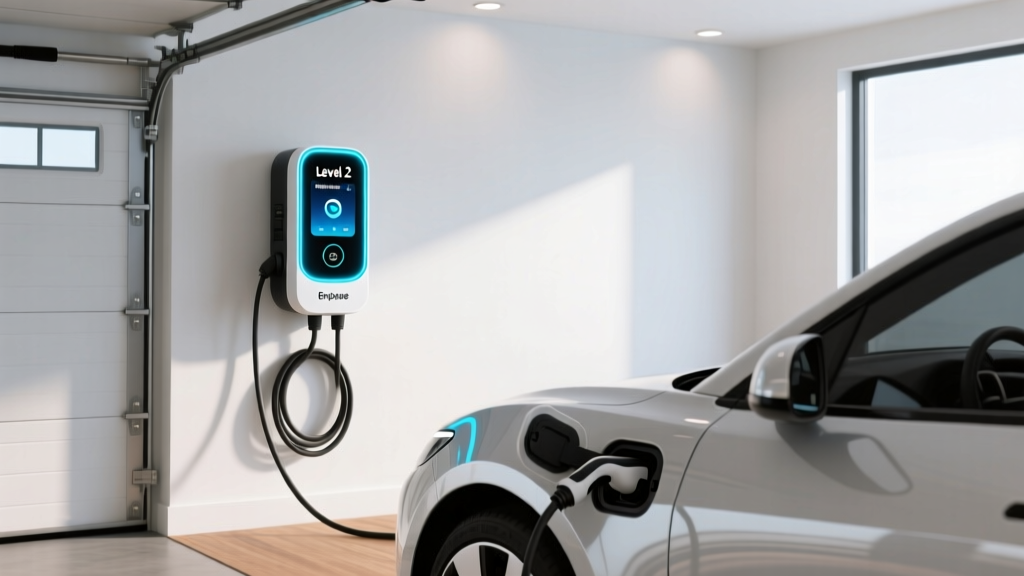
Home charging is where EV ownership economics shine. The average US residential electricity rate is approximately $0.17/kWh in 2026 (per EIA data), though rates range from $0.11/kWh in Louisiana to $0.42/kWh in Hawaii. Many utilities offer time-of-use (TOU) plans with off-peak rates as low as $0.06–$0.10/kWh for overnight charging.
At $0.17/kWh national average, fully charging that Ioniq 5's 77.4 kWh battery at home costs about $13.16 — roughly 30% less than the cheapest public DC fast charger. On an off-peak rate of $0.08/kWh, it drops to $6.19.
How Much Does It Cost to Install a Home EV Charger?
Installation costs vary dramatically based on your home's electrical infrastructure. Here's a realistic breakdown:
| Component | Simple Install (panel nearby) | Complex Install (panel upgrade + long run) |
|---|---|---|
| Level 2 Charger (hardwired, 48A) | $400–$700 | $400–$700 |
| Electrician labor | $300–$600 | $1,200–$2,500 |
| Electrical permit | $50–$150 | $100–$300 |
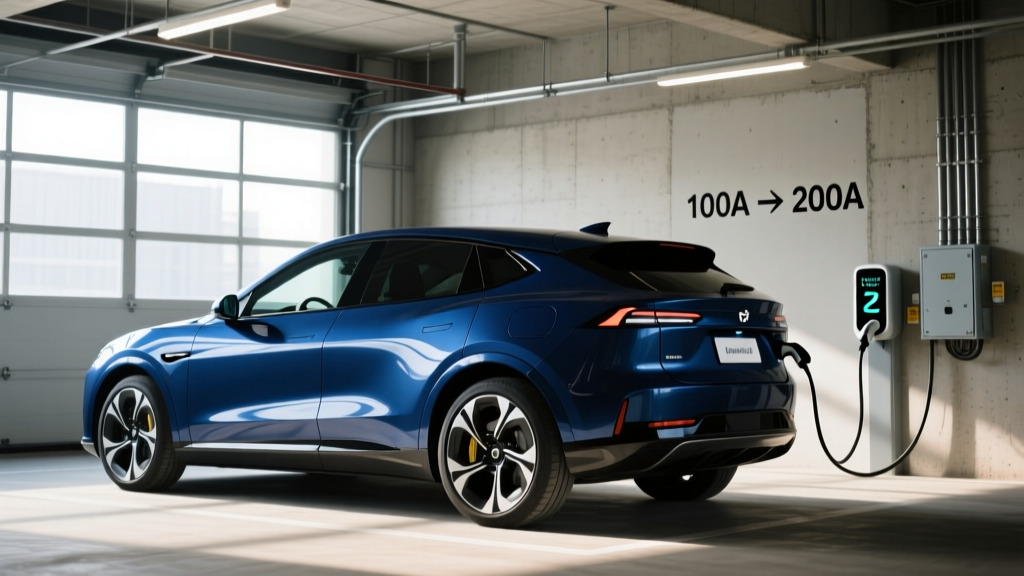
| Panel upgrade (100A → 200A) if needed | $0 | $1,500–$3,500 |
| Conduit/wire (50+ ft run) | $100–$200 | $400–$900 |
| Total | $850–$1,650 | $3,600–$7,900 |
The single biggest cost variable is whether your electrical panel has capacity. A 48-amp Level 2 charger requires a dedicated 60-amp circuit (NEC code requires circuits rated at 125% of continuous load). If your home has a 100-amp main panel that's already near capacity, you'll need a 200-amp upgrade — adding $1,500–$3,500. Homes built after 2000 typically have 200-amp panels with enough spare capacity.
Some homeowners opt for a lower-amperage charger (32-amp on a 40-amp circuit) to avoid panel upgrades. This delivers 7.7 kW — enough to add roughly 25–30 miles of range per hour, which covers most daily needs. Always hire a licensed electrician and pull a permit; unpermitted EV charger installations can void homeowner's insurance and create fire hazards.
What Electrical Upgrades Might I Need?
Beyond the panel, consider these requirements:
- Dedicated circuit: Your EV charger must have its own breaker — no sharing with dryers or ovens.
- GFCI protection: NEC 2020 and later require ground-fault circuit interrupter protection for outdoor receptacles; hardwired units typically have built-in GFCI.
- Outdoor rating: If your charger is installed outside (garage-less homes), it must carry a NEMA 4 or NEMA 4X weather rating.
- Wire gauge: A 60-amp circuit requires 6 AWG copper wire; longer runs may need 4 AWG to prevent voltage drop.
Charging Cost Per Mile vs Gas: The Real Math
The most meaningful comparison is cost per mile. Here's how EV charging stacks up against gasoline for comparable vehicles in 2026:
| Scenario | Energy Cost | Cost Per Mile |
|---|---|---|
| Home Level 2 (national avg $0.17/kWh) — Hyundai Ioniq 5 (3.6 mi/kWh) | $0.17/kWh | $0.047/mi |
| Home Level 2 (off-peak $0.08/kWh) — Ioniq 5 | $0.08/kWh | $0.022/mi |
| Tesla Supercharger ($0.35/kWh avg) — Model 3 LR (3.8 mi/kWh) | $0.35/kWh | $0.092/mi |
| Electrify America ($0.44/kWh) — Ioniq 5 | $0.44/kWh | $0.122/mi |
| Gasoline ($3.40/gal) — Toyota RAV4 (30 MPG combined) | $3.40/gal | $0.113/mi |
| Gasoline ($3.40/gal) — Honda CR-V (28 MPG combined) | $3.40/gal | $0.121/mi |
Home-charged EVs cost 50–80% less per mile than comparable gas vehicles. Even exclusive DC fast charging at premium rates is often comparable to or slightly cheaper than gasoline. A driver covering 12,000 miles annually would spend approximately $564 on home charging (national average) versus $1,356 on gasoline in a 30 MPG RAV4 — a $792 annual savings.
Efficiency matters enormously. The Ioniq 5 achieves roughly 3.6 miles per kWh (per fueleconomy.gov), while a heavier, less aerodynamic EV like the Ford F-150 Lightning manages about 2.0–2.3 mi/kWh. That F-150 Lightning would cost $0.085/mile at home — still cheaper than gas, but noticeably more than a sleek sedan.
Which Connector and Charger Is Compatible With My EV?
The connector landscape has consolidated significantly in 2026, but you still need to know what your car uses:
| Connector Type | Brands Using It (2026) | DC Fast Charge Availability |
|---|---|---|
| NACS (North American Charging Standard / Tesla) | Tesla (all), Ford, GM, Rivian, Volvo, Polestar, Mercedes, Fisker, Lucid (adapter), Hyundai/Kia (2025+) | Tesla Supercharger (20,000+ stalls), growing third-party NACS stations |
| CCS1 (Combined Charging System) | VW, Audi, BMW, older Hyundai/Kia (pre-2025), some Stellantis models | Electrify America, EVgo, ChargePoint DC |
| CHAdeMO | Nissan Leaf (legacy only — discontinued new) | Limited and declining network |
If you drive a CCS-equipped vehicle and want access to Tesla Superchargers, Tesla sells a CCS-to-NACS adapter (~$200) that unlocks the Supercharger network. Ford and GM owners who switched to NACS ports for 2025+ model years charge natively at Superchargers without an adapter. Always verify your vehicle's port type before purchasing home charging equipment.
Best Home EV Chargers for 2026: Equipment Picks
Here are proven Level 2 chargers across price points, all UL-listed for safety:
ChargePoint Home Flex (NEMA 14-50 or hardwired)
- Power output: Up to 12 kW (50 amps) on 240V
- Connector: J1772 (NACS adapter included for 2025+ version)
- Cable length: 23 feet
- Smart features: Wi-Fi, app scheduling, Alexa integration, utility TOU optimization
- Price: ~$549
Wall Connector (Tesla)
- Power output: Up to 11.5 kW (48 amps) hardwired
- Connector: NACS native
- Cable length: 24 feet
- Smart features: Wi-Fi, OTA updates, power-sharing for multi-unit installs, Tesla app integration
- Price: ~$475
Emporia Level 2 EV Charger
- Power output: Up to 11.5 kW (48 amps)
- Connector: J1772 (NACS version available)
- Cable length: 24 feet
- Smart features: Energy monitoring, solar integration, app control, TOU scheduling
- Price: ~$399 (best value pick)
Grizzl-E Smart (United Chargers)
- Power output: Up to 10 kW (40 amps)
- Connector: J1772
- Cable length: 24 feet
- Smart features: OCPP-compatible, adjustable amperage, extreme cold rated (-40°F)
- Price: ~$449
For most homes, a 48-amp hardwired charger delivers the best balance of charging speed and electrical compatibility. If you rent or want portability, a NEMA 14-50 plug-in version lets you take the charger when you move — but plug-in units are limited to 40 amps (9.6 kW) per NEC receptacle rules.
Safety, Permits, and the Federal Charger Tax Credit
Every Level 2 installation should comply with NEC Article 625 (Electric Vehicle Charging System Equipment). Key requirements:
- Dedicated circuit with correctly sized breaker (125% of continuous load)
- Hardwired connections preferred for 48A+ installations (more reliable than receptacles at high amperage)
- Outdoor installations require weather-rated (NEMA 4) enclosures
- Local permit and inspection — typically $50–$300 depending on jurisdiction
The federal Alternative Fuel Vehicle Refueling Property Credit (IRS Form 8911) covers 30% of home charger equipment and installation costs, up to $1,000. This credit has income limits and requires installation in an eligible census tract. Check with a tax professional to confirm eligibility for your specific situation — rules and eligible tracts change annually.
Frequently Asked Questions
How much does it cost to Supercharge a Tesla on a road trip?
A typical Tesla Model 3 Long Range (75 kWh battery) charging from 10–80% at a V3 Supercharger adds about 52 kWh. At the 2026 national average Supercharger rate of $0.35/kWh, that session costs roughly $18.20 and adds approximately 200 miles of range. In high-cost states like California, the same session can reach $25–$30.
How fast will each charging level add range?
Level 1 (120V) adds 3–5 miles per hour. Level 2 (240V, 48A) adds 30–40 miles per hour for most EVs. DC fast charging (150–350 kW) can add 150–300+ miles in 15–25 minutes, though speed tapers significantly above 80% state of charge. Exact rates depend on your vehicle's efficiency (miles per kWh) and its maximum charge acceptance rate.
Can I install a Level 2 charger myself?
Technically, a plug-in NEMA 14-50 charger requires only a 240V outlet — which you could plug in yourself if one already exists. However, any new circuit installation, hardwiring, or panel work must be done by a licensed electrician with a permit. DIY electrical work on 240V/60A circuits carries serious fire and electrocution risk, and unpermitted work may void your homeowner's insurance.
Is home charging always cheaper than public charging?
Yes, in nearly every scenario. Home charging at the national average rate of $0.17/kWh costs $0.04–$0.05 per mile for most EVs. Public DC fast charging averages $0.35–$0.48/kWh, or $0.09–$0.13 per mile. The exception is free public Level 2 charging offered by some workplaces, shopping centers, and hotels — but these are limited in availability and speed.
Do I need a 200-amp electrical panel for an EV charger?
Not necessarily. A 48-amp Level 2 charger on a 60-amp circuit draws about 11.5 kW. If your 100-amp panel has sufficient spare capacity (typically 20–30% unused), it may work. An electrician can perform a load calculation to determine this. If your panel is maxed out, a 200-amp upgrade costs $1,500–$3,500. Alternatively, some utilities now offer smart panel devices (like Span or Lumin) that manage loads dynamically, allowing EV charging without a full panel upgrade.
Does frequent DC fast charging damage the battery?
Modern EV battery management systems are sophisticated enough to mitigate most degradation from DC fast charging. Studies from NREL and real-world fleet data show that vehicles primarily using DC fast charging experience only 2–5% additional degradation over 100,000 miles compared to Level 2-only charging. The bigger degradation factors are sustained high state of charge (above 90%), extreme heat, and deep discharges below 10%. For daily driving, home Level 2 charging is more convenient; for road trips, DC fast charging is perfectly fine.