The Multi-Unit Dwelling (MUD) EV Charging Challenge
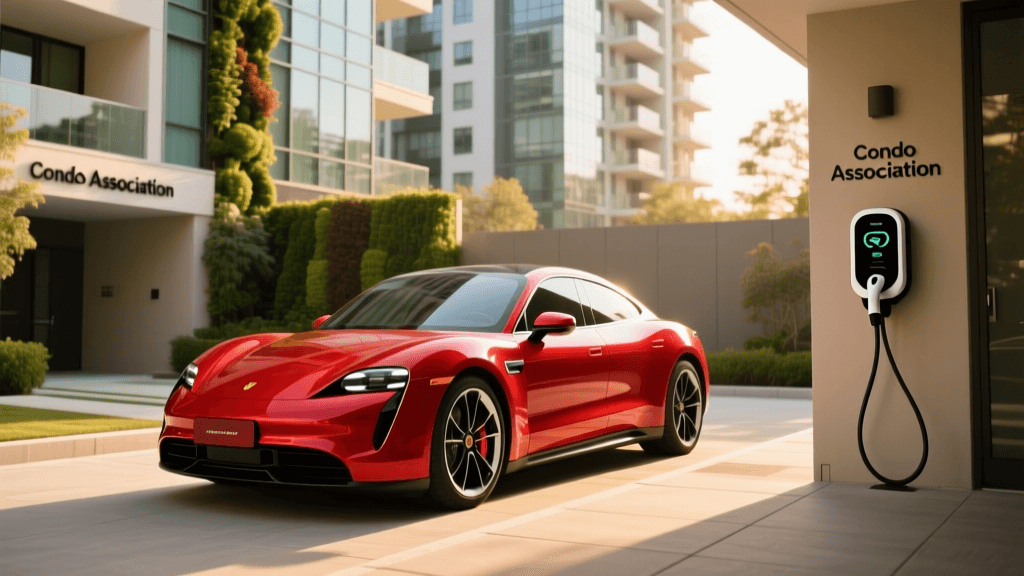
Transitioning to an electric vehicle (EV) is one of the most impactful environmental and financial decisions you can make. However, for the millions of drivers living in apartments, condominiums, and townhomes—collectively known as Multi-Unit Dwellings (MUDs)—the promise of waking up to a fully charged car can feel out of reach. Unlike single-family homeowners who can easily mount a Level 2 charger in their private garage, condo and apartment dwellers must navigate shared electrical grids, limited parking spaces, and the often-complex bureaucracy of Homeowner Associations (HOAs) or property management boards.
This beginner's complete guide will walk you through every step of the condo EV charger installation process. From understanding your legal rights and assessing electrical capacity to pitching the idea to your HOA and selecting the right hardware, we will provide actionable advice to help you get charging at home.
Step 1: Understand Your "Right to Charge" Laws
Before you submit any paperwork to your condo board, you need to know your legal standing. Over the past decade, several states have passed "Right to Charge" legislation. These laws generally prohibit HOAs and condo boards from unreasonably denying a resident's request to install an EV charging station in their designated parking space.
States like California (Civil Code 4745), Colorado, Florida, and New Jersey have robust protections in place. While an HOA cannot outright ban EV chargers without a valid safety or structural reason, they can impose reasonable restrictions. For example, they can require you to use a licensed contractor, carry specific liability insurance, and pay for all installation and maintenance costs. According to Plug In America's Right to Charge initiative, understanding your specific state and local statutes is the most critical first step, as it shifts the negotiating power in your favor when dealing with hesitant property managers.
Step 2: Assess Your Parking and Electrical Infrastructure
Once you know your rights, you must evaluate the physical reality of your living situation. EV charging in a MUD requires two main ingredients: a dedicated parking space and adequate electrical capacity.
Dedicated vs. Shared Parking
To install a personal Level 2 charger, you generally need a deeded or permanently assigned parking spot. If your building uses unassigned, first-come-first-served parking, an HOA will almost certainly deny a private installation request because it would give you exclusive use of a shared resource. If you have an assigned spot, measure the distance from the spot to the nearest electrical room or main service panel. The longer the wire run, the more expensive the installation.
Electrical Panel Capacity and Load Management
Most condo buildings were not designed with the massive electrical load of EV charging in mind. A standard Level 2 charger draws between 32 and 48 amps, which is equivalent to running two electric ovens simultaneously. If the building's main electrical panel is already near capacity, a traditional installation might require a costly service upgrade.
Fortunately, modern Dynamic Load Management Systems offer a workaround. Devices like the ChargePoint Home Flex or Emporia Vue use Current Transformer (CT) clamps to monitor the building's real-time power usage. If the building's electrical demand spikes (e.g., everyone turns on their AC in the evening), the system automatically throttles down the power to your EV charger to prevent tripping the main breaker. This technology is a game-changer for MUDs, as it eliminates the need for multi-thousand-dollar panel upgrades.
Step 3: Pitching the Project to Your HOA or Landlord
HOA boards are primarily concerned with three things: liability, aesthetics, and cost. Your proposal must proactively address all three. Do not approach the board with a vague idea; present a professional, comprehensive package.
According to guidelines outlined by the U.S. Department of Energy's Home Charging resources, a successful HOA proposal should include:
- Architectural Drawings: A simple diagram showing where the charger will be mounted (wall or pedestal), where the conduit will run, and how the wiring will be concealed to maintain building aesthetics.
- Contractor Credentials: Proof of licensing, bonding, and insurance from the electrician who will perform the work.
- Indemnification Agreement: A legal document stating that you (the unit owner) assume all liability for the charger, hold the HOA harmless from any damages or injuries related to its use, and agree to maintain it.
- Insurance Certificate (COI): A letter from your homeowner's or renter's insurance provider confirming that your policy covers the EVSE (Electric Vehicle Supply Equipment) and any associated liabilities.
Step 4: Choosing the Right Charger for Condos
Not all home chargers are created equal, and the shared nature of condo living dictates specific hardware requirements. For outdoor or shared-garage installations, hardwired units are vastly superior to plug-in (NEMA 14-50) units. Hardwiring eliminates the risk of charger theft, prevents unauthorized use by neighbors, and often satisfies local electrical codes that prohibit exposed receptacles in shared parking areas.
Furthermore, you must decide between a "networked" (smart) charger and a "non-networked" (dumb) charger. Networked chargers connect to Wi-Fi or cellular networks, allowing for advanced features like remote monitoring and billing.
| Feature | Networked Chargers (e.g., ChargePoint, Blink, JuiceBox) | Non-Networked Chargers (e.g., Grizzl-E, Emporia) |
|---|---|---|
| HOA Approval Ease | High (allows HOA to monitor and bill for electricity) | Low to Medium (harder to track shared power usage) |
| Sub-metering & Billing | Yes (built-in software to reimburse HOA for power) | No (requires separate physical sub-meter installation) |
| Load Management | Advanced (cloud-based group load sharing) | Basic (local CT clamp monitoring only) |
| Connectivity Requirement | Requires strong Wi-Fi or cellular signal in garage | No internet required |
| Average Hardware Cost | $600 - $800 | $400 - $550 |
If your charger will be connected to the building's common-area electrical panel rather than your unit's private sub-panel, a networked charger is practically mandatory. Solutions like ChargePoint's Multifamily programs allow the HOA to set a price per kWh, automatically billing your credit card for the electricity you consume, ensuring the community doesn't foot your charging bill.
Step 5: Installation Costs, Permitting, and Timelines
The cost of installing a Level 2 charger in a condo varies wildly based on the building's infrastructure. Here is a realistic breakdown of what you can expect to pay:
- The Charger Unit: $400 to $800.
- Basic Installation (Short wire run, surface-mounted conduit): $800 to $1,500.
- Complex Installation (Trenching, core drilling through concrete, long wire runs): $2,000 to $5,000+.
- Electrical Panel Upgrade (If required and load management is not an option): $3,000 to $10,000 (often split among multiple residents or covered by HOA reserves).
Permitting: Your electrician will need to pull local electrical permits. In multi-family buildings, fire marshals may also need to inspect the installation to ensure conduit placement doesn't violate fire egress routes or sprinkler system clearances. Expect the entire process—from HOA approval to final inspection—to take anywhere from 4 to 12 weeks.
Step 6: What If Your Condo Board Says No?
If your HOA denies your request and you do not live in a state with strong Right to Charge laws, or if your building's electrical infrastructure simply cannot support Level 2 charging without a prohibitive financial assessment, you still have options.
First, look into DC Fast Charging (Level 3) hubs located near your daily commute or grocery routes. While not as convenient as home charging, a 20-minute stop at a 150kW fast charger once a week is sufficient for most modern EVs. Second, advocate for a shared community charging project. Instead of asking for a private charger, propose that the HOA install two or three networked commercial chargers in visitor parking spots for all residents to reserve and use. Finally, if you have access to a standard 120V outdoor outlet on a private patio, a Level 1 trickle charger can provide 3 to 5 miles of range per hour—enough to top off a daily commute overnight, provided the HOA allows the use of existing exterior receptacles.
Conclusion
Installing an EV charger in a condo or apartment requires more diplomacy and planning than a single-family home installation, but it is entirely achievable. By understanding your legal rights, leveraging dynamic load management technology, and presenting a professional, liability-free proposal to your HOA, you can secure the convenience of home charging. The upfront effort is well worth the reward of never having to visit a gas station again.