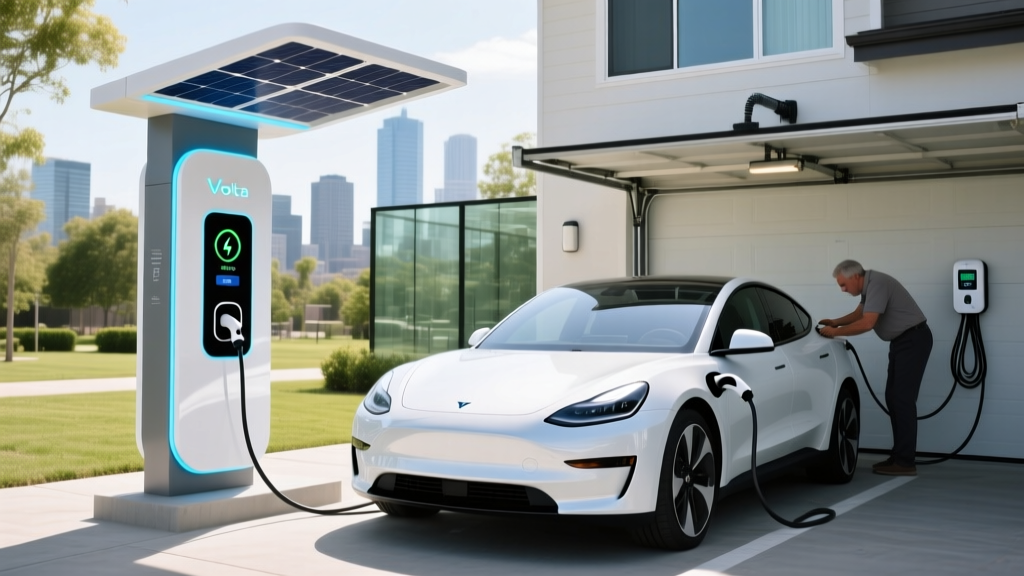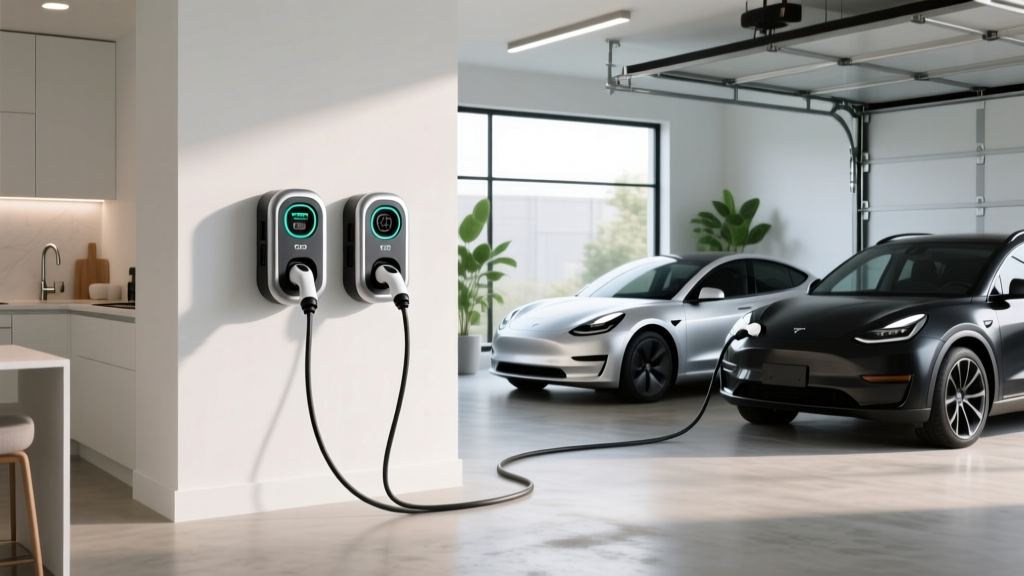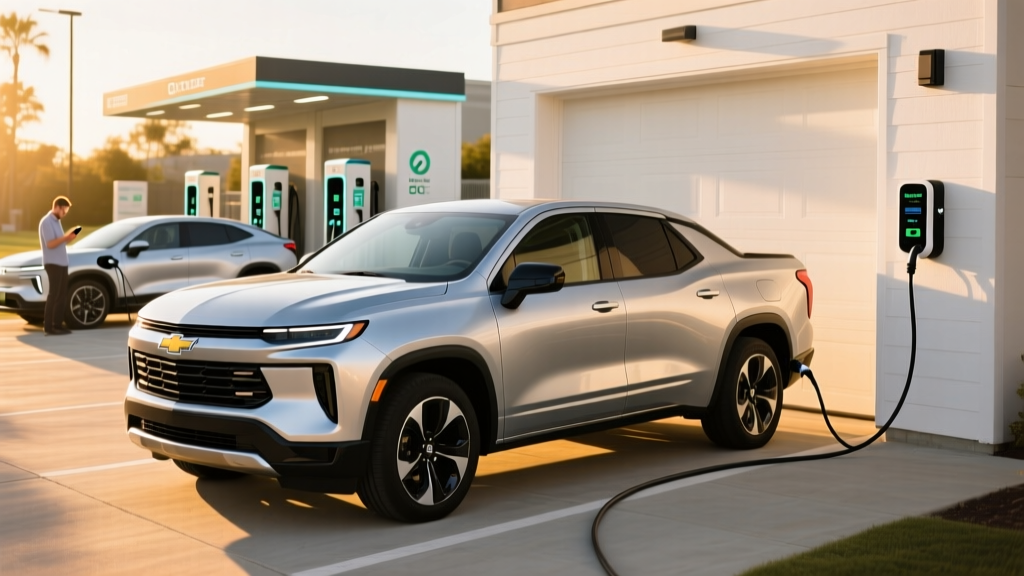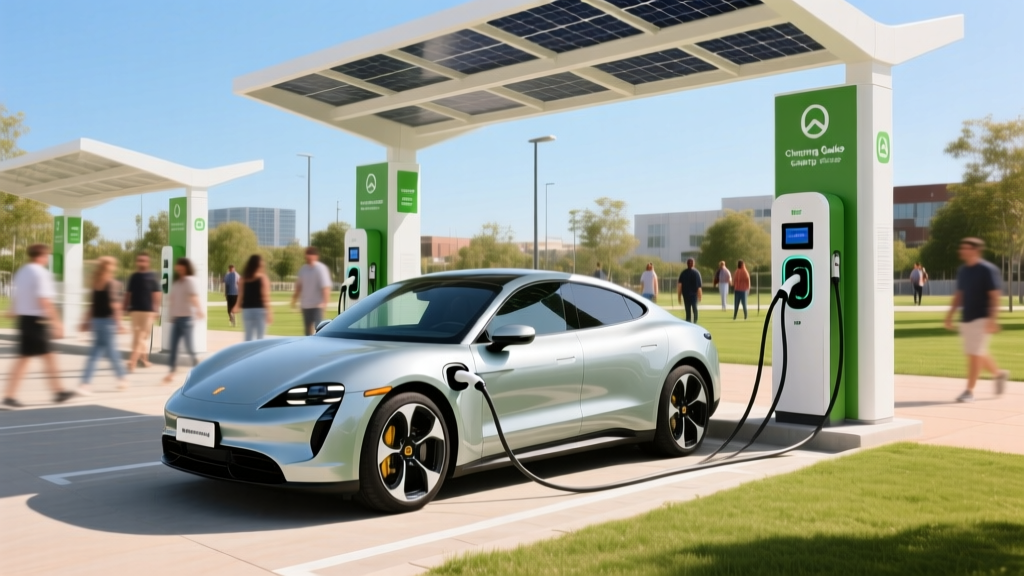
The search for free electric vehicle charging points is one of the first instincts new EV owners have — and for good reason. While home charging on off-peak electricity can cost as little as $0.04–$0.06 per mile, public DC fast charging often runs $0.30–$0.50+ per kWh, making long road trips noticeably more expensive. Knowing where free chargers exist, what speed they deliver, and when it makes sense to pay for faster infrastructure is essential to practical EV ownership in 2026.
This guide covers where free charging still exists, the three charging levels every EV owner must understand, what a home Level 2 installation actually costs, connector compatibility across brands, and the real per-mile economics of driving electric versus gasoline.
Where Free Electric Vehicle Charging Points Still Exist in 2026
Free public charging has shrunk considerably since the early EV adoption days, but it hasn't disappeared. Here's where you're most likely to find it:
- Workplace charging: Many employers offer complimentary Level 2 (typically 6.6–11.5 kW) charging as an employee perk. Check with your facilities team — some require an RFID badge or app registration.
- Hotels and resorts: Chains like Marriott, Hilton, and numerous boutique properties install ChargePoint or EVgo Level 2 stations and offer free charging to overnight guests. Always confirm before booking.
- Shopping centers and grocery stores: Some malls and retailers (notably certain Target, Whole Foods, and IKEA locations) provide complimentary Level 2 charging for customers, usually with a 2–4 hour time limit.
- Municipal and utility-sponsored stations: Select cities and utilities (particularly in California, New York, and parts of the Southeast) maintain free public Level 2 chargers to meet air-quality or electrification mandates.
- Dealer networks: Many franchised dealerships with EV lines (Hyundai, Kia, Ford, BMW) offer free DC fast or Level 2 charging for customers during service visits or as a brand perk.
- Promotional network credits: Electrify America, EVgo, and ChargePoint periodically offer free kWh credits with new vehicle purchases — Hyundai and Kia, for example, have included complimentary charging periods with new Ioniq and EV6 purchases.
The Three Charging Levels: Speed, Power, and Practical Use
Understanding the difference between kW (kilowatts) and kWh (kilowatt-hours) is the single most important piece of EV literacy. kW measures power — how fast energy flows into your battery, like water pressure from a hose. kWh measures energy — the total amount stored, like the size of the bucket. A 10 kW charger delivers energy twice as fast as a 5 kW charger, filling your 75 kWh battery in half the time.
| Level | Voltage | Power (kW) | Miles of Range Added per Hour | Typical Use Case | 10–80% Time (75 kWh battery) |
|---|---|---|---|---|---|
| Level 1 | 120V AC | 1.0–1.9 kW | 3–7 miles/hr | Overnight top-up, PHEVs, emergencies | ~40–60+ hours (impractical) |
| Level 2 | 240V AC | 3.3–19.2 kW | 12–75 miles/hr | Home daily charging, workplaces, hotels | ~4–12 hours (depending on kW) |
| DC Fast | 200–900V DC | 50–350+ kW | 150–1,200+ miles/hr (peak) | Road trips, quick top-ups | ~15–40 minutes (varies by vehicle) |
Most modern EVs accept Level 2 charging at 7.2–11.5 kW via their onboard charger. A vehicle like the Tesla Model Y (75 kWh usable battery, 11.5 kW onboard charger) will go from 10% to 80% at home in roughly 7.5 hours — easily accomplished overnight. DC fast charging bypasses the onboard charger entirely, delivering power directly to the battery at far higher rates.
Home Level 2 Charger Installation: Requirements, Costs, and Gotchas
Installing a home Level 2 charger is the single highest-impact upgrade an EV owner can make. Here's what it actually involves.
Electrical Requirements
A typical home Level 2 charger requires a 240-volt dedicated circuit, similar to what powers an electric dryer or oven. The most common residential setup is a NEMA 14-50 outlet on a 50-amp breaker, which supports chargers drawing up to 40 amps (9.6 kW). Higher-power chargers (11.5 kW / 48A or 19.2 kW / 80A) require 60-amp or 100-amp breakers respectively and heavier-gauge wiring.
Critical considerations:
- Dedicated circuit: The EV charger must have its own breaker — it cannot share a circuit with other major appliances.
- Panel capacity: Most modern homes have 200-amp electrical panels. Adding a 50-amp EV circuit is usually straightforward. Older homes with 100-amp panels may need a panel upgrade to 200 amps, which adds $1,500–$3,500 to the project.
- GFCI protection: The 2020 and 2023 National Electrical Code (NEC) requires GFCI (ground-fault circuit interrupter) protection for EV outlets in garages. Some chargers have built-in GFCI; double-GFCI (breaker + charger) can cause nuisance tripping — your electrician will know the correct configuration.
- Outdoor rating: If your charger mounts outside, it must carry a NEMA 4 or NEMA 4X weather-resistance rating. All major chargers listed below meet this standard.
- Permits: Most jurisdictions require an electrical permit ($50–$250) and a final inspection. Skipping this risks insurance claim denials and code violations at resale.
Installation Cost Breakdown
| Cost Component | Simple Install (panel nearby, no upgrade) | Complex Install (long wire run or panel upgrade) |
|---|---|---|
| Charger equipment (Level 2, 32A–48A) | $300–$700 | $400–$750 |
| Electrician labor (2–4 hrs simple / 6–12 hrs complex) | $300–$800 | $900–$2,500 |
| Electrical panel upgrade (if needed) | $0 | $1,500–$3,500 |
| Permit and inspection | $50–$150 | $100–$250 |
| Conduit, wiring, mounting hardware | $50–$200 | $200–$600 |
| Total estimated range | $700–$1,850 | $3,100–$7,600 |
The IRS §30D tax credit does not cover home charging equipment for most taxpayers — the Alternative Fuel Vehicle Refueling Property Credit (IRC §30C) covers up to $1,000 for charger installation, but it's limited to residents in eligible census tracts and has specific requirements. Consult a tax professional and check the latest IRS guidance for current-year eligibility.
Connector Compatibility: NACS, CCS1, CHAdeMO, and Adapter Needs
The connector landscape shifted dramatically in 2024–2025 when Ford, GM, Rivian, Volvo, and most major automakers adopted Tesla's NACS (North American Charging Standard) for their new vehicles. Here's where things stand in 2026:
| Connector Type | Brands Using It (Native) | Notes |
|---|---|---|
| NACS (Tesla standard) | Tesla (all), Ford (2025+), GM (2025+), Rivian (2025+), Volvo/Polestar (2025+), Hyundai/Kia (select 2026+) | Now the dominant North American standard. Smaller, lighter connector. Access to Tesla Supercharger network natively or via adapter. |
| CCS1 (Combined Charging System) | Volkswagen, BMW, Stellantis, Honda, most legacy EVs (2024 and earlier) | Still widely supported at Electrify America, EVgo, ChargePoint DC stations. Being phased out on new models. |
| CHAdeMO | Nissan Leaf (all years), Mitsubishi Outlander PHEV | Legacy standard. Declining station availability. Not recommended for new purchases. |
Adapter reality: If you drive a CCS1-equipped EV, a CCS-to-NACS adapter ($200–$300 from Tesla or third-party manufacturers) grants access to the Tesla Supercharger network — the largest and most reliable DC fast-charging network in North America. Ford and GM provide these adapters to owners. Conversely, NACS-equipped vehicles can use a NACS-to-CCS adapter at Electrify America and other CCS-only stations.
Cost to Charge: Home vs. Public vs. Gas — The Per-Mile Math
The economic case for an EV hinges on where and when you charge. Here's the real math for a mid-size EV averaging 3.5 miles per kWh (roughly 115 MPGe, typical of vehicles like the Hyundai Ioniq 5 or Tesla Model Y):
| Charging Scenario | Cost per kWh | Cost per Mile (at 3.5 mi/kWh) | Cost to "Fill" 75 kWh Battery (10–100%) |
|---|---|---|---|
| Home — off-peak utility rate (national avg) | $0.08–$0.14 | $0.023–$0.040 | $6.00–$10.50 |
| Home — peak / standard rate | $0.15–$0.25 | $0.043–$0.071 | $11.25–$18.75 |
| Free public Level 2 | $0.00 | $0.00 | $0.00 |
| Paid public Level 2 (ChargePoint, EVgo L2) | $0.20–$0.39 | $0.057–$0.111 | $15.00–$29.25 |
| DC Fast Charging (Electrify America, EVgo, Tesla non-Tesla) | $0.30–$0.55 | $0.086–$0.157 | $22.50–$41.25 |
| Tesla Supercharger (member/non-member) | $0.25–$0.35 | $0.071–$0.100 | $18.75–$26.25 |
| Gasoline baseline (28 MPG avg, $3.40/gal) | — | $0.121 | — |
At national average utility rates, home charging costs roughly one-third to one-quarter what gasoline costs per mile. Even at peak DC fast-charging rates, EVs remain cost-competitive with gas vehicles — but the savings evaporate if you rely exclusively on public fast charging. This is why home Level 2 installation pays for itself within 12–24 months for most drivers covering 10,000+ miles per year.
For the latest efficiency data by model, fueleconomy.gov provides EPA-rated kWh/100mi and MPGe figures for every EV sold in the US.
Recommended Home Level 2 Chargers: Equipment Picks for 2026
These are proven, code-compliant chargers we recommend based on reliability, power output, smart features, and connector compatibility:
ChargePoint Home Flex
- Power: Up to 12 kW (50A) — adjustable down to 16A for lower-capacity panels
- Connector: NACS or J1772 (select at purchase)
- Cable length: 23 feet
- Smart features: Wi-Fi, scheduling, energy tracking, Alexa integration
- Price: ~$550–$650
- Best for: Most homeowners; flexible amperage suits older panels
Tesla Wall Connector
- Power: Up to 11.5 kW (48A)
- Connector: NACS native; J1772 adapter available
- Cable length: 24 feet
- Smart features: Wi-Fi updates, power sharing (link multiple units on one circuit), load management
- Price: ~$475
- Best for: Tesla and NACS-equipped Ford/GM/Rivian owners
Emporia Vue Level 2 Charger
- Power: Up to 11.5 kW (48A)
- Connector: J1772 (CCS-compatible vehicles)
- Cable length: 24 feet
- Smart features: Wi-Fi, integration with Emporia energy monitor, solar-aware scheduling
- Price: ~$400–$500
- Best for: Budget-conscious buyers, solar panel owners
All three chargers carry UL certification, NEMA 4 outdoor ratings, and support hardwired or plug-in (NEMA 14-50) installation. Hardwired installations eliminate the NEC GFCI-breaker nuisance-tripping issue and allow full 48A operation — plug-in NEMA 14-50 outlets are limited to 40A continuous per code.
Safety, Code, and Best Practices
EV charging involves sustained high-current draw over many hours — it's the most demanding continuous load in a typical home. Follow these non-negotiable rules:
- Use a licensed electrician. EV charger installation is not a DIY project. Incorrect wiring at 240V/40A+ poses serious fire risk.
- Never use extension cords. If the charger cable doesn't reach your vehicle's charge port, relocate the charger — don't add an intermediary.
- Check your panel's age and condition. Federal Pacific (FPE) and Zinsco panels, common in homes built before 1990, are known fire hazards and should be replaced regardless of EV charging needs.
- Consider a smart panel or load-management system. Products like the Emporia Vue or Span smart panel can dynamically limit charger draw when other appliances are running, avoiding panel upgrades entirely in some cases.
- Register your charger for warranty. Most units carry 2–3 year warranties; registration is required for claims.
Frequently Asked Questions
How much does it cost to install a home EV charger?
A straightforward installation with an adequate electrical panel typically costs $700–$1,850 total (charger + electrician + permit). If your home needs a panel upgrade from 100A to 200A, total costs can reach $3,100–$7,600. Get three quotes from licensed electricians before committing.
How fast will each charging level add range?
Level 1 (120V) adds roughly 3–7 miles per hour. Level 2 (240V) adds 12–75 miles per hour depending on amperage. DC fast charging can add 150–1,200+ miles per hour at peak, but sessions are typically measured in minutes (10–80% in 15–40 min), not hours, because you don't stay plugged in at peak rate.
Which connector/charger is compatible with my EV?
Check your vehicle's charge port: if it's a small, single-connector port, it's NACS (Tesla and most 2025+ Ford/GM/Rivian/Volvo). If it has a larger, dual-pin CCS connector, you need CCS1-compatible equipment. CHAdeMO is found only on the Nissan Leaf and older Mitsubishi PHEVs. When in doubt, your owner's manual or the EPA fueleconomy.gov vehicle listing will specify.
How much does charging cost per mile vs gas?
Home charging at average utility rates costs $0.02–$0.04 per mile — roughly 70–80% less than gasoline at $3.40/gallon and 28 MPG ($0.12/mile). Public DC fast charging at $0.35–$0.50/kWh costs $0.10–$0.14 per mile, which is comparable to or slightly more than gas. The economic advantage of an EV depends heavily on home charging access.
What electrical upgrades might I need?
The most common upgrade is a 200-amp panel installation ($1,500–$3,500) for homes with older 100-amp service. You may also need a new conduit run from panel to garage ($200–$600 for longer runs), a new breaker, and potentially utility coordination if your transformer is undersized for the neighborhood's growing EV load. Your electrician will perform a load calculation before recommending any upgrades.
Are free charging points worth relying on?
Free Level 2 chargers are excellent for supplemental charging — topping up while you work, shop, or sleep at a hotel. But they're not a primary charging strategy. Availability is unreliable, spots are often occupied by non-charging vehicles ("ICEing"), and speeds (typically 6.6–7.2 kW) mean you'll only recover 25–30 miles per hour of parking. For daily driving, a home Level 2 charger remains the most reliable, cheapest, and fastest option for the majority of EV owners.