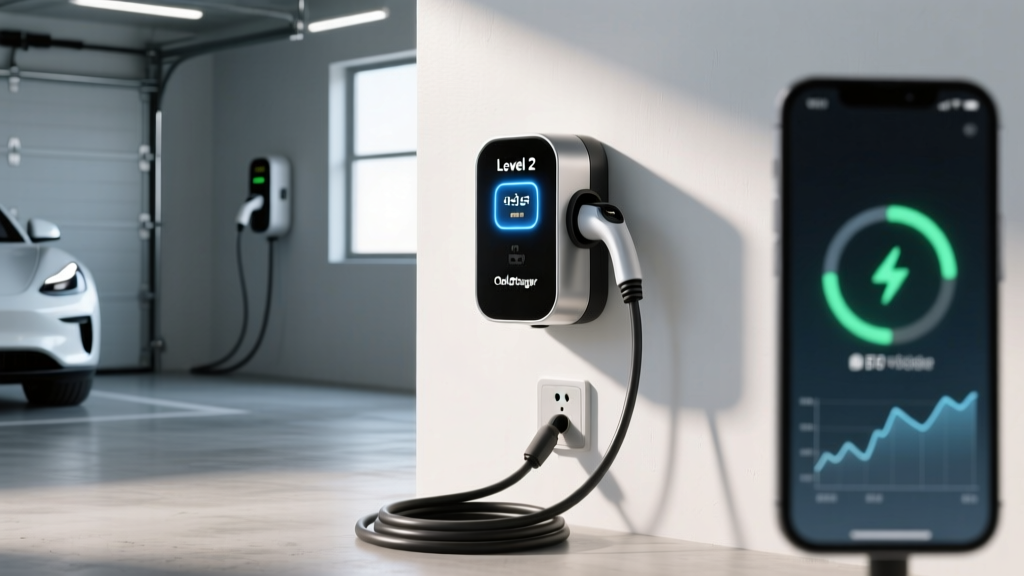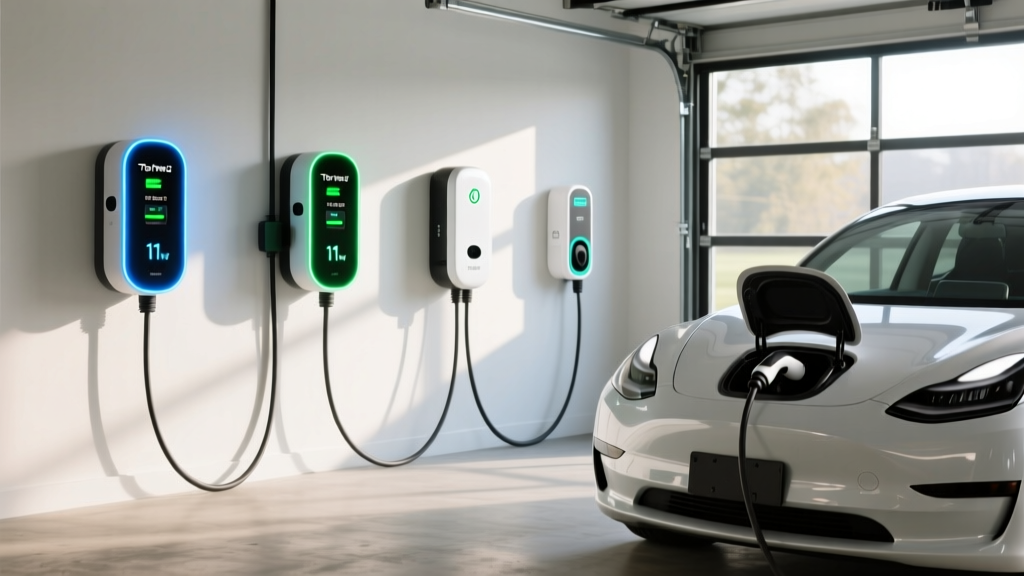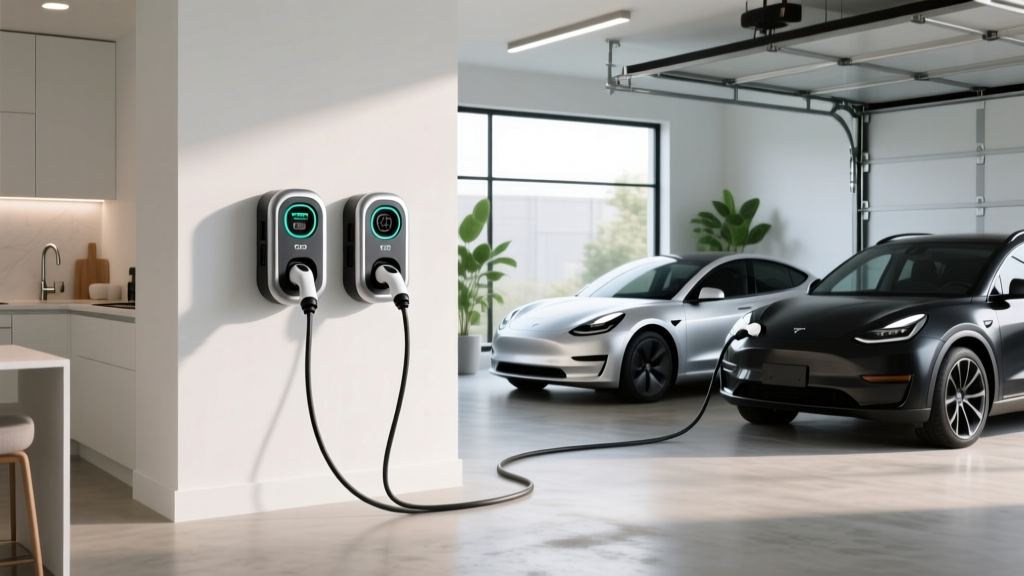
If you've been browsing EV forums or electrician quotes, you may have encountered the term "six pack charger" and wondered what it means for your garage. In the EV world, a six pack charger typically refers to a high-amperage Level 2 charging station—often a 48-amp or dual-port unit capable of delivering up to 11.5 kW of power—that can serve one or two electric vehicles simultaneously. The name nods to the unit's ability to "pack" serious charging capability into a single wall-mounted box, making it a popular choice for two-EV households or drivers who want maximum Level 2 speed without stepping into commercial-grade equipment.
This guide breaks down exactly what a six pack charger delivers, how it compares across all three charging levels, what your home's electrical panel needs to support it, and which specific units earn our recommendation in 2026.
The Three Charging Levels: kW Speeds and Miles Per Hour
Before evaluating any specific charger, you need a firm grasp of the three EV charging levels and the real-world range they add per hour of plug-in time. Remember: kW (kilowatts) measures power—how fast energy flows into your car—while kWh (kilowatt-hours) measures energy—the total capacity of your battery. A charger rated at 11.5 kW delivers 11.5 kilowatts of power; if you charge for one hour at that rate, you've added 11.5 kWh of energy to your battery.
| Level | Voltage | Max Power (kW) | Miles of Range Per Hour | Typical Use Case |
|---|---|---|---|---|
| Level 1 | 120V AC | 1.4 kW | 3–5 mi/hr | Overnight trickle; emergency backup |
| Level 2 (Standard) | 240V AC | 7.2–9.6 kW | 22–35 mi/hr | Daily home charging; most common |
| Level 2 (Six Pack / High-Amp) | 240V AC | 11.5 kW (48A) | 35–45 mi/hr | Two-EV homes; large-battery trucks/SUVs |
| DC Fast Charging | 400–800V DC | 50–350 kW | 150–1,200 mi/hr | Road trips; rapid top-ups away from home |
A six pack charger operating at 48 amps on a 240V circuit delivers 11.5 kW continuously. For a vehicle like the Hyundai Ioniq 5 (84 kWh usable battery, EPA 303-mile range), that means a 10–80% charge in roughly 5.5 hours. For a Ford F-150 Lightning extended-range (131 kWh usable, EPA 320-mile range), expect about 8.5 hours for the same 10–80% session. That's comfortably overnight for even the largest consumer EV batteries on the market.
What Electrical Upgrades Might Your Home Need?
A 48-amp six pack charger requires a dedicated 60-amp circuit breaker. The National Electrical Code (NEC) mandates that continuous loads—defined as loads expected to run for three hours or more—may not exceed 80% of a breaker's rated capacity. Since EV charging sessions routinely last four to eight hours, a 48A charger must sit on a 60A breaker (48 ÷ 0.80 = 60).
Here's what that means for your electrical panel:
- 200-amp panel (most homes built after 2000): Usually has sufficient spare capacity to add a 60A breaker, especially if you're not simultaneously running high-draw appliances like electric resistance heat or a tankless water heater. A licensed electrician will perform a load calculation per NEC Article 220 to confirm.
- 100-amp panel (older homes): Likely requires a panel upgrade to 200A before a 60A EV circuit can be safely added. This is the single biggest cost variable in a home charger installation.
- Wire gauge: A 60A circuit requires 6 AWG copper wire (THHN in conduit or NM-B cable). Longer runs from the panel to the garage—especially over 100 feet—may require 4 AWG to mitigate voltage drop.
Panel upgrade reality check: If your home has a 100-amp service and you need a full upgrade to 200 amps, expect to pay $1,500–$4,000 for the panel work alone, on top of the charger circuit installation. This is the most commonly underestimated cost in EV home charging. Always get a licensed electrician's load calculation before purchasing equipment.
How Much Does It Cost to Install a Six Pack Home Charger?
Installation costs vary dramatically based on your home's existing electrical infrastructure, the distance from your panel to the charging location, and local permit fees. Below is a realistic breakdown based on 2026 national averages for a 48-amp, hardwired Level 2 charger installation:
| Cost Component | Simple Install (Panel in garage, short run) | Complex Install (Long run, conduit, panel upgrade) |
|---|---|---|
| Charger unit (48A hardwired) | $500–$750 | $500–$750 |
| Electrician labor (2–4 hrs simple / 6–10 hrs complex) | $250–$500 | $750–$1,500 |
| Materials (wire, conduit, junction boxes) | $75–$200 | $300–$600 |
| Permit and inspection | $50–$150 | $50–$200 |
| Panel upgrade to 200A (if needed) | N/A | $1,500–$4,000 |
| Total estimated cost | $875–$1,600 | $3,100–$7,050 |
Most homeowners with a 200A panel and a garage-adjacent electrical panel will land in the $1,000–$1,800 range for a complete six pack charger installation. If you're running conduit 80+ feet from a basement panel to a detached garage, costs climb quickly.
Regarding incentives: the federal Alternative Fuel Vehicle Refueling Property Credit (IRS Form 8911) covers 30% of home charging equipment and installation costs, up to $1,000, but only for taxpayers in eligible census tracts. Check the IRS eligibility tool before counting on this credit, as the census tract requirement disqualifies many suburban and rural addresses.
Which Connector and Charger Is Compatible with Your EV?
The connector landscape has consolidated significantly as of 2026. The North American Charging Standard (NACS)—originally developed by Tesla—has been adopted by Ford, GM, Rivian, Hyundai, Kia, BMW, and most other major manufacturers. CCS1 (Combined Charging System) remains on some legacy models and older inventory. CHAdeMO is effectively discontinued for new vehicles, surviving only on the aging Nissan Leaf.
| Connector | Vehicles Using It (2026 Models) | Adapter Needed? |
|---|---|---|
| NACS (Tesla-style) | Tesla (all), Ford (2025+), GM (2025+), Rivian (2025+), Hyundai/Kia (2025+), BMW, Mercedes | None for native NACS; CCS-to-NACS adapters available for older CCS vehicles |
| CCS1 | VW ID.4 (pre-2025), older Hyundai/Kia, Audi e-tron (pre-2025), BMW iX (pre-2025), Porsche Taycan (pre-2025) | NACS-to-CCS adapter needed at Tesla Superchargers |
| CHAdeMO | Nissan Leaf (discontinued after 2025 MY), Mitsubishi Outlander PHEV (older) | Limited adapter options; network shrinking |
For a six pack charger in 2026, buy a NACS-connector unit unless you exclusively drive a CCS1-equipped vehicle with no plans to upgrade. A NACS charger will natively serve Teslas and the growing majority of new EVs, and CCS1 vehicles can use a NACS-to-CCS adapter (roughly $200–$300) for home charging.
Equipment Picks: Top Six Pack Chargers for 2026
We evaluated home chargers based on sustained power output, build quality, smart features, cable length, and real-world reliability reports. These three units represent the best options for a 48-amp (11.5 kW) six pack charger setup:
ChargePoint Home Flex (NACS, 50A capable)
- Power output: Up to 12 kW (50A) on a 60A circuit; configurable down to 16A for smaller circuits
- Connector: NACS (native); J1772 adapter included
- Cable length: 23 feet
- Smart features: Wi-Fi, app-based scheduling, energy tracking, Alexa integration
- Price: ~$650 (unit only)
- Best for: Flexibility—the amperage dial lets you match any circuit size without buying a different unit
Grizzl-E Smart (48A Hardwired)
- Power output: 11.5 kW (48A) fixed on a 60A circuit
- Connector: NACS or J1772 (select at purchase)
- Cable length: 24 feet
- Smart features: Wi-Fi, OCPP compatibility, load-sharing for dual installations
- Price: ~$550 (unit only)
- Best for: Cold-climate durability—rated to -40°F with a ruggedized aluminum enclosure
Tesla Wall Connector (Gen 3, 48A)
- Power output: 11.5 kW (48A) on a 60A circuit
- Connector: NACS (native)
- Cable length: 24 feet
- Smart features: Wi-Fi, power-sharing between two units on one circuit, OTA updates
- Price: ~$475 (unit only)
- Best for: Tesla owners wanting the lowest-cost, highest-integration option; power-sharing lets two Wall Connectors split a single 60A circuit intelligently
A note on hardwired vs. plug-in (NEMA 14-50): Hardwired installations are required for 48A continuous operation because no standard residential plug is rated for 48A continuous draw. A NEMA 14-50 receptacle is rated for 50A but limited to 40A continuous (80% rule), capping you at 9.6 kW. If you want the full 11.5 kW six pack performance, hardwire is mandatory.
Charging Cost Per Mile: Home vs. Public vs. Gas
The economic case for home charging is overwhelming when you compare it to both public DC fast charging and gasoline. Here's a realistic cost-per-mile breakdown using a 2026 average EV efficiency of 3.0 miles per kWh (roughly 112 MPGe combined, representative of vehicles like the Tesla Model Y and Hyundai Ioniq 5):
| Charging Scenario | Cost per kWh | Cost per Mile (3 mi/kWh) | Annual Cost (12,000 mi) |
|---|---|---|---|
| Home, off-peak utility rate | $0.09–$0.14 | $0.03–$0.047 | $360–$564 |
| Home, standard rate (no TOU) | $0.15–$0.20 | $0.05–$0.067 | $600–$804 |
| Public Level 2 (ChargePoint, etc.) | $0.25–$0.49 | $0.083–$0.163 | $996–$1,956 |
| DC Fast Charging (Electrify America, Tesla) | $0.35–$0.58 | $0.117–$0.193 | $1,404–$2,316 |
| Gasoline (25 MPG avg, $3.50/gal) | — | $0.14 | $1,680 |
Home off-peak charging with a six pack charger costs roughly one-quarter to one-third what gasoline costs per mile. Even on a standard utility rate with no time-of-use optimization, home charging still undercuts gasoline by 50–60%. The math is clear: the six pack charger pays for itself in fuel savings within 12–24 months for most drivers, depending on local electricity rates and annual mileage.
To maximize savings, enroll in your utility's time-of-use (TOU) plan and schedule charging sessions for off-peak hours (typically 10 PM–6 AM). Most smart chargers, including all three recommended above, support scheduled charging via their companion apps.
Safety, Code, and Installation Best Practices
EV charging represents a significant continuous electrical load, and cutting corners on installation invites fire risk, failed inspections, and voided equipment warranties. Follow these non-negotiable guidelines:
- Dedicated circuit: Your 48A charger must be on its own dedicated 60A breaker. Never share the circuit with other appliances.
- GFCI protection: The 2023 NEC (and most 2026 local adoptions) requires GFCI protection for outdoor receptacles. For hardwired indoor installations, GFCI is not typically required but may be mandated by local AHJ (Authority Having Jurisdiction). Confirm with your electrician.
- Outdoor rating: If your charger is mounted outside or in an open carport, verify the unit carries a NEMA 4 or IP65 weather-resistance rating. All three units recommended above meet this standard.
- Permit and inspection: Most jurisdictions require an electrical permit for a new 240V circuit. The inspection ensures correct wire gauge, breaker sizing, grounding, and torque on connections. Skipping the permit risks insurance claim denial in the event of an electrical fire.
- Load management: If you're installing two chargers on one circuit (a common dual-EV setup), use chargers with built-in load-sharing (like the Tesla Wall Connector's power-sharing feature) to prevent tripping the breaker when both vehicles charge simultaneously.
Frequently Asked Questions
How fast will a six pack charger add range compared to a standard Level 2?
A standard 32-amp Level 2 charger delivers 7.7 kW, adding roughly 25–28 miles of range per hour. A 48-amp six pack charger delivers 11.5 kW, adding 35–45 miles per hour—a roughly 50% speed increase. For a 100 kWh battery going from 10–80% SoC, that's about 9.5 hours on the 32A unit versus 6 hours on the 48A unit.
Can I install a six pack charger myself?
Technically, a homeowner can pull their own electrical permit in some jurisdictions, but we strongly recommend a licensed electrician for any 240V/60A circuit. The continuous-load nature of EV charging means every connection must be torqued to specification, and errors can cause thermal events that won't manifest until weeks into regular use. A professional installation also satisfies most charger manufacturers' warranty requirements.
Will a six pack charger work with my EV's onboard charger?
Your EV's onboard charger determines the maximum AC power it can accept. Most 2026 EVs have onboard chargers rated at 11.5 kW (48A), meaning they can take full advantage of a six pack charger. However, some vehicles—like the base Chevrolet Equities EV and certain PHEVs—have smaller onboard chargers (7.7 kW or 9.6 kW) that won't use the full 11.5 kW available. Check your vehicle's spec sheet for "AC charge rate" or "onboard charger" capacity before investing in a 48A unit.
How much does charging cost per mile compared to gas?
At the national average residential electricity rate of ~$0.16/kWh and an EV efficiency of 3.0 mi/kWh, home charging costs approximately $0.053 per mile. A comparable gas vehicle at 25 MPG and $3.50/gallon costs $0.14 per mile—nearly three times as much. Over 12,000 annual miles, that's roughly $636 for home EV charging versus $1,680 for gasoline.
Do I need a panel upgrade for a 48-amp charger?
If your home has a 200-amp electrical panel with adequate spare capacity (confirmed by an electrician's NEC Article 220 load calculation), you likely don't need a panel upgrade. If your home has a 100-amp panel, a 200-amp upgrade is almost certainly required, adding $1,500–$4,000 to your installation cost. Homes with existing high-draw electric loads—heat pumps, tankless water heaters, electric ranges—may need an upgrade even with a 200A panel.