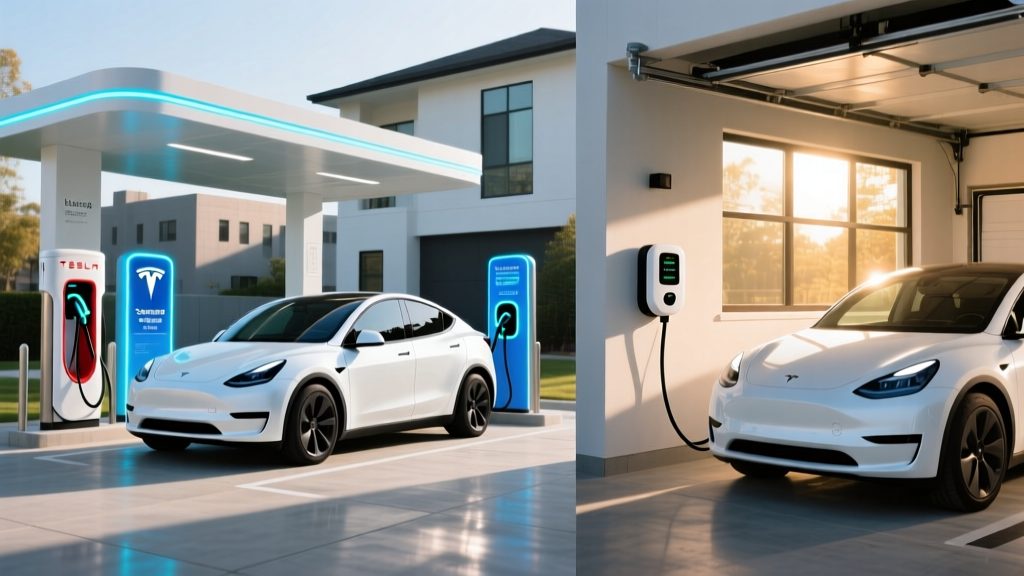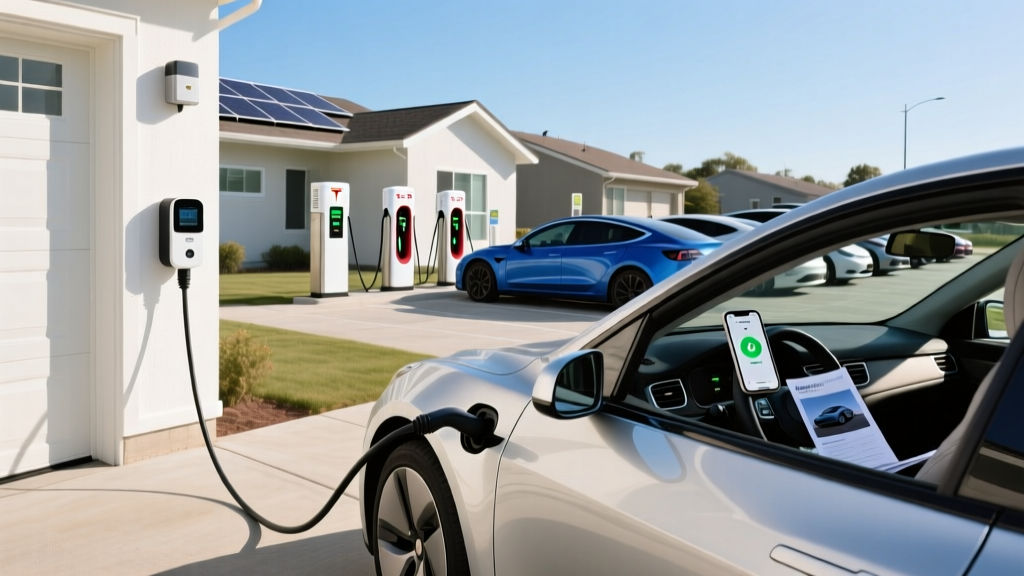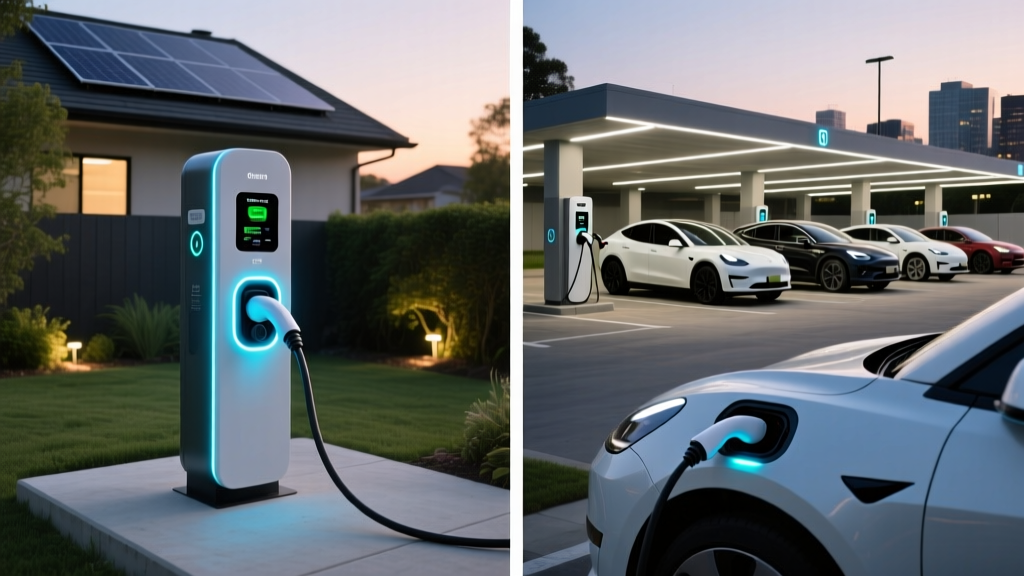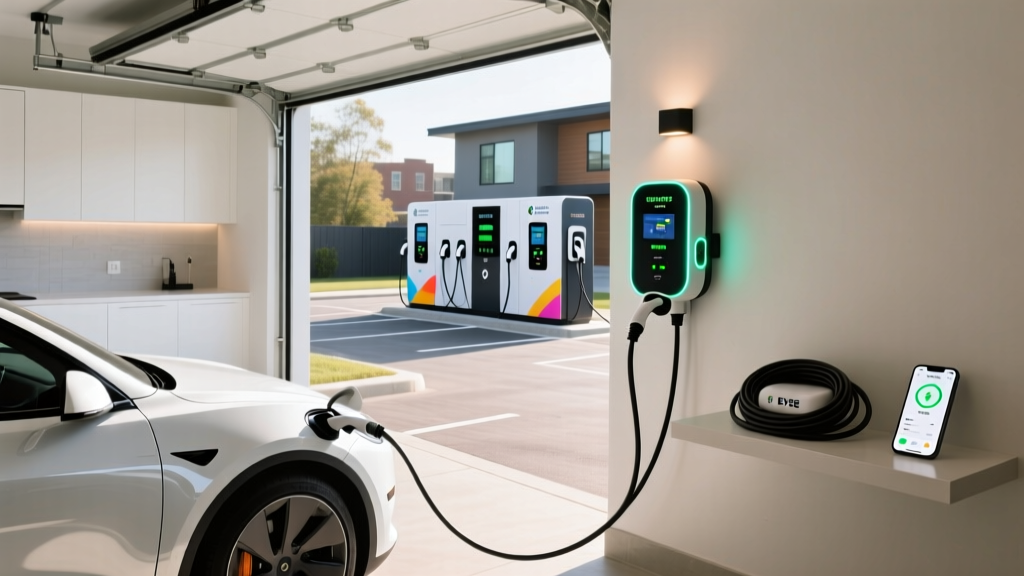
The EV Ranger's Charging Playbook: From Garage to Highway
Whether you're mapping a cross-country EV road trip or optimizing your daily commute, understanding charging infrastructure is the single most important skill for any electric vehicle owner. This guide serves as your complete EV ranger reference — covering home Level 2 installation realities, public DC fast charging networks, connector standards, and the hard numbers behind what charging actually costs per mile.
Before we get into the details, let's clear up the most common EV confusion: kW (kilowatts) measures power — the rate at which energy flows into your battery, like water pressure from a hose. kWh (kilowatt-hours) measures energy — the total capacity of your battery, like the size of the tank. A 75 kWh battery charged at 11.5 kW (Level 2) takes roughly 6.5 hours from empty to full. The same battery on a 150 kW DC fast charger can go from 10% to 80% in about 25-30 minutes. Knowing this distinction separates informed EV owners from frustrated ones.
Charging Levels Explained: Speeds, Power, and Range Added Per Hour
Every EV owner operates across three charging tiers. Here's exactly what each delivers in real-world terms:
| Charging Level | Voltage / Amperage | Power Output (kW) | Miles of Range Added Per Hour | Typical Use Case |
|---|---|---|---|---|
| Level 1 (120V household outlet) | 120V / 12A | 1.4 kW | 3–5 miles | Overnight trickle, PHEVs, emergency backup |
| Level 2 (240V home/public) | 240V / 32A–48A | 7.7–11.5 kW | 25–44 miles | Daily home charging, workplace, shopping centers |
| DC Fast Charging (public stations) | 400V–800V DC | 50–350 kW | 150–1,200+ miles (equivalent per hour) | Road trips, highway corridors, rapid top-ups |
Real-world context: Most EVs with 75–100 kWh batteries recover a full day's driving (30-40 miles) in about 1–1.5 hours on a Level 2 home charger. DC fast charging speeds are peak rates — your vehicle will not sustain 250 kW from 10% to 100%. Charging curves taper significantly above 80% State of Charge (SoC) to protect battery health. A vehicle advertising "250 kW peak" might sustain that rate only between 10–40% SoC before dropping to 150 kW, then 100 kW, then 50 kW as it approaches full. This is why manufacturers quote 10–80% charge times rather than 0–100%.
Home Level 2 Charger Installation: Electrical Requirements, Costs, and Gotchas
Installing a Level 2 home charger is the single highest-impact upgrade any EV owner can make. Here's what it actually requires and costs in 2026.
Electrical Requirements
A standard Level 2 home charger requires a dedicated 240V circuit, similar to what powers an electric dryer or oven. The most common configurations:
- 40-amp circuit → delivers up to 32A continuous (7.7 kW) — sufficient for most EVs and the most cost-effective install
- 50-amp circuit → delivers up to 40A continuous (9.6 kW) — ideal for larger batteries like the Ford F-150 Lightning (131 kWh) or Rivian R1S (149 kWh)
- 60-amp circuit → delivers up to 48A continuous (11.5 kW) — maximum for future-proofing, requires thicker wire and higher-rated breaker
Panel upgrade reality: Many homes built before 2000 have 100-amp or 150-amp main electrical panels. Adding a 50-amp EV circuit to an already-loaded panel may require a panel upgrade to 200 amps, which typically costs $1,500–$3,000 before the charger install even begins. Homes with 200-amp panels and available breaker slots usually avoid this expense. Always have a licensed electrician perform a load calculation before committing to a circuit size.
Installation Cost Breakdown
| Cost Component | Basic Install (Short Run) | Complex Install (Long Run / Panel Upgrade) |
|---|---|---|
| Level 2 charger equipment (hardwired or NEMA 14-50) | $350–$650 | $500–$750 |
| Electrician labor (2–4 hours basic; 6–10+ hours complex) | $400–$800 | $1,200–$2,500 |
| Electrical permit and inspection | $50–$150 | $50–$200 |
| Wire, conduit, breaker, and materials | $100–$300 | $300–$800 |
| Panel upgrade (if required) | $0 (not needed) | $1,500–$3,000 |
| Total estimated cost | $900–$1,900 | $3,550–$7,250 |
Key savings tip: The federal Residential Clean Energy Credit does not cover EV charger equipment (that provision expired for most taxpayers after 2021). However, some utilities and state programs offer rebates of $250–$1,000 for Level 2 installations — check with your local provider. Additionally, the Alternative Fuel Infrastructure Tax Credit was revived for eligible census tracts under the Inflation Reduction Act, covering up to 30% of charger hardware and installation costs (capped at $1,000 for residential). Consult a tax professional for eligibility.
Connector Compatibility: NACS, CCS1, CHAdeMO, and Adapter Needs
The North American charging connector landscape has shifted dramatically. As of 2026, the North American Charging Standard (NACS), originally developed by Tesla, has become the dominant connector for new EVs. Here's what you need to know based on your vehicle:
| Connector Type | Vehicles Using It (Native) | Public DC Fast Charger Availability | Adapter Needed? |
|---|---|---|---|
| NACS (Tesla) | Tesla (all models), Ford (2025+), GM (2025+), Rivian (2025+), Volvo, Polestar, Mercedes, BMW, Hyundai/Kia (2026+) | Tesla Supercharger network (25,000+ stalls); growing third-party NACS stations | CCS-to-NACS adapter for legacy CCS vehicles accessing Superchargers |
| CCS1 (Combo) | Legacy models: pre-2025 VW ID.4, older Hyundai Ioniq 5, BMW i4, Stellantis EVs | Electrify America, EVgo, ChargePoint, most non-Tesla networks | NACS-to-CCS adapter needed for Tesla Supercharger access (if vehicle supports it) |
| CHAdeMO | Nissan Leaf (all years), Mitsubishi Outlander PHEV (legacy) | Declining — limited to older Electrify America and independent stations | No adapter available; CHAdeMO infrastructure is being phased out |
For home Level 2 charging: All EVs sold in North America use the J1772 connector for Level 1 and Level 2 AC charging. NACS-equipped vehicles include a J1772-to-NACS adapter in the box, or you can purchase a third-party adapter ($50–$150). When buying a home charger, choose one with a J1772 connector for maximum compatibility, or a NACS connector if your vehicle is NACS-native and you want a cleaner single-cable setup.
Cost to Charge: Home vs. Public vs. Gas — The Real Cost Per Mile
One of the biggest advantages of EV ownership is lower fuel cost — but the savings depend heavily on where and when you charge. Here's the data:
| Charging Scenario | Average $/kWh | Cost Per Mile (at 3.5 mi/kWh efficiency) | Annual Cost (12,000 miles) |
|---|---|---|---|
| Home charging (off-peak utility rate) | $0.08–$0.14 | $0.023–$0.040 | $275–$480 |
| Home charging (standard residential rate) | $0.14–$0.20 | $0.040–$0.057 | $480–$685 |
| Public Level 2 (workplace, shopping) | $0.20–$0.35 | $0.057–$0.100 | $685–$1,200 |
| DC Fast Charging (Electrify America, EVgo) | $0.35–$0.55 | $0.100–$0.157 | $1,200–$1,885 |
| Tesla Supercharger (varies by location) | $0.25–$0.40 | $0.071–$0.114 | $857–$1,371 |
| Gasoline equivalent (25 MPG combined, $3.40/gal) | — | $0.136 | $1,632 |
The takeaway: Home charging at off-peak rates delivers fuel costs roughly 70–80% lower than gasoline. Even exclusive DC fast charging costs less per mile than gas in most scenarios. The efficiency figure of 3.5 miles per kWh is representative of mid-size EVs like the Tesla Model Y and Hyundai Ioniq 5; larger vehicles like the F-150 Lightning average closer to 2.0–2.5 mi/kWh, which increases cost per mile proportionally. Source: fueleconomy.gov efficiency data.
Charging Time Examples: How Long to Charge Common EV Batteries
Charge times vary based on battery size, vehicle acceptance rate, and thermal management. Here are real-world benchmarks for popular 2026 EVs:
| Vehicle | Battery (kWh usable) | Level 2 (11.5 kW): 10–100% | DC Fast: 10–80% | Peak DC Rate |
|---|---|---|---|---|
| Tesla Model Y Long Range | 75 kWh (NMC) | ~6.5 hours | ~25 minutes | 250 kW |
| Hyundai Ioniq 5 (Long Range) | 77.4 kWh (NMC) | ~7 hours | ~18 minutes | 350 kW (800V architecture) |
| Ford F-150 Lightning (Extended) | 131 kWh (NMC) | ~11.5 hours | ~41 minutes | 150 kW |
| Chevrolet Equinox EV | 85 kWh (NMC) | ~7.5 hours | ~30 minutes | 150 kW |
| BMW iX xDrive50 | 105.2 kWh (NMC) | ~9.5 hours | ~31 minutes | 200 kW |
Charging curve reality check: The Hyundai Ioniq 5's 350 kW peak rate is sustained only on compatible chargers (like Electrify America's 350 kW stalls) and only between roughly 10–55% SoC thanks to its 800-volt architecture. Above 80%, charge speed drops dramatically — often below 50 kW. This is why planning road-trip stops around 10–80% sessions is more time-efficient than charging to 100% at a DC fast station.
Recommended Home Level 2 Chargers: Power, Features, and Pricing
After testing dozens of units, here are the top home chargers for 2026 EV owners, selected for reliability, power output, smart features, and value:
Emporia Level 2 Smart Charger
- Power Output: 48A / 11.5 kW (on 60A circuit) or 40A / 9.6 kW (on 50A circuit) — configurable via app
- Connector: J1772 (NACS adapter available)
- Cable Length: 24 feet
- Smart Features: Wi-Fi connected, energy monitoring via Emporia Vue panel integration, scheduled charging for off-peak rates, solar integration
- Price: $399 (frequently on sale for $349)
- Best For: Budget-conscious owners who want full smart features and energy tracking
ChargePoint Home Flex
- Power Output: Up to 50A / 12 kW (on 60A circuit) — adjustable in 4A increments from 16A to 50A
- Connector: J1772 (25-foot cable)
- Smart Features: Wi-Fi, Alexa integration, detailed app scheduling, utility demand-response program compatibility
- Price: $649
- Best For: Owners who want flexible amperage adjustment and broad utility program support
Tesla Wall Connector
- Power Output: 48A / 11.5 kW (on 60A circuit)
- Connector: NACS native (J1772 adapter included for non-Tesla EVs)
- Cable Length: 24 feet
- Smart Features: Wi-Fi firmware updates, power sharing between multiple units on one circuit, Tesla app integration
- Price: $475
- Best For: Tesla owners and NACS-native vehicle owners who want a sleek, purpose-built unit
Grizzl-E Smart
- Power Output: 40A / 9.6 kW (on 50A circuit)
- Connector: J1772 (24-foot cable)
- Smart Features: OCPP-compatible, works with multiple charging apps, adjustable amperage via DIP switches
- Price: $499
- Best For: Cold-climate owners — built in Canada, rated to -40°F, rugged aluminum enclosure
Safety, Code, and Installation Best Practices
EV charging installations must comply with the National Electrical Code (NEC) and local building codes. Key requirements and best practices include:
- Dedicated circuit: Your EV charger must be on its own dedicated breaker — never shared with other appliances. This prevents overloads and ensures consistent power delivery.
- GFCI protection: NEC 2020 and later require Ground Fault Circuit Interrupter (GFCI) protection for all EV charging outlets in garages and outdoor locations. Hardwired chargers with built-in ground fault protection may satisfy this requirement without a GFCI breaker.
- Outdoor rating: If installing outdoors, both the charger and the outlet (if plug-in) must carry a NEMA 4 or NEMA 4X rating for weather resistance. All recommended chargers above meet this standard.
- Permit and inspection: Most jurisdictions require an electrical permit and post-installation inspection. Skipping this step can void homeowner's insurance coverage for electrical fires and may cause issues during home resale.
- Wire gauge: A 50-amp circuit requires 6 AWG copper wire; a 60-amp circuit requires 4 AWG. Your electrician will size this correctly, but undersized wire is a fire hazard — never cut corners here.
- NEMA 14-50 outlet vs. hardwired: A NEMA 14-50 outlet offers portability (take the charger when you move) but requires a GFCI breaker in many jurisdictions. Hardwired installations eliminate the GFCI breaker requirement on many chargers and reduce points of failure. For permanent installations, hardwired is generally preferred.
Frequently Asked Questions
How much does it cost to install a home EV charger?
A straightforward Level 2 installation in a home with an adequate electrical panel typically costs $900–$1,900 including equipment, electrician labor, wire, permit, and inspection. If your home requires a panel upgrade from 100A to 200A service, expect total costs of $3,550–$7,250. The wide range reflects variables like wire run distance (a charger mounted 5 feet from the panel costs far less than one 80 feet away through finished walls), local electrician rates, and permit fees.
How fast will each charging level add range?
Level 1 (120V) adds roughly 3–5 miles of range per hour — enough only for PHEVs with small batteries or overnight trickle charging. Level 2 (240V, 40–48A) adds 25–44 miles per hour, which fully replenishes most daily driving in 1–2 hours. DC fast charging at 150–350 kW can add 150–300+ miles in 20–30 minutes, though sustained rates depend on the vehicle's charging curve and battery temperature.
Which connector and charger is compatible with my EV?
For Level 2 home charging, all North American EVs use the J1772 connector — any J1772 Level 2 charger will work with any EV (NACS vehicles include a J1772 adapter). For DC fast charging, check your vehicle: 2025–2026 models from Ford, GM, Rivian, Tesla, Volvo, and Hyundai/Kia use NACS; older models from VW, BMW, and Stellantis may still use CCS1; Nissan Leaf uses CHAdeMO. The connector compatibility table above provides brand-by-brand details.
How much does charging cost per mile compared to gas?
Home charging at off-peak utility rates costs approximately $0.023–$0.040 per mile — roughly 70–80% less than gasoline at $3.40/gallon in a 25 MPG vehicle ($0.136/mile). Even exclusive DC fast charging at $0.35–$0.55/kWh costs $0.10–$0.16 per mile, which is competitive with or cheaper than gas. The cost advantage is largest for homeowners with access to time-of-use utility rates and smallest for apartment dwellers relying entirely on public charging.
What electrical upgrades might I need?
The most common upgrade is a panel capacity increase if your existing electrical service cannot support an additional 40–60 amp circuit. Homes with 100-amp panels almost always need an upgrade; 200-amp panels with available breaker slots usually don't. Other potential upgrades include running new conduit for long wire runs (especially in finished basements or through masonry walls), upgrading the meter socket if your utility requires it, or adding a sub-panel in a detached garage. A licensed electrician's load calculation will determine exactly what's needed before any work begins.