The Real Cost of Charging a Tesla in 2026: Supercharger vs. Your Garage
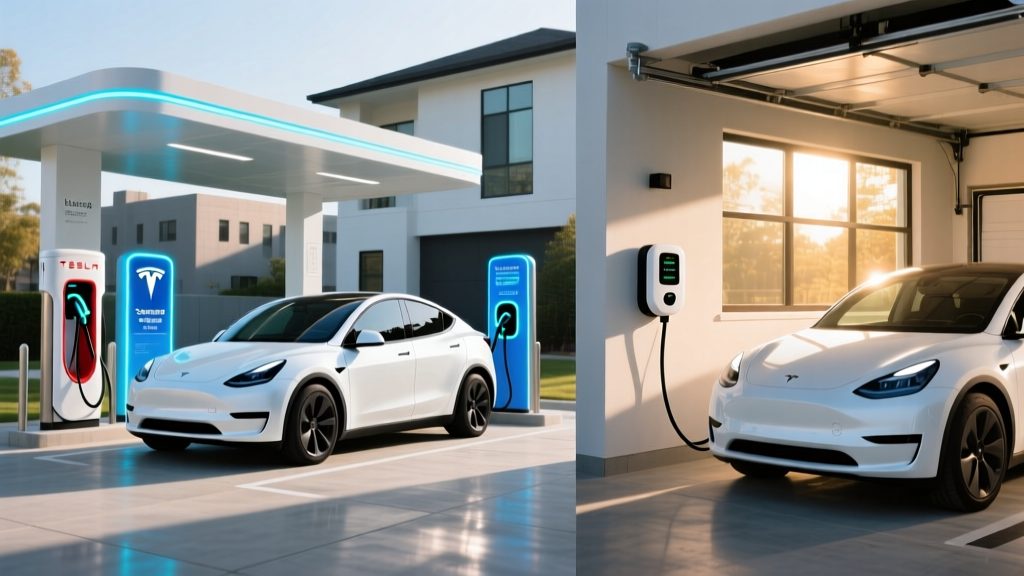
If you own or are shopping for a Tesla, one question dominates the ownership math: what does it actually cost to keep the battery full? The Tesla Supercharging cost per kWh varies dramatically by location, time of day, and whether you're at a V3 or V4 stall — but the gap between public fast charging and home Level 2 charging is wider than most buyers expect.
This guide breaks down exactly what you'll pay per kWh at a Supercharger, what a home charger installation runs, and how both compare to gasoline on a per-mile basis. We'll cover the electrical work, the equipment, the connectors, and the realistic charging times for today's Tesla lineup — the Model 3, Model Y, Model S, and Model X — plus what non-Tesla EV owners need to know now that the North American Charging Standard (NACS) has become the industry default.
Charging Levels Explained: Speeds, Power, and Miles Per Hour
Every EV charges at one of three levels. Here's what each delivers in real-world terms:
| Level | Voltage / Power | Miles of Range Added Per Hour | Best For |
|---|---|---|---|
| Level 1 | 120V / 1.0–1.4 kW | 3–5 mi/hr | Overnight top-ups, PHEVs, emergencies |
| Level 2 | 240V / 7.2–19.2 kW | 25–75 mi/hr | Daily home charging, workplace |
| DC Fast Charging | 400–800V / 50–350 kW | 150–1,000+ mi/hr (peak) | Road trips, rapid top-ups |
For a Tesla Model Y Long Range (75 kWh usable battery, EPA 320 miles), here's what charging looks like in practice:
- Level 1 (120V, 12A): ~1.4 kW — adds about 4 miles per hour. A 10–80% charge takes roughly 38 hours. Useful only for overnight maintenance or plug-in hybrids.
- Level 2 (240V, 48A Wall Connector): ~11.5 kW — adds about 44 miles per hour. A 10–80% charge takes approximately 4.5 hours. This is the home-charging sweet spot.
- Tesla V3 Supercharger (250 kW peak): 10–80% in roughly 25–30 minutes, adding up to 170 miles in 15 minutes under ideal conditions.
- Tesla V4 Supercharger (up to 350 kW for compatible vehicles): Newer V4 cabinets can deliver higher sustained power to 800V-architecture vehicles; current 400V Teslas see modest gains over V3.
Tesla Supercharging Cost Per kWh: What You'll Actually Pay
Tesla Supercharger pricing is not uniform. It varies by station, local utility rates, time of day, and whether you're in a state that permits per-kWh billing (most now do; a few still bill per minute due to regulatory restrictions).
As of early 2026, here's the national landscape for Tesla Supercharging cost per kWh:
- National average: $0.28–$0.36/kWh at V3/V4 stations
- Low-cost states (e.g., parts of Texas, Oklahoma, some rural Midwest): $0.22–$0.26/kWh
- High-cost states (California, Northeast corridor, urban centers): $0.38–$0.52/kWh
- Peak vs. off-peak: Some urban Superchargers now use time-of-use pricing, with rates 20–40% higher during 4–9 PM weekdays
- Non-Tesla vehicles using Superchargers (via Magic Dock or NACS): Typically 15–25% higher per kWh than Tesla owners, unless enrolled in a membership plan
Let's translate that into real session costs. For a Tesla Model Y Long Range (75 kWh usable battery), a 10–80% session requires roughly 52.5 kWh:
| Scenario | Rate per kWh | Session Cost (10–80%) | Cost Per Mile |
|---|---|---|---|
| Budget Supercharger (rural) | $0.24 | $12.60 | $0.044 |
| Average Supercharger | $0.32 | $16.80 | $0.059 |
| Premium urban (CA peak) | $0.48 | $25.20 | $0.088 |
| Home Level 2 (national avg. $0.16/kWh) | $0.16 | $8.40 | $0.029 |
| Home Level 2 (off-peak TOU $0.09/kWh) | $0.09 | $4.73 | $0.017 |
The takeaway is stark: exclusive Supercharger reliance in a high-cost state can push your per-mile fuel cost within striking distance of an efficient hybrid. Home charging on an off-peak rate is where the EV economic argument becomes overwhelming.
Home EV Charger Installation: Electrical Requirements and Costs
Installing a Level 2 home charger is the single highest-leverage investment an EV owner can make. Here's what the project involves and what it costs.
Electrical Requirements
A Level 2 charger requires a dedicated 240-volt circuit. The most common configurations:
- NEMA 14-50 outlet (50A circuit, 40A continuous draw): The most popular residential setup. Delivers up to 9.6 kW. Compatible with the Tesla Mobile Connector (with 14-50 adapter, ~$45) or any hardwired/portable Level 2 unit.
- NEMA 6-50 outlet (50A circuit): Older dryer-style outlet; less common for new installs but functional.
- Hardwired 60A circuit (48A continuous): Required for the Tesla Wall Connector at its full 11.5 kW output. No outlet — the charger wires directly into a junction box. Offers the fastest residential charging and avoids GFCI nuisance trips that some outlets experience.
- Hardwired 80A circuit (64A continuous): For the Tesla Wall Connector at 19.2 kW or similar high-power units. Requires 2/0 AWG copper wire and a panel with ample spare capacity.
Installation Cost Breakdown
| Component | Simple Install (near panel) | Complex Install (long run, conduit) |
|---|---|---|
| Level 2 charger unit | $250–$500 | $400–$700 |
| Electrical permit | $50–$150 | $100–$250 |
| Electrician labor (2–4 hrs simple; 6–12 hrs complex) | $300–$700 | $900–$2,500 |
| Wire, conduit, breaker, junction box | $75–$200 | $300–$800 |
| Panel upgrade (if needed) | $0 (not needed) | $1,800–$3,500 |
| TOTAL RANGE | $675–$1,550 | $3,500–$7,750 |
The federal Alternative Fuel Vehicle Refueling Property Credit (IRS Form 8911) covers 30% of home charger equipment and installation costs, up to $1,000 — but only if you live in an eligible census tract (typically rural or low-income areas, as defined under current Inflation Reduction Act rules). Check your eligibility with a tax professional before counting on this credit.
Connector Compatibility: NACS, CCS, and the Adapter Landscape
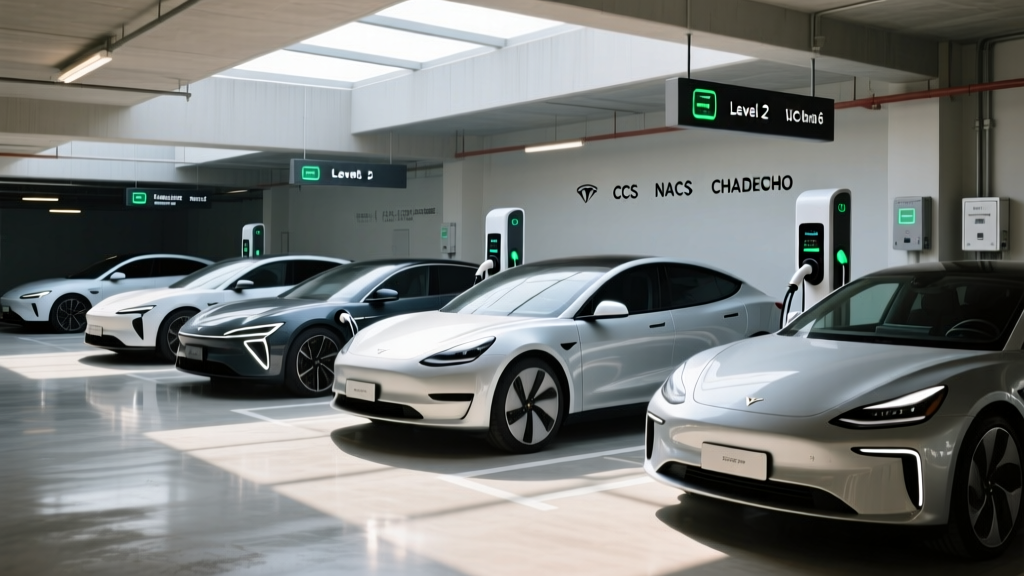
The connector on your EV determines where you can charge. As of 2026, the North American Charging Standard (NACS) — originally Tesla's proprietary connector — has become the dominant standard, with nearly every major automaker adopting it for new models starting in the 2025–2026 model years.
| Connector | Vehicles Using It | Supercharger Access | Adapter Needed? |
|---|---|---|---|
| NACS (Tesla) | All Teslas; Ford F-150 Lightning, Mustang Mach-E (2025+); GM Ultium vehicles (2025+); Rivian, Volvo, Polestar (2025+) | Native — plug directly in | None for Superchargers; CCS adapter (~$150–$250) for Electrify America, etc. |
| CCS1 | Hyundai Ioniq 5/6 (pre-2026), Kia EV6 (pre-2026), BMW iX, VW ID.4, older Ford/GM EVs | Via Tesla Magic Dock (built-in adapter at select stalls) or NACS adapter | NACS adapter for Supercharger access; native CCS for EA, ChargePoint |
| CHAdeMO | Nissan Leaf (legacy); largely discontinued | No | No practical adapter to NACS/CCS for DC fast charging |
For Tesla owners, the NACS connector is native. If you want to use non-Tesla DC fast charging networks (Electrify America, EVgo), you'll need a Tesla-to-CCS adapter. Tesla sells an official adapter, and reputable third-party options exist. For home Level 2 charging, the J1772 standard is used by non-Tesla chargers — Tesla includes a J1772 adapter with every vehicle, and the Wall Connector uses NACS natively.
Cost Per Mile: EV Charging vs. Gasoline
The ultimate ownership question is what you pay per mile driven. Here's a head-to-head comparison using a Tesla Model Y Long Range (EPA 320 mi, ~3.5 mi/kWh efficiency) versus a comparable gas SUV averaging 27 MPG combined (per fueleconomy.gov):
| Fueling Method | Rate | Cost Per Mile | Annual Cost (12,000 mi) |
|---|---|---|---|
| Home Level 2 (avg. $0.16/kWh) | $0.16/kWh | $0.046 | $549 |
| Home Level 2 (off-peak TOU $0.09/kWh) | $0.09/kWh | $0.026 | $309 |
| Tesla Supercharger (avg. $0.32/kWh) | $0.32/kWh | $0.091 | $1,097 |
| Gasoline SUV (27 MPG, $3.40/gal) | $3.40/gal | $0.126 | $1,511 |
| Gasoline SUV (27 MPG, $4.20/gal — CA premium) | $4.20/gal | $0.156 | $1,867 |
Even at the highest Supercharger rates, the Model Y costs less per mile than a 27 MPG gas SUV. But home charging is where the savings become dramatic — potentially $1,200–$1,500 per year less than gasoline for a driver covering 12,000 miles annually.
Recommended Home Charging Equipment
Here are proven Level 2 chargers for Tesla and NACS-equipped EVs, selected for reliability, power output, and smart features:
Tesla Wall Connector (Gen 3)
- Power: Up to 11.5 kW (48A, hardwired 60A circuit)
- Connector: NACS native
- Cable length: 24 ft
- Smart features: Wi-Fi for OTA updates, load sharing (pair two units on one circuit), access control via app
- Price: ~$475
- Best for: Tesla owners wanting the fastest, most integrated home charge
ChargePoint Home Flex (NACS version)
- Power: Up to 12 kW (50A) on a 60A circuit; configurable down to 16A
- Connector: NACS (2025+ models) or J1772 with adapter
- Cable length: 23 ft
- Smart features: Alexa integration, scheduling, detailed energy tracking, works with any EV brand
- Price: ~$550–$650
- Best for: Multi-EV households (Tesla + non-Tesla) or future-proofing
Emporia Vue Level 2 Charger
- Power: Up to 11.5 kW (48A)
- Connector: J1772 (NACS adapter included or sold separately)
- Cable length: 24 ft
- Smart features: Real-time energy monitoring, solar integration, dynamic load management with Emporia Vue panel monitor
- Price: ~$400–$500
- Best for: Solar-equipped homes, budget-conscious buyers wanting granular energy data
Tesla Mobile Connector (as Level 2)
- Power: Up to 7.2 kW (30A) with NEMA 14-50 adapter; 1.4 kW on 120V
- Connector: NACS native
- Cable length: 20 ft
- Smart features: Minimal — no Wi-Fi or scheduling; basic charge indicator
- Price: ~$300 (adapter sold separately ~$45)
- Best for: Budget install, renters, or as a travel backup
Safety, Code, and Installation Best Practices
EV charging draws sustained high current for hours — more like running a welder than plugging in a lamp. Cutting corners on electrical work is a fire risk and an insurance liability.
- Dedicated circuit: Your EV charger must be on its own dedicated breaker — never shared with other appliances. NEC Article 625 governs EV charging installations.
- GFCI protection: The 2020 NEC requires GFCI protection for outdoor receptacles used for EV charging. However, hardwired chargers are exempt from this requirement, which is one reason many electricians recommend hardwiring — GFCI breakers on 50A circuits can nuisance-trip during charging sessions.
- Outdoor rating: If your charger is mounted outside, both the unit and any outlet must carry a NEMA 4 (weatherproof) rating. The Tesla Wall Connector is rated for indoor and outdoor use.
- Wire gauge: A 50A circuit requires minimum 6 AWG copper; a 60A circuit requires 4 AWG. Longer wire runs may need thicker gauge to prevent voltage drop.
- Permits and inspection: Most jurisdictions require an electrical permit and a post-installation inspection. Skipping this can void your homeowner's insurance coverage for electrical fires and cause problems at resale.
- Load calculation: A licensed electrician will perform a NEC Article 220 load calculation to ensure your panel can handle the new circuit without overloading. This is non-negotiable for older homes.
Frequently Asked Questions
How much does it cost to install a home EV charger?
A straightforward Level 2 installation (panel nearby, short wire run, no panel upgrade) typically costs $675–$1,550 including the charger, permit, materials, and electrician labor. Complex installs with long conduit runs or a panel upgrade can range from $3,500 to $7,750. The federal Alternative Fuel Vehicle Refueling Property Credit covers 30% up to $1,000, but only in eligible census tracts — verify with the IRS before budgeting for it.
How fast will each charging level add range?
Level 1 (120V) adds 3–5 miles per hour — barely enough for daily driving. Level 2 (240V, 48A) adds 35–44 miles per hour, which fully replenishes most daily driving overnight. DC fast charging (150–250 kW) can add 150–200+ miles in 15–20 minutes, but the charge curve tapers significantly above 80% State of Charge.
Which connector and charger is compatible with my EV?
All Tesla vehicles use the NACS connector natively and charge at Superchargers without adapters. Starting in 2025, most new EVs from Ford, GM, Rivian, Volvo, and others also ship with NACS. Older CCS-equipped vehicles (pre-2025 Hyundai, Kia, VW, BMW) need a NACS adapter for Supercharger access. For home Level 2 charging, the Tesla Wall Connector is the best match for Tesla owners; multi-brand households should consider a NACS or J1772 charger with adapters.
How much does charging cost per mile compared to gas?
Home Level 2 charging at the national average rate ($0.16/kWh) costs roughly $0.046/mile in a Tesla Model Y — about one-third the cost of a 27 MPG gas SUV at $3.40/gallon ($0.126/mile). Even exclusive Supercharger use at $0.32/kWh ($0.091/mile) undercuts gasoline. Off-peak home charging can drop below $0.03/mile.
What electrical upgrades might I need?
If your home has a 100A or 150A panel, adding a 50–60A EV circuit may require a panel upgrade to 200A ($1,800–$3,500). Homes with existing 200A panels usually have sufficient capacity, but a load calculation is still required. Older homes with knob-and-tube wiring, aluminum branch circuits, or insufficient grounding will need remediation before any EV charger install.
Is Tesla Supercharging cheaper than other DC fast charging networks?
Generally, yes. Tesla Supercharger rates ($0.24–$0.48/kWh depending on location) tend to be 10–30% lower than Electrify America or EVgo rates at comparable speeds. Tesla's network also leads in reliability — J.D. Power's EVX study consistently ranks Tesla Superchargers highest in customer satisfaction for public charging. Non-Tesla networks frequently suffer from broken stalls, payment failures, and slower-than-advertised speeds.
Can I charge a non-Tesla EV at a Supercharger?
Yes, at select Supercharger stations equipped with Tesla's Magic Dock (a built-in CCS adapter). Additionally, NACS-equipped vehicles from Ford, GM, Rivian, and others can plug directly into Superchargers. Non-Tesla vehicles typically pay a 15–25% premium over Tesla owners unless enrolled in a Tesla membership plan. Check the Tesla app for station-by-station non-Tesla availability, as not all Supercharger locations have opened access.