If you're still driving a 2006 Chevrolet Cobalt Supercharged — that 2.0L supercharged Ecotec pushing 205 hp and delivering roughly 25 MPG combined — you already know the appeal of forced-induction efficiency. But as you consider trading that compact icon for a modern battery-electric vehicle, the single biggest shift isn't the powertrain: it's how you refuel. No more gas stations. Instead, you'll be plugging in at home, at work, or at a DC fast charger along the highway.
This guide walks first-time EV buyers — especially those coming from enthusiast gas cars like the Cobalt SS/SC — through every practical charging detail: speeds, connectors, home electrical requirements, real installation costs, and what you'll actually pay per mile in 2026.
Charging Levels Explained: Level 1, Level 2, and DC Fast Charging
Before buying a charger or an EV, understand the three charging tiers. The critical distinction every new EV owner must internalize: kW (kilowatts) measures power — how fast energy flows into the battery. kWh (kilowatt-hours) measures energy — the battery's total capacity, like gallons in a gas tank. A 75 kWh battery charged at 11.5 kW takes roughly 6.5 hours from empty to full (minus taper at the top).
| Level | Voltage / Amps | Power (kW) | Miles of Range Added Per Hour | Typical Use Case |
|---|---|---|---|---|
| Level 1 | 120V / 12–16A | 1.4–1.9 kW | 3–5 mi/hr | Overnight top-ups, low-mileage drivers, PHEVs |
| Level 2 | 240V / 32–48A | 7.7–11.5 kW | 25–44 mi/hr | Daily home charging, workplace, apartments |
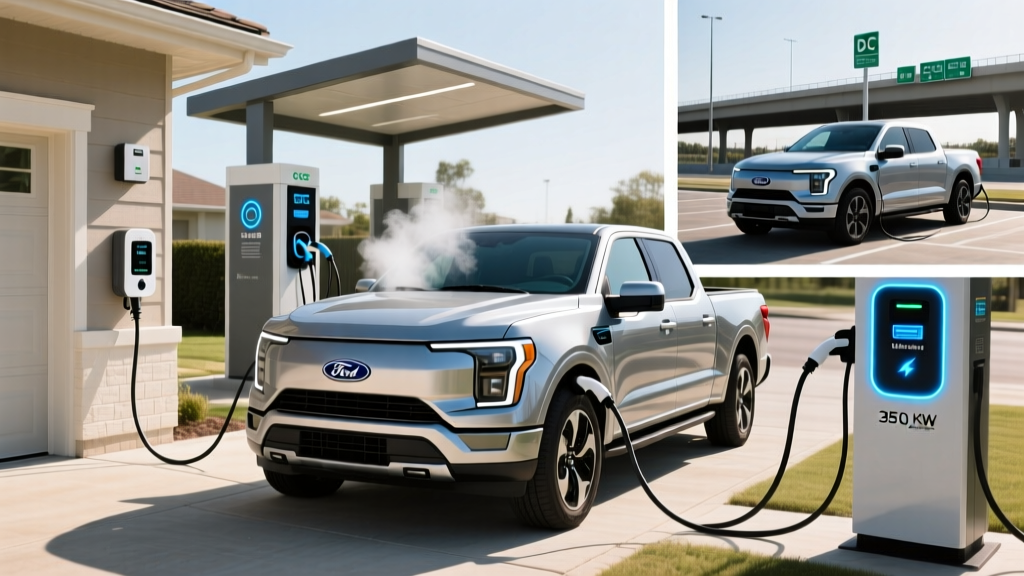
| DC Fast (Level 3) | 400–800V DC | 50–350 kW | 150–1,200+ mi/hr (peak) | Road trips, highway corridors, commercial fleets |
Most EV owners do 80–90% of their charging at home on Level 2. DC fast charging is reserved for road trips, and Level 1 is a fallback or a solution for plug-in hybrids with small batteries (like a Toyota RAV4 Prime's 18.1 kWh pack, which fully recharges overnight on 120V).
How Much Does It Cost to Install a Home EV Charger?
This is the number-one question from Cobalt owners eyeing their first EV, and the honest answer spans a wide range depending on your home's electrical panel, the distance from panel to garage, and local permitting. Here's the breakdown based on 2026 national averages:
| Component | Low-End Estimate | High-End Estimate | Notes |
|---|---|---|---|
| Level 2 EVSE hardware (smart charger) | $350 | $700 | 32A–48A units; Wi-Fi enabled models cost more |
| Electrician labor (240V/50A circuit run) | $400 | $1,500 | Depends on run distance, wall/ceiling fishing, conduit |
| Permit & inspection | $50 | $250 | Varies by municipality; some utilities bundle this |
| Electrical panel upgrade (if needed) | $1,500 | $4,000+ | Older homes with 100A service often need 200A upgrade |
| Total (no panel upgrade) | $800 | $2,450 | Most homes built after 1990 with 200A panels |
| Total (with panel upgrade) | $2,300 | $6,450+ | Homes with 100A or 60A service (pre-1980 builds) |
Electrical Requirements: What Your Circuit Needs
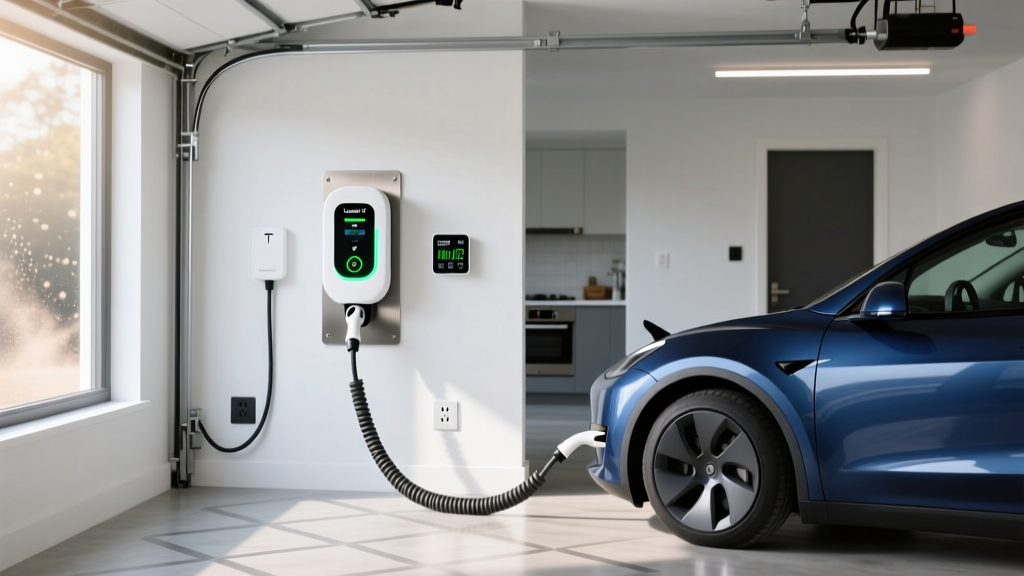
A 48-amp Level 2 charger requires a dedicated 60-amp, 240V circuit (NEC code mandates circuits be rated at 125% of continuous load: 48A × 1.25 = 60A). Wire gauge is typically 6 AWG copper for runs under 50 feet. The outlet should be a NEMA 14-60 (dryer-style) or the charger can be hardwired — hardwiring eliminates the plug as a failure point and is preferred by most electricians for outdoor installs.
Safety and code requirements you should verify with your installer:
- Dedicated circuit: The EVSE must have its own breaker — no sharing with other appliances.
- GFCI protection: NEC 2020 and later require GFCI breakers for outdoor receptacles; some jurisdictions extend this to garages.
- Outdoor rating: If your charger mounts outside, it must carry a NEMA 4 (weatherproof) or IP65+ rating.
- UL listing: Only purchase UL-listed or ETL-listed EVSE equipment. Non-listed units may void homeowner's insurance claims in the event of a fire.
Which Connector Is Compatible With My EV?
The connector landscape has consolidated significantly since the mid-2020s. Here's where things stand in 2026:
| Connector Type | Brands Using It (New Vehicles) | DC Fast Charge Availability | Adapter Needed? |
|---|---|---|---|
| NACS (Tesla / SAE J3400) | Tesla, Ford, GM, Rivian, Volvo, Polestar, Hyundai, Kia (2025+ models) | Tesla Supercharger network + NACS-equipped public stations | CCS-to-NACS adapter for older CCS vehicles (~$150–$250) |
| CCS1 (Combined Charging System) | Most 2024 and earlier non-Tesla EVs; some 2025–2026 holdovers | Electrify America, EVgo, ChargePoint, Ionity | NACS-to-CCS adapter for Tesla Superchargers (where supported) |
| CHAdeMO | Nissan Leaf (legacy); no new vehicles after ~2025 | Declining network; EA and EVgo phasing out | No mainstream adapter; plan for CCS/NACS replacement vehicle |
If you're buying a new EV in 2026, the odds strongly favor NACS. Ford, GM, Hyundai, Kia, Rivian, and others have adopted the Tesla-designed connector as the SAE J3400 standard. This means access to the Tesla Supercharger network — over 25,000 stalls in North America — either natively or with a manufacturer-provided adapter.
For home Level 2 charging, the J1772 connector remains universal for non-Tesla vehicles, and Tesla's Mobile Connector includes a J1772 adapter. Most Level 2 home chargers ship with a J1772 plug; NACS-equipped vehicles include a J1772-to-NACS adapter in the trunk.
How Fast Will Each Charging Level Add Range? Real-World Examples
Charging speed depends on three factors: the charger's maximum kW output, the vehicle's onboard charger capacity (for AC Level 1/2), and the battery's charge curve (for DC fast charging). The charge curve matters enormously — a vehicle that "peaks" at 250 kW may only sustain that rate from 10–30% State of Charge (SoC), then taper to 150 kW, then 80 kW, then 40 kW as it approaches 80%. This is why manufacturers quote "10–80%" times rather than 0–100%.
Charging Time Examples for Common Battery Sizes
| Vehicle (Battery Size) | Level 1 (1.4 kW) | Level 2 (11.5 kW / 48A) | DC Fast (Peak kW) | DC Fast 10–80% Time |
|---|---|---|---|---|
| Hyundai Ioniq 5 (77.4 kWh, NMC) | ~37 hours | ~4.7 hours | 240 kW (800V architecture) | ~18 minutes |
| Tesla Model Y Long Range (75 kWh, NMC) | ~36 hours | ~4.5 hours | 250 kW (V3 Supercharger) | ~22 minutes |
| Ford F-150 Lightning Extended Range (131 kWh, NMC) | ~63 hours | ~8 hours | 150 kW | ~41 minutes |
| Chevrolet Equinox EV (85 kWh, NMC) | ~41 hours | ~5.2 hours | 150 kW | ~30 minutes |
| Toyota RAV4 Prime PHEV (18.1 kWh, NMC) | ~9.5 hours | ~2.5 hours (6.6 kW onboard) | N/A (no DC fast charge) | N/A |
Note the Ford F-150 Lightning's large 131 kWh battery. Even at 150 kW DC fast charging, the 10–80% session takes over 40 minutes — substantially longer than the Ioniq 5's 18 minutes at 240 kW. Battery size and charge rate together determine your road-trip experience. If you're coming from a Cobalt Supercharged where a fill-up took 3 minutes, plan your expectations accordingly: DC fast charging adds a 20–40 minute stop every 200–280 miles on a road trip.
How Much Does Charging Cost Per Mile vs. Gas?
This is where leaving your Cobalt Supercharged behind pays off — but the savings vary dramatically based on where and when you charge.
| Scenario | Rate | Cost Per Mile (3.5 mi/kWh EV) | Cost Per Mile (25 MPG Gas Car) |
|---|---|---|---|
| Home charging (national avg. residential) | $0.16/kWh | $0.046 | $0.136 (at $3.40/gal) |
| Home off-peak / time-of-use rate | $0.09/kWh | $0.026 | $0.136 |
| Public Level 2 (ChargePoint, workplace) | $0.25–$0.35/kWh | $0.071–$0.100 | $0.136 |
| DC Fast Charging (Electrify America, EVgo) | $0.40–$0.55/kWh | $0.114–$0.157 | $0.136 |
| Tesla Supercharger (member pricing) | $0.28–$0.36/kWh | $0.080–$0.103 | $0.136 |
At home with off-peak rates, an EV costs roughly $0.026 per mile — about 80% cheaper than the Cobalt SC's $0.136/mile at 25 MPG. Even at public DC fast chargers at $0.50/kWh, you're roughly breaking even with gasoline. The economic case for EV ownership is overwhelmingly driven by home charging. If you can't charge at home (apartment dwellers, street-parkers), your per-mile cost may equal or exceed a fuel-efficient gas car.
According to fueleconomy.gov, the average EV efficiency in 2026 hovers around 3.0–4.0 miles per kWh, with aerodynamic sedans like the Lucid Air achieving over 4.5 mi/kWh and boxy trucks like the Rivian R1T landing closer to 2.4 mi/kWh.
Level 2 Home Charger Recommendations for 2026
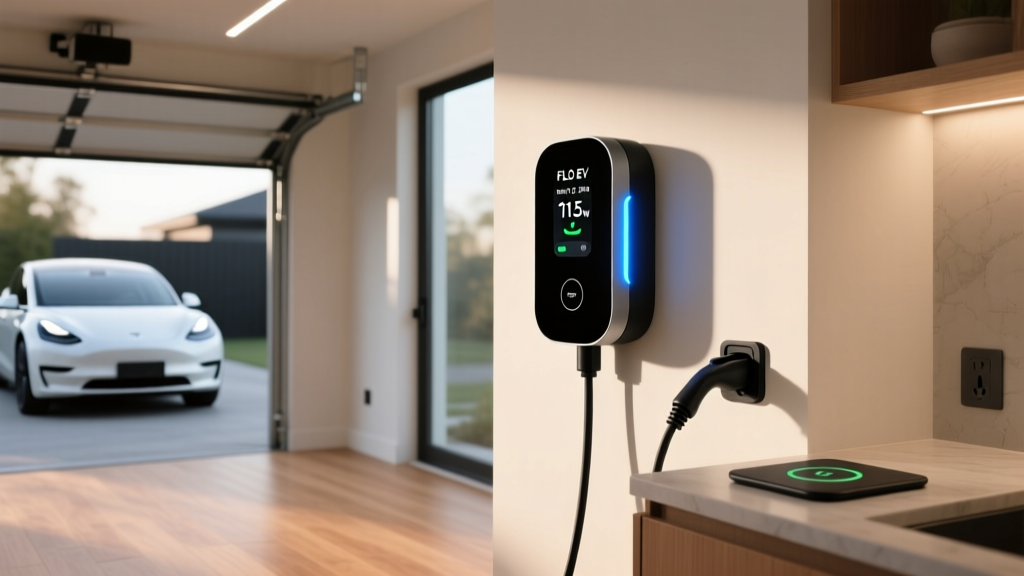
After testing dozens of units, here are three chargers that cover most buyer profiles. All are UL-listed, support NACS or J1772, and include smart scheduling features for off-peak rate optimization.
Emporia Level 2 Smart Charger
- Power Output: 48A / 11.5 kW (240V)
- Connector: J1772 (NACS adapter included)
- Cable Length: 24 feet
- Smart Features: Wi-Fi, energy monitoring, solar integration, time-of-use scheduling, load management
- Rating: NEMA 4 (indoor/outdoor)
- Price: ~$399
Best for: Budget-conscious buyers who want full smart features and energy monitoring without a subscription.
ChargePoint Home Flex (2nd Gen)
- Power Output: Up to 50A / 12 kW (configurable 16A–50A)
- Connector: J1772 or NACS (select at purchase)
- Cable Length: 23 feet
- Smart Features: Wi-Fi, Alexa integration, flexible amperage dial for older panels, scheduling
- Rating: NEMA 4 (indoor/outdoor)
- Price: ~$649
Best for: Homes with limited panel capacity — the adjustable amperage lets you set it to 32A (40A circuit) or 40A (50A circuit) without rewiring.
Tesla Wall Connector
- Power Output: 48A / 11.5 kW (240V)
- Connector: NACS native (J1772 adapter sold separately, ~$95)
- Cable Length: 24 feet
- Smart Features: Wi-Fi, power sharing (daisy-chain up to 6 units for multi-EV garages), OTA updates
- Rating: NEMA 3R (outdoor-rated, not fully sealed)
- Price: ~$475
Best for: Tesla owners and multi-EV households. The power-sharing feature lets two Wall Connectors share a single 60A circuit — no panel upgrade needed for a two-car garage.
Does the Federal Tax Credit Apply to Home Charger Installation?
The IRS §30C Alternative Fuel Vehicle Refueling Property Credit covers 30% of home EV charger equipment and installation costs, up to a maximum credit of $1,000. Key rules for 2026:
- The credit applies to both the EVSE hardware and electrician labor.
- Your home must be located in a qualifying census tract (non-urban or low-income community) — the IRS provides a lookup tool.
- The charger must be new and installed at your primary residence.
- Unlike the §30D vehicle credit, there is no MSRP cap or income cap for §30C, but the census-tract requirement excludes many suburban and urban addresses.
- This is a non-refundable credit — it reduces your tax liability but won't generate a refund beyond zero.
Consult a tax professional to confirm eligibility. Rules around critical-mineral sourcing and census-tract qualification have been updated multiple times since the Inflation Reduction Act's passage.
Public Charging Networks: What to Expect in 2026
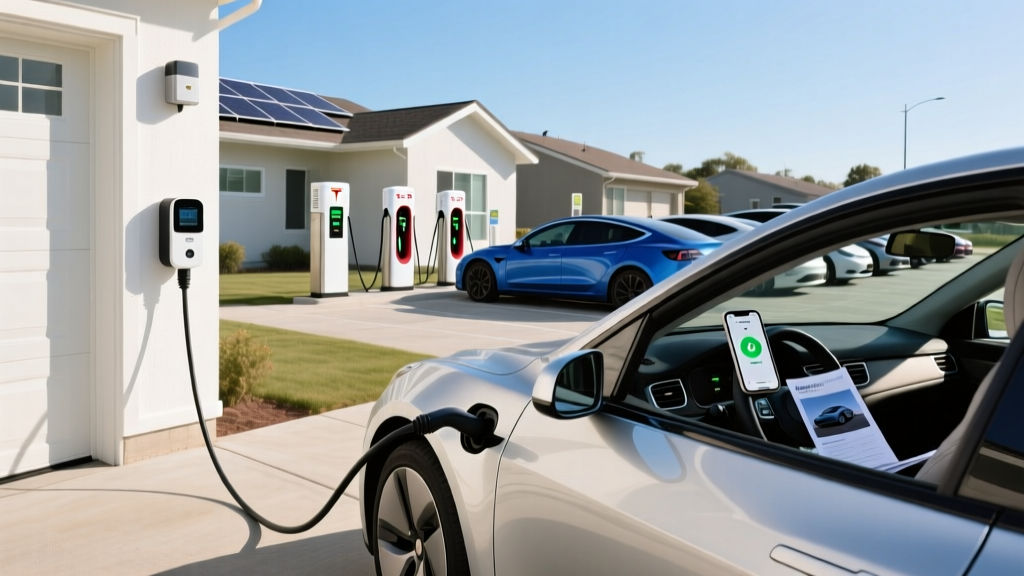
If your Cobalt Supercharged never needed anything beyond the nearest Chevron, the public EV charging landscape will feel fragmented at first. Here are the major networks and their reliability profiles:
- Tesla Supercharger: ~25,000+ stalls in North America. Consistently rated the most reliable network (95%+ uptime). Now open to non-Tesla NACS-equipped vehicles via the Tesla app.
- Electrify America: ~4,500+ stalls. 350 kW chargers at many locations. Reliability has improved since 2024 but still trails Tesla. Plug & Charge works with most brands.
- EVgo: ~3,500+ stalls. Strong in urban centers and shopping malls. Partnership with GM for Ultium Charge network.
- ChargePoint: Primarily Level 2 destination charging (hotels, workplaces, retail). Over 100,000 ports but few DC fast chargers.
For road trips, plan your route using the vehicle's native navigation (which accounts for charge curve, terrain, and battery temperature) or a third-party app like A Better Route Planner. Expect to add 20–40 minutes of charging for every 200–280 miles driven at highway speeds (70–80 mph).
Frequently Asked Questions
Can I charge my EV on a standard 120V outlet like I'd use for a phone?
Yes — this is Level 1 charging at 1.4–1.9 kW, adding 3–5 miles of range per hour. For a 75 kWh battery, a full charge from empty takes 35+ hours. Level 1 works well for plug-in hybrids with small batteries (8–20 kWh) or BEV drivers who travel under 30 miles daily and can charge for 10+ hours overnight. It is not practical as the primary charging method for a long-range BEV.
What electrical upgrades might I need for a Level 2 charger?
The most common upgrade is a new 240V circuit with a dedicated breaker (50A or 60A). If your panel has spare capacity (two open slots and sufficient amperage headroom), the install is straightforward — typically $400–$1,000 in labor plus $350–$700 for the charger. If your panel is full or undersized (100A service), you'll need a panel upgrade to 200A, which costs $1,500–$4,000+. Some jurisdictions require a load-management device (like the Emporia or Span smart panel) as an alternative to a full upgrade.
How fast will each charging level add range?
Level 1 (120V): 3–5 miles per hour. Level 2 (240V, 48A): 25–44 miles per hour depending on vehicle efficiency. DC fast charging: 150–1,200+ miles per hour at peak, but sustained rates taper significantly — a 10–80% session on a typical long-range EV takes 18–40 minutes depending on battery size and peak charge rate.
How much does charging cost per mile vs. gas?
At home with average residential electricity ($0.16/kWh), an EV at 3.5 mi/kWh costs about $0.046 per mile — roughly 66% less than a 25 MPG gas car at $3.40/gallon ($0.136/mile). Off-peak home rates can drop that to $0.026/mile. Public DC fast charging at $0.48/kWh roughly matches gasoline on a per-mile basis.
Which connector/charger is compatible with my EV?
For 2026 model-year vehicles, most new EVs from Ford, GM, Hyundai, Kia, Rivian, Volvo, and Tesla use the NACS (J3400) connector. Older 2024 and earlier non-Tesla EVs typically use CCS1. The Nissan Leaf used CHAdeMO, which is being phased out. For home Level 2 charging, nearly all EVs accept a J1772 plug (or include a J1772-to-NACS adapter). Check your vehicle's charge port or owner's manual before purchasing a home charger.
Is it safe to leave my EV plugged in overnight?
Yes. Modern EVs and UL-listed chargers have multiple safety layers: the vehicle's battery management system (BMS) stops charging at the target SoC, the EVSE monitors ground fault and temperature, and the charger's internal relay disconnects power when not actively charging. Set your charge limit to 80% for daily use (recommended for NMC batteries to prolong lifespan; LFP batteries can be charged to 100% daily without degradation concern). Leaving your EV plugged in also enables battery preconditioning in cold weather, using grid power rather than battery energy to warm the pack.