Introduction to Solar-Integrated EV Charging
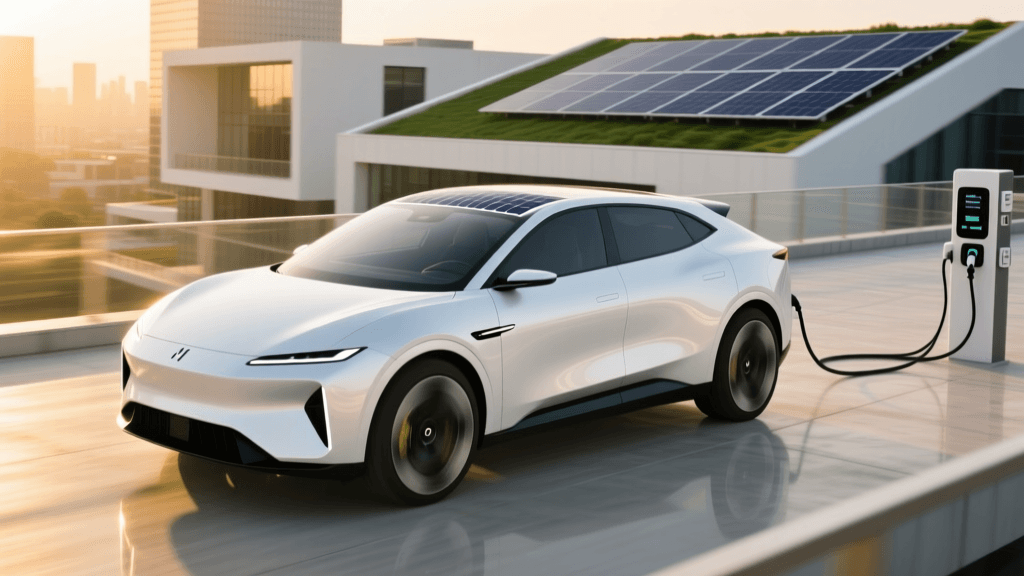
Pairing your home solar panel system with a smart EV charger is one of the most effective ways to reduce your carbon footprint and eliminate fueling costs. Instead of pulling electricity from a fossil-fuel-heavy grid, solar-integrated chargers allow you to fuel your vehicle directly with the photons hitting your roof. According to the Alternative Fuels Data Center, home charging is the most convenient and cost-effective way to power an electric vehicle, and integrating solar can drastically reduce the payback period of both your solar array and your EV.
However, not all EV chargers handle solar integration equally. Some require complex third-party home energy monitors, while others offer native, seamless communication with your solar inverters. In this head-to-head product showdown, we are pitting the Enphase IQ EV Charger against the Wallbox Pulsar Plus with Eco-Smart. Both are top-tier Level 2 chargers, but their approaches to solar diversion, installation requirements, and ecosystem lock-in are vastly different. Let us break down the technical specifications, installation hurdles, and long-term costs to determine which solar EV charger deserves a spot in your garage.
The Contenders: Enphase IQ vs. Wallbox Pulsar Plus
Enphase IQ EV Charger
Enphase Energy is a dominant force in the residential solar market, primarily known for its microinverter technology. The Enphase IQ EV Charger is designed specifically to integrate natively with the Enphase IQ Gateway and the Enphase App. It does not require third-party energy monitors; it simply reads the production and consumption data already being tracked by your Enphase solar system. This makes it a highly attractive option for homeowners who already have, or are planning to install, an Enphase solar ecosystem.
Wallbox Pulsar Plus with Eco-Smart
Wallbox takes a more agnostic approach. The Pulsar Plus is a universally compatible, highly compact Level 2 charger. To unlock its solar charging capabilities, Wallbox offers the 'Eco-Smart' feature, which requires the installation of a Wallbox Power Meter (a current transformer clamp installed in your electrical panel). This setup allows the Pulsar Plus to communicate with your main electrical panel to measure real-time home energy usage and divert excess solar production to your EV, regardless of what brand of solar inverter you own.
Hardware & Solar Integration Capabilities
The core difference between these two units lies in how they define and manage 'excess solar.' The Enphase IQ charger relies on the IQ Gateway to report net grid export. When your solar panels produce more energy than your home is consuming, the Enphase App detects this surplus and ramps up the charging amperage to the EV. You can configure the Enphase App to charge on 'Solar Only' mode, ensuring that the charger will pause entirely if a cloud rolls in and your home starts pulling from the grid.
Wallbox’s Eco-Smart operates similarly but uses the dedicated Power Meter for sub-second latency readings at the panel level. Wallbox offers two distinct solar modes: 'Full-Green' (charges only when surplus solar exceeds the minimum 6-amp EV charging threshold) and 'Eco' (blends grid power with solar power to maintain a steady, user-defined charging speed, supplementing with solar when available). The Environmental Protection Agency (EPA) notes that smart charging features that optimize for renewable energy availability are crucial for maximizing the environmental benefits of EV ownership.
Head-to-Head Comparison Table
| Feature | Enphase IQ EV Charger | Wallbox Pulsar Plus (Eco-Smart) |
|---|---|---|
| Max Output (Amps) | 40A (Hardwired) / 32A (Plug-in) | 48A (Hardwired only) |
| Solar Integration | Native (via IQ Gateway) | Requires Wallbox Power Meter |
| Inverter Compatibility | Enphase Microinverters Only | Universal (Any Solar Brand) |
| Solar Charging Modes | Solar Only, Grid + Solar | Full-Green, Eco (Blended) |
| Wire Gauge Required | 8 AWG Copper (for 40A/50A breaker) | 6 AWG Copper (for 48A/60A breaker) |
| Base Hardware Cost | ~$700 | ~$650 + $150 Power Meter |
| Wi-Fi / Connectivity | Wi-Fi + Power Line Comm. | Wi-Fi + Bluetooth |
Installation Requirements & Electrical Panel Upgrades
Installing a solar-integrated EV charger is not merely about mounting a box on the wall; it requires a thorough evaluation of your home's electrical capacity. The Department of Energy emphasizes that adding significant loads like EV chargers to homes with existing solar arrays requires careful NEC Article 220 load calculations.
Wiring and Breaker Sizing
The Wallbox Pulsar Plus supports up to 48 amps of continuous current. According to the National Electrical Code (NEC) 125% rule for continuous loads, a 48A charger requires a 60-amp double-pole breaker and 6 AWG copper wiring. This provides a maximum power output of 11.5 kW, which is ideal for larger battery packs like the Ford F-150 Lightning or GMC Hummer EV.
The Enphase IQ charger maxes out at 40 amps when hardwired, requiring a 50-amp breaker and 8 AWG copper wiring, delivering 9.6 kW. While slightly slower than the Wallbox, 40 amps is more than sufficient to replenish 30 to 35 miles of range per hour of charging, which easily covers the daily needs of 95% of EV drivers.
The Power Meter vs. Gateway Installation
Where the installations diverge is at the electrical panel. If you choose the Wallbox Eco-Smart route, your electrician must install the Wallbox Power Meter inside your main electrical panel. This involves clipping a Current Transformer (CT) clamp around the main service conductors. This can be tight, dangerous work in older, crowded panels. Conversely, if you already have an Enphase solar system, the IQ Gateway is likely already installed and communicating with your microinverters. The Enphase charger simply pairs to the existing network via Power Line Communication (PLC) or Wi-Fi, making the software integration significantly easier for the installer.
Cost Analysis: Hardware, Installation, and Permits
When budgeting for a solar EV charging setup, you must look beyond the sticker price of the charger. Here is a realistic cost breakdown for a standard residential installation:
- Enphase IQ Setup: The charger retails for roughly $700. If you already have an Enphase solar system and IQ Gateway, there are no additional hardware requirements for solar integration. Installation labor typically ranges from $600 to $1,200, depending on the conduit run length.
- Wallbox Eco-Smart Setup: The Pulsar Plus costs around $650, but you must add the Wallbox Power Meter (approx. $150). Installation labor may be slightly higher ($700 to $1,400) due to the requirement of opening the main panel, installing the CT clamps, and configuring the Power Meter via the installer app.
- Electrical Panel Upgrades: If your home has an older 100-amp electrical service, adding a 60-amp EV circuit and a solar backfeed will likely exceed your panel's capacity. Upgrading to a 200-amp service is a common requirement and can add $1,500 to $3,000 to your total project cost. Both chargers require this upgrade if your load calculation demands it.
- Permits and Inspections: Local municipalities typically charge between $100 and $250 for electrical permits. Note that adding the Wallbox Power Meter or upgrading your main service will trigger a mandatory city inspection to ensure compliance with local codes.
Software, App Experience, and Grid Management
A solar charger is only as smart as the software controlling it. The Enphase App provides a unified dashboard. You can see your solar production, home consumption, battery storage (if you have Enphase IQ batteries), and EV charging status all on one screen. The ability to set schedules based on Time-of-Use (TOU) utility rates is seamless, allowing you to charge from the grid only when rates are negative or at their lowest, and rely purely on solar during peak daylight hours.
The myWallbox app is equally robust but operates as a standalone entity from your solar inverter's app. You will likely find yourself checking two different apps: one to monitor your solar panel health and production, and the myWallbox app to manage your EV charging modes and view your energy diversion graphs. However, Wallbox’s Eco mode is highly praised for its smooth blending algorithm, which prevents the charger from constantly clicking on and off when cloud cover causes rapid fluctuations in solar production.
Which Solar EV Charger Should You Choose?
The decision ultimately comes down to your existing or planned solar infrastructure and your specific EV battery size.
Choose the Enphase IQ EV Charger If:
- You already own an Enphase solar system or are planning to install one.
- You want a single, unified app experience to monitor your entire home energy ecosystem.
- You prefer a slightly simpler electrical panel installation that does not require adding aftermarket CT clamps to your main service lines.
- Your EV battery is under 100 kWh, making the 40A (9.6 kW) charging speed perfectly adequate for overnight replenishment.
Choose the Wallbox Pulsar Plus Eco-Smart If:
- You have a non-Enphase solar system (e.g., SolarEdge, Tesla, SMA, or generic string inverters).
- You own an EV with a massive battery pack and need the 48A (11.5 kW) maximum charge rate to ensure the vehicle is ready by morning.
- You want the flexibility of the 'Eco' blended charging mode, which guarantees a minimum charge rate while still utilizing whatever solar surplus is available.
- You are installing a charger in a multi-unit dwelling or commercial setting where universal compatibility is required.
Conclusion
Integrating your EV charger with your solar array is a massive step toward true energy independence. The Enphase IQ EV Charger is a masterpiece of ecosystem synergy, offering unmatched simplicity and unified software for Enphase solar owners. On the other hand, the Wallbox Pulsar Plus with Eco-Smart is the ultimate universal soldier, bringing high-amperage, intelligent solar diversion to any home, regardless of the inverter brand on the roof. By carefully evaluating your electrical panel capacity, your solar hardware, and your daily driving needs, you can confidently select the charger that will turn your roof into a personal, zero-emission gas station.