The Challenge of EV Charging in Pre-1980s Homes
For homeowners living in houses built before the 1980s, the transition to an electric vehicle (EV) often collides with a harsh electrical reality: inadequate service capacity. Most older homes were constructed with 60-amp or 100-amp main electrical panels. At the time, this was sufficient to power basic lighting, a refrigerator, and perhaps a window AC unit. Today, a standard Level 2 EV charger draws between 32 amps and 48 amps continuously. According to the Alternative Fuels Data Center, assessing your home's electrical capacity is the most critical first step in EV infrastructure planning, as simply plugging a high-draw charger into a maxed-out 100A panel is a recipe for tripped main breakers or, worse, electrical fires.
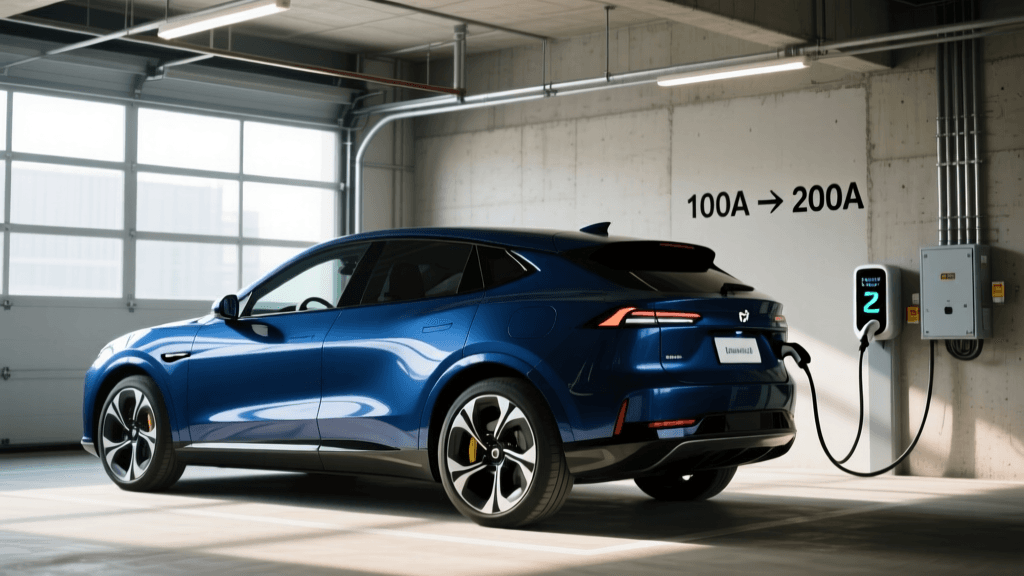
Traditionally, the only solution was a full electrical service upgrade to 200 amps—a disruptive, invasive process that typically costs between $2,500 and $4,500. However, the advent of dynamic EV charger load balancing has revolutionized this space. By intelligently monitoring real-time household energy consumption and throttling the EV charger's amperage on the fly, homeowners can safely charge their vehicles on existing 100A panels without triggering a main breaker trip.
Understanding the NEC 80% Continuous Load Rule
To understand why load balancing is mathematically necessary, we must look at the National Electrical Code (NEC), specifically NFPA 70. The NEC dictates that continuous loads—defined as any electrical draw that lasts for three hours or more—cannot exceed 80% of the circuit or panel's rated capacity. Because EV charging easily exceeds the three-hour threshold, it is classified as a continuous load.
On a 100-amp main panel, the maximum allowable continuous draw is 80 amps. If your home's baseline load (HVAC, electric oven, water heater, dryer) is currently drawing 45 amps while you are cooking dinner and running the AC, you only have 35 amps of continuous headroom remaining. Plugging in a 40-amp EV charger pushes your total continuous draw to 85 amps, violating the 80% rule and risking an immediate main breaker trip. Dynamic load balancing solves this by acting as a digital traffic cop, reducing the EV charger's draw to 35 amps in this scenario, and ramping it back up when the oven turns off.
Dynamic Load Balancing: The Technical Mechanism
Load management systems utilize Current Transformer (CT) clamps installed directly on your main service conductors. These clamps measure the real-time magnetic field generated by the electrical current, translating it into precise amperage data. This data is fed to a central hub or directly to the EV charger via Wi-Fi or hardwired Ethernet. If the total home load approaches the 80% threshold, the system sends a pulse-width modulation (PWM) signal to the EV, instructing it to lower its charging rate instantly.
Data Comparison: Top Load Management Ecosystems
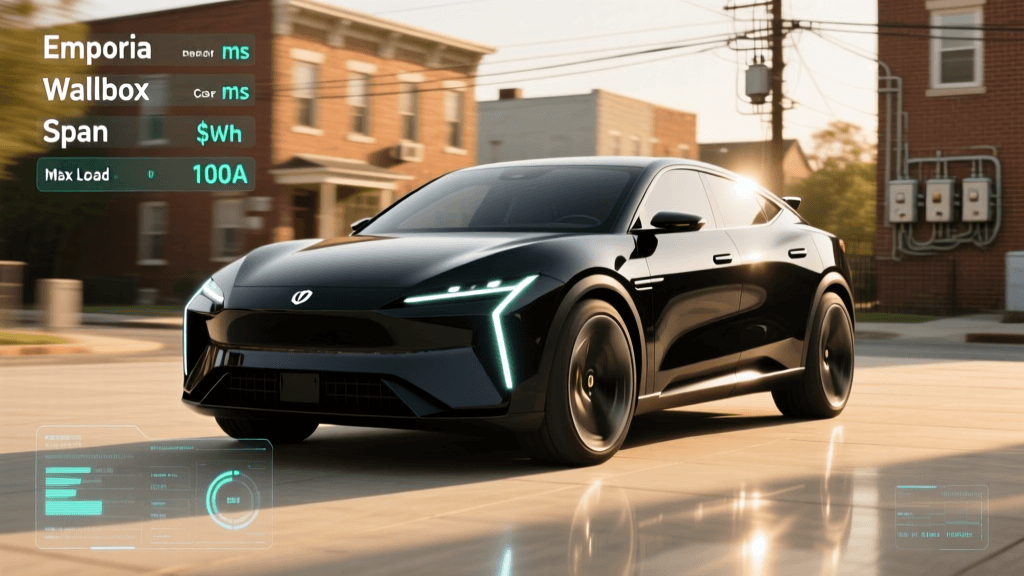
Not all load balancing systems are created equal. Some rely on basic hardware CT clamps, while others utilize advanced software APIs and circuit-level monitoring. Below is a data-driven comparison of the top three ecosystems for older homes.
| Feature | Emporia Vue 2 + Emporia EV Charger | Wallbox Pulsar Plus + Energy Meter | Span Smart Panel |
|---|---|---|---|
| Hardware Cost | ~$750 (Bundle) | ~$850 (Charger + Meter) | ~$3,500 - $5,000 |
| Monitoring Type | Software + Circuit-level CTs | Hardware Main-line CT Clamp | Integrated Circuit-level Sensors |
| Response Time | ~1 to 3 seconds | < 1 second | Instantaneous (Native) |
| Min. Amp Threshold | 6 Amps | 6 Amps | 6 Amps |
| Installation Complexity | Moderate (Requires Vue hub setup) | Low to Moderate | High (Full panel replacement) |
| Best For | Data nerds, solar integration | Reliability, simple 100A panels | Complete home electrification |
1. Emporia Vue 2 with Emporia EV Charger
The Emporia ecosystem is a favorite among data-driven EV owners. The Vue 2 energy monitor installs into your existing panel and places individual CT clamps on up to 16 separate circuits. This provides granular, circuit-level visibility into your home's energy usage. When paired with the Emporia EV Charger, the system uses an API to calculate the exact remaining headroom on your main breaker and adjusts the charging amperage in real-time. According to the U.S. Department of Energy, integrating smart home energy monitors with EV charging can optimize energy use and reduce peak grid strain. The primary drawback is the 1-to-3-second software polling latency, which is generally imperceptible but slightly slower than hardwired hardware relays.
2. Wallbox Pulsar Plus with Energy Meter
Wallbox takes a more traditional, hardware-centric approach. The Wallbox Energy Meter is a physical CT clamp that attaches to your main service wire. It communicates directly with the Pulsar Plus charger via a localized, hardwired RS-485 connection or a dedicated Wi-Fi network. This results in an incredibly fast response time (under one second). If someone turns on the electric dryer, the Wallbox instantly throttles the EV charger down. It is highly reliable, requires no cloud connection to function, and is widely considered the gold standard for straightforward 100A panel load management.
3. Span Smart Panel
Span is not just a load balancer; it is a complete replacement for your traditional breaker box. While it is the most expensive option, it offers unparalleled control. Span features built-in current sensors on every single circuit and allows you to prioritize circuits via a smartphone app. In the event of a grid outage (when paired with a home battery), Span can shed non-essential loads to keep the EV charger or critical appliances running. For older homes that desperately need a panel upgrade anyway, Span kills two birds with one stone, though the high entry cost is a significant barrier.
Cost Analysis: Load Management vs. Service Upgrade
When deciding how to proceed with an EV installation in an older home, the financial data heavily favors load management over traditional service upgrades, provided your existing panel is in good physical condition.
| Scenario | Estimated Cost | Timeline | Invasiveness |
|---|---|---|---|
| 100A Panel + Wallbox Load Balancing | $1,200 - $1,800 | 1 Day | Low (Minor drywall patching) |
| Upgrade to 200A Service | $2,500 - $4,500 | 2 to 6 Weeks | High (Utility coordination, permits) |
| Span Panel Replacement | $4,000 - $6,500 | 1 to 2 Weeks | High (Full panel swap, rewiring) |
As the data illustrates, utilizing a load balancing device like the Wallbox Energy Meter or Emporia Vue saves the homeowner an average of $1,500 to $2,500 and eliminates the weeks-long waiting period associated with municipal permits and utility company service drop upgrades.
Calculating Your Baseline Load
Before purchasing a load management system, you must verify that your 100A panel can support the minimum charging threshold. Most EVs and chargers require a minimum of 6 amps to initiate a charge. If your home's baseline load (refrigerator, HVAC, lighting, water heater) consistently sits at 75 amps, your remaining headroom is only 5 amps (80A max minus 75A baseline). In this extreme scenario, even a load-balanced charger will fail to initiate charging because it cannot reach the 6-amp minimum threshold.
How to calculate your baseline:
- Turn on all major continuous appliances (AC, electric heat, oven).
- Use a clamp meter on your main service conductors (or review your Emporia/Span app data) to measure the peak continuous draw.
- Subtract this number from 80 amps (for a 100A panel).
- If the result is greater than 6 amps, dynamic load balancing will work for your home.
Actionable Installation Advice
If you are proceeding with a load-balanced installation in an older home, follow these critical steps to ensure code compliance and operational safety:
- Inspect the Panel Bus Bar: Load balancing protects the main breaker, but it does not fix physical degradation. Have a licensed electrician inspect your 100A panel for rust, scorch marks, or outdated brands known for failures (e.g., Federal Pacific or Zinsco). If the panel is physically compromised, it must be replaced regardless of load balancing.
- Hardwire the Charger: While NEMA 14-50 receptacles are popular, hardwiring your EV charger is highly recommended for older homes. Receptacles can loosen over time and introduce thermal resistance. Hardwiring eliminates the receptacle, reducing points of failure and often satisfying local inspectors who are wary of high continuous loads on aging wiring.
- Set the DIP Switches Correctly: Your electrician must physically configure the DIP switches inside the EV charger to match the maximum allowable circuit size, ensuring a fail-safe hardware limit exists even if the software load-balancing Wi-Fi connection drops.
- Verify Neutral Sizing: Older homes sometimes have undersized neutral wires. Ensure your electrician verifies that the service neutral is adequately sized to handle the unbalanced loads that may occur when heavy 240V appliances and 120V lighting circuits are used simultaneously.
By leveraging modern dynamic load balancing technology, owners of older homes can bypass the massive expense of electrical service upgrades. Whether you choose the granular data tracking of Emporia, the rapid hardware response of Wallbox, or the total home integration of Span, load management makes Level 2 EV charging safe, code-compliant, and financially viable for virtually any 100-amp household.