What Are EV Charging Robots—and Are They Ready for Your Garage?
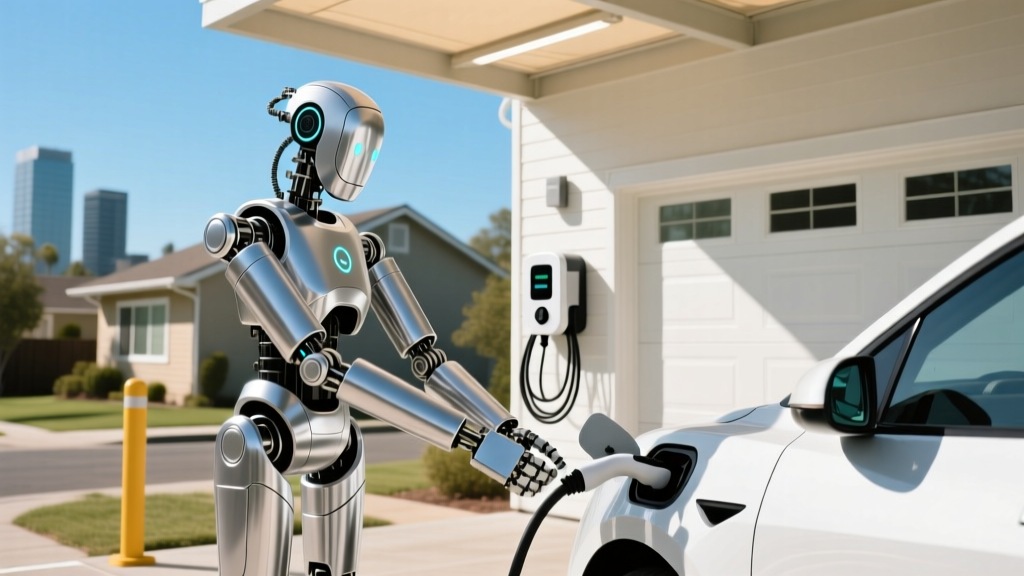
If you've seen videos of a robotic arm gliding out of a wall to plug into a Tesla, you've witnessed the promise of charging robots. Companies like Tesla (with its prototype "snake charger"), Volkswagen's mobile charging robot concept, and startups like ZigZag Energy and EV Safe Charge have all explored autonomous plug-in systems. The idea is seductive: pull into your garage, step out, and let a robot handle the cable.
But as of 2026, charging robots remain largely in the pilot and prototype phase. Most are deployed in controlled fleet environments—autonomous taxi depots, bus yards, and automated parking garages—not consumer driveways. For the vast majority of EV owners, a properly installed Level 2 home charger remains the fastest, most reliable, and most cost-effective way to charge daily.
This guide breaks down exactly what you need to know about home EV charging in 2026: charging speeds, installation costs, electrical requirements, connector compatibility, and how charging robots fit into the broader picture.
Charging Levels Explained: Speeds, Power, and Real-World Range
Understanding EV charging starts with one critical distinction: kW (kilowatts) measures power—the rate at which energy flows into your battery. kWh (kilowatt-hours) measures energy—the total capacity of your battery. Think of kW as the width of a hose and kWh as the size of the bucket.
| Level | Voltage | Max Power (kW) | Miles of Range Added Per Hour | Best For |
|---|---|---|---|---|
| Level 1 | 120V AC | 1.4–1.9 kW | 3–5 mi/hr | Overnight top-ups, PHEVs, low-mileage drivers |
| Level 2 | 240V AC | 7.2–19.2 kW | 20–60 mi/hr | Daily home charging, most EVs |
| DC Fast Charging | 400–800V DC | 50–350 kW | 150–1,000+ mi/hr (peak) | Road trips, rapid top-ups |
Real-world charging time examples (10–80% State of Charge):
- 60 kWh battery (e.g., base Hyundai Kona Electric): ~8.5 hours on a 7.2 kW Level 2 charger; ~22 minutes on a 150 kW DC fast charger (peak rate, before taper).
- 82 kWh battery (e.g., Ford Mustang Mach-E Extended Range): ~11 hours on 7.2 kW Level 2; ~25 minutes on a 150 kW DCFC.
- 100 kWh battery (e.g., Tesla Model S, Rivian R1T Max Pack): ~13.5 hours on 7.2 kW Level 2; ~28 minutes on a 250 kW DCFC.
Note: DC fast charging slows significantly above 80% SoC to protect battery health. That last 20% can take as long as the first 70%. Always plan road-trip stops around the 10–80% window.
How Much Does It Cost to Install a Home EV Charger?
A Level 2 home charger installation is not a single line item—it's a combination of equipment, electrical labor, permitting, and potentially a panel upgrade. Here's a realistic 2026 breakdown based on national averages and electrician surveys:
| Component | Low Estimate | High Estimate | Notes |
|---|---|---|---|
| Level 2 Charger (Equipment) | $350 | $750 | 32A–48A smart chargers; Wi-Fi enabled |
| Electrician Labor | $500 | $2,000 | Depends on run length, conduit, wall type |
| Electrical Permit | $50 | $250 | Varies by municipality |
| Panel Upgrade (if needed) | $1,500 | $4,000 | 100A → 200A service upgrade for older homes |
| Total (No Panel Upgrade) | $900 | $3,000 | Most homes with 200A service |
| Total (With Panel Upgrade) | $2,400 | $7,000 | Homes with 100A or maxed-out panels |
Electrical requirements for a typical 48A Level 2 charger:
- Voltage: 240V (NEMA 14-50 outlet or hardwired)
- Amperage: 48A continuous draw requires a 60A dedicated circuit (NEC code requires circuits rated at 125% of continuous load)
- Wire gauge: 6 AWG copper (or 4 AWG aluminum) for a 60A circuit
- GFCI protection: Required by NEC 2020/2023 for outlets; hardwired units may not require a GFCI breaker depending on local code
- Outdoor rating: If mounted outside, the charger must carry a NEMA 4 (weatherproof) rating
Panel upgrade reality check: Homes built before the 1990s often have 100A electrical service. Adding a 60A EV circuit to a 100A panel that's already running central AC, an electric dryer, and an electric range will likely overload it. A licensed electrician will perform a load calculation to determine if your panel has headroom. If not, a 200A upgrade is necessary—and that's where costs climb. Some utilities offer rebates of $500–$1,500 for panel upgrades tied to EV adoption; check with your local provider.
Which Connector Does Your EV Use? NACS, CCS, and CHAdeMO in 2026
The connector landscape has consolidated dramatically since Ford, GM, Rivian, and most major automakers adopted the North American Charging Standard (NACS), originally developed by Tesla. Here's where things stand for 2026 model-year vehicles:
| Connector | Brands Using It (Native) | Adapter Needed For |
|---|---|---|
| NACS (Tesla) | Tesla (all), Ford, GM, Rivian, Volvo, Polestar, Mercedes (2025+), Honda (2026+) | CCS public chargers → NACS-to-CCS adapter ($200–$300) |
| CCS1 | Hyundai, Kia, BMW, VW, Stellantis (some), legacy models | Tesla Superchargers → CCS-to-NACS adapter (included with some models) |
| CHAdeMO | Nissan Leaf (legacy only, discontinued for 2026) | Limited public infrastructure; CHAdeMO-to-CCS adapters rare and expensive |
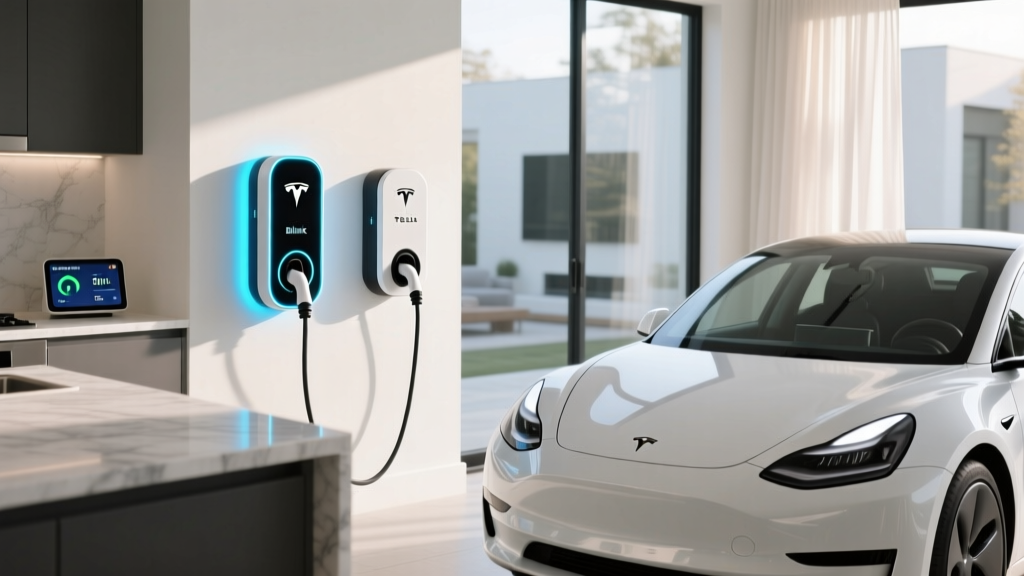
For home Level 2 charging: Nearly all home chargers ship with a J1772 connector (the Level 2 standard). Tesla vehicles include a J1772-to-NACS adapter in the glovebox. Non-Tesla NACS-equipped vehicles (2025+ Fords, GMs, etc.) will also include one. If your home charger has a NACS plug natively (like the Tesla Wall Connector), non-Tesla EVs with J1772 inlets will need the reverse adapter.
How Much Does Charging Cost Per Mile vs. Gas?
One of the strongest arguments for home charging is economics. Electricity prices vary by region, but the math almost always favors electrons over gasoline:
| Scenario | Rate | Vehicle Efficiency | Cost Per Mile |
|---|---|---|---|
| Home charging (national avg) | $0.16/kWh | 3.0 mi/kWh (100 MPGe avg) | $0.053/mi |
| Home charging (off-peak TOU rate) | $0.09/kWh | 3.0 mi/kWh | $0.030/mi |
| Public Level 2 (network avg) | $0.35/kWh | 3.0 mi/kWh | $0.117/mi |
| DC Fast Charging ( Electrify America, EVgo) | $0.48/kWh | 3.0 mi/kWh | $0.160/mi |
| Gasoline (30 MPG vehicle) | $3.40/gal | 30 MPG | $0.113/mi |
| Gasoline (22 MPG truck/SUV) | $3.40/gal | 22 MPG | $0.155/mi |
The takeaway: Home charging—even at standard residential rates—costs roughly half what gasoline does per mile. Off-peak time-of-use (TOU) rates offered by many utilities can slash that to a third. Public DC fast charging, however, can equal or exceed the cost of gasoline per mile. This is why home charging infrastructure is the economic backbone of EV ownership. Source: fueleconomy.gov efficiency data and EIA electricity pricing.
Where Charging Robots Fit: Current Deployments and Limitations
So where do charging robots stand in 2026? Here's the honest picture:
- VW Mobile Charging Robot: Demonstrated in controlled parking structures; uses a mobile battery cart that drives to your parked EV. Remains a pilot project, not commercially available to consumers.
- Tesla's Autonomous Charging Arm: Prototyped but never shipped. Tesla has instead focused on expanding the Supercharger network and NACS adoption.
- ZigZag Energy / EV Safe Charge (Ziggy): A wheeled battery robot that can be deployed in parking garages where fixed charger installation is impractical. Currently in limited commercial deployments (airport parking, event venues) with per-session pricing.
- Fleet/Robotaxi depots: Companies like Waymo and Motional are testing automated plug-in systems at their maintenance depots, where vehicles return autonomously and need hands-free charging. This is the most viable near-term use case.
Recommended Home Level 2 Chargers for 2026
Based on real-world testing, reliability data, and feature sets, these are the top home chargers for 2026:
Emporia Level 2 Smart Charger
- Power: 48A (11.5 kW at 240V)
- Connector: J1772 (NACS adapter available)
- Cable length: 24 ft
- Smart features: Wi-Fi, app scheduling, solar integration, TOU optimization, energy monitoring
- Price: ~$399
- Best for: Budget-conscious buyers wanting full smart features
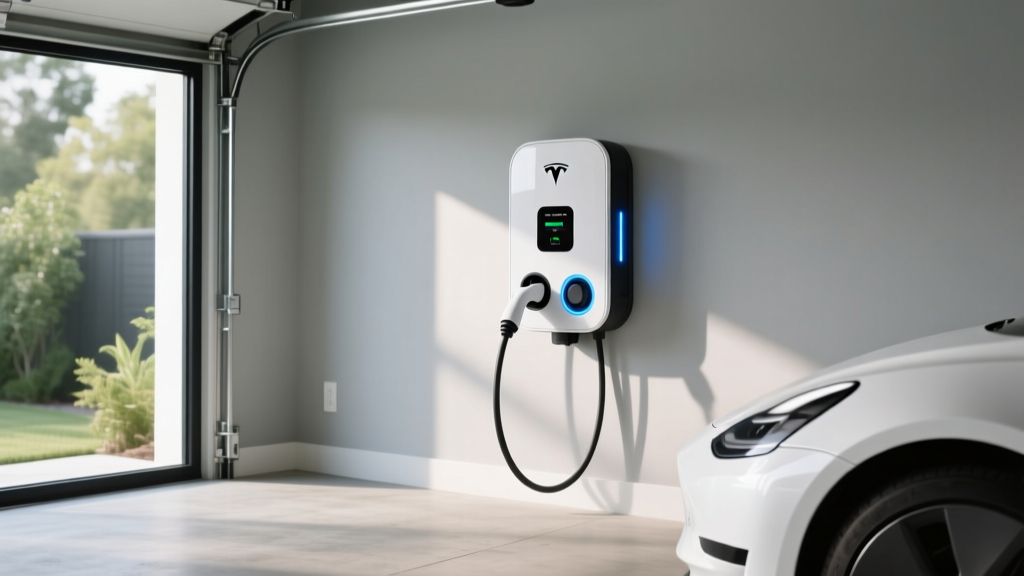
Tesla Wall Connector (Gen 4)
- Power: 48A (11.5 kW at 240V)
- Connector: NACS native (J1772 adapter included)
- Cable length: 24 ft
- Smart features: Wi-Fi, OTA updates, load sharing (pair two units on one circuit), power sharing
- Price: ~$475
- Best for: Tesla and NACS-equipped vehicle owners
ChargePoint Home Flex
- Power: Configurable 16A–50A (up to 12 kW)
- Connector: J1772 (NACS version available)
- Cable length: 23 ft
- Smart features: Wi-Fi, app scheduling, Alexa integration, detailed energy reports
- Price: ~$599
- Best for: Flexible amperage for older panels (can dial down to 32A/40A circuit)
Grizzl-E Smart
- Power: 40A (9.6 kW at 240V)
- Connector: J1772
- Cable length: 24 ft
- Smart features: Wi-Fi, OCPP-compatible, adjustable amperage, built in Canada
- Price: ~$449
- Best for: Cold-climate durability (rated to -40°F), simple reliability
Safety, Code, and Installation Best Practices
EV chargers draw significant continuous current—more than most household appliances. Cutting corners on installation is a fire risk. Here's what code and best practices require:
- Dedicated circuit: Your EV charger must have its own dedicated breaker. Sharing a circuit with other appliances is a code violation and a safety hazard.
- GFCI protection: The NEC (National Electrical Code) requires GFCI protection for 240V receptacles used for EV charging. Hardwired installations may be exempt depending on your jurisdiction—ask your electrician.
- NEMA 4 rating for outdoor installs: If your charger is exposed to weather, it must be rated for outdoor use. Most major chargers carry this rating, but verify before purchase.
- Permit and inspection: Nearly all jurisdictions require an electrical permit for a new 240V circuit. The inspection ensures the work meets code. Skipping this can void your homeowner's insurance in the event of an electrical fire.
- Load management systems: If your panel is near capacity but you want to avoid a full upgrade, devices like the Emporia Smart Load Center or Sense Energy Monitor can dynamically limit charger draw based on real-time household load. Some utilities approve these as alternatives to panel upgrades.
Frequently Asked Questions
How much does it cost to install a home EV charger?
Expect $900–$3,000 for a standard installation on an existing 200A panel (equipment, electrician, and permit). If your home needs a panel upgrade from 100A to 200A service, total costs can reach $2,400–$7,000. Always get a load calculation from a licensed electrician before committing.
How fast will each charging level add range?
Level 1 (120V) adds 3–5 miles per hour. Level 2 (240V, 48A) adds 30–45 miles per hour for most EVs. DC fast charging can add 150–300+ miles in 20–30 minutes, but only up to ~80% SoC before the charge curve tapers to protect the battery.
Which connector/charger is compatible with my EV?
For 2026 models: Tesla, Ford, GM, Rivian, Volvo, Polestar, and most new Honda/Mercedes models use NACS. Hyundai, Kia, BMW, and VW still use CCS1. For home Level 2 charging, all EVs can use a J1772 charger with the included adapter. Check your vehicle's charge port or owner's manual to confirm.
How much does charging cost per mile vs. gas?
Home charging at the national average electricity rate ($0.16/kWh) costs about $0.05/mile—roughly half the $0.11/mile cost of a 30 MPG gas vehicle at $3.40/gallon. Off-peak TOU rates can bring EV fueling down to $0.03/mile. Public DC fast charging at $0.48/kWh costs ~$0.16/mile, comparable to a less-efficient gas vehicle.
What electrical upgrades might I need?
Homes with 100A electrical service or panels already near capacity will likely need a 200A service upgrade ($1,500–$4,000). Some homes may also need a new conduit run from the panel to the garage (adding $300–$800 if the panel is far from the charge point). A licensed electrician's load calculation will determine your exact needs. Check IRS §30D for potential credits on home charging equipment, and consult your utility for local rebates.