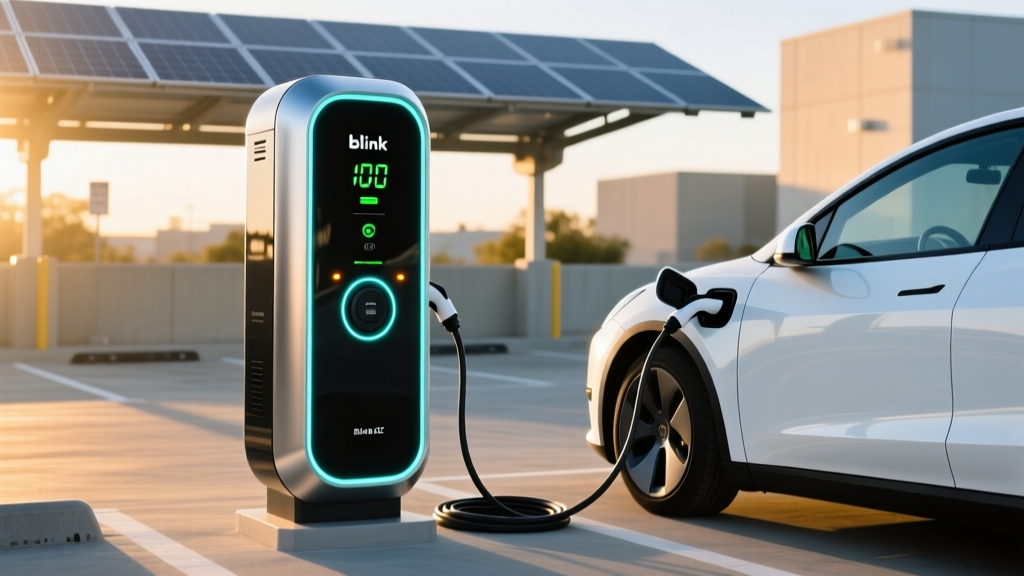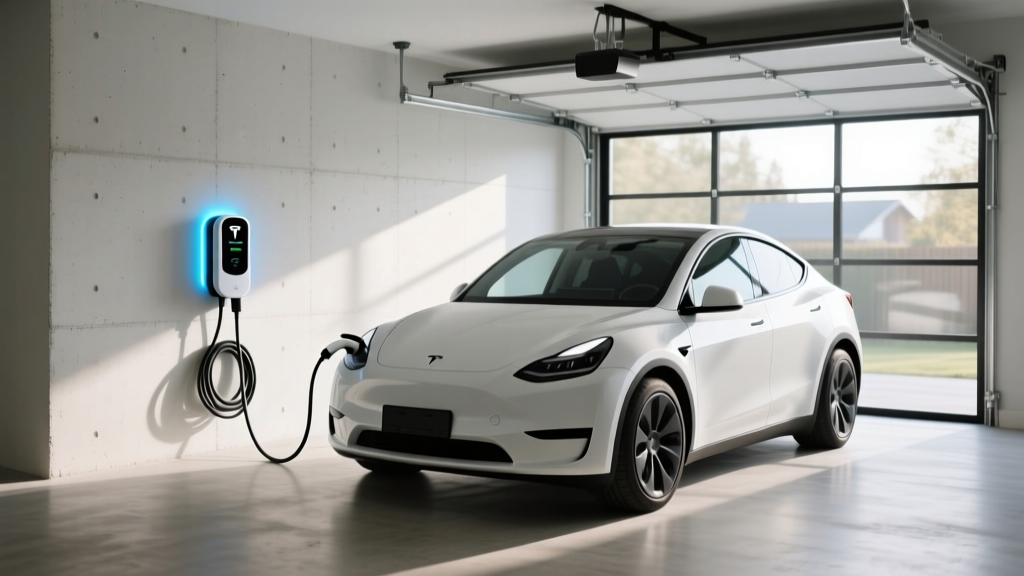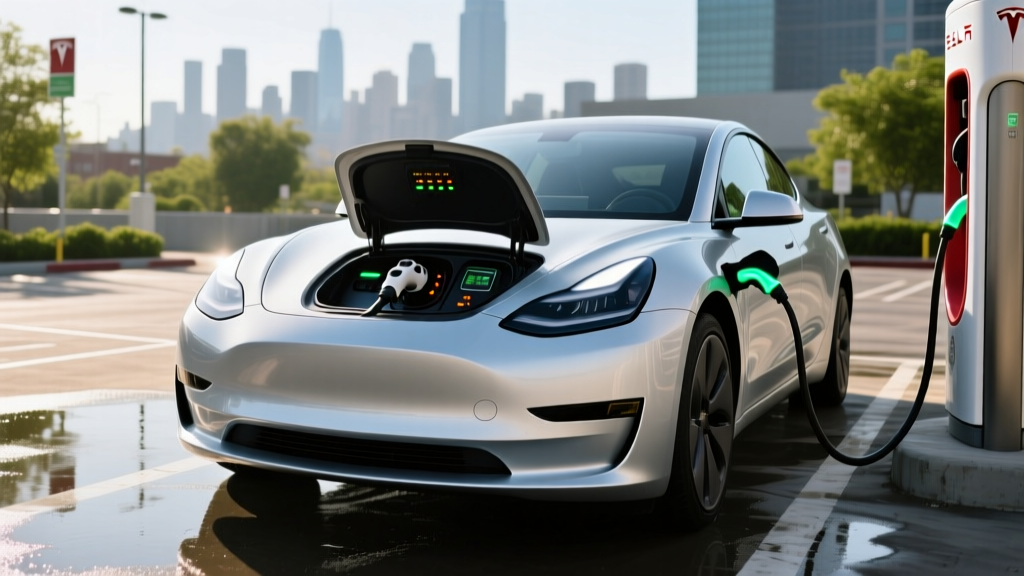
If you own a Tesla—or any EV with the newer NACS connector—you've likely encountered the Blink charging network at shopping centers, workplaces, and parking garages across the country. Blink operates one of the largest public charging networks in the U.S., while Tesla's Supercharger network remains the gold standard for reliability and speed. Understanding how these two ecosystems interact, what you need at home, and what charging actually costs per mile is essential for any EV owner in 2026.
This guide covers the full picture: Blink and Tesla public charging compatibility, home Level 2 installation requirements and costs, connector standards, and real-world charging economics backed by exact figures.
Charging Levels Explained: Speeds in kW and Miles Per Hour
Before comparing networks, you need to understand the three charging levels and what they deliver. The critical distinction: kW (kilowatts) measures power—the rate at which energy flows into your battery. kWh (kilowatt-hours) measures energy—the total capacity of your battery. Think of kW as the width of a pipe and kWh as the size of the tank it fills.
| Level | Voltage | Power (kW) | Miles Added/Hour | Typical Use Case |
|---|---|---|---|---|
| Level 1 | 120V AC | 1.2–1.9 kW | 3–5 mi/hr | Overnight trickle, emergency top-up |
| Level 2 | 240V AC | 3.3–19.2 kW | 12–75 mi/hr | Home daily charging, workplace, Blink Level 2 stations |
| DC Fast Charging | 400–800V DC | 50–350 kW | 150–1,000+ mi/hr (peak) | Road trips, Tesla Superchargers, Blink DC fast stations |
Real-world note: Those "miles per hour" figures assume a vehicle averaging 3–4 mi/kWh (like a Tesla Model Y or Hyundai Ioniq 5). Less efficient vehicles like the Ford F-150 Lightning (2.0–2.5 mi/kWh) will see fewer miles added per hour at the same kW rate. DC fast charging speeds also peak early in the session and taper significantly above 80% State of Charge (SoC) to protect battery health—expect a 10–80% charge to take 18–40 minutes depending on vehicle architecture and battery chemistry.
Blink Charging Network: What Tesla Owners Need to Know
Blink operates over 75,000 charging ports across North America, predominantly Level 2 stations at retail locations, parking structures, and workplaces. In 2025–2026, Blink expanded its DC fast charging footprint and added NACS (North American Charging Standard) connectors to new installations following Tesla's connector opening to the broader industry.
For Tesla owners: Tesla vehicles use the NACS connector natively. Newer Blink DC fast chargers equipped with NACS cables can charge Tesla vehicles directly—no adapter required. However, many existing Blink Level 2 stations still use J1772 connectors, which means you'll need Tesla's J1772-to-NACS adapter (included with most Tesla vehicles, or available separately for ~$45–$65) to use them.
For non-Tesla NACS vehicles: Starting with 2025–2026 model years, Ford, GM, Rivian, Volvo, and several other automakers switched to the NACS charge port. These vehicles can use both Tesla Superchargers (with an adapter where needed) and Blink NACS-equipped stations.
| Connector Type | Vehicles Using It (2026) | Blink Compatibility | Adapter Needed? |
|---|---|---|---|
| NACS (Tesla) | Tesla (all), Ford, GM, Rivian, Volvo, Polestar, others | Newer Blink DC stations | No (at NACS-equipped Blink stations) |
| J1772 (Level 2) | All EVs for AC charging (with adapter for NACS vehicles) | Most Blink Level 2 stations | Yes for NACS vehicles (J1772 adapter) |
| CCS1 | Hyundai, Kia, BMW, VW, most pre-2025 non-Tesla EVs | Blink DC fast stations | CCS-to-NACS adapter for Tesla (~$200–$250) |
| CHAdeMO | Nissan Leaf (legacy), Mitsubishi Outlander PHEV | Limited Blink stations | Not compatible with Tesla/NACS |
Home Level 2 Charger Installation: Requirements and Costs
Most EV owners do 80–90% of their charging at home on a Level 2 charger. Here's exactly what's involved electrically and financially.
Electrical Requirements
A Level 2 home charger requires a dedicated 240V circuit—identical to what powers an electric dryer or oven. Common configurations:
- 40-amp circuit: Delivers up to 32A continuous (9.6 kW) — sufficient for most EVs overnight
- 50-amp circuit: Delivers up to 40A continuous (9.6–11.5 kW) — recommended for larger batteries (100+ kWh)
- 60-amp circuit: Delivers up to 48A continuous (11.5 kW) — maximum for most residential chargers
Panel upgrade reality: If your home has a 100-amp electrical panel (common in homes built before 1990), adding a 40–60A dedicated circuit may max out your panel's capacity. A panel upgrade to 200A typically costs $1,500–$3,500 before the charger installation even begins. Homes with 200A panels usually have sufficient headroom.
Installation Cost Breakdown
| Component | Low End | High End | Notes |
|---|---|---|---|
| Level 2 Charger (Equipment) | $250 | $700 | Varies by brand, power, smart features |
| Electrician Labor | $400 | $1,500 | Depends on panel distance, wall type, conduit run |
| Electrical Permit | $50 | $250 | Required in most jurisdictions |
| Panel Upgrade (if needed) | $1,500 | $3,500 | 100A to 200A upgrade |
| Total (no panel upgrade) | $700 | $2,450 | Most homes with 200A panels |
| Total (with panel upgrade) | $2,200 | $5,950 | Older homes needing 200A service |
Federal incentive: The IRS Alternative Fuel Vehicle Refueling Property Credit (Section 30C) covers up to 30% of home charger equipment and installation costs, capped at $1,000. Eligibility depends on census tract requirements and applies to both the charger and electrician labor. Confirm current-year eligibility with a tax professional.
What Charging Costs Per Mile: Home vs. Public vs. Gas
The economics of EV charging vary dramatically depending on where and when you plug in. Here are real-world scenarios based on 2026 national averages:
| Charging Scenario | $/kWh | Cost Per Mile* | Annual Cost (12,000 mi) |
|---|---|---|---|
| Home (off-peak utility rate) | $0.08–$0.14 | $0.025–$0.045 | $300–$540 |
| Home (standard residential rate) | $0.14–$0.20 | $0.045–$0.065 | $540–$780 |
| Blink Level 2 (public) | $0.39–$0.59 | $0.11–$0.17 | $1,320–$2,040 |
| Blink DC Fast Charging | $0.49–$0.69 | $0.14–$0.20 | $1,680–$2,400 |
| Tesla Supercharger (2026 avg) | $0.28–$0.42 | $0.08–$0.12 | $960–$1,440 |
| Gas Vehicle (28 MPG avg, $3.40/gal) | — | $0.12 | $1,440 |
*Based on a vehicle averaging 3.5 mi/kWh (e.g., Tesla Model Y, Hyundai Ioniq 5). Larger EVs like the Rivian R1T average ~2.5 mi/kWh and will cost proportionally more per mile.
The takeaway: Home charging on off-peak rates delivers fuel costs roughly one-third to one-quarter of gasoline. Public DC fast charging—including Blink and Tesla Superchargers—narrows that advantage considerably, especially in states with high electricity rates. If you rely exclusively on public charging, your per-mile fuel cost approaches or exceeds that of an efficient gas car.
Charging Time Examples: 10–80% for Common EVs
Charging speed depends on three factors: the charger's maximum kW output, the vehicle's maximum charge acceptance rate, and the battery's charge curve (which tapers above 50–60% SoC to protect cells). Here are real-world 10–80% estimates at various charger types:
| Vehicle (Battery kWh) | Level 2 Home (11.5 kW) | Blink DC Fast (100 kW) | Tesla Supercharger V3 (250 kW) |
|---|---|---|---|
| Tesla Model 3 (75 kWh usable) | ~5.5 hours | ~42 minutes | ~25 minutes |
| Tesla Model Y (75 kWh usable) | ~5.5 hours | ~42 minutes | ~25 minutes |
| Ford F-150 Lightning (131 kWh usable) | ~8 hours | ~75 minutes | ~41 minutes (via NACS adapter) |
| Hyundai Ioniq 5 (77.4 kWh usable) | ~5.5 hours | ~43 minutes | ~18 minutes (800V architecture) |
Charge curve reality: A Tesla Model Y at a 250 kW Supercharger doesn't sustain 250 kW for the entire session. It peaks near 250 kW at low SoC (10–20%), then tapers to ~150 kW by 40%, ~80 kW by 60%, and ~40 kW by 80%. The "10–80% in 25 minutes" figure accounts for this taper. Charging from 80–100% can take nearly as long as 10–80% due to aggressive tapering—plan your road trips to charge to 80% and drive on.
Recommended Home Chargers for Tesla and NACS Vehicles
Whether you drive a Tesla or another NACS-equipped EV, these Level 2 home chargers are top picks for 2026, selected for reliability, power output, smart features, and value:
Tesla Wall Connector (Gen 4)
- Power: Up to 48A / 11.5 kW (on 60A circuit)
- Connector: NACS native
- Cable length: 24 feet
- Smart features: Wi-Fi, OTA updates, power sharing (link multiple units), Tesla app integration
- Price: ~$475
- Best for: Tesla owners wanting seamless ecosystem integration
Blink HQ 200
- Power: Up to 48A / 11.5 kW (on 60A circuit)
- Connector: J1772 (use included Tesla adapter) or NACS version available
- Cable length: 25 feet
- Smart features: Blink app, scheduling, energy monitoring, RFID access control
- Price: ~$549
- Best for: Multi-EV households (J1772 charges non-Tesla vehicles natively)
ChargePoint Home Flex
- Power: Up to 50A / 12 kW (on 60A circuit, adjustable down)
- Connector: J1772 (NACS adapter available) or NACS version
- Cable length: 23 feet
- Smart features: ChargePoint app, Alexa/Google integration, detailed energy reports, scheduled charging
- Price: ~$599–$649
- Best for: Smart-home integration and adjustable amperage for older panels
Emporia Vue Level 2 Charger
- Power: Up to 48A / 11.5 kW (on 60A circuit)
- Connector: J1772 or NACS
- Cable length: 24 feet
- Smart features: Emporia app, whole-home energy monitoring integration, solar-aware charging, V2H capable
- Price: ~$399
- Best for: Budget-conscious buyers with solar panels or energy monitoring needs
Key buying advice: Match the charger's maximum amperage to your vehicle's onboard charger limit. Most Teslas accept up to 48A AC (11.5 kW). The Hyundai Ioniq 5 accepts only 10.9 kW AC. Buying a 48A charger for a vehicle that accepts 32A wastes money—verify your vehicle's onboard charger spec before purchasing.
Safety and Code Considerations for Home Installation
EV charging draws sustained high current for hours—far longer than most household appliances. Proper installation isn't optional; it's a fire-safety requirement.
- Dedicated circuit: Your Level 2 charger must be on its own dedicated breaker—never shared with other appliances. The National Electrical Code (NEC) requires the circuit to be rated 125% above the charger's continuous draw (e.g., a 40A charger needs a 50A breaker).
- GFCI protection: NEC 2020 and later requires Ground Fault Circuit Interrupter (GFCI) protection for outdoor EV outlets. Many modern chargers include built-in GFCI; if yours doesn't and you're installing outdoors, your electrician will add a GFCI breaker (~$50–$100 extra).
- Outdoor rating: If your charger is mounted outside or in an unsealed garage, ensure it carries a NEMA 4 or IP55 (or higher) weather-resistance rating. All chargers listed above meet outdoor installation requirements.
- Hardwired vs. plug: Chargers rated above 40A typically require hardwired installation (no plug). Chargers at 40A or below can use a NEMA 14-50 outlet, which offers flexibility to unplug and take the charger when moving. Hardwired installations are more reliable and avoid the ~$50–$100 cost of a quality 14-50 receptacle.
- Permit and inspection: Most jurisdictions require an electrical permit ($50–$250) and a post-installation inspection. This protects you legally, ensures code compliance, and is typically required to claim the federal 30C tax credit.
Frequently Asked Questions
Can I charge my Tesla at a Blink station?
Yes, with a caveat. At Blink Level 2 stations (J1772 connector), you'll need the J1772-to-NACS adapter that comes with most Tesla vehicles. At newer Blink DC fast chargers equipped with NACS cables, you can plug in directly. Use the Blink app or your vehicle's built-in navigation to check connector availability at specific stations before driving there.
How much does it cost to install a home EV charger?
Expect $700–$2,450 for a standard Level 2 installation in a home with a 200A electrical panel. This includes the charger ($250–$700), electrician labor ($400–$1,500), and permit ($50–$250). If your home has an older 100A panel requiring an upgrade to 200A, total costs range from $2,200–$5,950. The federal Section 30C tax credit can offset up to $1,000 (30% of costs).
Is Tesla Supercharger cheaper than Blink DC fast charging?
Generally, yes. In 2026, Tesla Supercharger rates average $0.28–$0.42/kWh nationally, while Blink DC fast chargers typically price at $0.49–$0.69/kWh. For a Tesla Model Y charging from 10–80% (~56 kWh), that's roughly $16–$24 at a Supercharger versus $27–$39 at a Blink DC station. Tesla also offers off-peak pricing at select locations for additional savings.
How fast will each charging level add range to my Tesla?
For a Tesla Model Y (averaging ~3.5 mi/kWh): Level 1 (120V) adds roughly 3–4 miles per hour. Level 2 at home (11.5 kW) adds approximately 35–40 miles per hour—enough to fully replenish overnight. DC fast charging at a Tesla Supercharger V3 (250 kW) can add up to 200 miles in 15 minutes at peak rate, though the charge curve tapers significantly above 50% SoC.
What electrical upgrades might I need for a home charger?
The most common upgrade is a panel capacity increase from 100A to 200A ($1,500–$3,500) in older homes. You may also need a new dedicated circuit run from the panel to the garage ($400–$1,500 depending on distance and conduit requirements). Homes with modern 200A panels and nearby garage walls typically need only the circuit, breaker, and charger mount—no major upgrades.
Does Blink charge idle fees like Tesla Superchargers?
Yes. Blink imposes idle fees at select high-demand locations, typically $0.25–$0.50 per minute after a grace period (usually 10 minutes post-charge). Tesla's idle fees are $0.50–$1.00 per minute depending on station occupancy. Always move your vehicle promptly after charging completes.
Can I use a Blink charger with a non-Tesla EV that has a CCS port?
Most Blink DC fast chargers include CCS1 connectors, making them compatible with Hyundai, Kia, BMW, Volkswagen, and most pre-2025 non-Tesla EVs directly. For Level 2 Blink stations (J1772), all non-Tesla EVs can plug in natively since J1772 is the universal AC charging standard. CHAdeMO vehicles (Nissan Leaf) have limited Blink compatibility.