Why Weatherproofing Your Outdoor EV Charger Matters
Installing an Electric Vehicle Supply Equipment (EVSE) unit outdoors introduces a unique set of environmental challenges that indoor installations simply do not face. From driving rain and ultraviolet radiation to freezing temperatures and corrosive coastal salt air, an outdoor EV charger must be meticulously protected to ensure longevity, safety, and consistent performance. According to the U.S. Department of Energy Home Charging Installation Guide, proper siting and weatherproofing are critical steps in residential EV infrastructure deployment. Failure to adequately weatherproof your Level 2 charger can lead to catastrophic ground faults, degraded charging cables, and voided manufacturer warranties. This guide outlines the expert best practices for weatherproofing outdoor EV charger installations, ensuring your setup remains safe and operational year-round.
Understanding NEMA Enclosure Ratings for EVSE
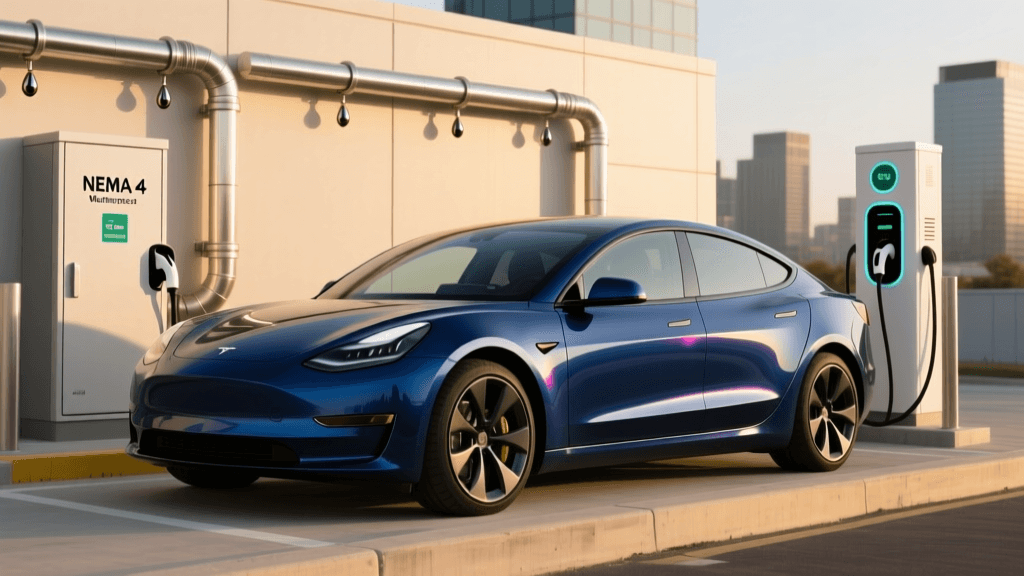
The first line of defense for any outdoor electrical equipment is its enclosure rating. The National Electrical Manufacturers Association defines specific standards for how well an enclosure protects internal components from environmental hazards. When selecting an outdoor EV charger, such as the ChargePoint Home Flex or the Tesla Wall Connector, you must verify that the unit is rated for wet locations. While many manufacturers advertise their units as outdoor-ready, understanding the specific NEMA rating is crucial for matching the charger to your local climate.
| NEMA Rating | Protection Level | Best Use Case |
|---|---|---|
| NEMA 3R | Protects against falling dirt, rain, sleet, snow, and external ice formation. | Standard residential outdoor installations in mild to moderate climates. |
| NEMA 4 | Protects against windblown dust, rain, splashing water, and hose-directed water. | Commercial setups, car washes, or homes requiring frequent pressure washing nearby. |
| NEMA 4X | Same as NEMA 4, but constructed from corrosion-resistant materials like stainless steel or fiberglass. | Coastal regions with salt air, or industrial environments with chemical exposure. |
For a comprehensive breakdown of these standards, electricians and installers should consult the National Electrical Manufacturers Association (NEMA) Enclosure Types guidelines. Most premium residential EV chargers meet NEMA 3R or NEMA 4 standards, which is sufficient for the vast majority of home driveways.
Conduit Selection and UV Resistance
Running wire from your main electrical panel to the outdoor EVSE requires conduit that can withstand prolonged sun exposure and physical impact. Not all conduits are created equal when it comes to weatherproofing.
Schedule 80 PVC vs. Schedule 40 PVC
While Schedule 40 gray electrical PVC is commonly used for outdoor runs, Schedule 80 PVC is the expert recommendation for areas where the conduit might be subject to physical damage, such as low on a wall near a driveway where a vehicle could accidentally clip it. Both gray electrical PVC formulations contain UV inhibitors, but you must never use white plumbing PVC for electrical runs, as it will rapidly degrade, become brittle, and shatter under direct sunlight.
Liquidtight Flexible Metal Conduit (LFMC)
When transitioning from a rigid wall mount to the EVSE chassis, or navigating tight corners, Liquidtight Flexible Metal Conduit is the industry standard. However, the outer plastic jacket of LFMC must be specifically rated for sunlight resistance. Look for conduit printed with the designation Sun Res or UV Res. Standard LFMC jackets will crack and peel after a single summer of direct UV exposure, exposing the metal core to moisture and rust.
Avoiding EMT in Wet Locations
Electrical Metallic Tubing (EMT) is fantastic for indoor garages but is generally a poor choice for exposed outdoor runs. Even when painted, the set-screw connectors and couplings are highly prone to rust, which can eventually compromise the grounding path and allow water ingress into the raceway.
The Critical Role of Drip Loops and Seal-Off Fittings
Water is relentless, and it will exploit any pathway into your electrical system. Two of the most overlooked weatherproofing techniques in amateur EV charger installations are drip loops and conduit seal-offs.
Implementing Drip Loops
A drip loop is a simple U-shaped bend in the cable or conduit just before it enters the EVSE enclosure or the wall junction box. Gravity forces rainwater running down the conduit or cable to pool at the bottom of the loop and drip off onto the ground, rather than traveling directly into the electrical connections. When using flexible cable for the final connection to a plug-in EVSE, always ensure the cord hangs below the level of the receptacle before curving back up to the plug.
Conduit Seal-Off Fittings (EYS/EYD)
Temperature fluctuations cause the air inside outdoor conduit to expand and contract, effectively making the conduit breathe. This breathing action can pull moist, humid air into the conduit, which then condenses into liquid water inside the EVSE or the main breaker panel. To prevent this, expert installers use sealing fittings filled with a specialized damming compound and sealing cement. These seal-offs create an airtight and watertight barrier, blocking moisture migration between the exterior environment and your interior electrical panels.
GFCI Protection and Wet Location Compliance
The National Electrical Code (NEC) has strict requirements for ground-fault circuit-interrupter (GFCI) protection in outdoor wet locations. According to NFPA 70 (NEC) Article 625, outdoor EV charging receptacles must be protected by a Class A GFCI device. This presents a unique challenge for outdoor installations.
The Nuisance Tripping Problem
Most modern Level 2 EV chargers have built-in GFCI protection within the unit itself. If you plug a NEMA 14-50 EV charger into an outdoor receptacle that is also protected by a GFCI breaker in the main panel, you create a stacked GFCI scenario. Minor electrical noise or harmless leakage currents can cause the breakers to nuisance trip, leaving your vehicle uncharged in the morning. Furthermore, outdoor GFCI breakers are highly susceptible to tripping during heavy rain or high humidity events due to microscopic moisture ingress in the outdoor receptacle.
The Expert Solution: Hardwiring
To bypass the receptacle GFCI requirement and eliminate the most common point of outdoor weather failure, expert installers strongly recommend hardwiring the EVSE. Hardwired units like the Tesla Wall Connector or the Emporia Vue do not require an outdoor receptacle, thereby removing the physical gap where water and insects can enter. Hardwiring provides a continuous, sealed connection from the conduit directly into the charger chassis, vastly improving the weatherproof integrity of the entire system.
Cable Management and Connector Care
The charging cable and the connector handle (J1772, CCS1, or NACS) are the most vulnerable components to outdoor weathering. Leaving a 20-foot charging cable coiled on the driveway exposes it to UV degradation, standing water, snowplows, and vehicle tires.
- Use UV-Rated Holsters: Always mount the connector holster in a shaded area if possible, or use a holster with a built-in weather shield. Ensure the holster faces downward or horizontally; never mount a holster facing upward where it can collect rainwater and debris.
- Implement Cable Retractors: Overhead cable management systems, such as the Retrakt pulley system or the EV Charge Harness, keep the cable suspended above the ground. This prevents the cable from sitting in puddles, snowbanks, or mud, significantly extending the lifespan of the outer jacket.
- Connector Pin Maintenance: While the connectors are rated IP55 or higher when mated to the vehicle, the exposed pins can corrode if left face-up in the rain. Periodically inspect the pins for green oxidation and clean them with electrical contact cleaner and a soft brush.
Cold Climate and Freezing Considerations
For EV owners in northern climates, weatherproofing also means winterizing. Standard EV charging cables become incredibly stiff and difficult to manage when temperatures drop below freezing. This stiffness puts immense mechanical strain on the conduit entry points and the internal wiring terminals of the EVSE.
If you live in a region with harsh winters, look for EVSE models that offer cold-weather cable options. Some manufacturers use specialized thermoplastic elastomers that remain flexible down to -40 degrees Fahrenheit. Additionally, ensure that your EVSE mounting wall is structurally sound; the added weight of a frozen, ice-encased cable pulling against the wall mount can rip poorly anchored units directly out of the drywall or siding.
Expert Installation Checklist for Outdoor Setups
Before finalizing your outdoor EV charger installation, run through this weatherproofing checklist to ensure maximum durability and safety:
- Verify the EVSE unit carries a minimum NEMA 3R rating for outdoor wet locations.
- Confirm all exterior conduit is Schedule 80 PVC or Sun-Res LFMC, with no exposed EMT.
- Ensure a proper drip loop is formed before the cable or conduit enters the enclosure.
- Install conduit seal-off fittings to prevent moisture migration into the main panel.
- Opt for a hardwired connection over a NEMA 14-50 receptacle to eliminate GFCI stacking and receptacle weather exposure.
- Mount the connector holster facing downward and utilize a retractor system to keep the cable off the ground.
- Apply a bead of outdoor-rated, paintable silicone caulk around the top and sides of the EVSE backplate to prevent water from seeping behind the unit and rotting wood siding.
By adhering to these expert weatherproofing best practices, you will ensure that your home charging infrastructure remains resilient against the elements, providing safe, reliable, and uninterrupted charging for your electric vehicle for years to come.