Why Electric Vehicle Charging Time Varies So Wildly
Ask any EV owner how long charging takes and you'll get a frustrating answer: "it depends." That's because electric vehicle charging time spans a massive range — from roughly 20 minutes at a DC fast charger to over 50 hours on a standard wall outlet. The determining factors are the power source (measured in kilowatts, or kW), your vehicle's battery capacity (measured in kilowatt-hours, or kWh), and the onboard charger's acceptance rate.
Before we break down each level, let's clear up the single most common point of confusion in EV charging:
kW vs. kWh — The Critical Distinction
kW (kilowatts) measures power — the rate at which energy flows into your battery. Think of it as the width of the pipe.
kWh (kilowatt-hours) measures energy — the total capacity of your battery. Think of it as the size of the tank.
A 77 kWh battery charged at 11.5 kW takes roughly 6.7 hours from empty to full (77 ÷ 11.5). That simple math governs every electric vehicle charging time calculation you'll ever make.
Charging Levels Compared: Speed, Power, and Range Added Per Hour
Every EV sold in the United States supports three charging tiers. Understanding what each delivers — in real-world miles added per hour — is essential for planning both daily routines and road trips.
| Level | Voltage / Amperage | Power Output (kW) | Miles of Range Added Per Hour | Typical Use Case |
|---|---|---|---|---|
| Level 1 | 120V / 12A | 1.4 kW | 3–5 miles | Overnight top-up, PHEV owners, emergency backup |
| Level 2 | 240V / 32A–48A | 7.7–11.5 kW | 25–45 miles | Daily home charging, workplace, public destinations |
| DC Fast Charge | 400V–800V DC | 50–350 kW | 180–1,200+ miles (equivalent rate) | Road trips, highway corridors, rapid top-ups |
A few real-world caveats matter here. Level 1 charging at 1.4 kW will add roughly 40 miles overnight — enough for many PHEV owners with 30–45 miles of electric range, but painfully slow for a BEV with a 75+ kWh battery. Level 2 at 11.5 kW (48 amps on a 60-amp circuit) is the practical home standard; it replenishes most EV batteries in 6–10 hours, perfectly suited for overnight charging.
DC fast charging is where the nuance gets critical. A vehicle may advertise a "peak" rate of 250 kW, but that rate is sustained only within a specific state-of-charge window — typically 10% to about 50%. Above 80%, the charge curve tapers dramatically to protect battery chemistry. When we say a Hyundai Ioniq 5 charges from 10–80% in roughly 18 minutes at a 350 kW charger, that's the useful window. Pushing from 80% to 100% can add another 20+ minutes at rapidly declining speeds. Per fueleconomy.gov, most EVs achieve optimal charging efficiency between 20% and 80% SoC.
Real-World Electric Vehicle Charging Time Examples (10–80%)
| Vehicle | Battery (kWh usable) | Peak DC Rate (kW) | 10–80% Time | Level 2 Full Charge (11.5 kW) |
|---|---|---|---|---|
| Tesla Model Y Long Range | ~75 kWh | 250 kW | ~25 min | ~6.5 hours |
| Hyundai Ioniq 5 (800V architecture) | 77.4 kWh | 240 kW | ~18 min | ~6.7 hours |
| Ford F-150 Lightning Extended Range | 131 kWh | 150 kW | ~41 min | ~11.4 hours |
| Chevrolet Equinox EV | 85 kWh | 150 kW | ~34 min | ~7.4 hours |
| Toyota bZ4X | 71.4 kWh | 150 kW | ~30 min | ~6.2 hours |
Notice how the 800V architecture in the Ioniq 5 enables a faster charge despite a similar battery size to the Model Y. Voltage matters as much as peak kW when calculating your actual electric vehicle charging time on the road.
Home Charger Installation: Electrical Requirements and Costs
Installing a Level 2 home charger is the single highest-impact upgrade an EV owner can make. But the total cost varies enormously based on your home's electrical panel, the distance from panel to charger location, and local permit requirements.
Electrical Requirements
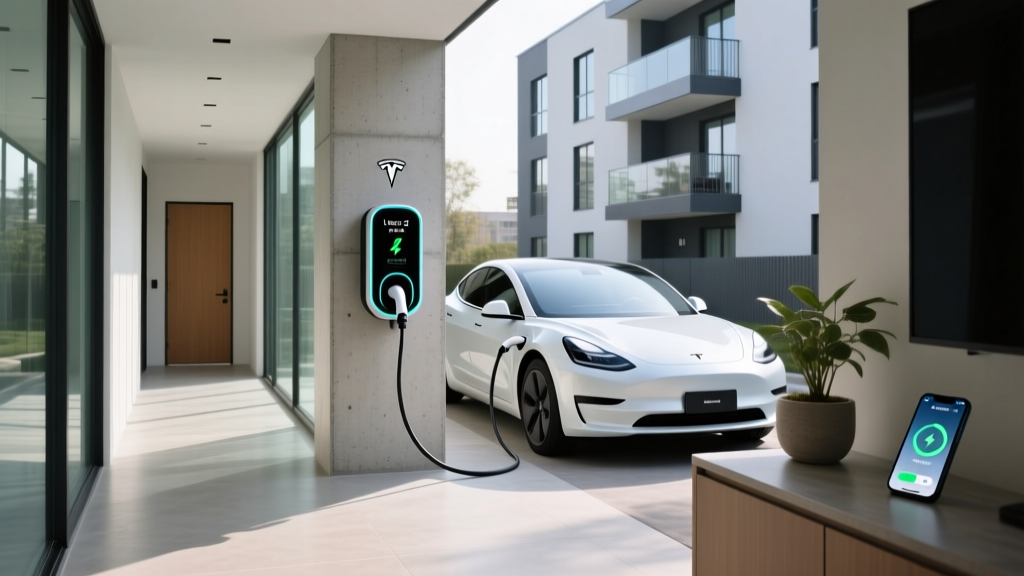
A standard Level 2 home charger requires a 240-volt dedicated circuit, identical in concept to what powers your electric dryer or oven. The most common configurations:
- 40-amp circuit → delivers up to 32A continuous (7.7 kW) — minimum recommended for BEV owners
- 50-amp circuit → delivers up to 40A continuous (9.6 kW) — the current sweet spot for most installations
- 60-amp circuit → delivers up to 48A continuous (11.5 kW) — maximum for most residential chargers
Electrical code (NEC Article 625) requires that continuous loads — and EV charging qualifies — cannot exceed 80% of a circuit's rated capacity. That's why a 48A charger needs a 60-amp breaker, not a 48-amp one.
Do You Need a Panel Upgrade?
This is where costs can escalate. Most modern homes have a 200-amp main service panel. If your panel is already near capacity (running electric heat, a tankless water heater, and a dryer), adding a 50- or 60-amp EV circuit may push you over the limit. Signs you may need an upgrade:
- Your panel is 100-amp service (common in homes built before 1980)
- Your panel has no open breaker slots
- A licensed electrician's load calculation shows you're above 80% of panel capacity
- Your panel is a known problematic brand (Federal Pacific, Zinsco, certain Challenger models)
A panel upgrade from 100A to 200A typically runs $1,500 to $3,500 before permits. Some utility companies offer rebates that offset this cost — always check with your provider before proceeding.
| Cost Component | Simple Install (panel nearby, no upgrade) | Complex Install (long run, panel upgrade needed) |
|---|---|---|
| Level 2 Charger Equipment | $350–$700 | $350–$700 |
| Electrician Labor | $400–$800 | $1,200–$2,500 |
| Electrical Materials (conduit, wire, breaker) | $100–$300 | $400–$800 |
| Panel Upgrade (if needed) | $0 | $1,500–$3,500 |
| Permit & Inspection | $50–$200 | $100–$300 |
| Total Estimated Cost | $900–$2,000 | $3,550–$7,800 |
The national median for a straightforward Level 2 installation sits around $1,200–$1,800 all-in. The IRS §30C tax credit may cover up to 30% of home charging equipment and installation costs (capped at $1,000) for eligible taxpayers in qualifying census tracts — consult a tax professional for your specific eligibility.
Connector Compatibility: NACS, CCS1, CHAdeMO, and Adapter Realities
The North American charging connector landscape has shifted dramatically. As of 2025, the Tesla-designed North American Charging Standard (NACS) has been adopted by nearly every major automaker for new models, though many vehicles on the road still use the Combined Charging System (CCS1) connector.
| Connector | Brands Using It (2026 Models) | DC Fast Charge Support | Adapter Needed For |
|---|---|---|---|
| NACS (J3400) | Tesla (all), Ford, GM, Rivian, Volvo, Polestar, Hyundai/Kia (newer), BMW, Mercedes | Native at Tesla Superchargers and growing NACS networks | CCS1 stations (adapter often included with vehicle) |
| CCS1 | VW ID.4 (carryover), Stellantis, some Toyota/Lexus, legacy models from Ford/GM | Native at Electrify America, EVgo, ChargePoint DC stations | Tesla Superchargers (Magic Dock or CCS-to-NACS adapter) |
| CHAdeMO | Nissan Leaf (legacy only — discontinued), Mitsubishi Outlander PHEV | Limited and shrinking network | No viable adapter to NACS/CCS for DC charging |
If you're purchasing a new EV in 2026, the vehicle will almost certainly have a NACS port or come with a CCS-to-NACS adapter enabling Supercharger access. For home Level 2 charging, all vehicles use the J1772 connector (or NACS, which now includes J1772 signaling), so any quality Level 2 charger will work regardless of your vehicle's DC fast-charge port.
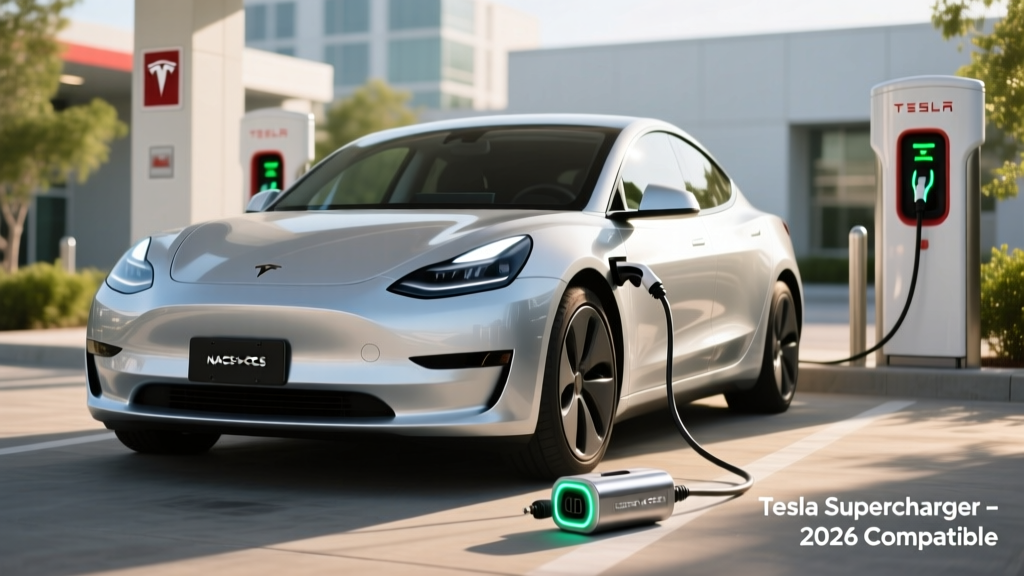
Adapter Tip: If your EV has a CCS1 port and you want to use Tesla Superchargers equipped with the Magic Dock, you do not need a separate adapter — the dock itself adapts. However, for third-party NACS chargers, you'll need a CCS-to-NACS adapter. Many automakers (Ford, GM, Rivian) include these with new vehicles or sell them for $100–$250.
Cost to Charge: Home vs. Public vs. Gas Comparison
One of the strongest economic arguments for EV ownership is the per-mile fuel cost. But the savings depend heavily on where and when you charge.
| Charging Scenario | Typical $/kWh | Cost to Add 200 Miles (at 3.5 mi/kWh efficiency) | Cost Per Mile |
|---|---|---|---|
| Home — Off-Peak TOU Rate | $0.08–$0.12 | $4.57–$6.86 | $0.023–$0.034 |
| Home — Standard Flat Rate | $0.14–$0.18 | $8.00–$10.29 | $0.040–$0.051 |
| Public Level 2 (workplace, mall) | $0.20–$0.35 | $11.43–$20.00 | $0.057–$0.100 |
| DC Fast Charge (Electrify America, EVgo) | $0.35–$0.55 | $20.00–$31.43 | $0.100–$0.157 |
| Tesla Supercharger (varies by location) | $0.25–$0.40 | $14.29–$22.86 | $0.071–$0.114 |
| Gas Vehicle (27 MPG avg, $3.40/gal) | — | $25.19 | $0.126 |
Home charging on an off-peak time-of-use (TOU) plan delivers the lowest cost per mile — typically 3 to 5 times cheaper than gasoline. Even DC fast charging at peak rates roughly matches or slightly undercuts gas. But if you rely exclusively on public DC fast chargers, your cost advantage narrows significantly. Per the AAA's EV charging cost study, drivers who charge primarily at home save an average of $800–$1,200 annually versus a comparable gas vehicle.
Many utilities now offer EV-specific TOU plans with deeply discounted overnight rates (often 11 PM – 6 AM). If your utility offers one, enrolling is the single easiest way to minimize your charging cost.
Equipment Recommendations: Best Home Level 2 Chargers
Not all Level 2 chargers are created equal. Here are tested recommendations spanning budget, smart features, and maximum power output — all with NACS/J1772 compatibility.
ChargePoint Home Flex (NACS)
- Power Output: Up to 11.5 kW (48A) on a 60A circuit; configurable down to 16A
- Connector: NACS (J3400) native; J1772 version also available
- Cable Length: 23 feet
- Smart Features: Wi-Fi, app scheduling, Alexa integration, energy tracking, automatic software updates
- Price: ~$599
- Best For: Flexible amperage configuration if your panel has limited headroom
Emporia Level 2 EV Charger
- Power Output: Up to 11.5 kW (48A)
- Connector: J1772 (CCS vehicles); NACS version available
- Cable Length: 24 feet
- Smart Features: Wi-Fi, app control, solar integration (pairs with Emporia Vue energy monitor), TOU scheduling
- Price: ~$399
- Best For: Budget-conscious buyers and solar-panel owners
WallConnector (Tesla, 3rd Gen)
- Power Output: Up to 11.5 kW (48A)
- Connector: NACS native
- Cable Length: 24 feet
- Smart Features: Wi-Fi, OTA updates, power sharing (link multiple units on one circuit), Tesla app integration
- Price: ~$450
- Best For: Tesla owners and NACS-equipped vehicles seeking a clean, integrated experience
Grizzl-E Smart (United Chargers)
- Power Output: Up to 10 kW (40A)
- Connector: J1772 or NACS (selectable at purchase)
- Cable Length: 24 feet
- Smart Features: OCPP-compatible, works with multiple energy-management platforms, DIP-switch amperage adjustment
- Price: ~$499
- Best For: Canadian/US cold-climate owners (rated to -40°F), commercial fleet use
Safety, Code, and Installation Best Practices
EV charging places a sustained high-amperage load on your home's electrical system for hours at a time — far longer than a dryer cycle. This makes code compliance and proper installation non-negotiable.
- Dedicated circuit: Your Level 2 charger must be on its own dedicated breaker. Never share the circuit with other appliances.
- GFCI protection: NEC 2020 and later require Ground Fault Circuit Interrupter protection for all EV charging outlets. Hardwired units may include built-in GFCI; receptacle-based installs need a GFCI breaker.
- Outdoor rating: If your charger is installed outdoors (or in an unconditioned garage), ensure the unit carries a NEMA 4 or IP65 weather rating. All chargers listed above meet this standard.
- NEMA 14-50 vs. hardwired: A NEMA 14-50 receptacle offers portability (take the charger when you move), but some jurisdictions now require hardwired installations for circuits above 40A due to documented receptacle overheating risks with continuous use. Ask your electrician which approach your local code requires.
- Permit and inspection: Always pull a permit. An unpermitted installation can void your homeowner's insurance in the event of an electrical fire and may cause issues at resale. Most jurisdictions charge $50–$200 for the permit, and inspection typically happens within 1–2 weeks.
- Cable management: A 24-foot cable draped across a garage floor is a tripping hazard. Install a cable holster or retractable reel ($30–$80) to keep things tidy and safe.
Frequently Asked Questions
How much does it cost to install a home EV charger?
A straightforward Level 2 installation with a nearby 240V panel typically costs $900 to $2,000 including the charger unit, electrician labor, materials, and permit. If your home needs a panel upgrade from 100A to 200A, or if the charger location is far from the panel requiring a long conduit run, costs can reach $3,500 to $7,800. The IRS §30C credit may cover up to $1,000 (30% of costs) for eligible installations in qualifying census tracts.
How fast will each charging level add range?
Level 1 (120V) adds 3–5 miles of range per hour — roughly 40 miles overnight. Level 2 (240V, 48A) adds 25–45 miles per hour, fully recharging most EVs in 6–10 hours. DC fast charging adds 180–1,200+ equivalent miles per hour at peak rates, with typical 10–80% sessions lasting 18–40 minutes depending on the vehicle and charger power.
Which connector/charger is compatible with my EV?
For home Level 2 charging, all EVs are compatible with any J1772 or NACS-equipped Level 2 charger. For DC fast charging, check whether your vehicle has a NACS (J3400) or CCS1 port. Nearly all 2025+ models from major automakers now use NACS. Older CCS1 vehicles can access Tesla Superchargers with an adapter or via Magic Dock-equipped stations. CHAdeMO vehicles (Nissan Leaf) have limited and shrinking DC fast-charge access.
How much does charging cost per mile vs gas?
Home charging on a standard rate costs roughly $0.04–$0.05 per mile, while off-peak TOU rates drop that to $0.02–$0.03 per mile. A comparable gas vehicle at 27 MPG and $3.40/gallon costs about $0.126 per mile. Public DC fast charging ranges from $0.07 to $0.16 per mile, still competitive with or cheaper than gasoline.
What electrical upgrades might I need?
The most common upgrade is a panel capacity increase from 100A to 200A service ($1,500–$3,500), needed when your existing panel lacks the headroom for an additional 50–60A circuit. Other potential upgrades include adding a sub-panel ($500–$1,200) if your main panel has no open slots, or trenching underground conduit ($500–$2,000) for detached garages. A licensed electrician's load calculation is the definitive answer for your home.
Does cold weather affect electric vehicle charging time?
Yes, significantly. Lithium-ion batteries charge more slowly when cold because the electrolyte becomes more viscous, limiting ion flow. In sub-freezing temperatures, expect DC fast charging to take 25–40% longer unless your vehicle has active battery preconditioning (Tesla, Hyundai/Kia 800V models, and most newer BEVs include this). Always precondition your battery before arriving at a DC fast charger in cold weather — this warms the pack to optimal temperature and restores peak charging speeds.