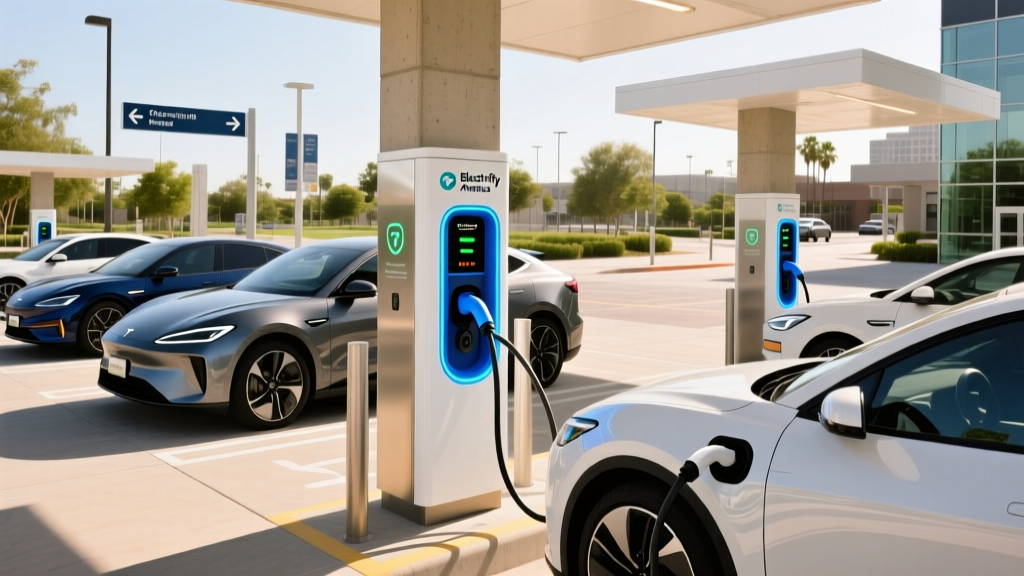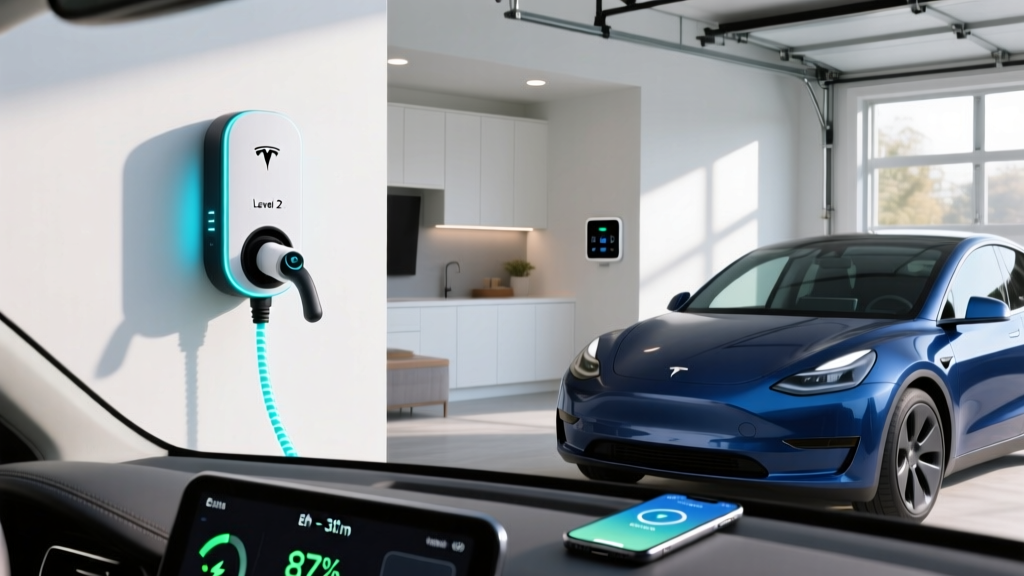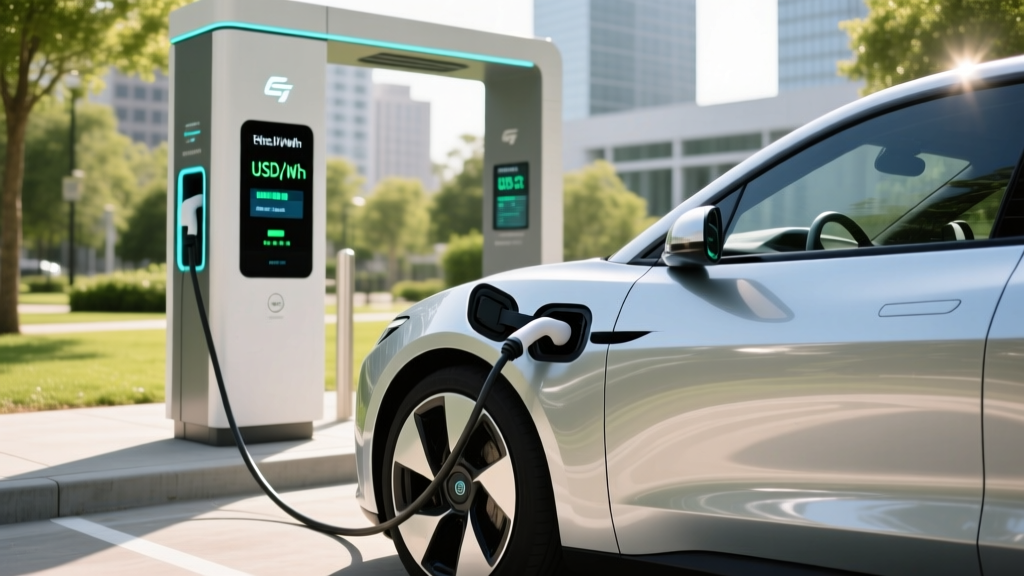
The Short Answer: Yes, but It Costs Less Than Gas
If you're asking "do you have to pay for electric car charging," the answer is almost always yes — but the amount varies wildly depending on where and how you charge. A full charge at home on off-peak utility rates might cost $5–$12, while the same charge at a public DC fast charger could run $18–$35. The good news: on a cost-per-mile basis, home charging typically beats gasoline by 50–70%, even as electricity rates have climbed through 2025 and into 2026.
This guide breaks down every cost layer — home installation, electricity rates, public network pricing, and equipment — so you know exactly what you'll spend before you buy an EV or plug in for the first time.
Understanding Charging Levels: Speed, Power, and What You'll Pay
Before discussing cost, you need to understand the three charging levels available to EV owners. The critical distinction: kW (kilowatts) measures power — how fast energy flows into your car. kWh (kilowatt-hours) measures energy — how much your battery holds. You pay per kWh consumed, but your charging speed depends on kW.
| Level | Voltage | Power (kW) | Miles of Range Added per Hour | Typical Use Case | Cost to You |
|---|---|---|---|---|---|
| Level 1 | 120V AC | 1.0–1.4 kW | 3–5 mi/hr | Overnight top-ups, low daily mileage | Home electricity rate (~$0.12–$0.18/kWh) |
| Level 2 | 240V AC | 3.3–19.2 kW | 12–75 mi/hr | Daily home charging, workplace, shopping centers | Home rate or public $0.25–$0.55/kWh |
| DC Fast Charge | 400–800V DC | 50–350 kW | 150–1,200+ mi/hr (peak) | Road trips, highway corridors | $0.30–$0.70/kWh (varies by network) |
A few real-world notes: Level 1 from a standard wall outlet is essentially free to install (just plug in), but at ~4 miles of range per hour, it's impractical for EVs with large batteries unless your daily commute is under 30 miles. Level 2 at home is where 80–90% of EV charging happens for owners with garage or driveway access. DC fast charging is your road-trip lifeline, but sustained use is more expensive and, according to battery degradation research, frequent exclusive reliance on DC fast charging can accelerate long-term capacity loss.
How Much Does It Cost to Install a Home EV Charger?
Home Level 2 charging is the economic sweet spot of EV ownership, but installation costs are the biggest upfront hurdle. Your total depends on three factors: the charger unit itself, the electrical work required, and whether your home's service panel needs an upgrade.
| Component | Low End | High End | Notes |
|---|---|---|---|
| Level 2 Charger (hardware) | $250 | $750 | 32A–48A smart chargers; hardwired units cost more than plug-in NEMA 14-50 models |
| Electrician labor | $400 | $1,500 | Depends on run length from panel, wall type, conduit needs |
| Electrical permit | $50 | $250 | Required in most jurisdictions; varies by municipality |
| Panel upgrade (if needed) | $1,500 | $4,000+ | Older homes with 100A service often need upgrade to 200A |
| Total (no panel upgrade) | $700 | $2,500 | Most homes with 200A service and short panel-to-garage runs |
| Total (with panel upgrade) | $2,200 | $6,500 | Common in pre-1990 homes or those with high existing electrical loads |
What Electrical Upgrades Might I Need?
A Level 2 charger drawing 40 amps requires a dedicated 50-amp circuit (the National Electrical Code requires circuits to be rated at 125% of continuous load). If your panel has spare capacity — typically two open breaker slots and sufficient amperage headroom — installation is straightforward. If your home has a 100-amp service panel, which is common in houses built before the 1990s, you'll likely need a panel upgrade to 200 amps before adding a 50A EV circuit.
Some homeowners opt for a lower-amperage charger (24A or 32A) to avoid a panel upgrade. A 32A charger on a 40A circuit still delivers ~7.7 kW — enough to fully recharge most EVs overnight — and may fit within existing panel capacity. Always have a licensed electrician perform a load calculation before deciding.
Federal and Utility Incentives for Home Charger Installation
The IRS §30D and 25C tax credits can offset home charging costs. The Alternative Fuel Vehicle Refueling Property Credit (Form 8911) covers up to 30% of charger hardware and installation costs, capped at $1,000, for equipment placed in service in eligible census tracts. Many utilities also offer rebates of $200–$500 for installing a smart Level 2 charger, and some provide off-peak rate plans that dramatically reduce your per-kWh cost. Check with your local utility and consult a tax professional for eligibility specifics.
Charging Speed and Time: How Long Does Each Level Take?
Charging time depends on your battery size (in kWh), the charger's power output (in kW), and the vehicle's onboard charger or DC charge acceptance rate. Here are realistic 10–80% charge times for common battery sizes:
| Battery Size | Example Vehicles | Level 1 (1.4 kW) | Level 2 (11.5 kW / 48A) | DC Fast (peak rate) |
|---|---|---|---|---|
| ~60 kWh | Chevrolet Equinox EV, base Tesla Model 3 | ~30 hours | ~3.5 hours | ~22 min at 150 kW peak |
| ~77 kWh | Ford Mustang Mach-E (Extended Range), Hyundai Ioniq 5 | ~40 hours | ~4.7 hours | ~18 min at 240 kW peak (Ioniq 5) |
| ~100 kWh | Tesla Model S, Ford F-150 Lightning (Extended) | ~52 hours | ~6.1 hours | ~25 min at 250 kW peak |
| ~130 kWh | GMC Hummer EV, Silverado EV (max) | ~68 hours | ~8 hours | ~35 min at 350 kW peak |
The charge curve matters. DC fast chargers don't sustain peak power from 10% to 80%. A charger rated at 250 kW might deliver that rate only between 10–30% state of charge, then taper to 150 kW, then drop further above 60%. This is why manufacturers quote "10–80%" times rather than 0–100%. Charging above 80% slows dramatically to protect battery health — expect the last 20% to take as long as the first 60% on a DC fast charger.
Cost to Charge: Home vs. Public vs. DC Fast — Per Mile Compared to Gas
The question "do you have to pay for electric car charging" really becomes "how much per mile?" Let's compare real costs using a 2026 Tesla Model 3 Long Range (EPA efficiency: ~26 kWh/100 miles) as a baseline:
| Charging Scenario | Rate ($/kWh) | Cost per 100 Miles | Cost per Mile | vs. Gas (30 MPG at $3.40/gal) |
|---|---|---|---|---|
| Home — off-peak utility rate | $0.10 | $2.60 | $0.026 | 78% cheaper |
| Home — standard residential rate | $0.16 | $4.16 | $0.042 | 63% cheaper |
| Home — high-cost state (CA, HI avg) | $0.30 | $7.80 | $0.078 | 31% cheaper |
| Public Level 2 (ChargePoint, EVgo) | $0.35–$0.55 | $9.10–$14.30 | $0.09–$0.14 | Comparable to 15% cheaper |
| DC Fast — Tesla Supercharger (avg) | $0.30–$0.40 | $7.80–$10.40 | $0.08–$0.10 | 10–30% cheaper |
| DC Fast — Electrify America / EVgo | $0.48–$0.69 | $12.48–$17.94 | $0.12–$0.18 | Comparable to gas or slightly more |
| Gasoline baseline (30 MPG, $3.40/gal) | — | $11.33 | $0.113 | Baseline |
Key takeaway: Home charging is where the savings live. If you can charge at home on off-peak rates, your fuel cost drops to roughly $0.03/mile — a fraction of gasoline. Public DC fast charging, especially at premium-priced networks in urban corridors, can equal or exceed gas costs per mile. For road trips, networks like Tesla Superchargers and Electrify America offer subscription plans (e.g., EA's Pass+ at ~$0.36/kWh) that reduce per-session costs for frequent travelers.
Are there free chargers? Yes — some workplaces, shopping centers, hotels, and apartment complexes offer complimentary Level 2 charging as an amenity. However, free DC fast chargers are essentially extinct in 2026 outside of limited promotional events. Expect to pay at nearly every public fast charger.
Which Connector Is Compatible With My EV?
The North American charging connector landscape has consolidated significantly. Tesla's North American Charging Standard (NACS) has become the dominant connector, with nearly every major automaker adopting it for 2025–2026 model-year vehicles. Here's what you need to know:
| Connector | Shape / Pins | Vehicles Using It (2026) | Adapter Needed? |
|---|---|---|---|
| NACS (Tesla / SAE J3400) | Compact, 5-pin | All Tesla vehicles; Ford, GM, Rivian, Hyundai, Kia, BMW, Mercedes, Volvo, Polestar (2025+ models) | CCS-to-NACS adapters available for legacy CCS vehicles at NACS stations |
| CCS1 (Combined Charging System) | Larger, 7-pin (J1772 + 2 DC pins) | Older Ford, GM, VW, Hyundai, Kia models (pre-NACS transition); Stellantis | NACS-to-CCS adapters (e.g., Tesla CCS adapter) for Supercharger access |
| CHAdeMO | Round, 10-pin | Nissan Leaf (discontinued after 2025 MY), Mitsubishi Outlander PHEV (legacy) | Limited adapter options; network shrinking |
| J1772 (AC only) | Round, 5-pin | All EVs use this for Level 1/2 AC charging (built-in or via NACS-to-J1772 adapter) | NACS vehicles need J1772-to-NACS adapter for non-Tesla Level 2 stations |
Practical advice: If you're buying a new EV in 2026, it almost certainly has a NACS port unless you're purchasing remaining CCS inventory. For home Level 2 charging, most smart chargers now ship with a NACS connector or offer it as an option. If your home charger has a J1772 plug and your car has NACS, a simple $50–$100 J1772-to-NACS adapter solves the mismatch.
Best Home EV Chargers: Equipment Picks for 2026
Here are widely recommended Level 2 home chargers based on reliability, features, and value. All require a 240V circuit installed by a licensed electrician:
ChargePoint Home Flex (NACS)
- Power Output: Up to 12 kW (50A) — configurable down to 16A for lower-capacity panels
- Connector: NACS (J1772 version also available)
- Cable Length: 23 feet
- Smart Features: Wi-Fi, scheduling, energy tracking, Alexa integration, utility demand-response compatible
- Price: ~$599 (frequently on sale at $499)
- Best For: Flexible amperage settings for homes with limited panel capacity
Tesla Wall Connector
- Power Output: Up to 11.5 kW (48A)
- Connector: NACS native; J1772 adapter included in box
- Cable Length: 24 feet
- Smart Features: Wi-Fi, over-the-air updates, Power Sharing (link up to 6 units on one circuit), vehicle-specific charge limits
- Price: ~$475
- Best For: Tesla owners and NACS-equipped EVs; best value in the category
Emporia Level 2 EV Charger
- Power Output: Up to 11.5 kW (48A)
- Connector: NACS or J1772 options
- Cable Length: 24 feet
- Smart Features: Wi-Fi, solar integration (pairs with Emporia Vue energy monitor), time-of-use scheduling
- Price: ~$399
- Best For: Budget-conscious buyers and solar-panel homes wanting energy monitoring
Grizzl-E Smart (United Chargers)
- Power Output: Up to 10 kW (40A)
- Connector: NACS or J1772
- Cable Length: 24 feet
- Smart Features: OCPP-compatible, works with multiple apps, load balancing
- Price: ~$499
- Best For: Extreme cold climates (rated to -40°F); durable aluminum enclosure
Safety, Permits, and Electrical Code Requirements
EV charging draws significant sustained current — more like running an electric oven for 8 hours than plugging in a phone. Safety isn't optional:
- Dedicated circuit required: Your Level 2 charger must be on its own breaker — no sharing with other appliances.
- GFCI protection: The 2023 NEC (and subsequent 2026 adoptions) requires GFCI protection for all EV charging outlets. Hardwired units may have GFCI built into the charger itself.
- Outdoor rating: If your charger is installed outdoors (driveway, exterior wall), it must carry a NEMA 3R or NEMA 4 weather-resistance rating. All chargers listed above meet this standard.
- Permit and inspection: Nearly all municipalities require an electrical permit for EV charger installation. The inspection ensures proper wire gauge, breaker sizing, grounding, and code compliance. Skipping this step can void homeowner's insurance coverage for electrical fires.
- Wire gauge: A 50A circuit requires 6 AWG copper wire (or 4 AWG aluminum). Your electrician will size accordingly based on run length and local code amendments.
Frequently Asked Questions
Do you have to pay for electric car charging at public stations?
Yes, nearly all public charging stations in 2026 require payment. Networks like Electrify America, EVgo, and ChargePoint bill by the kWh (where regulated) or by the minute. Typical DC fast charging costs $0.30–$0.69/kWh depending on the network, location, and whether you have a subscription plan. A few workplaces, hotels, and retail centers still offer free Level 2 charging, but these are amenities, not the norm.
Is home EV charging really cheaper than gas?
For most drivers, yes. At the U.S. average residential electricity rate of ~$0.16/kWh, charging a Tesla Model 3 Long Range costs about $0.04 per mile. A comparable gas car at 30 MPG with fuel at $3.40/gallon costs $0.11 per mile. That's a ~63% savings per mile, or roughly $700–$1,000 per year for a driver covering 12,000 miles. Even in high-cost states like California ($0.30/kWh), home EV charging still undercuts gasoline on a per-mile basis. Source: fueleconomy.gov.
How much does it cost to install a home EV charger?
A typical Level 2 home charger installation ranges from $700 to $2,500 if your electrical panel has sufficient capacity. This includes the charger ($250–$750), electrician labor ($400–$1,500), and permit fees ($50–$250). If your home needs a panel upgrade from 100A to 200A service, add $1,500–$4,000+. Homes built after 2000 with 200A panels rarely need upgrades.
Can I charge my EV from a regular 120V outlet?
Yes — this is Level 1 charging, and it requires no special equipment beyond the mobile charging cord that ships with most EVs. However, Level 1 delivers only ~1.0–1.4 kW, adding roughly 3–5 miles of range per hour. A full charge of a 77 kWh battery from empty would take 55+ hours. Level 1 is practical only for plug-in hybrids with small batteries or EV owners who drive fewer than 30 miles per day and can charge overnight (10–12 hours).
Do all EVs use the same charging connector?
As of 2026, most new EVs sold in North America use the NACS (Tesla/SAE J3400) connector. Vehicles still on the CCS1 standard (mostly 2023–2024 models) can access NACS stations using a CCS-to-NACS adapter (~$150–$250). CHAdeMO is effectively discontinued for new vehicles. For Level 2 AC charging, J1772 adapters are widely available for NACS-equipped vehicles.
Does DC fast charging damage my EV battery?
Occasional DC fast charging has minimal impact on battery health. However, exclusive reliance on DC fast charging (never using Level 2) can accelerate degradation by a few percentage points over the battery's lifetime. Modern battery management systems precondition the pack and manage charge rates to mitigate damage. Most manufacturers warranty their batteries for 8 years/100,000 miles with a minimum 70% capacity retention threshold — IRS §30D battery sourcing requirements also push manufacturers toward longer-lasting chemistries like LFP.
Are there free EV chargers?
Some do exist — typically Level 2 chargers at hotels, shopping malls, workplaces, and some apartment complexes. Apps like PlugShare and ChargeHub let you filter for free stations. However, free DC fast chargers are virtually nonexistent in 2026. For reliable daily charging, plan on paying for home electricity or a public network subscription.