Is There an Electric Range Rover? The Short Answer
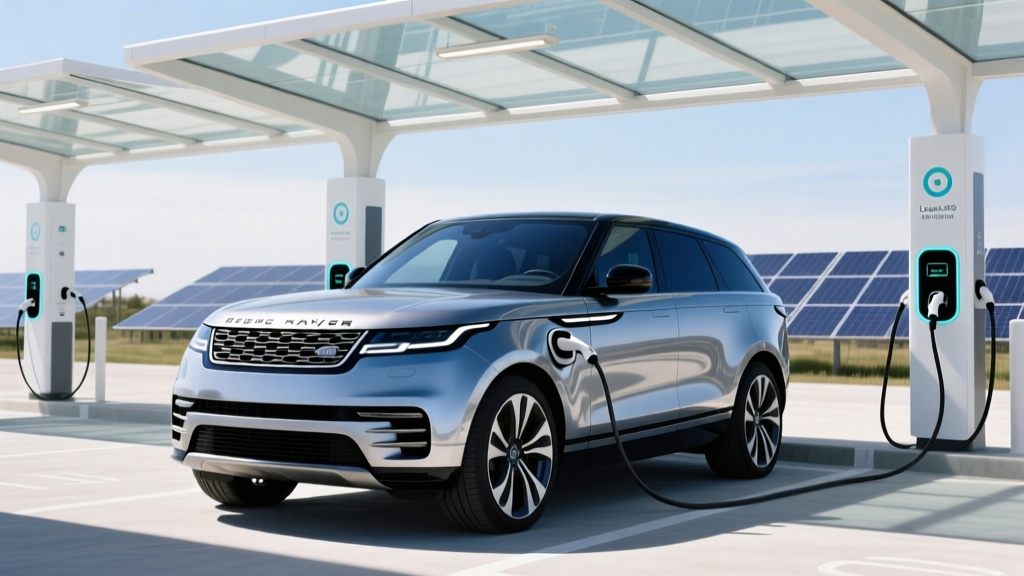
If you've been searching "is there an electric Range Rover," the answer is finally yes. The 2026 Range Rover Electric (officially the Range Rover Electric, built on JLR's MLA-Flex platform) is Land Rover's first fully electric flagship SUV. With an estimated 117 kWh usable battery, 800V architecture, and an EPA-estimated range targeting approximately 300+ miles, it represents a serious luxury EV contender.
But owning a large luxury EV with a battery this size demands a serious charging strategy. A 117 kWh pack is roughly 50% larger than a Tesla Model Y's, meaning home charging infrastructure and public fast-charging knowledge aren't optional — they're essential. This guide walks through exactly what Range Rover Electric owners (and any large-battery EV buyer) need to know about charging at home, in public, and what equipment to buy.
Battery: ~117 kWh usable, NMC chemistry | 800V architecture
EPA Range: ~300-320 miles (estimated, final EPA certification pending)
Real-World Expectation: ~250-280 miles highway; ~220-240 miles in cold weather (32°F and below)
Peak DC Fast Charge: ~250 kW (estimated), 10-80% in approximately 25-30 minutes
Charging Levels Explained: Speeds, Power, and Range Added Per Hour
Understanding EV charging requires distinguishing between kW (kilowatts), which measures power — the rate of energy delivery — and kWh (kilowatt-hours), which measures energy — the total capacity of the battery. Think of kW as the width of a hose and kWh as the size of the bucket.
Here's how each charging level performs, with real range-addition estimates for a large-battery EV like the Range Rover Electric (~3 miles per kWh of efficiency):
| Charging Level | Voltage / Amperage | Power (kW) | Miles of Range Added Per Hour | Best Use Case |
|---|---|---|---|---|
| Level 1 (Standard Outlet) | 120V / 12A | ~1.4 kW | ~3-4 miles | Emergency/overnight trickle |
| Level 2 (Home/Public AC) | 240V / 32-48A | 7.7 - 11.5 kW | ~23-35 miles | Daily home charging |
| DC Fast Charging | 400-800V DC | 50 - 350 kW | ~150-750 miles (peak rate) | Road trips, rapid top-ups |
Critical note on DC fast charging: The peak kW rating is not sustained across the entire session. A 250 kW peak charge rate typically holds from roughly 10-50% State of Charge (SoC), then tapers significantly. Expect a 10-80% session on a 250 kW-capable Range Rover Electric to take approximately 25-30 minutes at a 350 kW station, not the theoretical minimum. This is called the charge curve, and it's why we always report 10-80% times rather than peak kW alone.
For a 117 kWh battery, Level 1 charging is essentially useless for daily driving — it would take over 80 hours to fill from empty. Level 2 at 11.5 kW (48A) will add roughly 300 miles overnight in about 10-12 hours, which is practical for most owners who charge nightly. DC fast charging at 250 kW can restore 10-80% in under 30 minutes.
Home Charger Installation: Electrical Requirements and Real Costs
Installing a Level 2 home charger for a large-battery EV like the Range Rover Electric requires careful electrical planning. Here's what's involved.
Electrical Requirements
A Level 2 charger delivering 11.5 kW requires a 240V dedicated circuit at 60 amps (the charger draws 48A continuously; the National Electrical Code requires the circuit breaker to be rated at 125% of continuous load, so 48A × 1.25 = 60A breaker). For a 9.6 kW charger (40A draw), you'll need a 50A breaker.
Panel upgrade reality: Many homes built before 2000 have 100A or 150A main electrical panels. Adding a 60A EV circuit may exceed your panel's spare capacity, especially if you already run electric HVAC, a dryer, and an oven. A panel upgrade to 200A typically costs $1,500-$3,000 and is the single biggest surprise cost in EV charger installation. Always have a licensed electrician perform a load calculation before committing to a charger amperage.
Installation Cost Breakdown
| Cost Component | Low Estimate | High Estimate | Notes |
|---|---|---|---|
| Level 2 Charger Equipment | $400 | $750 | Smart Wi-Fi chargers, 24-25ft cable |
| Electrician Labor | $500 | $2,000 | Depends on run length from panel to garage |
| Electrical Permit | $50 | $250 | Varies by municipality |
| Panel Upgrade (if needed) | $1,500 | $3,000 | 100A→200A upgrade; not always required |
| Conduit/Wiring Materials | $100 | $500 | Longer runs cost more |
| Total (no panel upgrade) | $1,050 | $3,500 | Most installations fall in $1,200-$2,000 |
| Total (with panel upgrade) | $2,550 | $6,500 | Older homes with 100A panels |
The IRS §30D tax credit does not currently cover home charging equipment for most taxpayers — the Alternative Fuel Vehicle Refueling Property Credit (§30C) offers up to $1,000 for home charger installation, but it is subject to income caps and census-tract eligibility requirements. Check irs.gov for current-year rules and consult a tax professional.
Connector Compatibility: NACS, CCS, and the Range Rover Electric
The Range Rover Electric for the North American market is expected to use the CCS1 (Combined Charging System) connector for DC fast charging and a J1772 inlet for Level 2 AC charging. However, with the industry-wide shift to Tesla's NACS (North American Charging Standard), adapter compatibility is a key consideration.
| Connector Type | Brands Using It (2026) | DC Fast Charge | Level 2 AC | Adapter Available? |
|---|---|---|---|---|
| NACS (Tesla) | Tesla, Ford, GM, Rivian, Volvo, Polestar, Hyundai (2025+) | Yes | Yes | CCS→NACS adapters ~$200-$250 |
| CCS1 | VW, BMW, Mercedes, JLR/Range Rover, Hyundai (pre-2025), Kia | Yes | Yes (J1772) | NACS→CCS adapters available |
| CHAdeMO | Nissan Leaf (legacy), Mitsubishi | Yes | No (uses J1772) | Limited; network retiring |
What this means for Range Rover Electric owners: You can charge natively at Electrify America, EVgo, and other CCS-equipped networks. To access Tesla Superchargers (now open to non-Tesla EVs at many locations), you'll likely need a CCS-to-NACS adapter. JLR has indicated future models may adopt NACS natively, but the 2026 Range Rover Electric is expected to ship with CCS1. Budget $200-$250 for a quality adapter from a reputable brand like Lectron or A2Z.
Charging Cost Per Mile: EV vs. Gas for a Luxury SUV
One of the strongest ownership arguments for the Range Rover Electric is fuel cost savings — especially versus the gas Range Rover P400, which returns roughly 20 MPG combined. Here's how charging costs compare across scenarios:
| Charging Scenario | Cost per kWh | Cost to Add 300 Miles | Cost Per Mile |
|---|---|---|---|
| Home (off-peak utility rate) | $0.12-$0.15 | $14-$18 | $0.047-$0.06 |
| Home (standard residential rate) | $0.16-$0.20 | $19-$24 | $0.063-$0.08 |
| Public Level 2 (ChargePoint, etc.) | $0.25-$0.39 | $29-$46 | $0.097-$0.153 |
| DC Fast Charging (Electrify America) | $0.35-$0.55 | $41-$64 | $0.137-$0.213 |
| Gas Range Rover P400 (20 MPG, $3.50/gal) | N/A | $52.50 | $0.175 |
The verdict: Home charging delivers dramatic savings — roughly 60-70% less per mile than gasoline. Even DC fast charging on road trips is cost-competitive with premium fuel. However, if you rely exclusively on public DC fast charging at $0.48-$0.55/kWh, your per-mile cost can exceed that of a gas Range Rover. Home Level 2 charging is the economic foundation of EV ownership.
According to fueleconomy.gov, the average US residential electricity rate is approximately $0.17/kWh, but time-of-use plans in states like California, Texas, and Florida can drop off-peak rates to $0.08-$0.12/kWh — making overnight charging extraordinarily cheap.
Best Level 2 Home Chargers for Large-Battery EVs (2026 Picks)
For a 117 kWh battery, you want a charger that delivers maximum practical Level 2 speed (11.5 kW / 48A), has a long cable for garage flexibility, and offers smart scheduling for off-peak utility rates.
ChargePoint Home Flex (NACS or J1772)
- Power Output: Up to 11.5 kW (48A) on a 60A circuit; adjustable down to 16A
- Connector: Available in NACS or J1772 (CCS EVs use J1772 for AC)
- Cable Length: 24 feet
- Smart Features: Wi-Fi, app-based scheduling, Alexa integration, energy reporting
- Price: ~$549-$599
- Why it works: Adjustable amperage means you can install it on a 40A or 60A circuit depending on your panel capacity. UL-listed, indoor/outdoor rated (NEMA 4).
Grizzl-E Smart (J1772)
- Power Output: Up to 11.5 kW (48A)
- Connector: J1772 (compatible with all CCS and NACS EVs for AC charging)
- Cable Length: 24 feet
- Smart Features: Wi-Fi, OCPP protocol, app scheduling, over-the-air updates
- Price: ~$499-$549
- Why it works: Built in Canada for extreme cold (-40°F rated), rugged aluminum case, 3-year warranty. Excellent for unheated garages and outdoor installs.
Tesla Universal Wall Connector
- Power Output: Up to 11.5 kW (48A)
- Connector: Integrated NACS with J1772 adapter included
- Cable Length: 24 feet
- Smart Features: Wi-Fi, power sharing (link two units on one circuit), OTA updates
- Price: ~$599
- Why it works: Future-proof — the built-in NACS plug charges Tesla and NACS-equipped EVs natively, and the included J1772 adapter covers CCS vehicles like the Range Rover Electric. Sleek design, strong build quality.
Our recommendation for Range Rover Electric owners: The Tesla Universal Wall Connector offers the best long-term flexibility as the industry transitions to NACS, and the included J1772 adapter handles your Range Rover's AC charging natively. If you want a no-adapter, rugged solution, the Grizzl-E Smart is a proven workhorse.
Safety, Electrical Code, and Installation Best Practices
EV charger installation is electrical work that must comply with the National Electrical Code (NEC) and local building codes. Key requirements include:
- Dedicated circuit: Your Level 2 charger must be on its own dedicated breaker — not shared with other appliances.
- GFCI protection: NEC 2020 and later requires GFCI (Ground Fault Circuit Interrupter) protection for all EV charging outlets. Hardwired chargers often have GFCI built in; outlet-based installations need a GFCI breaker.
- Outdoor rating: If installing outside, the charger must carry a NEMA 4 or NEMA 4X rating for weather resistance. All three chargers recommended above meet this standard.
- Permit and inspection: Most jurisdictions require an electrical permit and post-installation inspection. Skipping this can void your homeowner's insurance coverage for electrical fires.
- Wire gauge: A 60A circuit requires 6 AWG copper wire (or 4 AWG aluminum). Your electrician will specify based on run length and local code.
Always hire a licensed electrician. DIY EV charger installation on a 240V/60A circuit carries serious shock and fire risk, and improper work may not be covered by insurance.
Charging Time Examples: 10-80% for Common Battery Sizes
Here's how long a 10-80% charge takes for the Range Rover Electric and comparable large-battery EVs, across different charger types:
| Vehicle (Battery Size) | Level 2 at 11.5 kW | DC Fast at 150 kW | DC Fast at 250+ kW |
|---|---|---|---|
| Range Rover Electric (~117 kWh) | ~7.5 hours | ~40 minutes | ~25-30 minutes |
| Tesla Model X (100 kWh) | ~6.5 hours | ~35 minutes | ~22-27 minutes |
| Rivian R1S (149 kWh Max Pack) | ~9.5 hours | ~50 minutes | ~35-40 minutes |
| BMW iX xDrive50 (111 kWh) | ~7 hours | ~38 minutes | ~28-32 minutes |
Preconditioning matters: The Range Rover Electric's 800V architecture supports rapid DC charging, but only if the battery is preconditioned (warmed to optimal temperature). When navigating to a DC fast charger via the vehicle's built-in navigation, the thermal management system will begin preconditioning automatically. Arriving at a charger without preconditioning — especially in cold weather — can reduce peak charge rates by 30-50% and add 10-15 minutes to your session.
Frequently Asked Questions
How much does it cost to install a home EV charger?
A typical Level 2 home charger installation costs $1,200-$2,000 when no panel upgrade is needed. This includes the charger unit ($400-$600), electrician labor ($500-$1,200), permit ($50-$250), and wiring materials. If your home needs a 200A panel upgrade, add $1,500-$3,000, bringing the total to $2,500-$5,000+. Always get a load calculation from a licensed electrician first.
How fast will each charging level add range?
Level 1 (120V) adds roughly 3-4 miles per hour. Level 2 (240V, 48A) adds approximately 30-35 miles per hour for a large SUV like the Range Rover Electric. DC fast charging at 250 kW can add 150-200 miles in 15-20 minutes at peak rate, though the charge curve tapers significantly above 50% SoC.
Which connector is compatible with the Range Rover Electric?
The 2026 Range Rover Electric is expected to use CCS1 for DC fast charging and J1772 for Level 2 AC charging. To access Tesla Superchargers, you will need a CCS-to-NACS adapter (~$200-$250). All Level 2 home chargers with a J1772 plug will work natively.
How much does charging cost per mile versus gas?
Home charging at $0.15/kWh costs approximately $0.05-$0.06 per mile for the Range Rover Electric — roughly 65% less than a gas Range Rover P400 at $0.175/mile. Public DC fast charging at $0.48/kWh costs about $0.16/mile, which is comparable to premium gasoline. Home charging is where the savings are.
What electrical upgrades might I need?
The most common upgrade is a main panel increase from 100A or 150A to 200A, costing $1,500-$3,000. You may also need a new dedicated 60A circuit with 6 AWG copper wire. Homes with modern 200A panels and spare breaker slots typically need no panel upgrade. An electrician's load calculation will determine your specific needs.
Is the Range Rover Electric eligible for the federal EV tax credit?
The §30D Clean Vehicle Credit offers up to $7,500, but eligibility depends on MSRP caps ($80,000 for SUVs), buyer income limits ($300,000 joint / $150,000 single), and battery component and critical mineral sourcing requirements. The Range Rover Electric's MSRP is expected to exceed $100,000, which would disqualify it from the federal credit. Check IRS guidance for current rules and consult a tax professional.