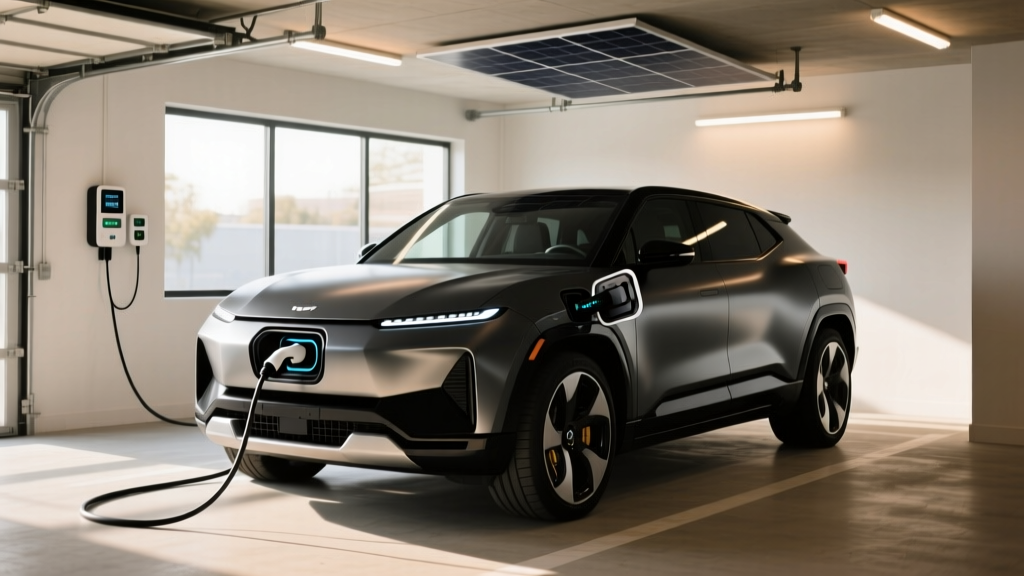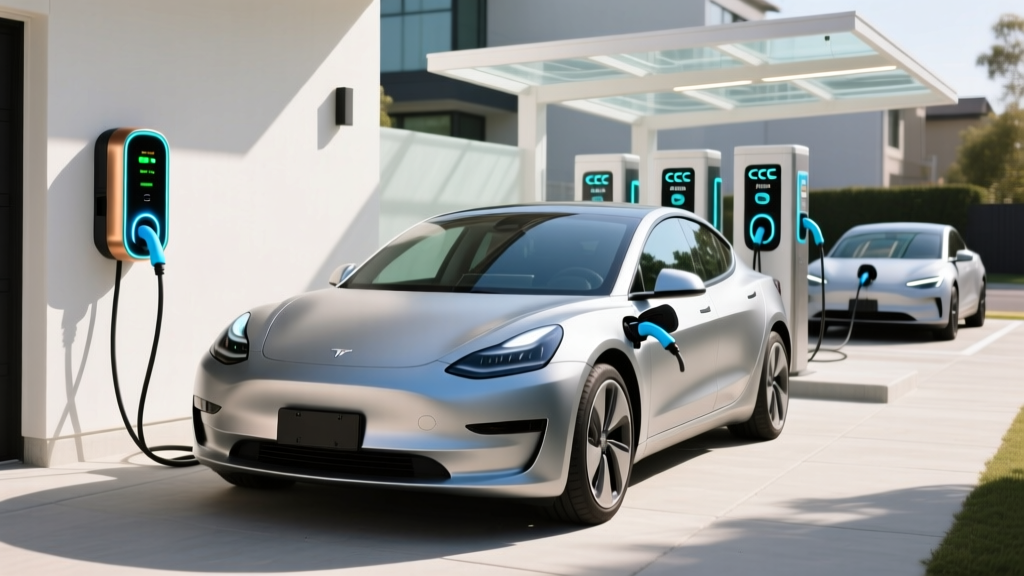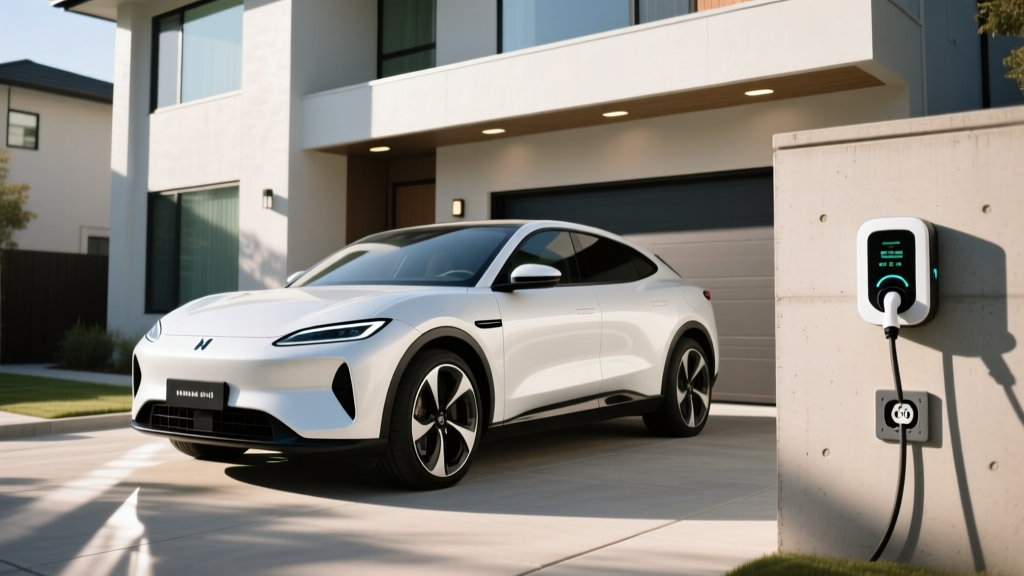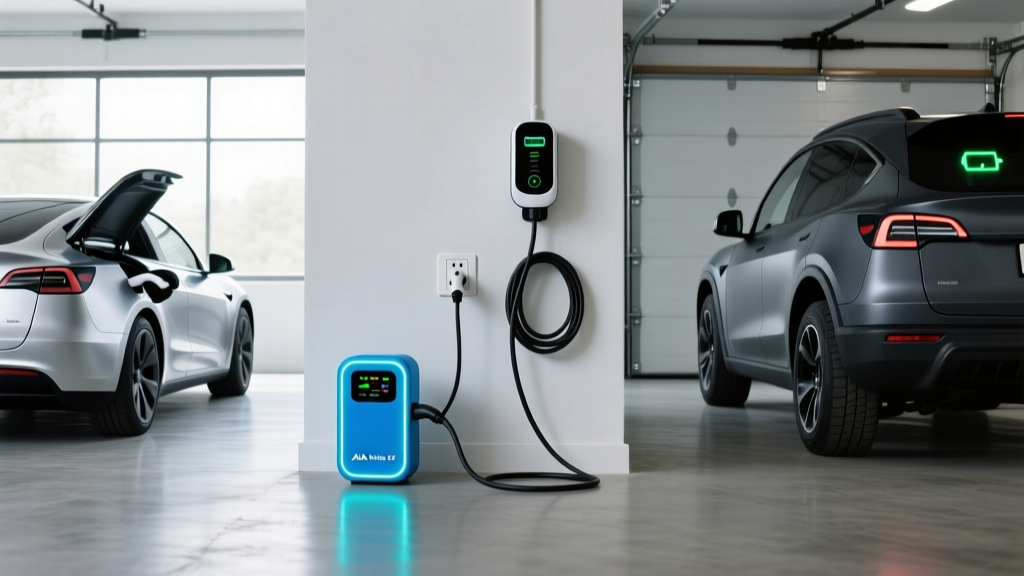
For EV owners without a dedicated garage outlet or those who travel frequently, AAA mobile EV charging has emerged as a tempting safety net. AAA and similar roadside-assistance providers now dispatch vans equipped with DC fast chargers or Level 2 units to stranded drivers. But how does that on-demand model stack up against installing a Level 2 charger at home? This guide breaks down charging speeds, connector compatibility, real installation costs, and the per-mile economics you need to make the right call in 2026.
How AAA Mobile EV Charging Actually Works
AAA's mobile EV charging service sends a technician in a van carrying a battery pack (typically 50–100 kWh) or a tow truck to your location. The tech plugs into your vehicle and delivers enough energy to reach the nearest public fast charger—usually 10 to 25 miles of range. It is a rescue service, not a daily charging strategy.
Availability varies by region. As of 2026, AAA offers mobile EV charging through select clubs in metropolitan areas including parts of California, the Northeast, and Texas. Membership is required, and dispatches may carry a fee beyond standard roadside coverage. Response times average 45–90 minutes in urban zones, considerably longer in rural areas.
Charging Levels Explained: Speed, Power, and Real-World Range Added
Before comparing services, you need the fundamentals. Charging speed is measured in kW (kilowatts), which is the rate of power delivery. Your battery's capacity is measured in kWh (kilowatt-hours), which is the total energy it stores. Think of kW as how fast water flows from a hose, and kWh as the size of the bucket.
| Level | Voltage / Amperage | Power (kW) | Miles of Range Added per Hour | Best For |
|---|---|---|---|---|
| Level 1 | 120V / 12A | 1.4 kW | 3–5 mi/hr | Overnight top-off, PHEVs |
| Level 2 (Home) | 240V / 32–48A | 7.7–11.5 kW | 25–44 mi/hr | Daily home charging |
| DC Fast (Public) | 400–800V DC | 50–350 kW | 150–1,000+ mi/hr (peak) | Road trips, rapid top-ups |
| AAA Mobile (typical) | Varies | 7–50 kW | 25–150 mi/hr | Emergency rescue only |
Charging time examples for common battery sizes (10–80% SoC):
- Tesla Model Y (75 kWh usable, LFP): Level 2 at 11.5 kW ≈ 4.5 hours; 250 kW DC fast ≈ 15–18 minutes
- Hyundai Ioniq 5 (77.4 kWh usable, NMC): Level 2 at 11.5 kW ≈ 4.7 hours; 350 kW DC fast (800V architecture) ≈ 18 minutes
- Ford F-150 Lightning Extended Range (131 kWh usable, NMC): Level 2 at 11.5 kW ≈ 8 hours; 150 kW DC fast ≈ 45–50 minutes
Real-world charging curves matter here. Most EVs peak at their maximum kW only between 10–40% SoC, then taper significantly. A vehicle advertising "250 kW peak" may sustain that for only 5–8 minutes before dropping to 100–150 kW above 60% SoC. That is why 10–80% times are the honest metric, not peak kW alone.
Home Level 2 Charger Installation: Costs, Electrical Requirements, and Gotchas
A home Level 2 charger is the single highest-impact upgrade for daily EV ownership. It refills your battery overnight at the lowest per-kWh cost and eliminates dependence on public infrastructure for routine driving. Here is what the installation actually involves.
Electrical Requirements
A standard Level 2 home charger requires a 240-volt dedicated circuit, identical to what powers an electric dryer or oven. Most chargers draw 32A (7.7 kW) or 48A (11.5 kW). The National Electrical Code (NEC) requires circuits to be rated at 125% of the continuous load, so:
- A 32A charger needs a 40-amp breaker
- A 48A charger needs a 60-amp breaker
Your home's electrical panel must have sufficient spare capacity. A typical 200-amp panel in a modern home can usually accommodate a 40–60A EV circuit. Older homes with 100-amp service often require a panel upgrade to 200A, which is the single largest cost variable in the entire installation.
Permits and Code Compliance
Virtually every jurisdiction requires an electrical permit for a new 240V circuit. The permit ensures the work is inspected for safety and code compliance. Permit fees typically range from $50 to $200 depending on your municipality. Skipping the permit risks insurance claim denials if an electrical fire occurs, and it can create issues at home sale.
| Item | Simple Install (panel has capacity) | Complex Install (panel upgrade needed) |
|---|---|---|
| Level 2 Charger (hardwired or NEMA 14-50) | $350–$700 | $350–$700 |
| Electrician labor (2–4 hrs simple / 8–16 hrs complex) | $300–$800 | $1,500–$3,000 |
| Electrical panel upgrade (if needed) | $0 | $1,500–$3,500 |
| Conduit, wiring, junction box | $50–$200 | $200–$600 |
| Permit and inspection | $50–$200 | $100–$300 |
| Total Estimated Cost | $750–$1,900 | $3,650–$8,100 |
The wide range exists because electrical work is hyper-local. A short conduit run from a garage-mounted panel might cost $750 total, while running 80 feet of conduit from a basement panel to a detached garage could exceed $4,000 even without a panel upgrade. Always get three quotes from licensed electricians and confirm they have specific EV charger installation experience.
Safety and Code Considerations
- Dedicated circuit: Your EV charger must have its own breaker—not shared with other appliances.
- GFCI protection: NEC 2023 and later require GFCI (ground-fault circuit interrupter) protection for all EV charging outlets. Hardwired units may have GFCI built in.
- Outdoor rating: If your charger is mounted outside, both the unit and the receptacle must carry a NEMA 3R or NEMA 4 weather-resistance rating.
- Cable management: A 25-foot cable is standard; 18-foot cables are cheaper but limit parking flexibility. Never use an extension cord with an EV charger.
Connector Compatibility: NACS, CCS1, and CHAdeMO in 2026
The connector landscape has shifted dramatically. Tesla's North American Charging Standard (NACS) has been adopted by Ford, GM, Rivian, Hyundai, Kia, and most major automakers for 2025+ models. CCS1 (Combined Charging System) remains on many 2022–2024 vehicles, while CHAdeMO is effectively legacy—found only on older Nissan Leaf and Mitsubishi Outlander PHEV models.
| Connector | Brands Using It | Adapter Needed? |
|---|---|---|
| NACS (Tesla standard) | Tesla, Ford (2025+), GM (2025+), Rivian (2025+), Hyundai/Kia (2025+), Volvo, Polestar, BMW (2026+) | No for new models; CCS-to-NACS adapters available for $150–$250 |
| CCS1 | VW ID.4 (through 2024), older Ford/GM/Hyundai EVs, BMW i4 (pre-2026), Stellantis | NACS-to-CCS adapter needed for Tesla Superchargers ($200–$300) |
| CHAdeMO | Nissan Leaf (all years), Mitsubishi Outlander PHEV (older) | No adapter available to NACS; network is shrinking |
For home Level 2 charging: Most home chargers ship with a J1772 connector (the universal Level 2 plug). All non-Tesla EVs accept J1772 natively. Tesla owners use the included J1772-to-NACS adapter that ships with every Tesla vehicle. If you own a CCS1-equipped vehicle and want to use Tesla Superchargers for road trips, you need a manufacturer-approved NACS-to-CCS adapter—Ford and GM provide these to qualifying owners.
Charging Cost per Mile: Home vs. Public vs. Gas
The economics of EV charging depend entirely on where and when you plug in. Here is a realistic breakdown using the national average electricity rate of $0.17/kWh (home) and common public charging rates, benchmarked against a 30 MPG gas car at $3.40/gallon.
| Scenario | Rate | Cost per Mile (3.5 mi/kWh EV) | Annual Cost (12,000 mi) |
|---|---|---|---|
| Home off-peak (utility time-of-use) | $0.10/kWh | $0.029/mi | $343 |
| Home standard rate | $0.17/kWh | $0.049/mi | $583 |
| Public Level 2 (ChargePoint, EVgo) | $0.30–$0.45/kWh | $0.086–$0.129/mi | $1,029–$1,543 |
| DC Fast (Electrify America, EA Pass) | $0.35–$0.55/kWh | $0.100–$0.157/mi | $1,200–$1,886 |
| Gasoline car (30 MPG, $3.40/gal) | $3.40/gallon | $0.113/mi | $1,360 |
The takeaway is clear: home charging at off-peak rates delivers the lowest per-mile cost of any option, roughly one-quarter the cost of gasoline. Public DC fast charging, however, can equal or exceed gasoline costs per mile. This is why AAA mobile EV charging—as convenient as it is for emergencies—should never be your primary charging strategy. The per-kWh cost of a dispatched mobile unit, combined with wait times, makes it the most expensive "fuel" you can buy.
Recommended Home Level 2 Chargers for 2026
Not all Level 2 chargers are equal. The best units combine reliable hardware, smart scheduling (to exploit off-peak utility rates), adequate cable length, and proper safety certifications. Here are three proven options across budgets.
ChargePoint Home Flex
- Power output: Up to 11.5 kW (48A) on a 60A circuit; configurable down to 16A
- Connector: J1772 (NACS adapter included for Tesla)
- Cable length: 23 feet
- Smart features: Wi-Fi, app scheduling, Alexa integration, energy tracking
- Price: ~$550–$650
- Best for: Flexibility across panel capacities; excellent app
Tesla Wall Connector
- Power output: Up to 11.5 kW (48A) on a 60A circuit
- Connector: NACS native (J1772 adapter available for non-Tesla EVs)
- Cable length: 24 feet
- Smart features: Wi-Fi, over-the-air updates, power sharing between multiple units, load management
- Price: ~$475
- Best for: Tesla owners or households with multiple Teslas; best value-to-power ratio
Grizzl-E Smart
- Power output: Up to 10 kW (40A) on a 50A circuit
- Connector: J1772
- Cable length: 24 feet
- Smart features: OCPP-compatible, works with multiple apps, adjustable amperage via dip switches
- Price: ~$450–$550
- Best for: Extreme cold climates (-40°F rated), outdoor installs, budget-conscious buyers
One note on the federal §30D alternative fuel vehicle refueling property credit: as of 2026, home charger equipment and installation may qualify for a 30% tax credit (up to $1,000) under IRS Form 8911, subject to income limits and placement in eligible census tracts. Consult a tax professional to confirm your eligibility.
When Does AAA Mobile EV Charging Make Sense?
Despite its limitations as a daily strategy, AAA mobile EV charging fills a genuine gap. Here are the scenarios where it earns its place:
- Apartment dwellers without home charging: If you rely entirely on public infrastructure and occasionally misjudge your battery, mobile charging is a legitimate backup.
- Road trips through charging deserts: Rural stretches in the Mountain West or Great Plains still have sparse DC fast coverage. AAA mobile dispatch can bridge a 30-mile gap.
- Charger malfunction stranding: Public chargers still suffer downtime. If the only Electrify America stall in a 50-mile radius is broken, a mobile dispatch is faster than a tow to the next station.
- New EV owners building confidence: Knowing mobile charging exists reduces the psychological barrier to EV adoption for range-anxious buyers.
According to NHTSA and industry data, EV roadside stranding events remain rare—most EV owners never use mobile charging. The feature is best understood as insurance, not infrastructure.
Frequently Asked Questions
How much does it cost to install a home EV charger?
A straightforward Level 2 installation on an existing 200-amp panel with a short wiring run costs between $750 and $1,900 (equipment + electrician + permit). If your home needs a panel upgrade from 100A to 200A, total costs rise to $3,650–$8,100. The single biggest variable is whether your electrical panel has spare capacity and how far the charger is from that panel.
How fast will each charging level add range?
Level 1 (120V) adds roughly 3–5 miles per hour. Level 2 (240V, 32–48A) adds 25–44 miles per hour, enough to fully recharge most EVs overnight. DC fast charging at 150–350 kW can add 100–250+ miles in 15–25 minutes, though speeds taper significantly above 80% State of Charge.
Which connector/charger is compatible with my EV?
For home Level 2 charging, virtually every EV sold in North America accepts the J1772 connector (Tesla vehicles use an included adapter). For DC fast charging, check whether your vehicle has NACS, CCS1, or CHAdeMO. Most 2025+ models from Ford, GM, Hyundai, Kia, and Rivian have switched to NACS. Consult your owner's manual or the EPA's fueleconomy.gov vehicle pages for your specific model year.
How much does charging cost per mile vs. gas?
Home charging at off-peak rates costs approximately $0.03 per mile—roughly one-quarter the cost of a 30 MPG gas car at $3.40/gallon ($0.11/mile). Standard-rate home charging runs about $0.05/mile. Public DC fast charging at $0.40–$0.55/kWh can cost $0.11–$0.16/mile, matching or exceeding gasoline. The economics overwhelmingly favor home charging.
What electrical upgrades might I need?
The most common upgrade is a panel upgrade from 100A to 200A service ($1,500–$3,500), required in older homes that lack spare breaker capacity. You may also need a new conduit run if the charger location is far from the panel, or a sub-panel installation for a detached garage. Some utilities offer rebates for panel upgrades tied to EV adoption—check with your local provider before scheduling work.
Is AAA mobile EV charging available everywhere?
No. As of 2026, AAA mobile EV charging is available through select regional clubs, primarily in California, the Northeast corridor, Texas, and parts of Florida. Coverage is expanding but remains concentrated in metro areas with high EV adoption. Rural coverage is limited. Check with your local AAA club for current availability before depending on the service for trip planning.
The Verdict: AAA Mobile vs. Home Level 2
Choose home Level 2 installation if: You have a garage or dedicated parking spot with electrical access, you drive more than 30 miles daily, and you want the lowest per-mile cost ($0.03–$0.05/mi). A home charger pays for itself within 12–24 months through fuel savings alone.
Rely on AAA mobile EV charging if: You are an apartment dweller or street parker without access to home charging, you want emergency backup while public infrastructure matures in your area, or you are a new EV owner building confidence. Use it as a safety net, not a primary strategy.
Use both if: You install a home Level 2 charger for daily use and keep AAA membership for road-trip emergencies. This is the optimal setup for most EV owners in 2026.