The Short Answer: Yes, But It Depends on the Charger Type
The question "do Tesla chargers work on other cars" gets asked constantly as Tesla's North American Charging Standard (NACS) becomes the dominant EV connector in North America. The answer isn't a simple yes or no — it depends entirely on which Tesla charger you're talking about and what vehicle you're driving.
Tesla operates three distinct charging ecosystems: the Supercharger network (DC fast charging), Destination Chargers (Level 2 at hotels and businesses), and the Wall Connector (home charging equipment). Each has different compatibility rules for non-Tesla vehicles in 2026.
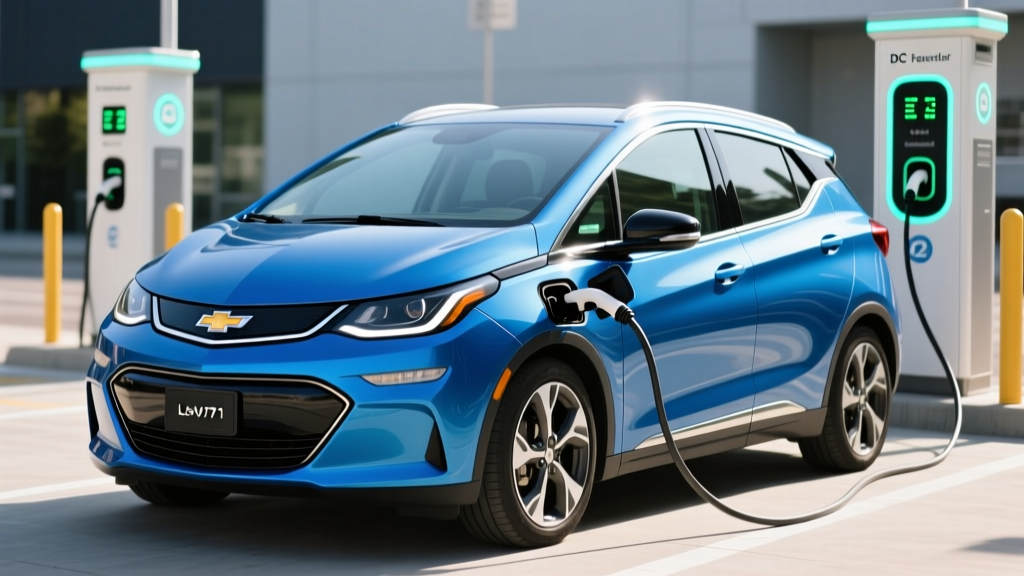
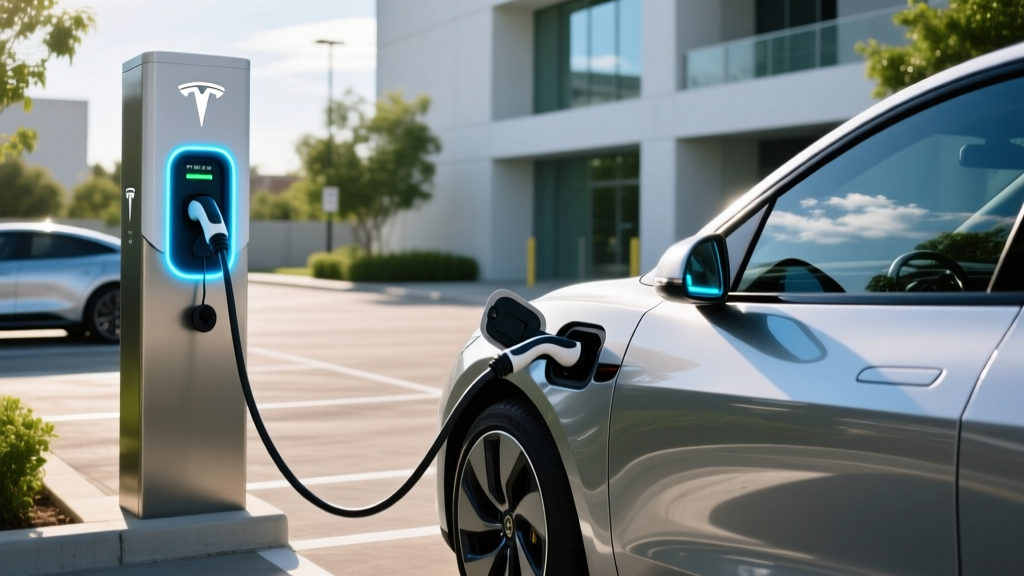
- Tesla Superchargers: Now open to most non-Tesla EVs via NACS connector or built-in Magic Dock CCS adapter at select stations
- Tesla Destination Chargers: Work with any EV using a J1772-to-NACS adapter (or native NACS vehicles)
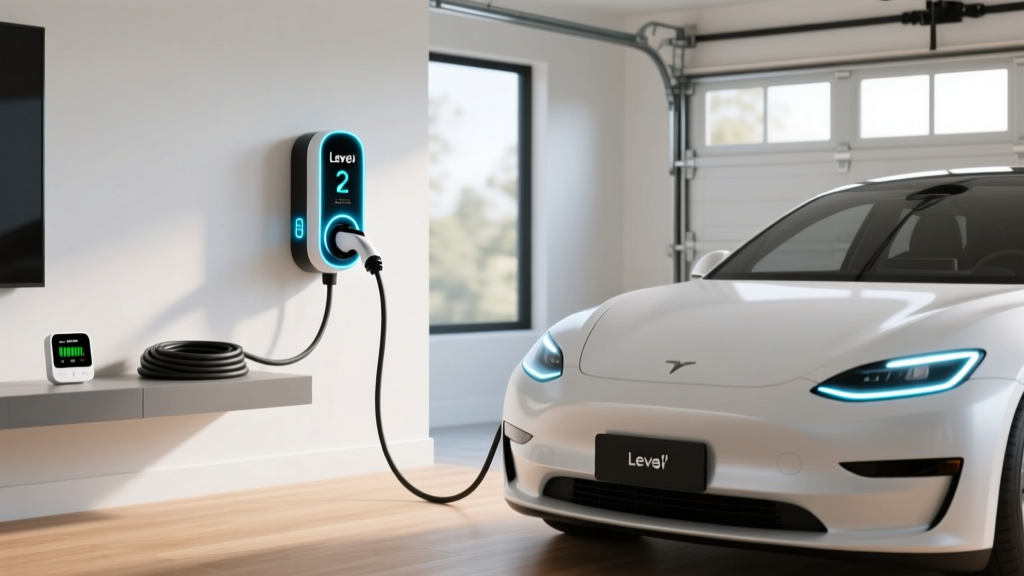
- Tesla Wall Connector (home): Charges any EV with a J1772 adapter; NACS-equipped vehicles plug in directly
Before we map out each charger type, let's ground the discussion in the fundamentals of charging levels, connectors, and the critical difference between kW and kWh.
Charging Levels Explained: kW, kWh, and Miles Per Hour
The single most common EV confusion is mixing up kW (kilowatts — the rate of power delivery, like water pressure in a hose) with kWh (kilowatt-hours — the total energy stored, like gallons in a tank). A 75 kWh battery charged at 11 kW takes roughly 7 hours from empty to full. Understanding this distinction is essential for evaluating any charger.
| Level | Voltage / Power | kW Output | Miles of Range Per Hour | Typical Use Case |
|---|---|---|---|---|
| Level 1 | 120V / 12A | 1.4 kW | 3–5 mi/hr | Emergency / overnight trickle |
| Level 2 | 240V / 32–48A | 7.7–11.5 kW | 25–44 mi/hr | Home, workplace, Destination |
| DC Fast (Level 3) | 400–800V DC | 50–350 kW | 150–1,000+ mi/hr (peak) | Road trips, Superchargers |
Real-world context: A Tesla Model Y Long Range (75 kWh usable battery, EPA-rated 310 miles) charging at a Level 2 station delivering 11.5 kW will add roughly 40 miles of range per hour. That same vehicle at a V3 Supercharger peaking at 250 kW can add approximately 175 miles in 15 minutes — though the charge curve tapers significantly above 80% State of Charge, so sustained speeds are lower than the peak number suggests.
Tesla Supercharger Network: Open Access for Non-Tesla EVs
As of 2026, Tesla has opened a substantial portion of its Supercharger network to non-Tesla vehicles. This expansion followed the broader industry adoption of the NACS connector, which Tesla open-sourced in late 2022. Nearly every major automaker — Ford, GM, Rivian, Hyundai, Kia, BMW, Mercedes-Benz, and others — has committed to NACS as their standard charging port.
How Non-Tesla EVs Access Superchargers
There are two pathways depending on your vehicle's native connector:
- Native NACS vehicles (2025+ Ford F-150 Lightning, GM Ultium models, new Rivian R1T/R1S, etc.): Plug directly into any Supercharger stall using the Tesla app for authentication and payment.
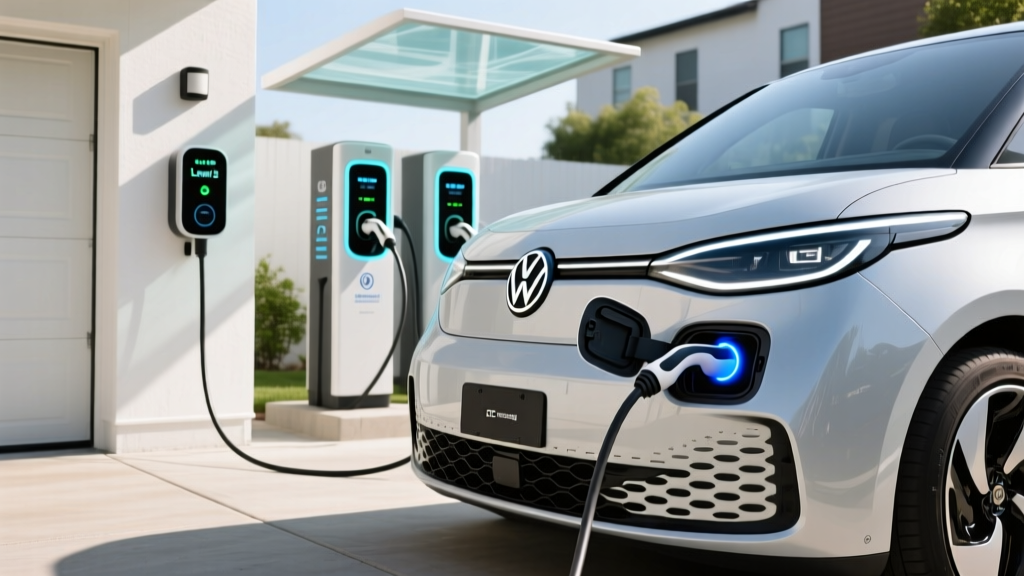
- CCS1-equipped vehicles (most 2024 and earlier non-Tesla EVs): Use Tesla's built-in "Magic Dock" adapter available at designated Supercharger stalls, or carry a third-party CCS-to-NACS adapter. Not all Supercharger locations have Magic Dock — the Tesla app shows which stalls support it.
| Connector Type | Brands Using It (2026) | Tesla Supercharger Access | Adapter Needed? |
|---|---|---|---|
| NACS (Tesla) | Tesla, Ford (2025+), GM (2025+), Rivian (2025+), Hyundai/Kia (2025+), BMW, Mercedes | Direct plug-in | No |
| CCS1 | VW, Audi, Porsche, older Ford/GM/Hyundai, most pre-2025 EVs | Via Magic Dock or adapter | Yes — CCS-to-NACS (~$200–$300) |
| CHAdeMO | Nissan Leaf (legacy), Mitsubishi Outlander PHEV | Not compatible | No reliable adapter exists |
Supercharger Speeds: V3 vs V4
Tesla's current network consists of V3 Superchargers (250 kW peak) and the newer V4 Superchargers (up to 350 kW peak for 800V-architecture vehicles). A Hyundai Ioniq 5 with its 800V battery system can theoretically pull close to 350 kW at a V4 stall, achieving a 10–80% charge in roughly 18 minutes. A 400V vehicle like the Ford Mustang Mach-E will peak lower, around 150–230 kW depending on the model, yielding a 10–80% time of 25–35 minutes.
Tesla Destination Chargers and the Wall Connector at Home
Destination Chargers (Level 2 at Hotels, Restaurants, Businesses)
Tesla Destination Chargers are Level 2 units (typically 11.5 kW / 48A) installed at partner locations. Historically Tesla-only, most Destination Chargers installed or updated since 2024 now feature a NACS connector that works with any NACS-equipped vehicle. For CCS1 vehicles, a NACS-to-J1772 adapter (approximately $100–$170 from brands like Lectron or Ayletch) enables compatibility. Always check the listing on Tesla's website or PlugShare before relying on a specific Destination Charger.
Tesla Wall Connector (Home Charger)
The Tesla Wall Connector (Gen 3) is a Level 2 home charger delivering up to 11.5 kW (48A on a 60A circuit). It comes with a native NACS connector. For non-Tesla EVs with a J1772 port, Tesla sells an official J1772 adapter, and third-party NACS-to-J1772 adapters also work. The Wall Connector is Wi-Fi-enabled for firmware updates and can be configured via the Tesla app, but it does not offer load-sharing with non-Tesla energy products or detailed scheduling without the Tesla ecosystem.
How Much Does It Cost to Install a Home EV Charger?
Installing a Level 2 home charger is the single most impactful upgrade for EV ownership. Costs vary dramatically based on your home's electrical panel capacity and the distance from the panel to your parking spot.
| Component | Typical Cost Range | Notes |
|---|---|---|
| Level 2 Charger (Equipment) | $350–$750 | Tesla Wall Connector ~$475; ChargePoint Home Flex ~$550; Emporia Vue ~$400 |
| Electrician Labor (standard install) | $400–$1,200 | Depends on run length from panel, wall type, conduit needs |
| Electrical Permit | $50–$200 | Required in most jurisdictions; varies by municipality |
| Panel Upgrade (if needed) | $1,500–$4,000 | 100A → 200A service upgrade; common in pre-1990 homes |
| Total (no panel upgrade) | $800–$2,150 | Most homes with 200A service |
| Total (with panel upgrade) | $2,300–$6,350 | Older homes, high-load households |
Electrical Requirements for a Level 2 Charger
A 48A Level 2 charger requires a dedicated 60A, 240V circuit (the National Electrical Code requires circuits to be rated at 125% of continuous load, so 48A × 1.25 = 60A). If you opt for a 32A charger, a 40A circuit suffices. Your electrician will verify:
- Panel capacity: A 200A service panel can typically accommodate a 60A EV circuit. A 100A panel often cannot, especially if you're running central AC, an electric dryer, and an electric oven simultaneously.
- Wire gauge: 6 AWG copper for 60A; 8 AWG for 40A circuits.
- GFCI protection: NEC 2020 and later require GFCI breakers for EV receptacles (NEMA 14-50 outlets). Hardwired installations may not require a separate GFCI breaker depending on local code interpretation — hardwired is generally preferred for reliability and to avoid nuisance trips.
- Outdoor rating: If your charger is installed outside, the unit must carry a NEMA 4 or IP65 weather rating. The Tesla Wall Connector and ChargePoint Home Flex both meet this standard.
Charging Cost Per Mile: Home vs. Public vs. Gas
The economics of EV charging depend heavily on where you charge. Home charging on a time-of-use (TOU) plan is dramatically cheaper than DC fast charging, and both are generally cheaper than gasoline per mile.
| Scenario | $/kWh or $/gal | Vehicle Efficiency | Cost Per Mile |
|---|---|---|---|
| Home (off-peak TOU) | $0.08–$0.14/kWh | 3.0 mi/kWh (typical EV) | $0.03–$0.05 |
| Home (standard rate) | $0.15–$0.22/kWh | 3.0 mi/kWh | $0.05–$0.07 |
| Public Level 2 | $0.20–$0.40/kWh | 3.0 mi/kWh | $0.07–$0.13 |
| DC Fast (Tesla Supercharger) | $0.28–$0.45/kWh | 3.0 mi/kWh | $0.09–$0.15 |
| Gasoline (30 MPG combined) | $3.40/gal (2026 avg) | 30 MPG | $0.11 |
| Gasoline (22 MPG combined) | $3.40/gal | 22 MPG | $0.15 |
The takeaway: If you charge primarily at home on off-peak rates, your fuel cost drops to roughly $0.03–$0.05 per mile — about one-third the cost of gasoline. Even at DC fast-charging rates, most EVs match or beat a 30 MPG gas car per mile. The savings are most dramatic for high-mileage drivers and those with access to cheap home electricity. According to fueleconomy.gov, the average EV owner saves $600–$1,200 annually on fuel compared to a comparable gas vehicle.
Recommended Home Chargers for 2026
Whether you drive a Tesla or a non-Tesla EV, here are three proven Level 2 home chargers that cover the major use cases:
Tesla Wall Connector (Gen 3)
- Power Output: Up to 11.5 kW (48A)
- Connector: Native NACS (J1772 adapter available)
- Cable Length: 24 ft
- Smart Features: Wi-Fi firmware updates, Tesla app integration, power sharing between two units on one circuit
- Price: ~$475
- Best For: Tesla owners or households with NACS-equipped vehicles; cleanest ecosystem integration
ChargePoint Home Flex
- Power Output: Up to 12 kW (50A, configurable down to 16A)
- Connector: J1772 native (NACS adapter included in 2025+ models)
- Cable Length: 23 ft
- Smart Features: ChargePoint app scheduling, Alexa integration, adjustable amperage to match circuit capacity
- Price: ~$550
- Best For: Mixed-EV households (CCS and NACS); flexible amperage for older panels
Emporia Level 2 EV Charger
- Power Output: Up to 11.5 kW (48A)
- Connector: J1772 (NACS adapter available)
- Cable Length: 24 ft
- Smart Features: Energy monitoring via Emporia Vue panel integration, solar-aware scheduling, utility TOU optimization
- Price: ~$400
- Best For: Budget-conscious buyers; homes with Emporia energy monitoring or solar panels
Charging Time Examples: 10–80% for Common EV Batteries
To give you a practical sense of charging speed across different scenarios, here are estimated 10–80% charge times for popular EV battery sizes at each charging level. Note that these assume optimal conditions — cold batteries, high states of charge, and grid congestion can all slow real-world times.
| Battery Size | Example Vehicles | Level 2 (11.5 kW) | DC Fast (150 kW peak) | DC Fast (250 kW peak) |
|---|---|---|---|---|
| 62 kWh (usable) | Chevy Equinox EV, Nissan Leaf Plus | ~4 hr | ~28 min | ~22 min |
| 75 kWh (usable) | Tesla Model Y LR, Ford Mach-E ER | ~5 hr | ~33 min | ~25 min |
| 84 kWh (usable) | Hyundai Ioniq 5, Kia EV6 | ~5.5 hr | ~30 min | ~18 min (800V) |
| 100+ kWh (usable) | GMC Hummer EV, Rivian R1T Max, Chevy Silverado EV | ~7 hr | ~45 min | ~35 min |
Cold-weather caveat: In sub-freezing temperatures, an un-preconditioned battery may accept DC fast charging at dramatically reduced rates — sometimes 50% or less of peak kW. Always use your vehicle's battery preconditioning feature (available on most modern EVs when you navigate to a charger) to warm the battery before arrival. Tesla vehicles precondition automatically when a Supercharger is set as the navigation destination.
Frequently Asked Questions
Do Tesla chargers work on other cars without an adapter?
If your non-Tesla EV has a native NACS charge port (most 2025+ models from Ford, GM, Rivian, Hyundai, Kia, and others), you can plug directly into Tesla Superchargers and Wall Connectors without any adapter. If your vehicle has a CCS1 port, you'll need either a CCS-to-NACS adapter or a Supercharger stall equipped with Tesla's Magic Dock. CHAdeMO vehicles (Nissan Leaf) cannot use Tesla chargers.
How much does it cost to install a home EV charger?
A standard Level 2 home charger installation costs between $800 and $2,150 if your electrical panel has sufficient capacity. This includes the charger unit ($350–$750), electrician labor ($400–$1,200), and a permit ($50–$200). If your home needs a panel upgrade from 100A to 200A service, add $1,500–$4,000, bringing the total to $2,300–$6,350. Always get a quote from a licensed electrician before committing.
How fast will each charging level add range?
Level 1 (120V) adds 3–5 miles per hour — suitable only for overnight trickle charging of PHEVs or emergency use. Level 2 (240V) adds 25–44 miles per hour depending on amperage and vehicle efficiency, fully replenishing most EVs overnight. DC fast charging adds 150–1,000+ miles per hour at peak, enabling a 10–80% charge in 18–45 minutes depending on battery size and charger power.
Which connector or charger is compatible with my EV?
Check your vehicle's charge port: if it's NACS (the smaller, Tesla-style connector), you can use Tesla Superchargers and any NACS-equipped Level 2 charger natively. If it's CCS1 (the larger, oval connector with two DC pins below), you'll need a CCS-to-NACS adapter for Tesla Superchargers but can use any CCS public charger directly. CHAdeMO vehicles are limited to the shrinking CHAdeMO public network and cannot access Tesla infrastructure. Refer to your owner's manual or fueleconomy.gov for your specific model's connector type.
How much does charging cost per mile vs gas?
Home charging on off-peak electricity costs roughly $0.03–$0.05 per mile — about one-third the cost of gasoline at $3.40/gallon in a 30 MPG vehicle ($0.11/mile). Public DC fast charging at $0.28–$0.45/kWh costs $0.09–$0.15 per mile, which is comparable to or slightly cheaper than gas. The savings compound for high-mileage drivers: at 15,000 miles/year, home charging saves approximately $900–$1,200 annually versus a 25 MPG gas car.
What electrical upgrades might I need for a home charger?
The most common upgrade is a panel capacity increase from 100A to 200A service, required when your existing panel can't accommodate a new 60A dedicated circuit alongside your home's other loads. Other potential upgrades include: adding a sub-panel closer to your parking spot (to reduce wire run costs), replacing a Federal Pacific or Zinsco panel (known fire hazards found in mid-century homes), or upgrading your utility service drop if you're adding EV charging alongside solar panels and a heat pump. A licensed electrician can perform a load calculation to determine exactly what's needed per NEC Article 220.