Understanding the Charger Shortage Problem
When EV owners search for how to fix a shortage in a charger, they're typically facing one of three scenarios: insufficient electrical panel capacity to support a Level 2 charger, a charger that delivers less power than the vehicle can accept, or inadequate public charging infrastructure in their area. Each requires a different solution, but all stem from the same root issue—mismatched power supply and demand.
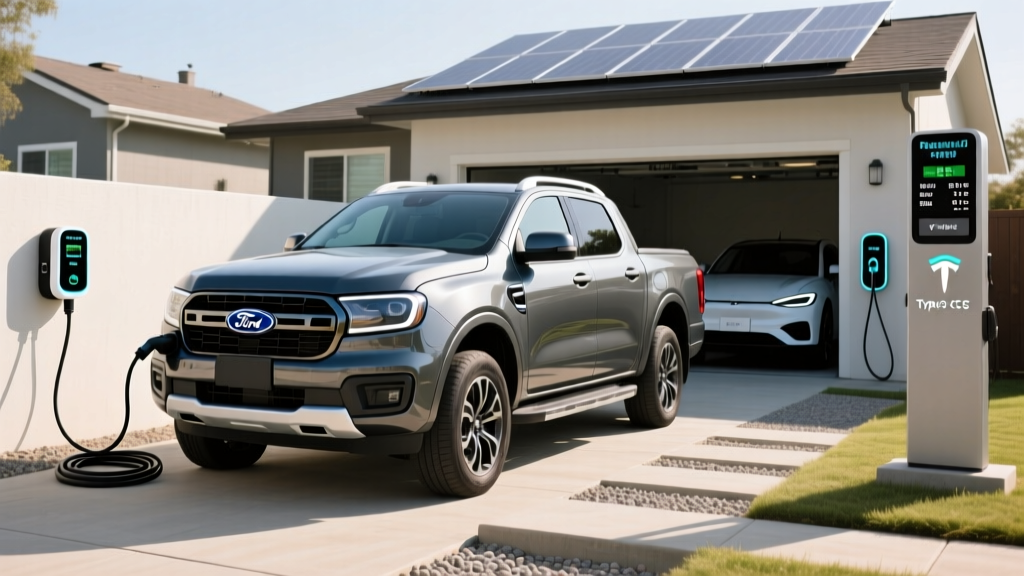
The most common shortage occurs at home. A 2018 electrical panel with 100-amp service may only have 20-30 amps of spare capacity after accounting for HVAC, appliances, and lighting. A 40-amp Level 2 charger draws 9.6 kW continuously—far beyond what's available. The result: slow charging, tripped breakers, or the inability to install a charger at all.
Charging Levels Explained: Speeds and Power Requirements
Before solving a shortage, you need to understand what each charging level delivers. Power is measured in kilowatts (kW), while battery capacity is measured in kilowatt-hours (kWh)—the energy stored. Confusing these units leads to unrealistic expectations.
| Level | Voltage/Amps | Power (kW) | Miles Added Per Hour | Typical Use Case |
|---|---|---|---|---|
| Level 1 | 120V / 12A | 1.4 kW | 3-5 miles | Overnight trickle, PHEVs, low-mileage drivers |
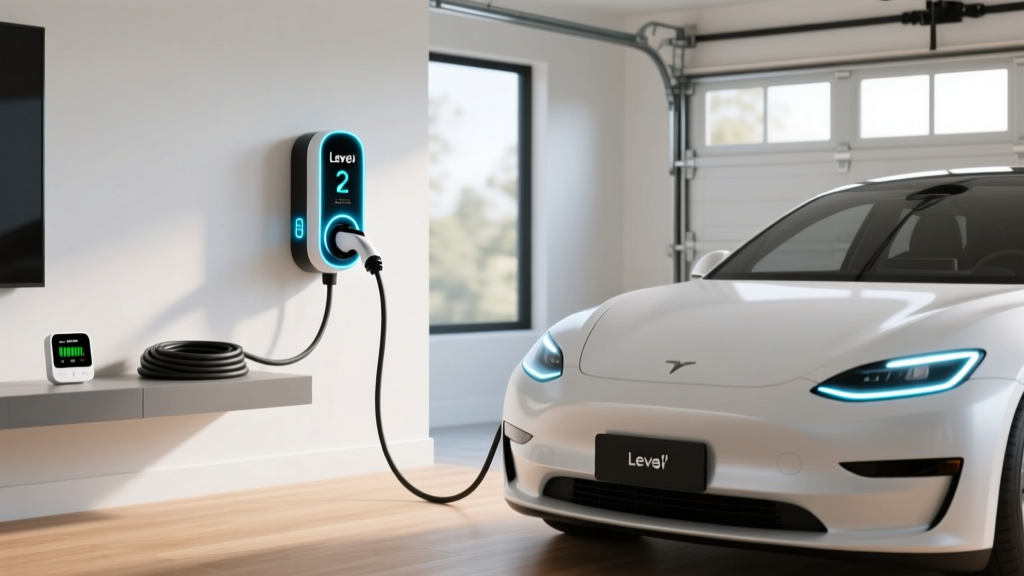
| Level 2 (basic) | 240V / 24A | 5.8 kW | 18-25 miles | Limited panel capacity, smaller batteries |
| Level 2 (standard) | 240V / 40A | 9.6 kW | 30-40 miles | Most EVs, overnight full charge |
| Level 2 (high-power) | 240V / 48-80A | 11.5-19.2 kW | 40-60 miles | Large batteries (F-150 Lightning, Hummer EV) |
| DC Fast | 400-800V DC | 50-350 kW | 150-300+ miles (10-80%) | Road trips, commercial fleets |
A 75 kWh battery (like the Tesla Model Y Long Range) charging at 9.6 kW takes roughly 8 hours from 10% to 90%. At 5.8 kW, that same charge stretches to 13 hours—problematic if you drive 60+ miles daily and need quick turnaround.
Electrical Requirements for Home Level 2 Installation
A standard 40-amp Level 2 charger requires a dedicated 50-amp circuit (NEC code mandates 125% overhead for continuous loads). This means 6 AWG copper wire, a 240V double-pole breaker, and sufficient panel capacity.
Most modern homes with 200-amp service have adequate spare capacity. Older homes with 100-amp panels often don't. An electrician will perform a load calculation per NEC Article 220, tallying existing loads (HVAC tonnage, electric range, water heater, dryer) against panel rating. If spare capacity falls below 40 amps, you have options:
- Panel upgrade: Replace 100A panel with 200A service ($2,500-$4,500 including utility coordination, permits, and labor)
- Load management device: Smart panel monitors real-time consumption and throttles charger when other loads spike ($500-$1,200 hardware + install)
- Lower-amperage charger: Install 24A or 32A unit that fits existing capacity (reduced charge speed)
- Time-of-use scheduling: Charge only during off-peak hours when HVAC and appliances are idle
Installation Cost Breakdown: What You'll Actually Pay
Home charger installation costs vary dramatically based on panel capacity, wire run distance, and local permit fees. Here's a realistic 2026 breakdown:
| Component | Low End | High End | Notes |
|---|---|---|---|
| Level 2 charger (hardware) | $400 | $800 | 32A-48A smart charger with NACS or J1772 |
| Electrician labor (standard install) | $600 | $1,500 | 50-amp circuit, 20-40 ft wire run, outlet or hardwire |
| Permit and inspection | $100 | $400 | Varies by municipality |
| Panel upgrade (if needed) | $2,500 | $4,500 | 100A to 200A service upgrade |
| Load management device | $500 | $1,200 | Alternative to panel upgrade |
| Total (no panel upgrade) | $1,100 | $2,700 | Typical suburban home with 200A service |
| Total (with panel upgrade) | $3,600 | $7,200 | Older home requiring service upgrade |
Some utilities offer rebates covering $300-$1,000 of installation costs. Check with your local provider before scheduling work.
Connector Compatibility: NACS, CCS1, and CHAdeMO
North America has standardized on NACS (North American Charging Standard, originally Tesla's connector) for new vehicles starting in 2025. Most 2025-2026 EVs from Ford, GM, Rivian, Hyundai, Kia, and others now ship with NACS ports. Older vehicles and some 2024 models still use CCS1 (Combined Charging System) or CHAdeMO (Nissan Leaf).
| Connector | Brands Using It | Adapter Availability |
|---|---|---|
| NACS (Tesla-style) | Tesla, Ford, GM, Rivian, Hyundai, Kia, Volvo, Polestar, BMW, Mercedes | CCS-to-NACS adapters available ($200-$350) |
| CCS1 | 2024 and older non-Tesla EVs, some commercial fleets | NACS-to-CCS adapters available ($150-$250) |
| CHAdeMO | Nissan Leaf (discontinued after 2025), Mitsubishi Outlander PHEV | Limited adapter options; network support declining |
For home Level 2 charging, most chargers ship with J1772 connectors (the Level 2 standard). Tesla owners use the included J1772-to-NACS adapter. Non-Tesla NACS vehicles typically include the same adapter in 2025-2026 models. If buying a used charger, verify the connector matches your vehicle or budget for an adapter.
Cost to Charge: Home vs Public vs Gas
Charging cost depends on electricity rates, which vary by state, utility, and time of day. Here's a realistic comparison using a 2026 Hyundai Ioniq 5 (77.4 kWh battery, 3.5 miles/kWh efficiency):
| Charging Scenario | Rate | Cost per 100 Miles | Annual Cost (12k miles) |
|---|---|---|---|
| Home (off-peak TOU rate) | $0.12/kWh | $3.43 | $411 |
| Home (standard residential rate) | $0.18/kWh | $5.14 | $617 |
| Public Level 2 (ChargePoint, EVgo) | $0.35/kWh | $10.00 | $1,200 |
| DC Fast Charging (Electrify America, Tesla Supercharger) | $0.48/kWh | $13.71 | $1,645 |
| Gas vehicle (28 MPG combined, $3.40/gal) | $3.40/gal | $12.14 | $1,457 |
Home charging at off-peak rates delivers the lowest cost—roughly $0.03-$0.05 per mile vs $0.12-$0.15 for gas. Public DC fast charging narrows the gap and can exceed gas costs in high-price markets. For maximum savings, install a Level 2 charger at home and use time-of-use rates to charge between 10 PM and 6 AM.
Equipment Recommendations: 2026 Level 2 Chargers
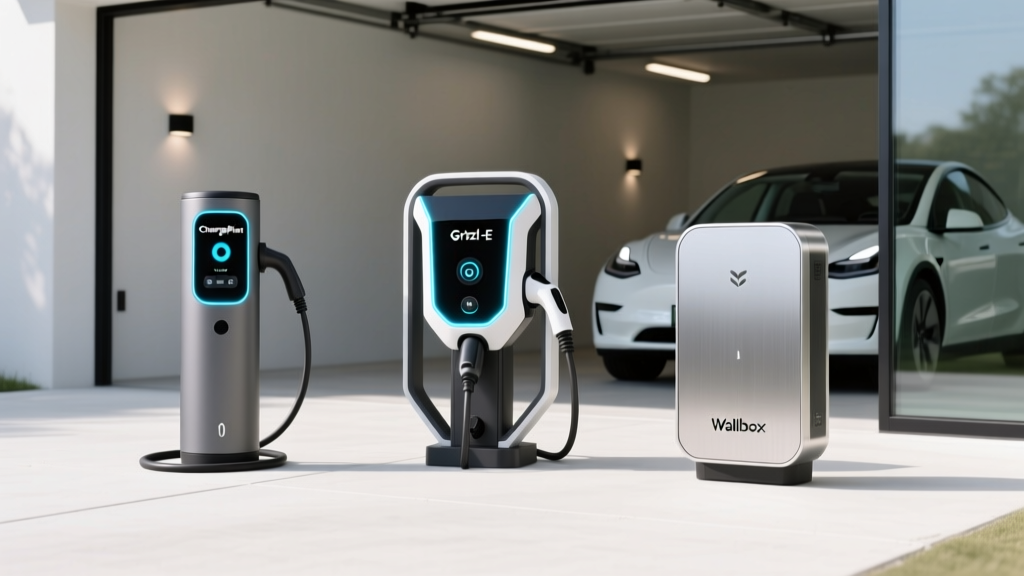
Here are three proven Level 2 chargers for different needs and budgets:
Emporia Vue Level 2 EV Charger
- Power: 48A / 11.5 kW (240V)
- Connector: J1772 (NACS adapter included for Tesla/NACS vehicles)
- Cable length: 24 feet
- Smart features: Wi-Fi, app scheduling, energy monitoring, load balancing with Emporia panel monitor
- Price: $599
- Best for: Homes with Emporia energy monitoring, large batteries needing 48A
ChargePoint Home Flex
- Power: Configurable 16A-50A / 3.8-12 kW (240V)
- Connector: J1772 (25-foot cable)
- Smart features: Wi-Fi, app control, Alexa integration, flexible amperage for limited panels
- Price: $699
- Best for: Homes with 30-40A spare capacity (set to 24A or 32A)
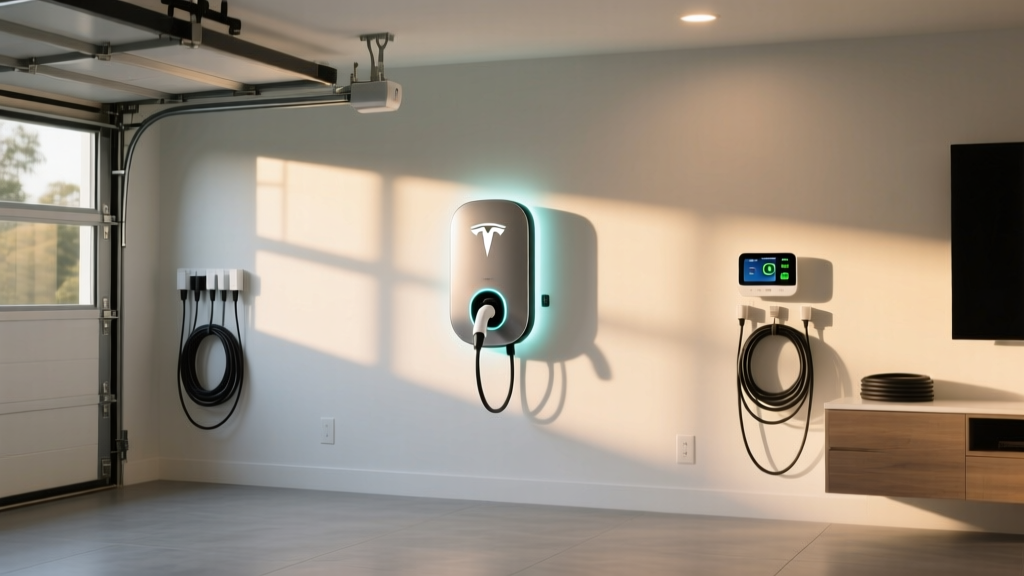
Tesla Wall Connector
- Power: 48A / 11.5 kW (240V)
- Connector: NACS native (J1772 adapter available separately)
- Cable length: 24 feet
- Smart features: Wi-Fi, power sharing (multiple units on one circuit), over-the-air updates
- Price: $475
- Best for: Tesla owners, multi-EV households with NACS vehicles
All three are UL-listed, NEMA 4-rated for outdoor installation, and compatible with hardwire or NEMA 14-50 outlet mounting. Hardwire is preferred for 48A+ units (NEMA 14-50 outlets are rated for 50A continuous, but some jurisdictions require GFCI breakers that can nuisance-trip).
Safety and Code Considerations
EV charger installation must comply with NEC Article 625 and local amendments. Key requirements:
- Dedicated circuit: Charger cannot share a circuit with other loads
- GFCI protection: Required for outdoor installations and some indoor jurisdictions (2023 NEC update)
- Outlet height: 18-48 inches above floor (ADA compliance in commercial, best practice at home)
- Wire gauge: 6 AWG copper for 50A circuit, 4 AWG for 60A+
- Outdoor rating: NEMA 4 or 4X enclosure for weather resistance
- Permit and inspection: Required in most jurisdictions; unpermitted work may void insurance
Never use extension cords or adapters to convert 120V outlets to 240V. Never install a charger on a circuit with insufficient wire gauge or breaker rating. Hire a licensed electrician familiar with NEC Article 625—EV-specific experience matters.
Real-World Charging Times: What to Expect
Manufacturer-stated charging times assume ideal conditions (battery preconditioned, ambient temperature 65-75°F, sustained peak power). Real-world times vary due to charging curve taper, cold weather, and battery state of charge.
| Vehicle (Battery Size) | Level 2 at 9.6 kW | Level 2 at 11.5 kW | DC Fast (Peak kW) |
|---|---|---|---|
| Tesla Model 3 RWD (60 kWh) | 4.5 hours | 3.8 hours | 18 min (170 kW peak) |
| Hyundai Ioniq 5 (77.4 kWh) | 5.8 hours | 4.8 hours | 18 min (240 kW peak, 800V) |
| Ford F-150 Lightning (131 kWh) | 9.5 hours | 8 hours | 41 min (150 kW peak) |
| Chevy Equinox EV (85 kWh) | 6.3 hours | 5.3 hours | 32 min (150 kW peak) |
DC fast charging slows dramatically above 80% to protect battery longevity. A 10-80% charge at a 240 kW station may take 18 minutes, but 80-100% can add another 20-30 minutes. For daily driving, charge to 80-90% at home overnight and use DC fast charging only for road trips.
FAQ: Solving Charger Shortages
How much does it cost to install a home EV charger?
A standard Level 2 installation with adequate panel capacity costs $1,100-$2,700 (charger + electrician + permit). If your home needs a 100A-to-200A panel upgrade, total cost rises to $3,600-$7,200. Load management devices offer a $500-$1,200 alternative to panel upgrades in some cases.
How fast will each charging level add range?
Level 1 (120V) adds 3-5 miles per hour. Level 2 at 9.6 kW (40A) adds 30-40 miles per hour. DC fast charging adds 150-300+ miles in a 20-30 minute session (10-80% SoC), depending on vehicle and station power.
Which connector/charger is compatible with my EV?
2025-2026 vehicles from Tesla, Ford, GM, Hyundai, Kia, Rivian, and most others use NACS. Older non-Tesla EVs use CCS1. Nissan Leaf uses CHAdeMO. For home Level 2, most chargers use J1772; Tesla and NACS vehicles include adapters. Verify your vehicle's port before purchasing a charger.
How much does charging cost per mile vs gas?
Home charging at off-peak rates costs $0.03-$0.05 per mile. Gas at 28 MPG and $3.40/gallon costs $0.12 per mile. Public DC fast charging costs $0.10-$0.14 per mile—competitive with gas but higher than home charging.
What electrical upgrades might I need?
If your home has 100-amp service and existing loads consume 70+ amps, you'll likely need a panel upgrade to 200A ($2,500-$4,500) or a load management device ($500-$1,200) that throttles the charger when other appliances run. An electrician's load calculation determines your spare capacity.
For more on EV efficiency ratings, see the EPA's EV technology guide. For federal tax credit eligibility on EV purchases, consult the IRS clean vehicle credit page.