The Unique Challenge of Detached Garage EV Charging
As electric vehicle adoption accelerates, homeowners are increasingly confronted with a distinct architectural hurdle: the detached garage. Unlike attached garages where an EV charger can easily draw power from a shared interior wall or a nearby main electrical panel, detached structures require bridging a significant physical gap. This distance introduces complex variables regarding voltage drop, trenching costs, and local code compliance. However, as the EV infrastructure industry matures, the approach to powering these remote spaces is undergoing a radical transformation. We are moving away from brute-force copper trenching toward intelligent, decentralized energy ecosystems that prioritize efficiency, resilience, and long-term scalability.
The Current Baseline: Trenching, Conduit, and Subpanels
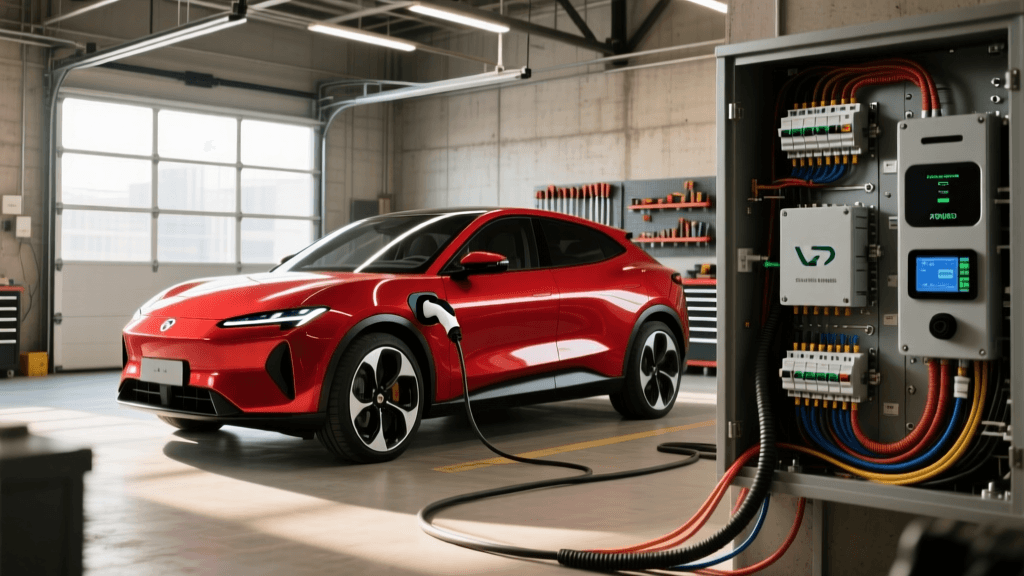
Today, the standard method for installing a Level 2 EV charger in a detached garage involves digging a trench from the main house to the garage, laying PVC conduit, and pulling heavy-gauge copper wire to a newly installed subpanel. According to the National Electrical Code (NEC), detached structures with their own subpanels require specific grounding electrode systems and disconnecting means to ensure safety. For a standard 50-amp circuit capable of delivering 40 amps of continuous charge (ideal for vehicles like the Ford F-150 Lightning or Tesla Model Y), electricians typically recommend 4 AWG or 6 AWG copper THWN-2 wire, depending on the exact distance and calculated voltage drop.
The financial pain point of this traditional method is substantial. Trenching through landscaping, driveways, or concrete walkways can add thousands of dollars to the project. The U.S. Department of Energy notes that while standard home charging installations average between $1,000 and $2,500, complex runs requiring extensive trenching and main panel upgrades can easily exceed $4,500. As copper prices remain volatile and labor costs rise, the industry is actively seeking alternative topologies that reduce reliance on continuous, high-amperage physical wire runs.
Future Trend 1: Localized Microgrids and Solar Carports
The most significant industry outlook for detached garages involves decoupling the EV charger from the home's main electrical panel entirely. Instead of trenching, forward-thinking installers and homeowners are turning to localized microgrids. By constructing a solar carport adjacent to or integrated with the detached garage, owners can generate, store, and dispense power on-site.
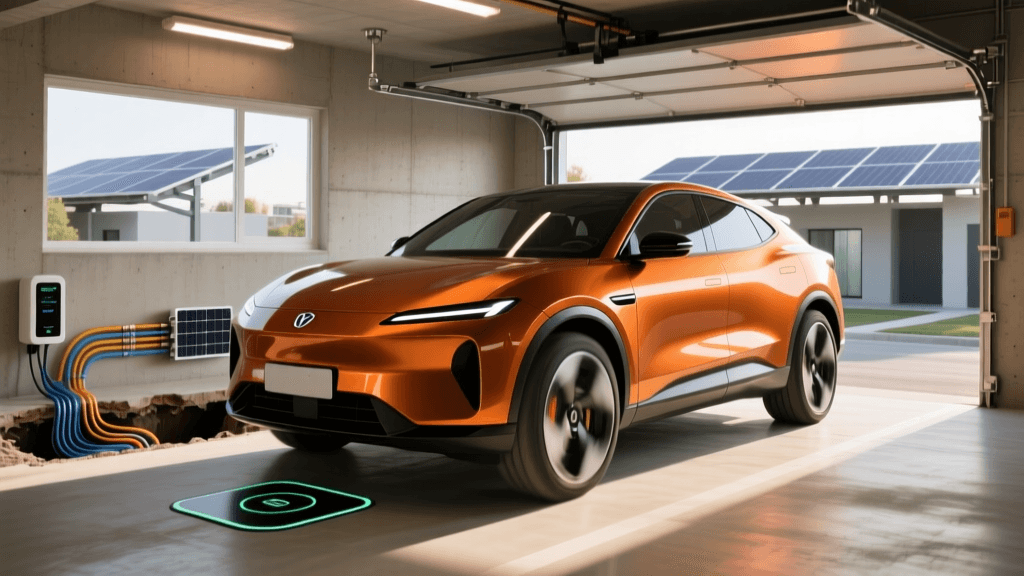
Systems utilizing Enphase IQ microinverters paired with a localized battery storage solution (such as a Tesla Powerwall or FranklinWH aPower) can create a self-sustaining charging hub. This approach entirely bypasses the need for a 100-foot underground wire run. The solar canopy generates DC power, converts it to AC, and stores excess in the garage-mounted battery. When you plug in your EV at night, the charger draws from the localized battery rather than the distant main grid. This trend not only solves the trenching dilemma but also provides resilience during grid outages, transforming the detached garage into an independent energy node capable of sustaining the household's transportation needs regardless of external grid conditions.
Future Trend 2: Dynamic Load Management Over Long Runs
For those who must rely on a physical connection to the main house, smart load management is revolutionizing wire gauge requirements. Traditionally, to prevent voltage drop over a 150-foot run, an electrician might need to upsize to expensive 2 AWG or even 1 AWG copper wire. However, next-generation smart chargers like the FLO Home X5 or the ChargePoint Home Flex are increasingly being paired with dynamic load-sharing CT (Current Transformer) clamps.
These smart systems monitor the real-time energy consumption of the main house. If the house is drawing heavy power (e.g., HVAC and electric oven are running), the system dynamically throttles the amperage sent to the detached garage charger. Because the system guarantees that the total combined load will never exceed the main breaker's capacity, electrical codes in many jurisdictions allow for the use of thinner, more affordable wire gauges over long distances. Furthermore, these systems rely on robust network communication. Homeowners are now pulling shielded Cat6 Ethernet or fiber-optic cables alongside the power lines to ensure the detached garage charger maintains a low-latency connection to the home's network, allowing the load-balancing algorithms to function flawlessly without relying on spotty Wi-Fi signals across the yard.
Future Trend 3: Inductive Wireless Charging Pads
Looking further down the industry roadmap, the physical act of plugging in a heavy, stiff charging cable in an unheated or cramped detached garage will become obsolete. Inductive wireless power transfer (WPT) is rapidly advancing from commercial fleet testing to residential viability. Companies like WiTricity are pioneering magnetic resonance charging pads that are embedded directly into the concrete floor of the garage, with a corresponding receiver pad mounted to the undercarriage of the EV.
For detached garages, this means the high-voltage equipment and grid connections can be housed safely in an exterior, weatherproof pedestal outside the garage, while only low-profile, specialized wiring is needed inside. As the National Renewable Energy Laboratory (NREL) continues to research and validate wireless charging efficiencies, we are approaching a tipping point where residential inductive pads will offer comparable 11kW to 19kW Level 2 charging speeds with near-perfect alignment automation, completely changing the spatial design of detached garage interiors and eliminating cable wear and tear.
Cost & ROI: Traditional vs. Future-Forward Installations
To understand the shifting economics of detached garage EV charging, consider the following comparison of current and emerging installation methodologies.
| Installation Method | Estimated Cost | Disruption Level | Future-Proofing Value |
|---|---|---|---|
| Traditional Trench & Subpanel (50A) | $3,500 - $6,000 | High (Digging, Concrete Repair) | Moderate (Limited by wire gauge) |
| Solar Carport & Local Battery | $12,000 - $18,000 | High (Structural Build) | Exceptional (Off-grid capable, V2H ready) |
| Smart Load-Sharing (Thinner Wire) | $2,000 - $3,500 | Moderate (Narrow trenching) | High (Software-managed upgrades) |
| Embedded Inductive Pad (Future) | $4,000 - $7,000 (Projected) | Low (Core drilling only) | Exceptional (Zero physical wear) |
Actionable Advice: Future-Proofing Your Trench Today
If you are installing a Level 2 charger in a detached garage today and must rely on traditional trenching, you can still adopt a future-forward mindset. The golden rule of modern EV infrastructure is to separate the cost of digging from the cost of wire. Digging the trench is the most expensive and disruptive part of the job.
Always install oversized conduit. Even if your electrician is only pulling 6 AWG wire through a 1-inch pipe today, insist on laying a 1.5-inch or 2-inch Schedule 80 PVC conduit. Furthermore, pull a secondary, empty conduit alongside the first. This "dark conduit" costs pennies on the dollar during the initial excavation but will be invaluable in five to ten years when you upgrade to an 80-amp circuit for faster charging, or when you install a bidirectional Vehicle-to-Home (V2H) system that requires additional communication and heavier power lines.
Bidirectional chargers, such as the Ford Charge Station Pro or GM's upcoming Ultium Home solutions, require specific 4-wire setups and isolated busbar configurations to handle back-fed power safely during a grid outage. Ensuring your detached garage subpanel is rated for at least 100 amps—and features a dedicated, isolated busbar setup—will prepare your space for V2H integration. As battery capacities grow and DC fast-charging home prototypes enter the residential market, having the physical panel space and conduit pathways to accommodate future tech will save you from tearing open drywall and replacing panels in the near future. The detached garage is no longer just a place to store tools; it is the critical energy gateway for the modern electric home.