The Evolution of the Detached Garage Energy Hub
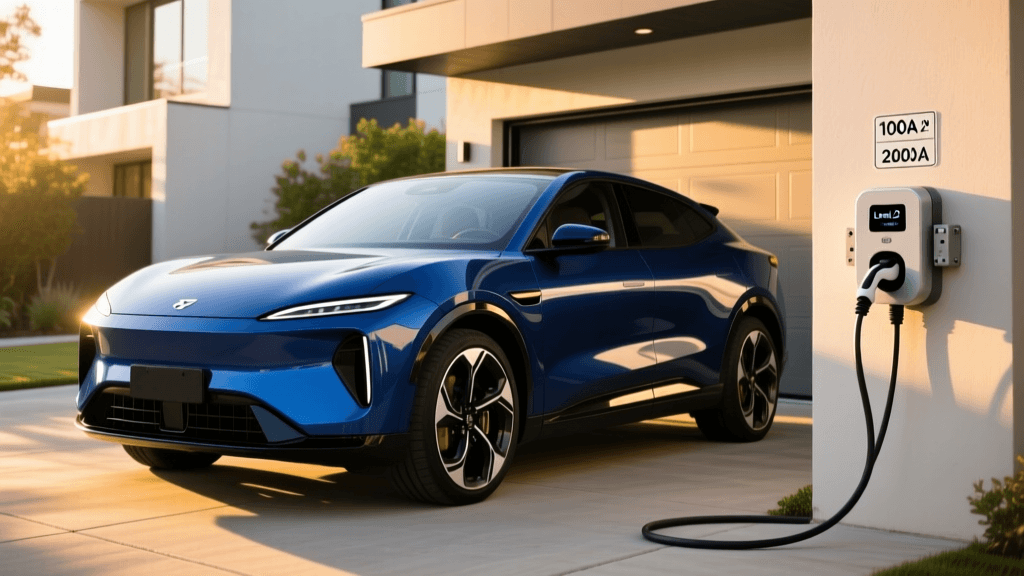
For decades, the detached garage was a simple storage space for tools, lawnmowers, and weekend projects. Today, it is rapidly evolving into the most critical energy node on a modern property. As electric vehicle (EV) adoption accelerates, homeowners with detached garages face unique installation challenges—primarily trenching, voltage drop over long distances, and main panel capacity limits. However, looking through the lens of future industry trends, a detached garage EV charger installation is no longer just about running a 240-volt wire. It is about preparing for bidirectional charging, wireless charging pads, solar carports, and localized battery storage.
According to the U.S. Department of Energy, home charging accounts for over 80% of all EV charging sessions. For properties where the main electrical panel is located in the primary residence, routing power to a detached structure requires strategic foresight. In this guide, we explore how to future-proof your detached garage EV charging setup, balancing current Level 2 charging needs with the next decade of automotive and grid technology.
Trenching and Conduit: Digging Once for the Future
The most expensive and labor-intensive part of a detached garage installation is trenching. Whether your garage is 30 feet or 150 feet from your main home, the physical act of digging, laying conduit, and backfilling is a fixed cost that should never be repeated. The industry standard is shifting away from direct-burial wiring toward oversized, easily accessible conduit systems.
Upgrading to 2-Inch Schedule 80 PVC
While a standard 1-inch PVC conduit can easily house the 6 AWG or 4 AWG copper wire needed for a 48-amp Level 2 charger like the ChargePoint Home Flex, future-proofing demands a 2-inch Schedule 80 PVC conduit. Why? Future EVs and heavy-duty electric trucks (like the Chevy Silverado EV or Ford F-150 Lightning) may require dual-charger setups or 80-amp continuous circuits, necessitating much thicker 1 AWG or 1/0 AWG wiring. Furthermore, a 2-inch conduit allows you to pull a secondary fiber-optic or Cat6A ethernet line alongside your power lines, ensuring your detached garage has the hardwired bandwidth required for advanced smart-home security and ultra-fast charger firmware updates without relying on spotty Wi-Fi.
- Current Standard: 1-inch PVC, 6 AWG Copper (50A breaker, 40A continuous charge).
- Future-Proof Standard: 2-inch Schedule 80 PVC, pulling string installed, 4 AWG Copper (or 2 AWG Aluminum for runs over 100 feet to mitigate voltage drop).
- Pro-Tip: Always install a nylon pull string inside the conduit. This reduces the cost of future wire upgrades by up to 70%, as electricians can simply use the string to pull new cables through the existing underground pathway.
Sub-Panels, Load Management, and the NEC
When feeding a detached structure, the National Fire Protection Association (NFPA) outlines strict rules under NEC Article 225 (Outside Branch Circuits and Feeders). You are generally required to install a disconnect switch at the detached garage and establish a separate grounding electrode system. Rather than just installing a simple disconnect, the modern approach is to install a 100-amp or 125-amp smart sub-panel inside the detached garage.
Automated Load Shedding
As we add EV chargers, electric snowmelt systems, and HVAC to detached workshops, the localized load can spike dramatically. Smart panels like the SPAN Drive or systems utilizing the Emporia Vue 3 energy monitor allow for automated load shedding. If you are welding in the garage and the EV charger is active, the smart panel can dynamically throttle the charger's amperage down to prevent tripping the main breaker, ramping it back up the moment you turn off the welder. This software-defined power distribution is a massive trend in residential electrical design, eliminating the need for expensive main service upgrades (e.g., jumping from 200A to 400A service).
The Horizon: V2H, V2G, and Battery Storage
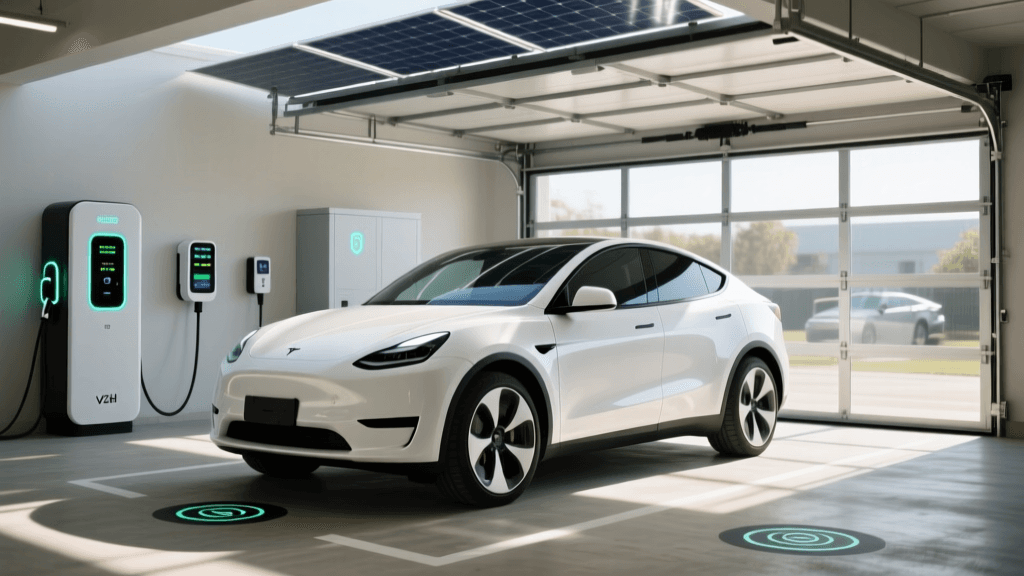
The most disruptive trend in EV infrastructure is Vehicle-to-Home (V2H) and Vehicle-to-Grid (V2G) technology. The National Renewable Energy Laboratory (NREL) has extensively documented how bidirectional charging can transform EVs into mobile power plants. If your main home loses power during a storm, a V2H-capable EV plugged into your detached garage can theoretically power your primary residence.
Preparing for Bidirectional Flow
To support V2H, your detached garage sub-panel must be wired with a 4-quadrant inverter setup and an automatic transfer switch (ATS). While currently limited to vehicles like the Hyundai Ioniq 5 and Ford F-150 Lightning, industry standards like ISO 15118-20 are paving the way for universal DC bidirectional charging. Running a 4-wire feeder (two hots, neutral, ground) with an oversized neutral wire is critical today, as bidirectional systems rely heavily on the neutral path to balance loads between the garage sub-panel and the main house.
Solar Carports and Localized Battery Storage
For detached garages with south-facing roofs, integrating a solar canopy is becoming highly cost-effective. Instead of trenching power to the garage, homeowners are installing Tesla Powerwall 3 or Enphase IQ 5P batteries inside the detached garage, paired with rooftop solar. This creates an independent microgrid. You charge your EV using the sun, store excess in the Powerwall, and completely bypass the need to upgrade the main home's electrical panel or trench heavy-gauge wire across your driveway.
Wireless Charging: Embedding the Future in Concrete
While Level 2 plug-in chargers like the Tesla Wall Connector dominate today, inductive wireless charging is the ultimate end-game for residential convenience. Companies like WiTricity are developing high-efficiency magnetic resonance pads that can be embedded directly into the garage floor or the driveway just outside the detached structure. If you are pouring a new concrete slab for your detached garage or replacing the driveway apron, installing a blank 4-inch PVC stub-up in the center of the parking pad is a low-cost preparation step. This allows future wireless charging transmitters to be routed up through the concrete without the need for destructive core drilling.
Cost Analysis: Traditional vs. Future-Proofed Detached Installs
Investing in future-proofing increases upfront material and labor costs but drastically reduces the total cost of ownership over a 10-to-15-year horizon. Below is a comparative breakdown of installation scenarios for a typical 60-foot trench to a detached garage.
| Installation Scenario | Key Components | Estimated Cost Range | Future-Proof Rating |
|---|---|---|---|
| Basic Direct Burial | 6 AWG UF-B Cable, 50A Breaker, Standard Disconnect | $2,800 - $4,200 | Low (Hard to upgrade) |
| Standard Conduit | 1-inch PVC, 6 AWG THHN, 100A Sub-Panel | $3,500 - $5,500 | Medium (Room for 1 upgrade) |
| Future-Proof Trench | 2-inch Sch 80 PVC, Pull String, Cat6A, 125A Sub-Panel | $4,800 - $7,000 | High (Ready for 80A+ & V2H) |
| Microgrid / Solar Carport | Solar Canopy, Powerwall 3, 100A Sub-Panel, No Trench | $22,000 - $35,000 | Maximum (Off-grid capable) |
| Wireless Pad Prep | 4-inch PVC Stub-up, Junction Box in Slab (Add-on) | +$400 - $800 | High (Wireless ready) |
Actionable Steps for Homeowners Today
If you are planning a detached garage EV charger installation this year, follow these actionable steps to ensure your property is ready for the automotive trends of the 2030s:
- Mandate Oversized Conduit: Write "2-inch Schedule 80 PVC with pull string" into your electrician's contract. The material cost difference is less than $150, but the future labor savings are in the thousands.
- Calculate Voltage Drop Early: For runs over 100 feet, use an online voltage drop calculator. Stepping up to 2 AWG aluminum wire (XHHW-2) is often cheaper than copper and handles the distance efficiently while leaving headroom for future 80-amp circuits.
- Install a Smart Sub-Panel: Skip the basic 60-amp disconnect box. Install a 125-amp main breaker panel in the garage to serve as a hub for the EV charger, future workbench tools, and potential battery storage inverters.
- Pre-Wire for V2H: Ensure your electrician installs a properly sized neutral wire and leaves physical space in the sub-panel for an automatic transfer switch and bidirectional inverter, which will be essential for utilizing your EV as a backup generator.
By treating your detached garage not as an afterthought, but as a forward-looking energy hub, you protect your home's value and ensure seamless compatibility with the next generation of electric vehicles, solar integration, and smart grid technologies.