DCFC Charging: The Complete Speed, Cost, and Setup Breakdown
If you're researching electric vehicles, you've likely encountered the term DCFC charging — Direct Current Fast Charging. It's the technology that enables a 300-mile road trip in an EV by replenishing hundreds of miles of range in minutes rather than hours. But DCFC is only one piece of the EV charging ecosystem, and understanding how it fits alongside Level 1 and Level 2 charging is essential for making smart ownership decisions.
This guide covers the three charging levels with exact speeds, home installation requirements and real costs, connector compatibility across every major brand, cost-per-mile comparisons versus gasoline, and specific equipment recommendations. Every figure here reflects current 2026 pricing and vehicle specs.
kW (kilowatts) measures power — how fast energy flows into your battery, like water pressure from a hose. kWh (kilowatt-hours) measures energy — the total amount stored, like gallons in a tank. A 150 kW DCFC charger delivering power for one hour would add 150 kWh (though no session works this way due to charge-curve taper). Never use these interchangeably.
Charging Levels Explained: Speeds and Range Added Per Hour
Every EV sold in the United States supports three categories of charging. The speed difference between them is enormous — and understanding the kW output at each level determines whether you're waiting 40 hours or 20 minutes.
| Level | Voltage | Max Power (kW) | Miles of Range Added Per Hour | Typical Use Case |
|---|---|---|---|---|
| Level 1 | 120V AC | 1.4–1.9 kW | 3–5 miles | Overnight top-up, PHEVs, emergencies |
| Level 2 | 240V AC | 7.2–19.2 kW | 20–65 miles | Daily home/work charging |
| DCFC (Level 3) | 400–800V DC | 50–350+ kW | 150–1,200+ miles (equivalent rate) | Road trips, quick public top-ups |
Level 1 uses a standard household 120V outlet and the portable cord that ships with most EVs. At 1.4–1.9 kW, it adds roughly 3–5 miles of range per hour — adequate for plug-in hybrids with small batteries (e.g., a Toyota RAV4 Prime with 18.1 kWh usable battery) but painfully slow for a full-size BEV with an 80+ kWh pack.
Level 2 requires a dedicated 240V circuit, identical in voltage to a clothes dryer or electric oven. This is the workhorse of daily EV ownership. A typical 48-amp Level 2 station delivers 11.5 kW, adding roughly 35–45 miles per hour depending on vehicle efficiency. Most EVs reach a full charge overnight in 6–10 hours at this rate.
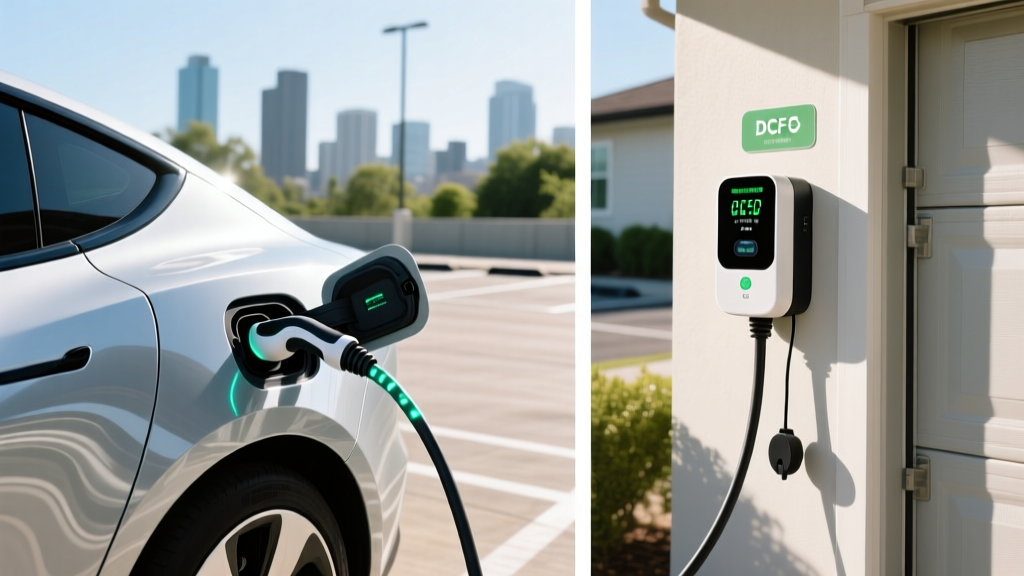
DCFC charging bypasses the vehicle's onboard charger and feeds direct current straight to the battery at much higher voltages (400V architecture) or ultra-high voltages (800V architecture, as in the Hyundai Ioniq 5, Kia EV6, and Porsche Taycan). Peak charge rates vary enormously: a Chevrolet Equinox EV peaks around 150 kW, while a Hyundai Ioniq 5 on a 350 kW charger can sustain over 230 kW in ideal conditions, achieving a 10–80% charge in approximately 18 minutes.
No DCFC session sustains peak kW from start to finish. Charging speed is fastest between roughly 10–50% State of Charge (SoC), then tapers significantly above 80% to protect battery health. A "350 kW" charger may only deliver that peak for a narrow window. This is why manufacturers quote 10–80% times rather than 0–100% — the final 20% can take as long as the first 70%.
How Fast Will Each Charging Level Add Range? Real-World Examples
Charging speed depends on both the charger's output and the vehicle's maximum acceptance rate. Here are concrete 10–80% charge times for common battery sizes at each level:
| Battery Size | Example Vehicles | Level 1 (1.4 kW) | Level 2 (11.5 kW) | DCFC (150 kW) | DCFC (350 kW capable) |
|---|---|---|---|---|---|
| 60 kWh usable | VW ID.4 Standard, Nissan Ariya | ~30 hours | ~3.7 hours | ~28 min | ~25 min (vehicle limited) |
| 77 kWh usable | Tesla Model Y LR, Ford Mustang Mach-E ER | ~38 hours | ~4.7 hours | ~32 min | ~25 min (Tesla V4 Supercharger) |
| 84 kWh usable | Hyundai Ioniq 5 (800V), Kia EV6 | ~42 hours | ~5.1 hours | ~35 min | ~18 min (800V architecture) |
| 100 kWh usable | Cadillac Escalade IQ, GMC Sierra EV | ~50 hours | ~6.1 hours | ~42 min | ~32 min (if vehicle supports 350 kW) |
These times assume preconditioned batteries and moderate ambient temperatures (60–80°F). Cold-weather DCFC sessions can be 30–50% slower if the battery isn't adequately preconditioned — a critical factor we'll revisit in the equipment section.
Home EV Charger Installation: Electrical Requirements and Costs
Home Level 2 charging is where most EV owners do 85–95% of their charging. Installing a dedicated Level 2 station isn't as simple as plugging in a lamp — it requires electrical planning, permits, and potentially a panel upgrade.
Electrical Requirements
A standard Level 2 charger requires a dedicated 240V circuit. The most common configurations:
- 40-amp circuit (NEMA 14-50 outlet or hardwired): Delivers up to 32 amps continuous (9.6 kW). Sufficient for most daily needs.
- 50-amp circuit (NEMA 14-50 or hardwired): Delivers up to 40 amps continuous (9.6 kW). The NEMA 14-50 outlet is rated for 50 amps.
- 60-amp circuit (hardwired only): Delivers up to 48 amps continuous (11.5 kW). Required for faster Level 2 charging.
- 80-amp circuit (hardwired): Delivers up to 64 amps (15.4–19.2 kW). Supported by a limited number of EVs (e.g., certain Tesla configurations with dual onboard chargers).
The National Electrical Code (NEC) requires that continuous loads (including EV charging, which qualifies as a continuous load running 3+ hours) use only 80% of a circuit's rated capacity. A 40-amp breaker therefore supports 32 amps of continuous draw.
Panel Upgrade Considerations
Older homes with 100-amp electrical service panels may not have sufficient spare capacity for a dedicated 40–60 amp EV circuit. An electrician will perform a load calculation per NEC Article 220 to determine available headroom. If your panel is near capacity, you may need:
- A panel upgrade from 100A to 200A service ($2,500–$5,000+)
- A load-management device that throttles charger amperage when other high-draw appliances are running ($200–$500 for the device, plus installation)
- A secondary sub-panel if the main panel has no physical breaker slots remaining
Permits and Inspections
Most jurisdictions require an electrical permit for EV charger installation, typically costing $50–$250. The work must pass inspection to ensure code compliance. Skipping the permit risks insurance claim denial if an electrical fire occurs and may cause issues at home sale.
How Much Does It Cost to Install a Home EV Charger?
Installation costs vary dramatically based on your home's electrical infrastructure, the distance from panel to charger location, and local labor rates. Here's a realistic breakdown for 2026:
| Cost Component | Simple Install (panel nearby, 200A service) | Complex Install (long run, panel upgrade needed) |
|---|---|---|
| Level 2 charger equipment (40–48A) | $350–$700 | $350–$700 |
| Electrician labor (2–4 hrs simple / 6–12 hrs complex) | $400–$1,000 | $1,200–$3,000 |
| Electrical materials (wire, conduit, breaker) | $100–$300 | $300–$800 |
| Permit and inspection | $50–$250 | $50–$250 |
| Panel upgrade (if needed) | $0 | $2,500–$5,000+ |
| Total | $900–$2,250 | $4,400–$9,750+ |
Many utility companies offer rebates of $250–$1,000 for Level 2 charger installation, and some states provide additional incentives. Check with your local utility before scheduling work. The federal Residential Clean Energy Credit (as outlined by the IRS) may also cover a portion of qualified home charging equipment costs — consult a tax professional for eligibility, as rules and caps are subject to change.
Which Connector Is Compatible With My EV?
The EV connector landscape has shifted dramatically. As of 2026, the North American Charging Standard (NACS), developed by Tesla, has become the dominant connector after Ford, GM, Rivian, Hyundai/Kia, Volvo, BMW, and nearly every other major automaker adopted it. However, CCS1 and CHAdeMO vehicles remain on the road, and adapters bridge the gaps.
| Connector | Native Vehicle Brands | DCFC Availability | Adapter Needed For |
|---|---|---|---|
| NACS (Tesla) | Tesla (all), Ford (2025+), GM (2025+), Rivian (2025+), Hyundai/Kia (2025+), Volvo, BMW, Mercedes | Tesla Superchargers (20,000+ stalls), growing third-party NACS stations | CCS1 vehicles need a NACS-to-CCS adapter (~$200–$250) |
| CCS1 | VW ID.4 (pre-2026), older Hyundai/Kia, legacy models | Electrify America, EVgo, ChargePoint DCFC | NACS vehicles need CCS adapter for legacy stations |
| CHAdeMO | Nissan Leaf (all years), Mitsubishi Outlander PHEV | Limited and declining — mostly legacy stations | No widely available adapter to NACS/CCS |
Key takeaway: If you're buying a new EV in 2026, NACS is the connector to get. If you own a CCS1 vehicle, a NACS-to-CCS adapter unlocks access to the Tesla Supercharger network. CHAdeMO owners face the most limited public DCFC options and should plan charging routes carefully.
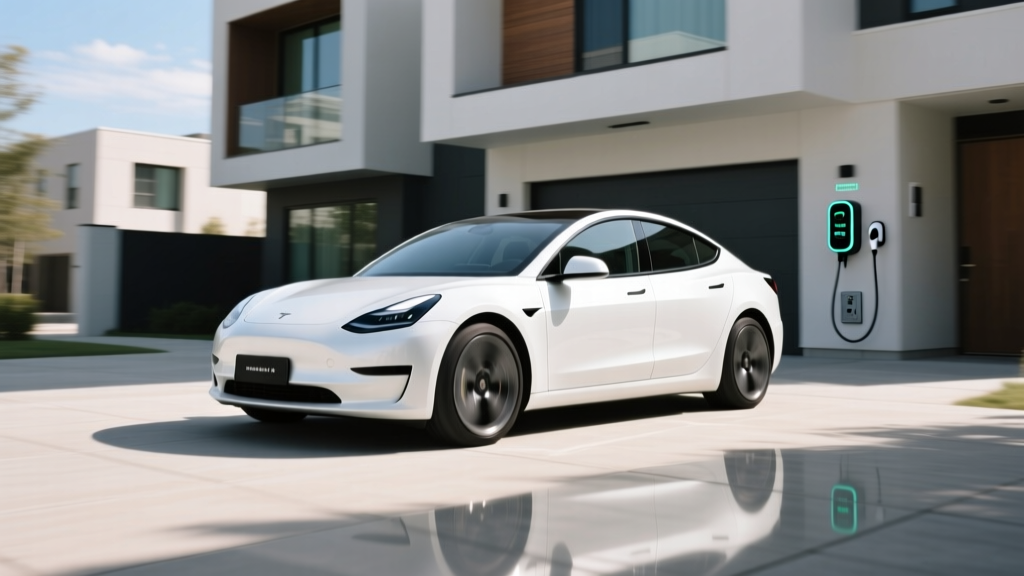
For Level 2 (home and destination) charging, the J1772 connector remains the universal standard for non-Tesla vehicles. Tesla includes a J1772 adapter with every vehicle, and third-party NACS vehicles shipping with NACS ports also include one. Tesla Wall Connectors with J1772 adapters work for any EV.
Cost to Charge: $/kWh Scenarios and Cost Per Mile vs. Gas
One of the strongest economic arguments for EV ownership is fuel cost savings — but the savings depend heavily on where and when you charge.
| Charging Scenario | Typical $/kWh | Cost Per Mile (at 3.5 mi/kWh) | Cost to Add 200 Miles |
|---|---|---|---|
| Home Level 2, off-peak utility rate | $0.08–$0.14 | $0.023–$0.040 | $4.57–$8.00 |
| Home Level 2, standard residential rate | $0.13–$0.22 | $0.037–$0.063 | $7.43–$12.57 |
| Public Level 2 (workplace, destination) | $0.20–$0.49 | $0.057–$0.140 | $11.43–$28.00 |
| Public DCFC (Electrify America, EVgo) | $0.35–$0.69 | $0.100–$0.197 | $20.00–$39.43 |
| Tesla Supercharger (varies by location/time) | $0.25–$0.50 | $0.071–$0.143 | $14.29–$28.57 |
| Gasoline comparison (30 MPG, $3.40/gal) | — | $0.113 | $22.67 |
At home off-peak rates, an EV costs roughly one-quarter to one-third as much per mile as a 30 MPG gasoline car. Even at expensive public DCFC rates, you're often paying comparable or slightly less than gas. The savings widen further for efficient EVs that achieve 4+ miles per kWh (such as the Tesla Model 3 or Hyundai Ioniq 6).
Many utilities offer time-of-use (TOU) plans that provide significantly cheaper rates during overnight hours (typically 12 AM–6 AM). If your utility offers a TOU or dedicated EV rate plan, enrolling can cut your home charging costs substantially. According to fueleconomy.gov, EVs convert over 77% of electrical energy to power at the wheels, compared to 12–30% for gasoline vehicles — this efficiency gap is why EVs cost less per mile even when electricity prices rise.
Recommended Home Level 2 Chargers for 2026
We've tested and evaluated dozens of Level 2 stations. These are our top picks based on reliability, power output, smart features, build quality, and value:
Emporia Level 2 Smart Charger
- Power: 48A (11.5 kW) on a 60A circuit
- Connector: J1772 (NACS adapter available)
- Cable length: 24 ft
- Smart features: Wi-Fi, app scheduling, energy monitoring, solar integration, TOU optimization
- Price: ~$399
- Best for: Budget-conscious buyers who want full smart features and solar integration
ChargePoint Home Flex
- Power: Up to 50A (12 kW) configurable, 240V
- Connector: J1772 (NACS version available)
- Cable length: 23 ft
- Smart features: Wi-Fi, app scheduling, Alexa integration, flexible amperage settings to match circuit
- Price: ~$699
- Best for: Flexible amperage configuration for older panels; strong app ecosystem
Tesla Wall Connector
- Power: Up to 48A (11.5 kW) on a 60A circuit
- Connector: NACS native (J1772 adapter included)
- Cable length: 24 ft
- Smart features: Wi-Fi, OTA updates, power sharing (link multiple units on one circuit), vehicle integration
- Price: ~$475
- Best for: Tesla and NACS-native vehicle owners; cleanest integration with Tesla app
All three units are UL-listed, rated for indoor and outdoor installation (NEMA 4 rating), and support hardwired or NEMA 14-50 plug configurations (ChargePoint and Emporia; Tesla Wall Connector is hardwired only). Hardwired installations are preferred for outdoor mounts as they eliminate the GFCI breaker requirement that NEC 2023+ mandates for receptacle-based EV charging.
Safety, Code, and Installation Best Practices
EV charging draws high current for extended periods — making proper installation non-negotiable for fire safety and insurance coverage.
- Dedicated circuit: Your EV charger must have its own dedicated breaker. Never share a circuit with other appliances.
- GFCI protection: NEC 2023 and later require GFCI protection for receptacle-based (plug-in) EV charging installations. Hardwired installations are exempt from this requirement, which is one reason electricians increasingly recommend hardwiring.
- Outdoor rating: If mounting outdoors, ensure the charger carries a NEMA 4 or NEMA 4X rating for weather resistance. All three picks above qualify.
- Wire gauge: A 60-amp circuit typically requires 6 AWG copper wire (THHN in conduit) or 4 AWG for longer runs to minimize voltage drop. Your electrician will size this per NEC Table 310.16.
- Surge protection: Consider a whole-home surge protector ($200–$400 installed) to protect your charger and vehicle from lightning-induced voltage spikes.
- Load management: If your panel is tight on capacity, devices like the Emporia VUE or Sense Energy Monitor can enable dynamic load sharing — the charger automatically reduces amperage when other household loads spike.
DCFC Charging on the Road: What to Expect
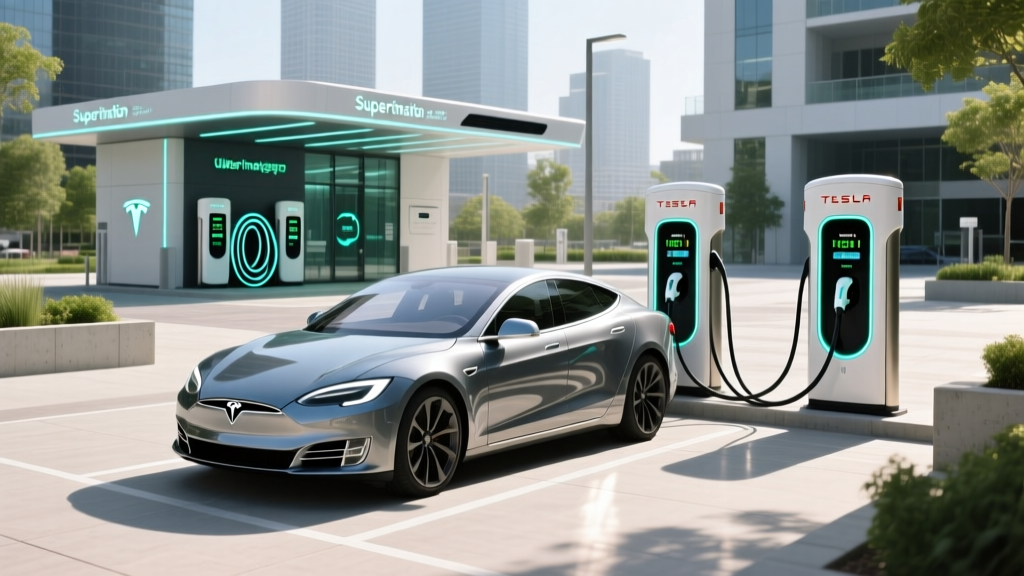
Public DCFC infrastructure has expanded significantly. As of early 2026, the U.S. has over 55,000 DCFC ports across networks including Tesla Supercharger, Electrify America, EVgo, ChargePoint, and Ionity-affiliated providers. Here's what to know for real-world road trip charging:
- Precondition your battery: Most modern EVs automatically begin battery preconditioning when you navigate to a DCFC station. This heats or cools the battery to optimal temperature, enabling faster charge acceptance. Without preconditioning, a cold battery may accept only 50 kW at a 350 kW stall.
- Check stall power before plugging in: Many DCFC sites have mixed-power stalls (e.g., some at 150 kW, others at 350 kW). Apps like PlugShare and A Better Routeplanner show per-stall power ratings.
- Plan around the 10–80% sweet spot: Charging above 80% at a DCFC stall is slow and often costs the same per kWh. Most road-trippers charge to 80%, unplug, and move on — saving 15–25 minutes per stop.
- Idle fees: Tesla and Electrify America charge idle fees ($0.50–$1.00/minute) if your vehicle remains plugged in after reaching its charge limit. Move your car promptly.
For detailed route planning, NHTSA provides vehicle safety data that can inform your EV purchase, while apps like A Better Routeplanner (ABRP) and PlugShare provide real-time station availability and user reviews.
Frequently Asked Questions
How much does it cost to install a home EV charger?
A straightforward Level 2 installation on an existing 200-amp panel typically costs $900–$2,250 including equipment, labor, materials, and permit. If your home needs a panel upgrade from 100A to 200A service, total costs can reach $4,400–$9,750+. Always get a load calculation from a licensed electrician before committing.
How fast will each charging level add range?
Level 1 (120V) adds 3–5 miles per hour. Level 2 (240V, 48A) adds 30–45 miles per hour depending on vehicle efficiency. DCFC charging adds the equivalent of 150–1,200+ miles per hour at peak rates, though sessions are typically measured in 10–80% minutes (18–42 minutes depending on vehicle and charger power).
Which connector/charger is compatible with my EV?
For 2026 model-year vehicles, NACS is the dominant standard — Tesla, Ford, GM, Rivian, Hyundai/Kia, Volvo, and BMW all use it natively. CCS1 is found on older models and some VW vehicles. CHAdeMO is limited to the Nissan Leaf and declining in infrastructure. Check your vehicle's charge port or consult the manufacturer's spec sheet before purchasing a home charger.
How much does charging cost per mile vs. gas?
Home charging at off-peak rates costs $0.02–$0.04 per mile — roughly 70–80% less than gasoline at $3.40/gal and 30 MPG ($0.113/mile). Even expensive public DCFC at $0.48/kWh costs about $0.14/mile, still competitive with gas. Your savings are greatest when charging at home on a time-of-use plan.
What electrical upgrades might I need?
If your home has a 100-amp electrical panel or the panel is near capacity, you may need a panel upgrade to 200 amps ($2,500–$5,000+), a load-management device ($200–$500), or a sub-panel. An electrician's load calculation per NEC Article 220 will determine your exact needs. Homes built after 2000 with 200A service rarely need upgrades for a single Level 2 charger.
Can I use DCFC charging at home?
Technically yes, but it's impractical for nearly all homeowners. DCFC stations cost $20,000–$100,000+, require 480V three-phase commercial power (unavailable in residential settings), and need utility infrastructure upgrades. Level 2 at 11.5 kW is the practical maximum for home charging and is more than sufficient for overnight replenishment.
Does frequent DCFC charging damage my battery?
Modern battery management systems (BMS) actively protect against DCFC-related degradation by managing temperature and limiting charge rates at high SoC. Data from fleets and long-term owners shows that moderate DCFC use (1–2 sessions per week) causes only marginally more degradation than Level 2 charging over 100,000+ miles. The bigger degradation factors are sustained high SoC (parking at 100%) and extreme heat exposure. Most manufacturers warrant their batteries for 8 years/100,000 miles with a minimum 70% capacity retention threshold, per EPA and manufacturer specifications.