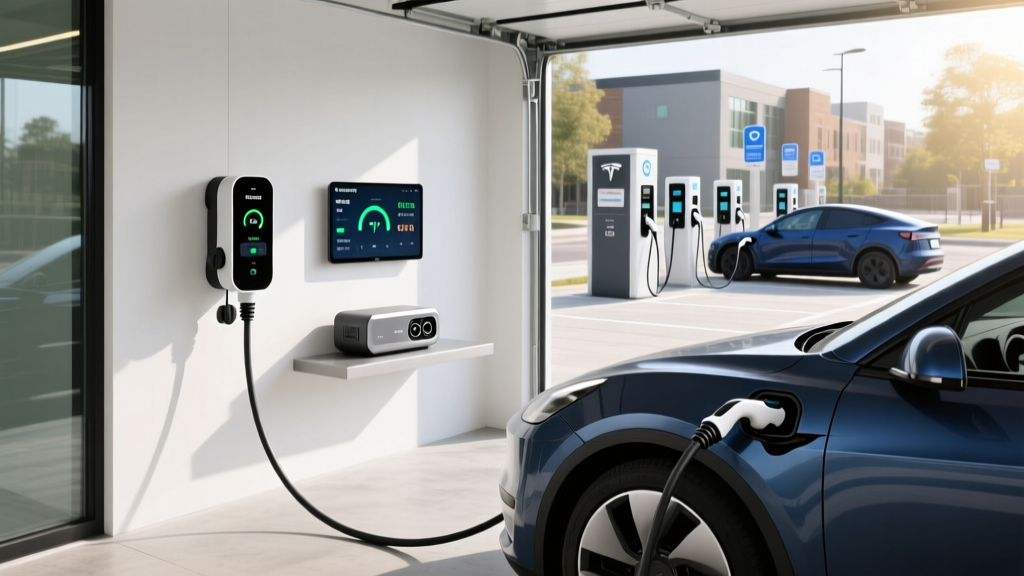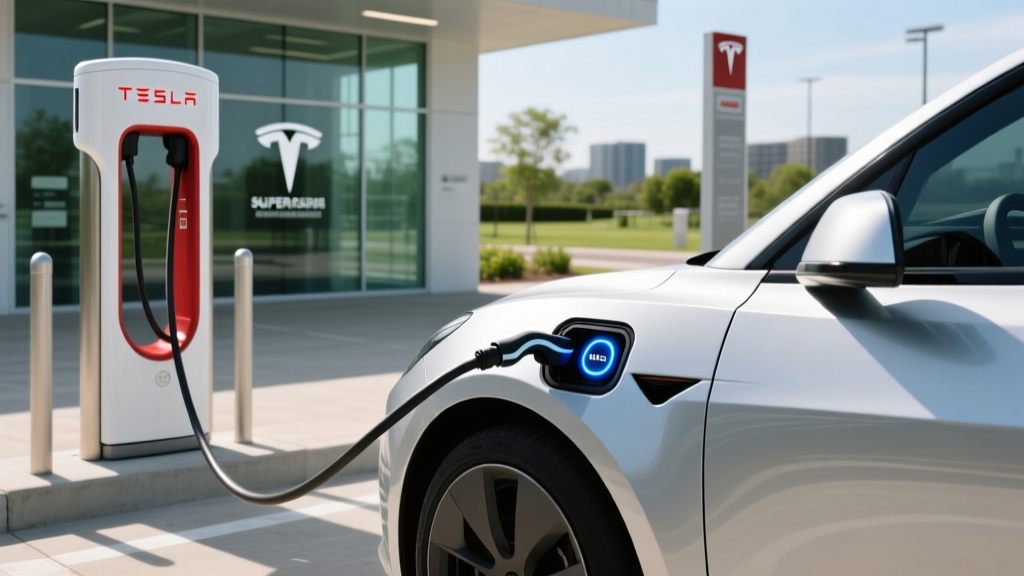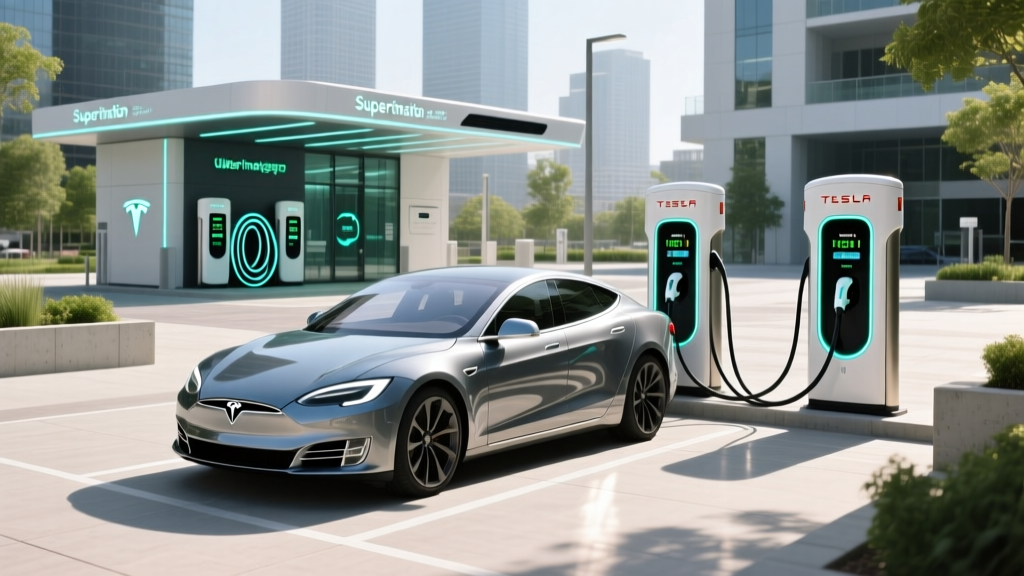
If you own a Tesla—or any EV using the North American Charging Standard (NACS)—you've likely encountered two very different charging experiences: the high-speed Supercharger plaza on the highway, and the wall-mounted Destination Charger at a hotel or restaurant. Understanding the difference between a Tesla Destination Charger vs Supercharger isn't just academic; it determines how long you wait, what you pay per kWh, and whether your car is actually gaining meaningful range while parked.
This guide breaks down both networks by power output (kW), energy delivered (kWh), real-world charging times, cost per mile, and connector compatibility. We'll also cover how to replicate Destination Charger speeds at home, including 240V electrical requirements, installation costs, and equipment picks for 2026.
Understanding EV Charging Levels: kW, kWh, and Miles Per Hour
Before comparing Tesla's two networks, let's lock in the critical distinction: kW (kilowatts) is power—the rate of energy flow. kWh (kilowatt-hours) is energy—the total amount stored in your battery. A Supercharger delivers high kW for fast charging; a Destination Charger delivers lower kW over many hours. Your battery capacity is measured in kWh (e.g., 75 kWh usable in a Model Y Long Range).
| Level | Power (kW) | Voltage / Amps | Miles of Range Added Per Hour | Typical Use |
|---|---|---|---|---|
| Level 1 | 1.2–1.9 kW | 120V / 12–16A | 3–5 miles | Emergency / overnight trickle |
| Level 2 | 7.2–19.2 kW | 240V / 30–80A | 20–55 miles | Home daily, Destination Chargers |
| DC Fast Charge | 50–350 kW | 400–800V DC | 150–1,000+ miles (equivalent rate) | Road trips, Superchargers |
Tesla Destination Chargers are Level 2 AC units, typically delivering 11.5 kW (48A) or up to 17.3 kW (72A) on newer Wall Connector hardware. Tesla Superchargers are DC Fast Chargers ranging from 150 kW (V2) to 250 kW (V3) and 350 kW+ (V4, rolling out through 2025–2026).
Tesla Destination Charger vs Supercharger: Spec-by-Spec Comparison
Here's the head-to-head breakdown for a 2026 Tesla Model Y Long Range (75 kWh usable battery, ~320 miles EPA range):
| Attribute | Destination Charger | Supercharger (V3/V4) |
|---|---|---|
| Charging Type | Level 2 AC | DC Fast Charge |
| Peak Power | 11.5–17.3 kW | 250–350 kW |
| 10–80% Time (Model Y LR) | 5–7 hours | ~25–30 minutes (V3) |
| Miles Added Per Hour | 30–52 miles | ~750–1,000 miles/hr equivalent |
| Typical Location | Hotels, restaurants, workplaces | Highway corridors, urban plazas |
| Cost to User | Often free (included with stay) | $0.25–$0.48/kWh (varies by location/time) |
| Connector | NACS (native Tesla) | NACS (native Tesla) |
| Best For | Overnight stays, multi-hour parking | Road-trip pit stops, quick top-ups |
Connector Compatibility: NACS, CCS1, and Adapters
As of 2026, the NACS (North American Charging Standard) connector has become the dominant EV plug in North America. Ford, GM, Rivian, Hyundai, and most other automakers now ship EVs with native NACS ports, granting access to Tesla Superchargers and Destination Chargers without adapters.
| Connector | Native Vehicles | Tesla Supercharger Access | Destination Charger Access |
|---|---|---|---|
| NACS (Tesla) | Tesla (all), Ford, GM, Rivian, Hyundai/Kia (2025+), Volvo, BMW (2025+) | Yes, native | Yes, native |
| CCS1 | Legacy VW ID.4 (pre-2025), older BMW iX, some Stellantis models | Yes, with NACS adapter | Yes, with NACS adapter |
| CHAdeMO | Nissan Leaf (discontinued), Mitsubishi Outlander PHEV (legacy) | No (network retired) | No |
If you drive a CCS1-equipped EV, Tesla sells a CCS-to-NACS adapter (~$175) that enables Supercharger access. For Destination Chargers, the same adapter works, though you'll be limited by the vehicle's onboard AC charger capacity (typically 11.5 kW max for most non-Tesla EVs). CHAdeMO vehicles cannot access Tesla's network without complex and unreliable third-party solutions—effectively, CHAdeMO is a dead standard in North America as of 2026.
How Much Does It Cost to Charge: Destination, Supercharger, and Home?
Charging cost depends on your electricity rate (home) or the network's per-kWh pricing (public). Here's a realistic comparison using a 2026 Model Y Long Range (75 kWh battery, ~4.0 miles/kWh efficiency):
| Scenario | Cost per kWh | Cost to Add 200 Miles | Cost Per Mile |
|---|---|---|---|
| Home (off-peak utility rate) | $0.09–$0.14 | $4.50–$7.00 | $0.023–$0.035 |
| Destination Charger (often free) | $0.00 | $0.00 | $0.00 |
| Supercharger (average 2026) | $0.28–$0.42 | $14.00–$21.00 | $0.07–$0.105 |
| Electrify America / 3rd-party DCFC | $0.35–$0.55 | $17.50–$27.50 | $0.088–$0.138 |
| Gas car (28 MPG combined, $3.40/gal) | — | $24.29 | $0.121 |
Home charging remains the cheapest option by far—roughly one-third to one-quarter the cost of Supercharging. Destination Chargers, when free, are unbeatable. Superchargers are typically 40–60% cheaper than gas per mile, though premium urban Supercharger locations with time-of-use pricing can narrow that gap.
According to fueleconomy.gov, the 2026 Model Y Long Range achieves 122 MPGe combined, translating to roughly $0.04/mile on national average electricity rates ($0.16/kWh) when charging at home.
Charging Time Examples: 10–80% for Common Battery Sizes
Charging speed isn't just about peak kW—it's about the charge curve. DC fast chargers taper power above ~50% State of Charge (SoC) to protect battery health. Here are real-world 10–80% times for popular 2026 EVs:
- Tesla Model Y Long Range (75 kWh, NMC): V3 Supercharger (250 kW peak) — ~25–28 min; Destination Charger (11.5 kW) — ~5.5 hours
- Tesla Model 3 Standard Range (57.5 kWh, LFP): V3 Supercharger — ~22–25 min; Destination — ~4.5 hours. Note: LFP batteries tolerate frequent 100% charging better than NMC, so Destination charging to full is less of a concern.
- Ford F-150 Lightning Extended Range (131 kWh, NMC): V3 Supercharger — ~40–45 min; Destination (11.5 kW) — ~9+ hours
- Hyundai Ioniq 5 (77.4 kWh, NMC): 350 kW charger — ~18 min; Tesla Supercharger via adapter (250 kW) — ~25 min; Destination — ~6 hours
For Destination Chargers, the limiting factor is your car's onboard AC charger, not the wall unit. Most Teslas accept up to 11.5 kW (48A) on AC; the 17.3 kW Wall Connector only benefits vehicles with dual onboard chargers (rare on current models).
Replicating Destination Charger Speeds at Home: Installation and Costs
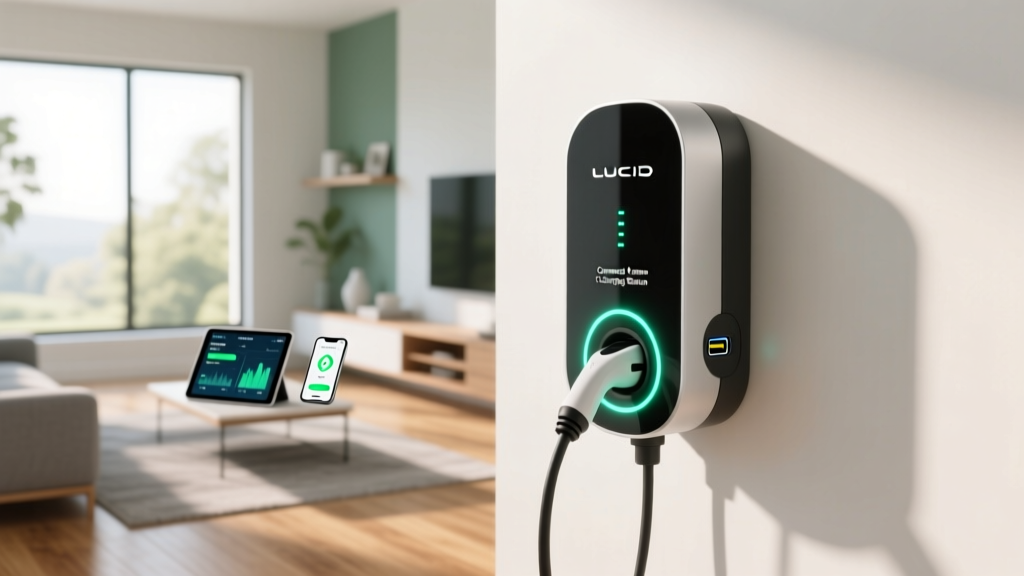
A Tesla Wall Connector at home delivers the same experience as a Destination Charger—plug in overnight and wake up to a full battery. Here's what installation actually requires:
Electrical Requirements
- Circuit: Dedicated 60A breaker (for 48A continuous charging) or 50A breaker (for 40A charging)
- Voltage: 240V single-phase (standard US residential split-phase)
- Wire gauge: 6 AWG copper for 48A; 8 AWG for 40A (THHN in conduit)
- Panel capacity: Minimum 100A service; 200A recommended for homes with EV + electric appliances
Do You Need a Panel Upgrade?
If your home has a 100A main panel and already runs electric HVAC, dryer, oven, and water heater, adding a 60A EV circuit may exceed your panel's capacity. A licensed electrician will perform a NEC Article 220 load calculation. If you're over capacity, expect a panel upgrade to 200A ($1,800–$3,500) or consider a smart load-management device like the Emporia Smart Panel that dynamically throttles EV charging when household demand spikes.
| Component | Low Estimate | High Estimate | Notes |
|---|---|---|---|
| Level 2 charger (hardware) | $350 | $700 | Tesla Wall Connector, ChargePoint Home Flex, Emporia |
| Electrician labor (4–8 hrs) | $600 | $2,000 | Depends on run length, conduit, attic/crawlspace |
| Electrical materials (wire, conduit, breaker) | $150 | $500 | Longer runs = more copper cost |
| Permit and inspection | $50 | $300 | Varies by municipality |
| Panel upgrade (if needed) | $1,800 | $3,500 | 100A to 200A service upgrade |
| Total (no panel upgrade) | $1,150 | $3,500 | Most homes with 200A panels |
| Total (with panel upgrade) | $2,950 | $7,000 | Older homes with 100A service |
Some utilities offer rebates of $250–$1,000 for Level 2 installation, and the federal Alternative Fuel Vehicle Refueling Property Credit (IRS Form 8911) covers 30% of home charging equipment and installation costs, up to $1,000, subject to census-tract eligibility. Check with a tax professional for your specific situation.
Equipment Recommendations: Best Home Chargers for 2026
Tesla Wall Connector (Gen 4)
- Power Output: Up to 11.5 kW (48A) on a 60A circuit
- Connector: NACS (native Tesla); works with NACS-equipped Ford, GM, Rivian, Hyundai
- Cable Length: 24 feet
- Smart Features: Wi-Fi firmware updates, access control (restrict to specific VINs), power sharing between two units on one circuit
- Price: ~$475
- Best For: Tesla owners and NACS-native vehicles; clean integration with Tesla app
ChargePoint Home Flex (2nd Gen)
- Power Output: Up to 12 kW (50A) on a 60A circuit; adjustable down to 16A
- Connector: NACS (2025+ models) or J1772 with NACS adapter
- Cable Length: 23 feet
- Smart Features: Alexa integration, scheduling, energy tracking, flexible amperage dial
- Price: ~$550
- Best For: Multi-EV households with mixed brands; adjustable circuit sizing
Emporia Vue Level 2 Charger
- Power Output: Up to 11.5 kW (48A)
- Connector: NACS (2026 model) or J1772
- Cable Length: 24 feet
- Smart Features: Integrates with Emporia Vue energy monitor for solar-aware charging, EV energy tracking, time-of-use optimization
- Price: ~$400
- Best For: Solar-equipped homes; budget-conscious buyers who want energy monitoring
Safety, Code, and Installation Considerations
Level 2 EV charging is a continuous load under the National Electrical Code (NEC Article 625), meaning the circuit must be rated for 125% of the charger's maximum draw. A 48A charger requires a 60A breaker. Key safety requirements:
- Dedicated circuit: The EV charger must have its own breaker—no sharing with other outlets or appliances.
- GFCI protection: NEC 2020+ requires GFCI for outdoor receptacles; hardwired Wall Connectors bypass this requirement and are generally preferred for reliability.
- Outdoor rating: All recommended chargers above carry NEMA 4 (weatherproof) ratings suitable for outdoor mounting. Ensure your electrician uses weatherproof conduit fittings.
- Permit required: Nearly all jurisdictions require an electrical permit and inspection for EV charger installation. Skipping this risks insurance claim denial in the event of an electrical fire.
- Hardwired vs plug: Hardwired installation (no plug) is more reliable and avoids NEMA 14-50 receptacle overheating issues reported with high-amperage continuous use. If using a 14-50 outlet, specify an industrial-grade receptacle (Hubbell or Bryant), not a residential-grade unit.
Tesla Destination Charger vs Supercharger: Frequently Asked Questions
Is a Tesla Destination Charger free to use?
Usually, yes. Most Destination Chargers are installed by hotels, restaurants, and wineries as a complimentary amenity for patrons. However, some urban locations and parking garages have begun charging per-kWh rates ($0.15–$0.30/kWh) to recoup electricity costs. Always check the listing in your Tesla's navigation or the Tesla app before assuming it's free.
Can non-Tesla EVs use Tesla Destination Chargers?
Yes, if the non-Tesla EV has a native NACS port (2025+ Ford, GM, Rivian, Hyundai/Kia models). CCS1 vehicles can use a NACS adapter. However, some Destination Charger hosts restrict access to Tesla vehicles only via the Wall Connector's access-control settings. The Tesla app shows which locations are open to all NACS vehicles.
How fast does a Supercharger actually charge compared to a Destination Charger?
A V3 Supercharger (250 kW peak) adds roughly 200 miles of range in about 15 minutes to a Model Y Long Range. A Destination Charger (11.5 kW) adds the same 200 miles in about 6–7 hours. Superchargers are for quick top-ups; Destination Chargers are for "charging where you park."
Is frequent Supercharging bad for my Tesla battery?
Occasional Supercharging on road trips has negligible impact. However, daily DC fast charging accelerates degradation slightly compared to Level 2 charging. Tesla's battery management system (BMS) and thermal preconditioning mitigate most risk. Data from high-mileage Teslas shows ~10–12% capacity loss at 150,000 miles regardless of charging mix. For daily use, Level 2 home or Destination charging at 80% SoC is optimal for long-term battery health.
What electrical upgrades might I need for a home Level 2 charger?
If your home has a 200A electrical panel with available capacity, you likely need only a new 60A breaker and a wire run to your garage or parking spot ($1,150–$3,500 total). Homes with 100A panels or heavy existing electric loads may need a panel upgrade to 200A ($1,800–$3,500 additional). An electrician's load calculation determines this—never guess.
How much does charging cost per mile compared to gas?
Home Level 2 charging costs roughly $0.03–$0.04 per mile (at $0.12–$0.16/kWh). Supercharging averages $0.07–$0.10 per mile. A comparable gas SUV at 28 MPG and $3.40/gallon costs about $0.12 per mile. Over 15,000 annual miles, home charging saves $1,200–$1,500 versus gas, according to fueleconomy.gov data.
Should I charge to 100% at a Destination Charger?
If your Tesla has an NMC battery (Long Range, Performance models), daily charging to 100% accelerates degradation—Tesla recommends 80% for daily use. If your Model 3 or Model Y has an LFP battery (Standard Range), Tesla recommends charging to 100% at least weekly for accurate BMS calibration. Check your vehicle's battery chemistry in the Tesla app under Battery settings.