Why a 2014 Range Rover Sport Supercharged Owner Is Googling EV Charging
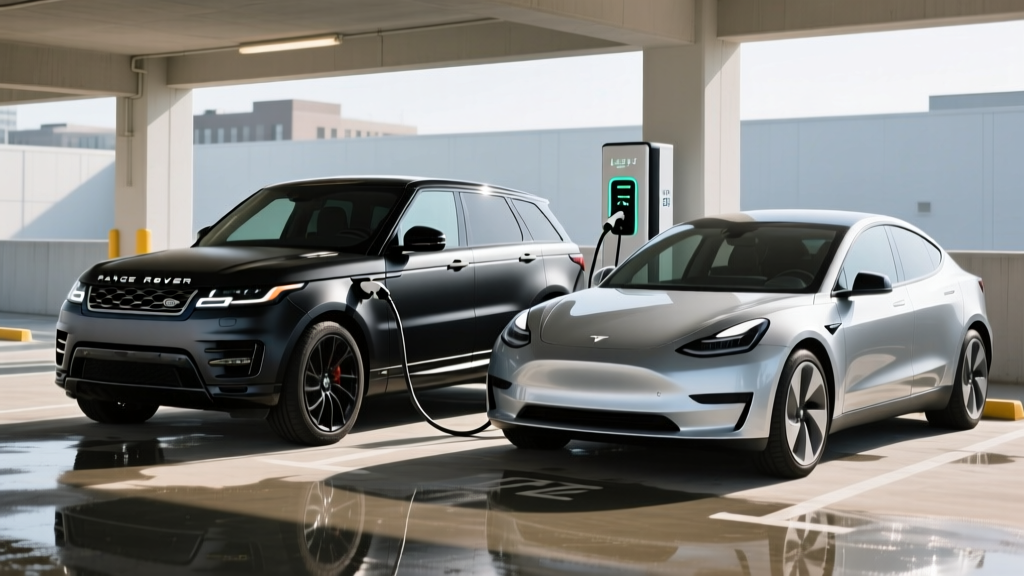
If you own a 2014 Range Rover Sport Supercharged, you already know the tradeoff: 510 horsepower from a supercharged 5.0L V8, a 0–60 mph time around 5.0 seconds, and a combined EPA fuel economy of roughly 14 MPG. At current national gas prices hovering around $3.40 per gallon, that works out to approximately $0.24 per mile just in fuel.
That sting is exactly why many Range Rover Sport Supercharged 2014 owners are researching the electrified side of the Land Rover lineup — and EV charging in general. The 2026 Range Rover Sport PHEV (P460e) delivers 434 horsepower, an EPA-estimated 31 miles of electric-only range, and a combined MPGe of 54 when running on its battery. But to capture those savings, you need to understand home charging infrastructure, costs, and what your electrical panel can actually handle.
This guide breaks down EV and PHEV charging from the ground up — written specifically for luxury SUV owners weighing whether to keep the supercharged V8 or make the switch to a plug-in hybrid or full BEV.
Charging Levels Explained: How Fast Will Each Level Add Range?
Before installing anything, you need to understand the three charging levels and what they mean in real-world miles added per hour. The critical distinction: kW (kilowatts) measures power — the rate of energy delivery, while kWh (kilowatt-hours) measures energy — the total amount stored in a battery. Think of kW as the width of a hose and kWh as the size of the bucket.
| Level | Voltage | Max Power (kW) | Miles of Range Added/Hour | Best For |
|---|---|---|---|---|
| Level 1 | 120V (standard outlet) | 1.4–1.9 kW | 3–5 miles (BEV), 5–8 miles (PHEV) | Overnight top-ups, PHEV owners with short commutes |
| Level 2 | 240V (dryer-style outlet) | 3.3–19.2 kW | 12–80 miles (BEV), full PHEV in 1.5–4 hrs | Daily home charging, the standard for most EV owners |
| DC Fast Charging | 400–800V DC | 50–350 kW | 150–1,000+ miles/hour equivalent | Road trips, quick 10–80% top-ups in 15–30 minutes |
For context, a PHEV like the 2026 Range Rover Sport P460e has a 31.8 kWh battery (usable capacity approximately 25.9 kWh). On a Level 2 charger delivering 7.2 kW, that battery charges from 0–100% in roughly 3.5 hours. On Level 1 at 1.4 kW, you are looking at nearly 19 hours — meaning Level 1 is impractical for a full recharge but can maintain charge overnight if your daily electric-only driving is under 15 miles.
For a full BEV like the 2026 Range Rover Electric (announced, expected 100+ kWh battery), a Level 2 charger at 11.5 kW would take roughly 9–10 hours for a full charge, while a 150 kW DC fast charger could take it from 10–80% in approximately 25–30 minutes, depending on the charge curve taper above 80%.
How Much Does It Cost to Install a Home EV Charger?
This is the question that stops most prospective EV and PHEV buyers. The honest answer: it varies enormously depending on your home's electrical panel, the distance from the panel to the charger location, and local permit requirements. Here is a realistic breakdown based on 2026 national averages.
| Component | Simple Install (panel nearby, no upgrade) | Complex Install (long run, panel upgrade needed) |
|---|---|---|
| Level 2 Charger Equipment | $400–$700 | $400–$700 |
| Electrician Labor | $500–$1,200 | $1,500–$3,500 |
| Electrical Permit | $50–$200 | $50–$200 |
| Panel Upgrade (100A → 200A) | Not needed | $1,500–$4,000 |
| Conduit/Wiring (long runs 50+ ft) | $100–$300 | $500–$1,500 |
| Total Estimated Cost | $1,050–$2,400 | $3,950–$9,900 |
Homes built before 2000 — which includes many residences where a 2014 Range Rover Sport Supercharged might be parked — often have 100-amp or 150-amp electrical panels. Adding a 40-amp or 50-amp dedicated circuit for a Level 2 charger may require a panel upgrade to 200 amps, especially if you are also running central air, an electric oven, and a dryer. A licensed electrician will perform a load calculation per NEC Article 220 to determine if your existing panel can handle the additional draw.
Pro tip: The IRS §30D credit does not cover home charger installation for most taxpayers in 2026. However, the Alternative Fuel Vehicle Refueling Property Credit (§30C) may provide up to $1,000 for home charging equipment installed in qualifying census tracts. Check the IRS §30C page for current eligibility rules.
What Electrical Upgrades Might I Need?
Beyond the panel itself, here are the specific electrical requirements and potential upgrades for a Level 2 home charger:
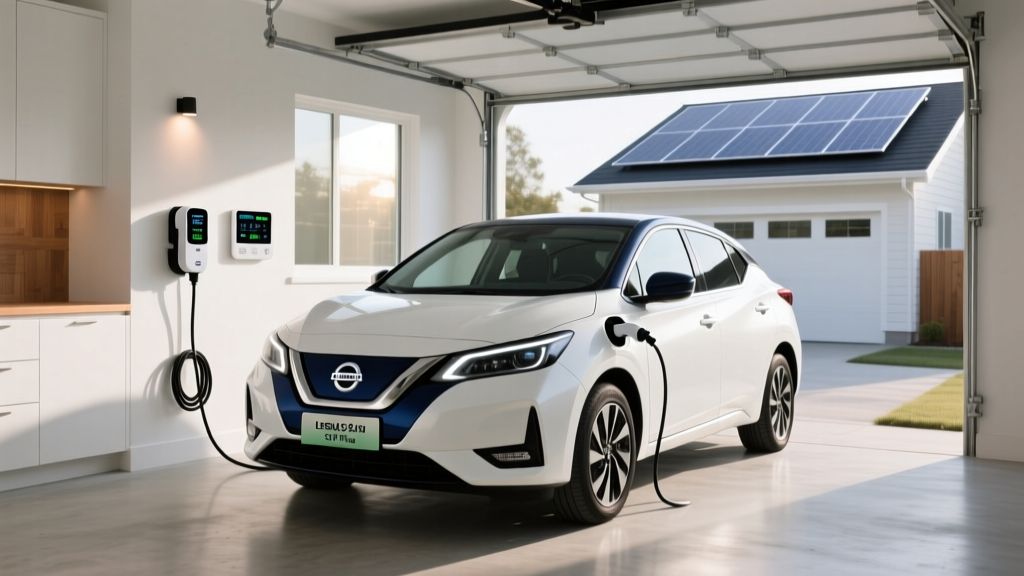
- Dedicated circuit: A Level 2 charger requires its own dedicated 240V circuit — typically 40A or 50A. This means a new double-pole breaker in your panel and a dedicated run of copper wire (6 AWG for 50A, 8 AWG for 40A).
- NEMA 14-50 outlet vs. hardwired: A NEMA 14-50 receptacle allows you to unplug and take your charger when you move. Hardwired installations eliminate the outlet but may not require GFCI breaker protection in some jurisdictions, reducing nuisance trips.
- GFCI protection: NEC 2020 and later requires GFCI protection for EV charging outlets in garages. Some smart chargers have built-in ground-fault detection, which can complicate breaker-level GFCI requirements. Your electrician will advise based on local code.
- Outdoor rating: If your charger will be mounted outside (common for homes without garages), ensure the unit carries a NEMA 4 or IP65 rating for weather resistance.
- Load management: Some chargers offer dynamic load balancing — they monitor your home's total electrical draw and reduce charging power when other large loads kick on, potentially avoiding a panel upgrade entirely.
Which Connector Is Compatible with My EV or PHEV?
The connector landscape has consolidated significantly by 2026, but the details still matter depending on what you drive or plan to buy.
| Connector Standard | Brands Using It (2026 Models) | Notes |
|---|---|---|
| NACS (North American Charging Standard) | Tesla, Ford, GM, Rivian, Volvo, Polestar, Mercedes-Benz, BMW, Land Rover/Range Rover (2025+) | Now the dominant standard; access to Tesla Supercharger network |
| CCS1 (Combined Charging System) | Hyundai, Kia, Volkswagen, Stellantis, some older BMW/Mercedes models | Still widely supported at public stations; adapters to NACS available |
| CHAdeMO | Nissan Leaf (legacy), Mitsubishi Outlander PHEV (older) | Being phased out; limited new-station deployment |
| J1772 (Level 2 AC) | All non-Tesla EVs/PHEVs (2024 and earlier) | Standard for Level 2 home charging; NACS vehicles use an adapter or integrated inlet |
For Land Rover/Range Rover PHEVs sold in 2024 and earlier, the J1772 connector is standard for Level 2 AC charging, with CCS1 for DC fast charging. The 2025+ Range Rover Sport PHEV and the upcoming Range Rover Electric have transitioned to NACS, meaning native compatibility with the Tesla Supercharger network — a significant advantage for road-trip charging.
If you are buying a home charger today and want maximum future-proofing, choose a unit with a NACS connector or one that ships with both J1772 and a NACS adapter in the box.
Charging Cost Per Mile: EV/PHEV vs. the Supercharged V8
This is where the math gets compelling for anyone currently fueling a 2014 Range Rover Sport Supercharged. Let's compare real costs.
| Vehicle | Energy Source | Rate | Cost Per Mile |
|---|---|---|---|
| 2014 RR Sport Supercharged | Gasoline (premium) | $3.60/gal, 14 MPG combined | $0.257/mile |
| PHEV (home charging, off-peak) | Electricity | $0.13/kWh, 3 mi/kWh | $0.043/mile |
| PHEV (home charging, peak) | Electricity | $0.25/kWh, 3 mi/kWh | $0.083/mile |
| BEV (DC fast charging, public) | Electricity | $0.48/kWh, 3 mi/kWh | $0.160/mile |
| BEV (home charging, off-peak) | Electricity | $0.13/kWh, 3.2 mi/kWh | $0.041/mile |
The takeaway: charging at home on off-peak rates costs roughly one-sixth of what you spend fueling the supercharged 5.0L V8. Even expensive public DC fast charging undercuts premium gasoline on a per-mile basis. According to fueleconomy.gov, the 2014 Range Rover Sport Supercharged costs an estimated $3,750 more per year in fuel than the average new vehicle — money that evaporates when you switch to home-charged electricity.
For a driver covering 12,000 miles per year with 70% electric-mode driving in a PHEV, annual fuel savings versus the 2014 Supercharged model can exceed $2,200–$2,800, depending on local electricity and gas prices.
Equipment Recommendations: Home Chargers Worth Buying in 2026
Not all Level 2 chargers are equal. Here are three units that cover different needs and budgets, all currently available:
ChargePoint Home Flex (NACS or J1772)
- Power Output: Up to 12 kW (50A circuit) on 240V
- Connector: Available in NACS or J1772; NACS version includes J1772 adapter
- Cable Length: 23 feet
- Smart Features: Wi-Fi, Alexa/Google Home integration, scheduled charging, energy dashboard, charge sharing between two units on one circuit
- Price: ~$599–$699
- Best For: Owners who want flexible amperage settings (dip-switch configurable from 16A to 50A) to match their panel capacity
Tesla Wall Connector (NACS)
- Power Output: Up to 11.5 kW (48A) on 240V
- Connector: NACS native; J1772 adapter included in box
- Cable Length: 24 feet
- Smart Features: Wi-Fi firmware updates, load sharing between up to six units, power adjustment via app
- Price: ~$475
- Best For: Tesla owners or anyone buying a NACS-equipped vehicle (2025+ Range Rover, Ford, GM, Rivian); best value-to-power ratio
Grizzl-E Smart (J1772 or NACS)
- Power Output: Up to 10 kW (40A) on 240V
- Connector: J1772 or NACS options
- Cable Length: 24 feet
- Smart Features: OCPP-compatible, works with utility demand-response programs, basic app scheduling
- Price: ~$449–$549
- Best For: Cold-climate owners (rated to -40°C), outdoor installations (IP65), budget-conscious buyers who still want smart scheduling
Charging Time Examples: What to Expect with Common Battery Sizes
Charging time depends on battery capacity (kWh), charger power (kW), and the vehicle's onboard charger limit. Here are realistic estimates for common scenarios:
| Battery Size | Level 1 (1.4 kW) | Level 2 (7.2 kW) | Level 2 (11.5 kW) | DC Fast (150 kW, 10–80%) |
|---|---|---|---|---|
| 25 kWh (PHEV, e.g. RR Sport P460e) | ~18 hours | ~3.5 hours | ~2.2 hours | N/A (most PHEVs lack DC fast charging) |
| 75 kWh (mid-size BEV) | ~54 hours | ~10.5 hours | ~6.5 hours | ~22 minutes |
| 100 kWh (full-size luxury BEV) | ~71 hours | ~14 hours | ~8.7 hours | ~28 minutes |
Charge curve reality check: DC fast charging speeds are peak rates, not sustained averages. A vehicle advertising "250 kW peak" may only hold that rate from 10–30% State of Charge before tapering to 150 kW, then dropping further above 60%. The 10–80% time is the most useful real-world metric, and it is typically 2–3× longer than the peak kW figure alone would suggest. Always precondition your battery (most EVs do this automatically when you navigate to a charger) to hit peak rates.
The Decision Framework: Keep the Supercharged V8 or Switch?
Keep your 2014 Range Rover Sport Supercharged if:
- You cannot install a home charger (apartment, no garage, HOA restrictions)
- Your daily driving exceeds 60 miles with no charging options at work
- You tow frequently (the 5.0L V8 rates at 7,716 lbs towing; most PHEVs rate lower)
- You value the supercharged V8 character and accept the fuel cost as part of ownership
Switch to a PHEV or BEV if:
- You can install a Level 2 charger at home and your daily commute is under 35 miles (PHEV covers it entirely on electricity)
- You want to cut fuel costs by $2,000+ per year
- You are ready for a newer vehicle with modern safety tech (the 2014 model predates automatic emergency braking standardization)
- You want the Range Rover experience with lower running costs — the 2026 Range Rover Sport P460e starts around $85,000 MSRP and delivers similar luxury with dramatically lower per-mile energy cost
Frequently Asked Questions
Can I charge a Range Rover PHEV on a regular 120V outlet?
Yes, but slowly. Level 1 charging at 120V delivers roughly 1.4 kW, which adds about 5–6 miles of electric range per hour to a PHEV with a ~26 kWh usable battery. A full charge takes approximately 18–19 hours. For a PHEV owner driving 20 miles round-trip, plugging in overnight on Level 1 can replenish most of the battery. For anything more, Level 2 is strongly recommended.
Does the 2014 Range Rover Sport Supercharged have any electric capability?
No. The 2014 Supercharged model uses a conventional 5.0L supercharged V8 with no hybrid or plug-in capability. Land Rover did not introduce a PHEV Range Rover Sport until the 2018 model year (P400e). If you want electric driving in a Range Rover Sport, you need a 2018+ PHEV or the upcoming 2026 Range Rover Electric.
Will installing a home EV charger increase my property value?
Potentially. A 2025 study by the National Association of Realtors found that homes with a dedicated 240V EV charging outlet sold for approximately 1–3% more than comparable homes without one. The installation cost of $1,500–$3,000 (simple install) may partially or fully recoup at sale, while providing years of fuel savings in the meantime.
Do I need a permit to install a Level 2 charger?
In most US jurisdictions, yes. An electrical permit is required for any new 240V circuit. The permit typically costs $50–$200 and ensures the installation is inspected for NEC compliance. Skipping the permit risks voiding homeowner's insurance coverage for electrical fires and can cause issues during a future home sale. Always hire a licensed electrician who pulls permits.
What is the cheapest way to charge an EV at home?
Time-of-use (TOU) electricity plans from your utility let you charge during off-peak hours (typically 10 PM – 6 AM) at rates as low as $0.06–$0.10 per kWh in some regions, versus $0.20–$0.35 during peak. Most smart chargers (ChargePoint, Tesla Wall Connector, Grizzl-E) allow you to schedule charging windows via their apps. At $0.08/kWh and 3 miles per kWh, your cost drops to just $0.027 per mile — roughly one-tenth the cost of fueling the 2014 Range Rover Sport Supercharged.