If you've searched for a Costco Tesla charger deal, you've likely seen the rotating bundle: a Tesla Wall Connector paired with installation perks or Costco Shop Cards. For EV owners — or those about to take delivery — the warehouse-club package can shave real money off a home charging setup. But the hardware is only half the equation. The actual cost to charge your car at home depends on your electrical panel, local utility rates, and whether you need a service upgrade.
This guide breaks down the Costco bundle, compares it to buying direct, and walks through every number you need: kW charging speeds, installation costs, connector compatibility, and the true cost per mile versus gasoline.
What Costco Actually Sells: The Tesla Wall Connector Bundle
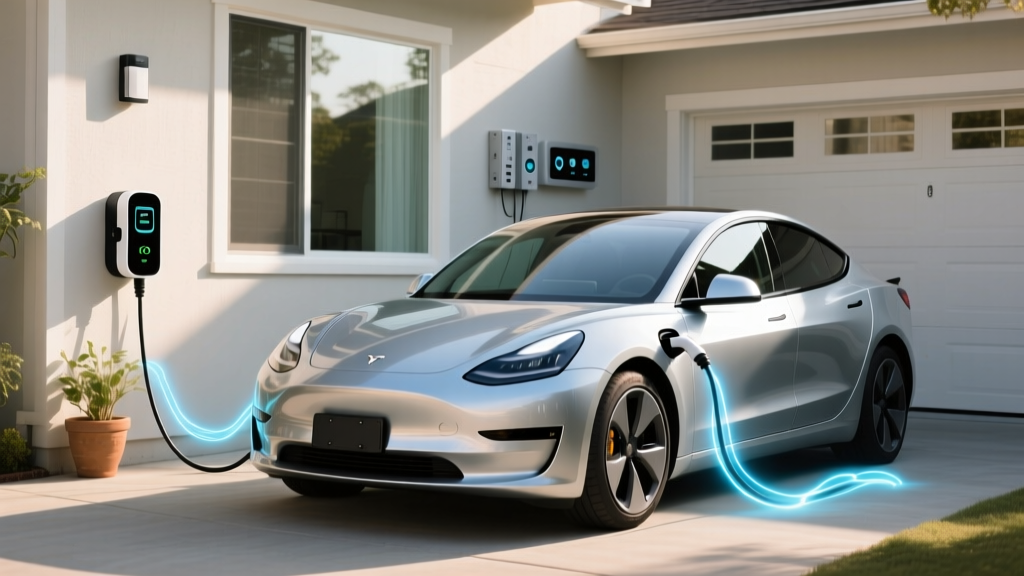
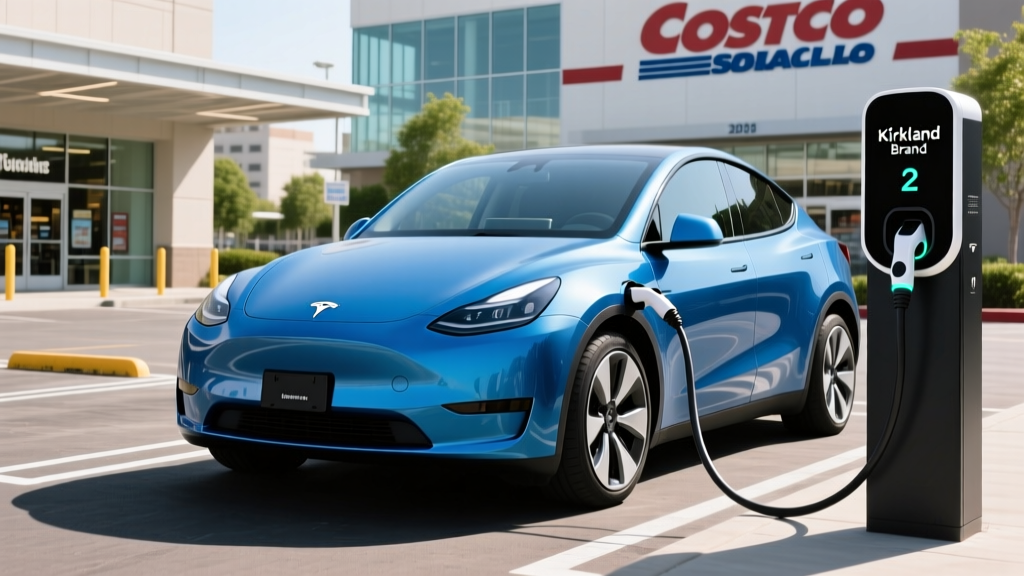
Costco periodically stocks the Tesla Wall Connector (Gen 3) as a member-only bundle. The exact package rotates, but recent iterations include:
- Hardware: Tesla Wall Connector, 24-foot cable, NACS (Tesla) connector
- Power output: Up to 11.5 kW (48 amps) on a 60-amp dedicated circuit
- Wi-Fi connected: Over-the-air updates, access control, power sharing between multiple units
- Price: Typically $399.99–$449.99 (vs. $475 MSRP direct from Tesla)
- Bonus: Often bundled with a $50–$100 Costco Shop Card or installation discount through a partnered electrician network
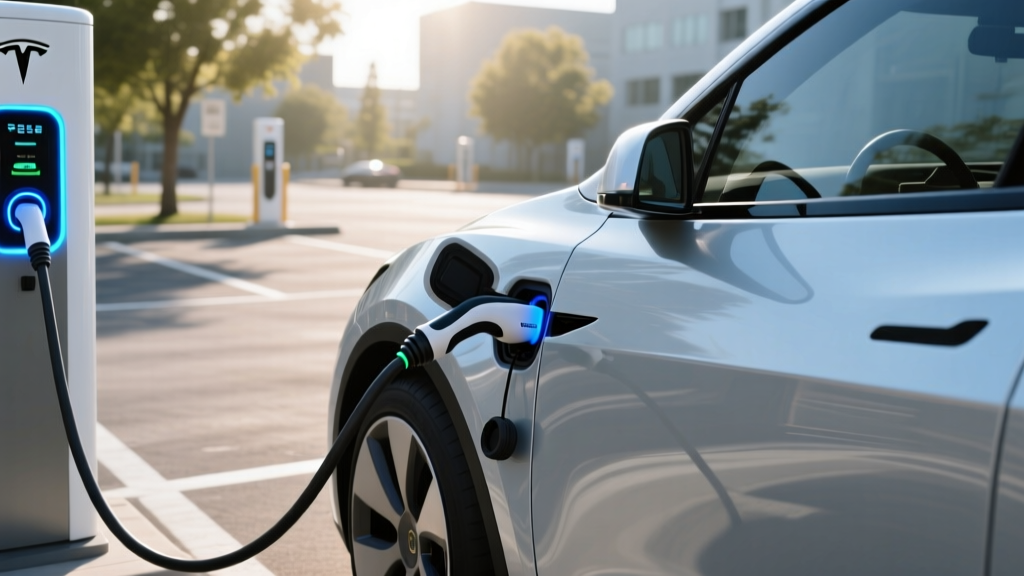
The Gen 3 Wall Connector is a legitimate Level 2 charger, not a trickle-charge mobile connector. At 11.5 kW, it adds roughly 44 miles of range per hour of charging for a Tesla Model Y — enough to fully replenish any Tesla overnight. The caveat: you need a NACS-port vehicle. If you drive a non-Tesla EV with a CCS1 port (like a Hyundai Ioniq 5 or Ford Mustang Mach-E), you'll need a NACS-to-CCS adapter or should consider a universal J1772 charger instead.
Tesla Wall Connector (Gen 3) — Costco Bundle
Max power: 11.5 kW (48A)
Connector: NACS (Tesla)
Cable: 24 ft
Smart features: Wi-Fi, OTA updates, load sharing
Price: ~$400–$450 at Costco
Alternative: ChargePoint Home Flex
Max power: 12 kW (50A)
Connector: J1772 (NACS adapter included)
Cable: 23 ft
Smart features: Wi-Fi, app scheduling, Alexa
Price: ~$549 (often on sale)
Charging Levels Explained: kW, Miles Per Hour, and Real Charge Times
Before wiring anything, understand what each charging level delivers. kW (kilowatts) measures power — the rate of energy flow. kWh (kilowatt-hours) measures energy — the total amount stored in your battery. Think of kW as the speed of water through a hose and kWh as the bucket you're filling.
| Level | Voltage / Amps | Max Power (kW) | Miles of Range Added Per Hour | Typical 10–80% Time (75 kWh battery) |
|---|---|---|---|---|
| Level 1 (standard outlet) | 120V / 12A | 1.4 kW | 3–5 mi/hr | ~38 hours |
| Level 2 (home / public AC) | 240V / 32–48A | 7.7–11.5 kW | 25–44 mi/hr | ~5–7 hours |
| DC Fast Charging | 400–800V DC | 50–350 kW | 150–1,000+ mi/hr | ~18–40 minutes |
Real-world note: DC fast charging does not sustain peak kW for the entire session. A vehicle rated at 250 kW peak may only hold that rate between 10–40% State of Charge, then taper significantly. Expect a 10–80% session on a 150 kW charger with a Tesla Model Y (75 kWh battery) to take roughly 25–30 minutes, not the theoretical 18 minutes.
How Much Does It Cost to Install a Home EV Charger?
The Costco Tesla charger hardware is the easy part. Installation is where costs vary wildly based on your home's electrical infrastructure. Here's the honest breakdown for a typical 240V / 48A Level 2 installation:
| Component | Low-End Cost | High-End Cost | Notes |
|---|---|---|---|
| Charger hardware (Tesla Wall Connector) | $400 | $475 | Costco bundle vs. direct |
| Electrician labor (run 60A circuit, mount unit) | $500 | $1,500 | Depends on distance from panel to garage |
| Electrical permit | $50 | $200 | Varies by municipality |
| Panel upgrade (100A → 200A service) | $1,500 | $4,000 | Required for older homes with 100A panels |
| Total (no panel upgrade) | $950 | $2,175 | Most newer homes with 200A service |
| Total (with panel upgrade) | $2,450 | $6,175 | Older homes or those near panel capacity |
Panel upgrade reality check: A 48A Level 2 charger requires a 60-amp dedicated circuit (NEC code requires circuits rated at 125% of continuous load). If your home has a 100-amp main panel already serving central A/C, an electric dryer, and an electric range, you may not have headroom. A licensed electrician will perform a load calculation before recommending whether a panel upgrade is necessary. Do not skip this step.
Electrical Requirements: What Your Home Needs
The Tesla Wall Connector at full 11.5 kW output requires:
- Circuit: 60-amp dedicated breaker (240V, single-phase)
- Wire: 6 AWG copper (or 4 AWG aluminum) for runs up to ~50 feet; thicker gauge for longer runs
- Outlet or hardwire: The Gen 3 Wall Connector is hardwired (no plug). Hardwired installations avoid the need for a NEMA 14-50 receptacle and GFCI breaker, which can nuisance-trip on EV chargers
- GFCI: Not required for hardwired units under NEC 2023/2026. If you install a NEMA 14-50 outlet instead, a GFCI breaker is code-mandated in most jurisdictions — and they cost $100–$150 extra
- Outdoor rating: The Wall Connector is NEMA 3R rated (suitable for outdoor installation). If mounting outside, ensure the conduit and junction box are also weather-rated
Can You Get Away With Less Than 48 Amps?
Yes. The Wall Connector is configurable via internal DIP switches to 16A, 24A, 32A, 40A, or 48A. If your panel can only spare a 40A breaker, set the unit to 32A (7.7 kW). You'll still add ~30 miles per hour — more than enough for overnight charging on most commutes. This can save $500–$1,000 on wire and breaker costs.
Connector Compatibility: Will It Fit Your EV?
The Costco Tesla charger bundle ships with a NACS (North American Charging Standard) connector — the native Tesla plug. Here's where things stand in 2026:
| Connector | Compatible Vehicles (2026) | Adapter Needed for Tesla Wall Connector? |
|---|---|---|
| NACS (Tesla) | All Tesla vehicles; Ford F-150 Lightning, Mustang Mach-E (2025+); GM Ultium vehicles (2025+); Rivian (2025+) | No — native fit |
| CCS1 | Hyundai Ioniq 5/6, Kia EV6/EV9, VW ID.4, BMW iX, most pre-2025 non-Tesla EVs | Yes — Tesla sells a CCS-to-NACS adapter (~$175) |
| CHAdeMO | Nissan Leaf (legacy) | No widely available adapter; not recommended |
| J1772 (Level 2 AC) | All non-Tesla EVs for AC charging | Yes — Tesla includes a J1772-to-NACS adapter with some vehicles, or buy aftermarket (~$50–$100) |
Bottom line: If you own a Tesla or a post-2024 Ford/GM/Rivian with a NACS port, the Costco bundle plugs in directly. For CCS1 vehicles, the adapter works but adds a connection point and slight convenience loss. If your household has mixed EVs (one Tesla, one Hyundai), consider the ChargePoint Home Flex or Emporia Level 2 with a J1772 connector and a separate Tesla adapter.
Cost to Charge: Home vs. Public vs. Gas
This is where EV ownership economics either shine or disappoint — it depends entirely on where and when you charge.
| Scenario | Rate ($/kWh) | Cost to Add 200 Miles (3.5 mi/kWh efficiency) | Cost Per Mile |
|---|---|---|---|
| Home — off-peak utility rate | $0.08–$0.12 | $4.57–$6.86 | $0.023–$0.034 |
| Home — standard residential rate | $0.13–$0.18 | $7.43–$10.29 | $0.037–$0.051 |
| Public Level 2 (ChargePoint, etc.) | $0.25–$0.49 | $14.29–$28.00 | $0.071–$0.140 |
| DC Fast (Tesla Supercharger, EA) | $0.28–$0.48 | $16.00–$27.43 | $0.080–$0.137 |
| Gasoline equivalent (25 MPG, $3.50/gal) | — | $28.00 | $0.140 |
The math: A Tesla Model Y averages roughly 3.5 miles per kWh (EPA combined 122 MPGe). At the national average residential electricity rate of ~$0.16/kWh, adding 200 miles of range costs about $9.14. The same distance in a 25 MPG gas car at $3.50/gallon costs $28.00. Home charging is roughly one-third the per-mile cost of gasoline.
However, exclusive reliance on DC fast charging at $0.35–$0.48/kWh narrows the savings dramatically. If you cannot charge at home and depend on public fast chargers, your per-mile cost may approach or exceed gasoline. Home charging access is the single biggest factor in EV economics.
Is the Costco Bundle Worth It? Decision Framework
Buy the Costco Tesla Charger If:
- You own a Tesla or NACS-equipped vehicle
- Your Costco is currently stocking the bundle (availability is seasonal/regional)
- The Shop Card or installation perk brings effective price below ~$380
- You want a hardwired, Wi-Fi-enabled unit with a long 24-foot cable
Buy a Different Charger If:
- You own a CCS1 vehicle (Hyundai, Kia, VW, BMW) and don't want adapter hassle
- You need a plug-in NEMA 14-50 unit (for portability or renter flexibility)
- Your electrical panel only supports 32A or 40A — in which case, the Emporia Vue ($399, 48A configurable, J1772) or Grizzl-E ($399, 40A, rugged outdoor) may offer better value with universal connectors
Frequently Asked Questions
How much does it cost to install a home EV charger?
For a typical 240V / 48A hardwired installation with an existing 200-amp panel, expect $950–$2,175 total (charger + electrician + permit). If your home needs a panel upgrade from 100A to 200A, add $1,500–$4,000. Always get a load calculation from a licensed electrician before committing.
How fast will each charging level add range?
Level 1 (120V) adds 3–5 miles per hour. Level 2 (240V, 48A) adds 25–44 miles per hour depending on vehicle efficiency. DC fast charging adds 150–1,000+ miles per hour at peak, but sessions taper above 80% SoC. For a 75 kWh battery, Level 2 fully charges overnight in 5–7 hours; DC fast charges 10–80% in roughly 20–35 minutes.
Which connector is compatible with my EV?
All Teslas use NACS. Most 2025+ Ford, GM, and Rivian vehicles also ship with NACS. Hyundai, Kia, VW, BMW, and most pre-2025 EVs use CCS1. The Nissan Leaf uses CHAdeMO. Check your vehicle's charge port — if it matches the Tesla-style oval, it's NACS. If it has two additional DC pins below the J1772 AC pins, it's CCS1.
How much does charging cost per mile vs. gas?
At home on off-peak electricity ($0.10/kWh), EV charging costs roughly $0.03/mile. At standard residential rates ($0.16/kWh), about $0.05/mile. Gasoline at $3.50/gallon in a 25 MPG car costs $0.14/mile. Public DC fast charging at $0.35–$0.48/kWh costs $0.08–$0.14/mile — approaching gas prices.
What electrical upgrades might I need?
The most common upgrade is a panel service increase from 100A to 200A ($1,500–$4,000). You may also need: a new 60A double-pole breaker ($20–$50), 6 AWG copper wire run ($3–$8/foot), and a hardwire junction box. If your panel is full (no open slots), a subpanel or tandem breakers may be needed. A load calculation determines all of this before work begins.
Does the Costco Tesla charger qualify for a tax credit?
The federal Residential Clean Energy Credit (IRC §25D) previously covered 30% of home EV charger hardware and installation costs up to $1,000. However, this credit expired for property placed in service after December 31, 2025. As of 2026, no federal tax credit applies to Level 2 home charger purchases. Check your state and utility — many offer rebates of $200–$500 for smart charger installations. Consult a tax professional for eligibility.
Sources: EPA Fuel Economy — Tesla Model Y, IRS Residential Clean Energy Credit, Tesla Home Charging.