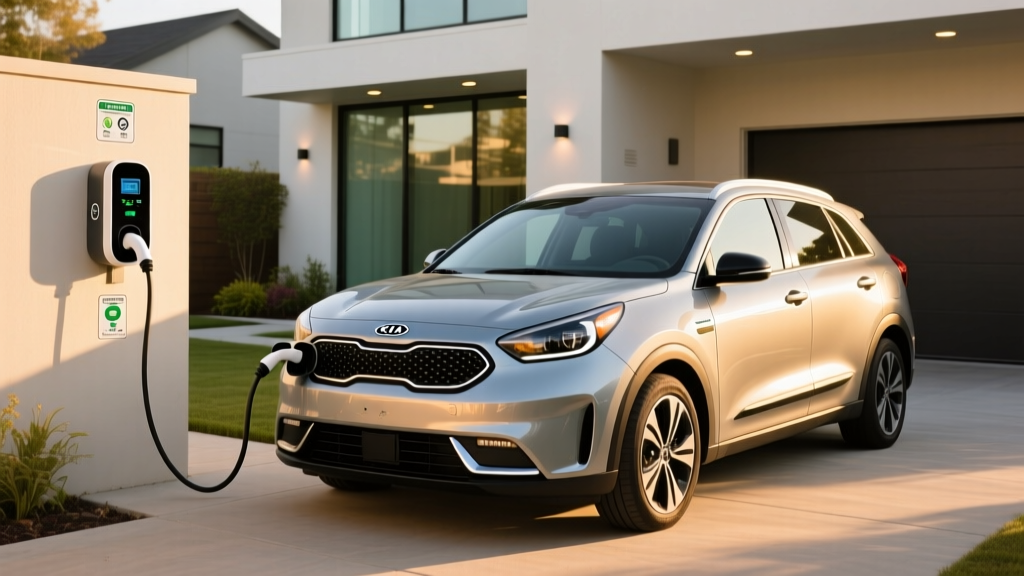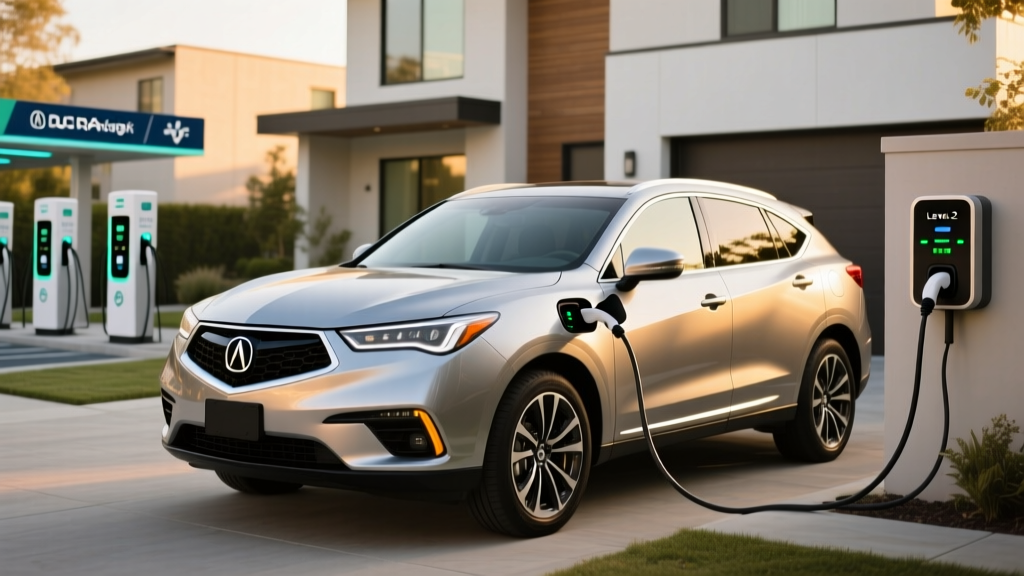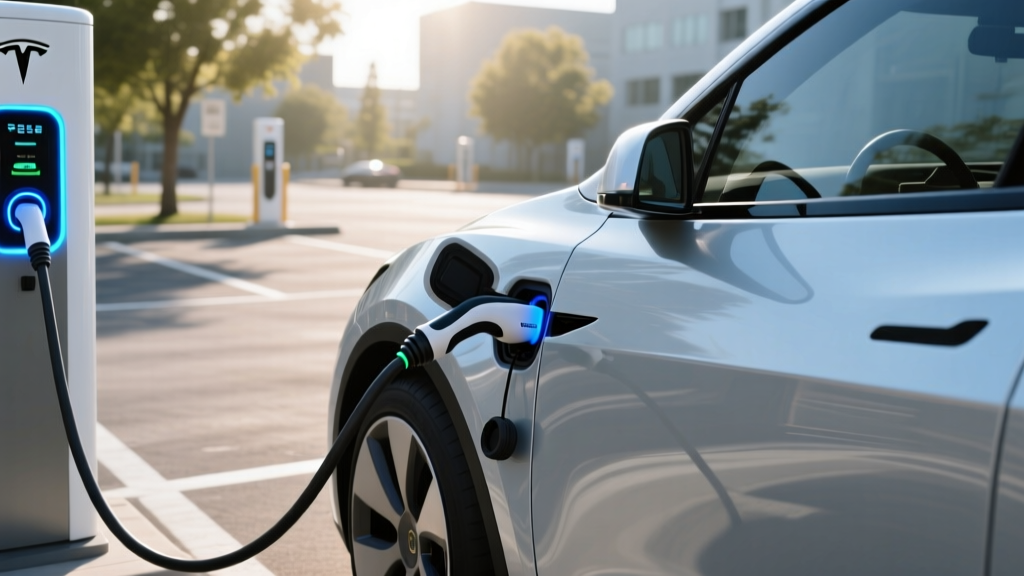
If you're researching Tesla Supercharging time before buying a Model 3, Model Y, or stepping into the wider NACS ecosystem, the marketing headlines won't tell you the full story. Peak kilowatt numbers look impressive on a spec sheet, but real-world charging speed depends on battery state of charge, temperature, chemistry, and which Supercharger generation you're plugged into. This guide dissects actual Supercharging times across the current Tesla fleet, then covers what it takes — and costs — to replicate convenient charging at home.
Understanding kW vs kWh: The Most Common EV Charging Mistake
Before comparing charge times, let's lock down the units. kW (kilowatts) measures power — how fast energy flows into your car at any given moment, like the flow rate of a gas pump nozzle. kWh (kilowatt-hours) measures energy — the total amount stored in your battery, analogous to gallons in a fuel tank.
A Tesla Model Y Long Range has a ~75 kWh usable battery. Plugging into a 250 kW V3 Supercharger doesn't fill that battery in 18 minutes (75 ÷ 250). The charge rate tapers as the battery fills. Understanding the charge curve — not just the peak kW — is what separates realistic expectations from parking-lot frustration.
Tesla Supercharger Generations: V2, V3, and V4 Compared
Tesla's Supercharger network has evolved through several hardware generations, each with different peak power outputs and cable configurations. Here's what you'll encounter on the road in 2026:
| Generation | Peak Power | Connector | Model Y LR 10–80% | Cybertruck 10–80% | Notes |
|---|---|---|---|---|---|
| V2 | 150 kW | NACS (Tesla) | ~35–40 min | ~45 min | Older stalls; shared-power pairs (A/B stalls) |
| V3 | 250 kW | NACS (Tesla) | ~25–28 min | ~30–35 min | Most common; no power sharing between stalls |
| V4 | Up to 350 kW (cabinet); 250–325 kW typical to vehicle | NACS (Tesla) + CCS adapter capability | ~22–26 min | ~25–30 min | Newer deployments; integrated CCS cable in some markets |
The jump from V2 to V3 is dramatic — roughly 10–15 minutes saved on a 10–80% session. The V3-to-V4 improvement is more modest because current Tesla vehicles (Model 3, Model Y, Cybertruck) have onboard charge acceptance curves that peak around 250 kW regardless of stall capability. Future vehicles with 800V+ architectures will benefit more from V4's headroom.
Tesla advertises "up to 200 miles in 15 minutes" on V3. In practice, this holds true only if you arrive with a low state of charge (below 15%), a preconditioned battery (navigated to the Supercharger via the car's nav), and moderate ambient temperatures (50–85°F). Arrive at 40% SoC on a cold day, and that same 15 minutes might add only 100–120 miles. Always precondition by setting the Supercharger as your navigation destination.
Tesla Supercharging Time by Model: 10–80% Data
Charge time depends heavily on battery size and chemistry. Tesla currently offers two primary chemistries across its lineup:
- NMC (Nickel Manganese Cobalt): Used in Long Range and Performance trims. Higher energy density, faster peak charge rates, but Tesla recommends daily charging to 80% for longevity.
- LFP (Lithium Iron Phosphate): Used in Model 3 Rear-Wheel Drive. Slightly lower energy density, can be charged to 100% daily without degradation concern, but charges slower at the top of the curve and in cold weather.
| Model / Trim | Battery (usable kWh) | Chemistry | Peak kW | 10–80% Time | EPA Range |
|---|---|---|---|---|---|
| Model 3 RWD | ~57 kWh | LFP | ~170 kW | ~30–35 min | 272 mi |
| Model 3 Long Range AWD | ~75 kWh | NMC | ~250 kW | ~25–28 min | 363 mi |
| Model Y Long Range AWD | ~75 kWh | NMC | ~250 kW | ~25–28 min | 320 mi |
| Model Y Performance | ~75 kWh | NMC | ~250 kW | ~25–28 min | 293 mi |
| Cybertruck AWD | ~123 kWh | NMC | ~250 kW | ~35–40 min | 340 mi |
| Model S Long Range | ~95 kWh | NMC | ~250 kW | ~30–35 min | 402 mi |
| Model X Long Range | ~95 kWh | NMC | ~250 kW | ~32–38 min | 348 mi |
A few critical nuances:
- The 80% cliff: Above 80% SoC, charge rates drop sharply — often below 50 kW. Charging from 80–100% can take as long as 10–80%. On road trips, plan to leave at 80% and hop to the next station.
- Cold-weather penalty: Below 32°F, expect 10–80% times to stretch 20–40% longer even with preconditioning. LFP batteries are particularly sensitive to cold charge rates.
- V2 shared stalls: At older V2 stations, plugging into stall 1A while 1B is occupied splits the 150 kW feed. You might see only 75–90 kW. Choose an unpaired stall or a V3/V4 site whenever possible.
Charging Levels Explained: Level 1, Level 2, and DC Fast Charging
Superchargers are DC fast chargers, but most of your charging will happen at home on Level 1 or Level 2. Here's how the three levels compare in practical terms:
| Level | Voltage | Power (kW) | Miles of Range Added per Hour | Best For |
|---|---|---|---|---|
| Level 1 | 120V AC | 1.0–1.9 kW | 3–5 mi/hr | Overnight top-ups, PHEVs, low-mileage drivers |
| Level 2 | 240V AC | 7.2–19.2 kW | 20–60 mi/hr | Home daily charging, workplace, destinations |
| DC Fast (V3 Supercharger) | 400–800V DC | 50–350 kW | 150–1,000+ mi/hr (at peak) | Road trips, quick top-ups, fleet turnaround |
For a Tesla Model Y Long Range driven 40 miles per day, a Level 2 home charger running at 11.5 kW (48A) replaces a full day's driving in under two hours. That's why Level 2 is the practical baseline for EV ownership — you wake up every morning with a full battery, and Superchargers become a road-trip tool rather than a daily necessity.
Home Level 2 Charger Installation: Costs, Electrical Requirements & Panel Upgrades
Installing a Level 2 home charger is straightforward for many homes, but older electrical panels can turn a $1,200 project into a $4,000+ job. Here's the full breakdown.
Electrical Requirements
A typical Level 2 home charger requires:
- 240V dedicated circuit (same voltage as your electric dryer or oven)
- 40A to 60A breaker, depending on charger amperage (NEC code requires the breaker be rated 125% above continuous load — a 48A charger needs a 60A breaker)
- Panel capacity: Your main service panel must have enough spare amperage. A 200A panel serving a large home with electric HVAC, dryer, and oven may be near capacity — adding a 60A EV circuit could require a panel upgrade to 400A or a load-management device.
Homes built before 1990 often have 100A or 150A service. Adding a 60A EV circuit to a maxed-out 100A panel is a code violation and a fire risk. A panel upgrade to 200A typically costs $1,500–$3,500; upgrading to 400A with a new meter base can run $3,000–$5,000+. Always have a licensed electrician perform a load calculation before committing to a charger amperage. Some utilities offer rebates that offset panel-upgrade costs — check with your provider.
| Component | Low End | Typical | High End | Notes |
|---|---|---|---|---|
| Level 2 Charger (hardware) | $300 | $500 | $750 | Wall Connector, ChargePoint, Emporia |
| Electrician labor (simple install) | $400 | $800 | $1,500 | Short wire run, panel adjacent to garage |
| Electrician labor (complex install) | $1,000 | $1,800 | $3,000 | Long conduit run, attic/crawlspace, sub-panel |
| Permit & inspection | $50 | $150 | $400 | Varies by municipality; required for code compliance |
| Panel upgrade (if needed) | $1,500 | $2,500 | $5,000 | 100A→200A or 200A→400A; not always required |
| Total (no panel upgrade) | $750 | $1,450 | $2,500 | Most homes with 200A+ service |
| Total (with panel upgrade) | $2,250 | $3,950 | $7,500 | Older homes with 100–150A service |
The federal Residential Clean Energy Credit does not currently cover EV charger hardware for 2026 (the Alternative Fuel Vehicle Refueling Property Credit under §30C expired for residential use after 2021 and was not renewed in its prior form). However, many utilities and state programs offer rebates of $250–$1,000 for Level 2 equipment and installation. Check your utility's EV program page and state incentive databases for current offers.
Connector Compatibility: NACS, CCS1, CHAdeMO & Adapter Needs
The connector landscape shifted dramatically in 2024–2025 when Ford, GM, Rivian, Volvo, and most major automakers adopted Tesla's NACS (North American Charging Standard) for their EVs. Here's where things stand in 2026:
| Connector | Brands Using It (Native) | DC Fast Network Access | Adapter Needed? |
|---|---|---|---|
| NACS (Tesla) | Tesla, Ford (2025+), GM (2025+), Rivian, Volvo, Polestar, Fisker, Mercedes (2026+) | Tesla Superchargers + growing NACS third-party | None for Tesla; Ford/GM use OEM NACS adapter for legacy CCS stations |
| CCS1 | Hyundai, Kia, BMW, VW, Audi, Porsche, Stellantis, Honda | Electrify America, EVgo, ChargePoint, Ionity | Tesla CCS adapter (~$175) or Magic Dock at select Superchargers |
| CHAdeMO | Nissan Leaf (legacy), Mitsubishi Outlander PHEV | Declining; some Electrify America & EVgo stalls | No viable adapter to NACS; network shrinking |
If you own a Tesla, you charge natively at every Supercharger. If you own a non-Tesla with NACS (2025+ Ford F-150 Lightning, GM Equinox EV, etc.), you also access Superchargers directly. CCS1-equipped vehicles can use Tesla's Magic Dock adapter built into select Supercharger stalls, or carry Tesla's CCS-to-NACS adapter for Supercharger access where supported. CHAdeMO is effectively a legacy standard — plan your purchases accordingly.
Cost to Charge: Home vs Supercharger vs Gas — $/Mile Compared
Electricity pricing varies enormously by location, time of day, and charging method. Here are representative 2026 scenarios for a Tesla Model Y Long Range (~3.5 miles per kWh):
| Scenario | $/kWh | Cost per Full Charge (75 kWh) | Cost per Mile | Annual Cost (12,000 mi) |
|---|---|---|---|---|
| Home — Off-Peak TOU Rate | $0.08 | $6.00 | $0.023 | $274 |
| Home — Standard Rate | $0.16 | $12.00 | $0.046 | $549 |
| Tesla Supercharger (avg) | $0.32 | $24.00 | $0.091 | $1,097 |
| Third-Party DC Fast (EA, EVgo) | $0.42 | $31.50 | $0.120 | $1,440 |
| Gas Equivalent (28 MPG, $3.40/gal) | — | — | $0.121 | $1,457 |
The takeaway: home charging on an off-peak rate is roughly 5x cheaper per mile than gasoline. Even exclusive Supercharger use undercuts gas on a cost-per-mile basis, though the gap narrows. If you rely entirely on third-party DC fast charging at $0.40+/kWh, you may actually spend more per mile than a fuel-efficient hybrid. This is why home Level 2 installation isn't a luxury — it's the economic foundation of EV ownership.
Recommended Home Level 2 Chargers: Equipment Picks for 2026
We've tested and tracked reliability data on the major Level 2 chargers available. Here are our top picks for Tesla and NACS-equipped vehicles:
Tesla Wall Connector (Gen 3)
- Power Output: Up to 11.5 kW (48A on 60A breaker)
- Connector: NACS (native Tesla)
- Cable Length: 24 ft
- Smart Features: Wi-Fi, OTA updates, load sharing (up to 6 units on one circuit), Power-Sharing, access control
- Price: ~$450
- Best For: Tesla-only households; cleanest integration with Tesla app
Emporia Vue Level 2 Charger
- Power Output: Up to 11.5 kW (48A on 60A breaker)
- Connector: NACS or J1772 (configurable)
- Cable Length: 24 ft
- Smart Features: Wi-Fi, Emporia energy monitoring integration, solar-aware charging, scheduling, load management
- Price: ~$399
- Best For: Homes with solar panels or Emporia Vue energy monitor; excellent value
ChargePoint Home Flex
- Power Output: Up to 12 kW (50A on 60A breaker; configurable down to 16A)
- Connector: NACS or J1772 (swappable pigtail)
- Cable Length: 23 ft
- Smart Features: Wi-Fi, ChargePoint app, Alexa integration, flexible amperage settings for older panels
- Price: ~$650
- Best For: Mixed-fleet households (Tesla + non-Tesla); adjustable amperage avoids panel upgrades
A note on amperage flexibility: if your electrician's load calculation shows you can only spare 30A or 40A, the ChargePoint Home Flex and Emporia can be configured to draw less power — you'll charge slower, but you'll avoid a costly panel upgrade. A 32A (7.7 kW) circuit still adds roughly 25 miles of range per hour on a Model Y, which is plenty for overnight replenishment.
Safety, Electrical Code & Installation Best Practices
EV charging is a continuous, high-draw electrical load — your charger may run at full amperage for 6–10 hours straight. This demands proper installation:
- Dedicated circuit: Your EV charger must have its own breaker — never share a circuit with other appliances.
- GFCI protection: NEC 2023 and later require GFCI (Ground Fault Circuit Interrupter) protection for all EV charging outlets. Hardwired installations (like the Tesla Wall Connector) may be exempt in some jurisdictions, but GFCI breakers are recommended for outdoor installations regardless.
- Outdoor rating: If your charger is mounted outside or in an unsealed garage, ensure it carries a NEMA 4 or IP65 rating. The Tesla Wall Connector and ChargePoint Home Flex are both rated for outdoor use.
- Permit and inspection: Most municipalities require an electrical permit for EV charger installations. Skipping the permit risks insurance denial in the event of an electrical fire and may violate local code. Budget $50–$400 and 1–3 weeks for the inspection cycle.
- Wire gauge: A 60A circuit requires 6 AWG copper wire (or 4 AWG aluminum) for typical run lengths. Longer runs may need thicker wire to prevent voltage drop. Your electrician will size this correctly.
Frequently Asked Questions
How much does it cost to install a home EV charger?
A straightforward Level 2 installation on an existing 200A panel typically costs $750–$2,500 including hardware, electrician labor, and permit. Homes needing a panel upgrade should budget $2,250–$7,500 total. Get 2–3 quotes from licensed electricians and confirm they include permit costs.
How fast will each charging level add range?
Level 1 (120V) adds 3–5 miles per hour. Level 2 (240V, 48A) adds 30–45 miles per hour on a Model Y. DC fast charging (V3 Supercharger, 250 kW) can add up to 200 miles in 15 minutes at low SoC, but tapers significantly above 80%.
Which connector and charger is compatible with my EV?
All Tesla vehicles use NACS natively. Most 2025+ Ford, GM, Rivian, and Volvo EVs also use NACS and can access Tesla Superchargers directly. Hyundai, Kia, BMW, and VW still use CCS1 and require an adapter or Magic Dock-equipped Supercharger. Check your vehicle's charge port or owner's manual to confirm.
How much does charging cost per mile vs gas?
Home charging on off-peak electricity costs roughly $0.02–$0.05 per mile. Supercharging averages $0.08–$0.10 per mile. A comparable gas vehicle at 28 MPG and $3.40/gallon costs about $0.12 per mile. Home charging delivers the largest savings — typically $800–$1,200 annually for a 12,000-mile driver.
What electrical upgrades might I need for a home charger?
If your home has a 200A or larger service panel with spare breaker slots and headroom in the load calculation, you likely need no upgrade. Homes with 100A or 150A panels — common in pre-1990 construction — may require a panel upgrade ($1,500–$5,000) or a lower-amperage charger configuration (32A instead of 48A) to stay within code.
Does Tesla Supercharging time change in cold weather?
Yes. Below freezing, expect 10–80% Supercharging times to increase by 20–40% compared to moderate temperatures. The battery management system limits charge rate to protect the cells until they warm up. Always navigate to the Supercharger using the car's built-in navigation to trigger battery preconditioning — this can recover 5–10 minutes of charge time even in cold conditions.
Is it safe to Supercharge to 100% regularly?
For NMC batteries (Long Range, Performance trims), Tesla recommends daily charging to 80% and reserving 100% for road trips. Frequent 100% charges accelerate long-term degradation. For LFP batteries (Model 3 RWD), Tesla recommends periodic 100% charges to allow the BMS to recalibrate. On road trips, charging to 100% occasionally is fine for any chemistry — just don't let the car sit at 100% for extended periods.
Understanding Tesla Supercharging time is ultimately about managing expectations around the charge curve, not just the peak kW headline. Plan your road trips around 10–80% sessions at V3 or V4 stations, install a Level 2 charger at home for daily convenience, and your EV ownership experience will be defined by ease — not anxiety.