The 2025 Chevrolet Equinox EV arrived with a bold promise: over 300 miles of range at a mainstream price point. But as any seasoned EV owner will tell you, the EPA range sticker is only the beginning of the story. What really determines your daily satisfaction is how quickly you can replenish that 85 kWh (usable) battery, what it costs to charge at home versus on the road, and whether your garage electrical panel can handle a Level 2 charger installation without a costly upgrade.
This guide breaks down the 2025 Equinox EV range in real-world terms, maps out every charging scenario from a standard 120V outlet to a 150 kW DC fast charger, and walks through the exact electrical requirements and costs for a home charging setup. Whether you're an Equinox EV owner optimizing your routine or a shopper deciding if the charging logistics work for your household, the numbers below will give you the full picture.
2025 Equinox EV Range: EPA vs. Real World
The 2025 Equinox EV is built on GM's Ultium platform and comes with a lithium-ion NMC battery pack. Here are the official EPA range figures by trim and drivetrain, sourced from fueleconomy.gov:
| Trim / Drivetrain | Battery (Usable) | EPA Range | MPGe (Combined) | kWh/100 mi |
|---|---|---|---|---|
| LT FWD (2LT/3LT) | 85 kWh | 319 mi | 97 MPGe | 34 |
| RS FWD (2RS/3RS) | 85 kWh | 315 mi | 96 MPGe | 35 |
| LT AWD (2LT/3LT) | 85 kWh | 285 mi | 89 MPGe | 38 |
| RS AWD (2RS/3RS) | 85 kWh | 281 mi | 88 MPGe | 38 |
Charging Levels Explained: Speeds and Range Added
Understanding the difference between kW (kilowatts — the rate of power delivery, like water pressure from a hose) and kWh (kilowatt-hours — the total energy stored, like gallons in a tank) is essential. Your charger's kW rating determines how fast energy flows into the Equinox EV's 85 kWh battery.
| Charging Level | Voltage / Amps | Power (kW) | Miles of Range Added per Hour | Best For |
|---|---|---|---|---|
| Level 1 (Standard Outlet) | 120V / 12A | ~1.4 kW | ~3–4 mi/hr | Emergency top-ups, overnight trickle for low-mileage drivers |
| Level 2 (Home / Workplace) | 240V / 32–48A | 7.7–11.5 kW | ~25–37 mi/hr | Daily home charging, overnight full replenishment |
| DC Fast Charging | 400V+ DC | Up to 150 kW peak | ~180–250 mi in 30 min | Road trips, rapid replenishment away from home |
Equinox EV Charging Time Examples
Here's what charging the 85 kWh battery actually looks like in practice:
- Level 1 (1.4 kW): 0–100% in approximately 60+ hours. Only practical for adding ~30 miles overnight.
- Level 2 at 7.7 kW (32A): 0–100% in roughly 11 hours. An overnight charge from 20% to full takes about 9 hours.
- Level 2 at 11.5 kW (48A): 0–100% in roughly 7.5 hours. The sweet spot for daily drivers who want a full battery every morning.
- DC Fast Charge at 150 kW peak: 10–80% in approximately 30 minutes. Note that the Equinox EV's charge curve tapers significantly above 80% — the last 20% can take as long as the first 70%. GM recommends DC fast charging to 80% for optimal battery longevity and time efficiency.
Home Charger Installation: Electrical Requirements and Costs
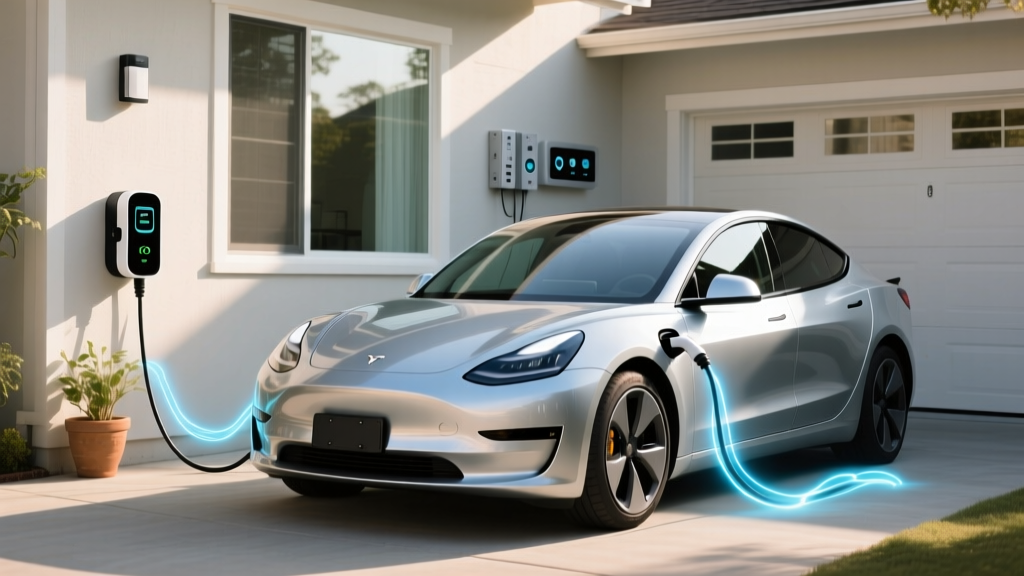
Installing a Level 2 home charger for your Equinox EV involves more than plugging in a unit. Here's what the electrical side demands:
Core Electrical Requirements
- Circuit: A dedicated 240V circuit. For a 48A charger, you need a 60-amp breaker (NEC code requires circuits rated at 125% of continuous load: 48A × 1.25 = 60A).
- Wire gauge: Typically 6 AWG copper for a 60A circuit, though runs over 50 feet may require 4 AWG to minimize voltage drop.
- Panel capacity: Your main electrical panel must have enough spare amperage to accommodate the new circuit. Most modern 200A panels handle a 60A EV circuit without issue. Older 100A panels often require an upgrade.
- Permit: Nearly all jurisdictions require an electrical permit for a new 240V circuit. This ensures the work is inspected and meets code.
- GFCI protection: The 2020 NEC (and later) requires GFCI protection for EV charging outlets in garages. Some hardwired chargers have built-in GFCI; receptacle-based installs may need a GFCI breaker (adds ~$50–$80 to material costs).
Installation Cost Breakdown
| Component | Cost Range | Notes |
|---|---|---|
| Level 2 Charger (Equipment) | $350 – $750 | Varies by brand, power output, smart features |
| Electrician Labor (standard install) | $500 – $1,500 | Depends on run length from panel, wall type, conduit needs |
| Electrical Permit | $50 – $200 | Varies by municipality |
| Panel Upgrade (if needed) | $1,500 – $3,500 | 100A → 200A service upgrade; not required in most modern homes |
| Total (no panel upgrade) | $900 – $2,450 | Typical scenario for homes with 200A service |
| Total (with panel upgrade) | $2,400 – $5,950 | Older homes with 100A or maxed-out panels |
Connector Compatibility: NACS, CCS1, and What the Equinox EV Uses
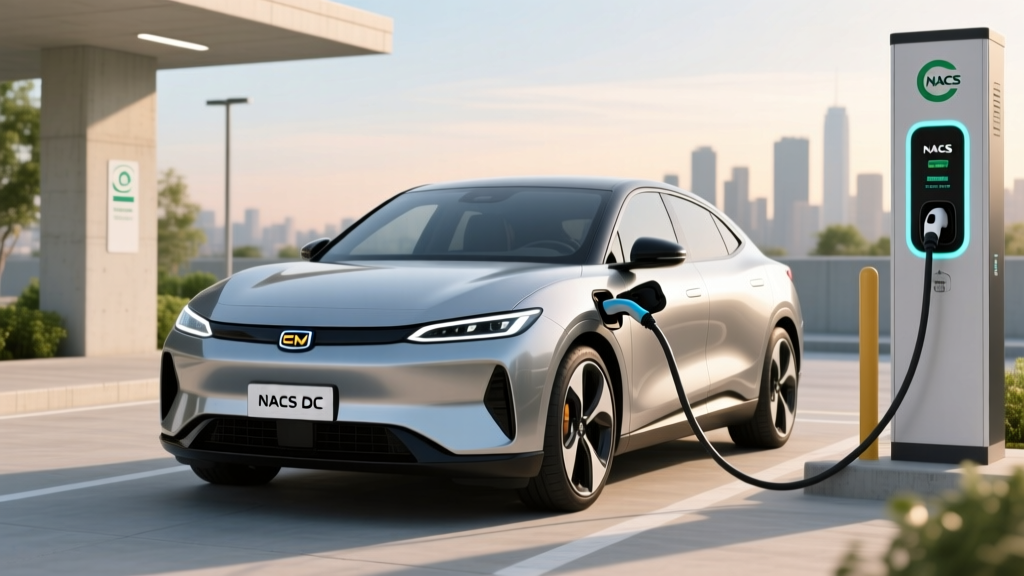
The 2025 Chevrolet Equinox EV ships with the CCS1 (Combined Charging System) connector as standard. However, GM announced that all new Ultium-based EVs — including future Equinox EV model years — will transition to the NACS (North American Charging Standard / Tesla) connector. Here's the current compatibility landscape:
| Connector Type | Used By | Equinox EV Compatibility |
|---|---|---|
| CCS1 | Chevrolet (current), Ford (current), Hyundai, Kia, VW, BMW, most non-Tesla brands | Native — built-in port on 2025 Equinox EV |
| NACS (Tesla) | Tesla (all models), Ford (2025+), GM (2025+ transition), Rivian, Volvo, others adopting | Requires a CCS-to-NACS adapter for Tesla Supercharger access; GM has confirmed adapter availability for current CCS-equipped vehicles |
| CHAdeMO | Nissan Leaf, Mitsubishi Outlander PHEV (legacy) | Not compatible — no adapter available; this standard is effectively discontinued for new vehicles |
Practical tip: If you plan to use Tesla Superchargers with your 2025 Equinox EV, purchase the GM-approved CCS-to-NACS adapter (~$200–$300). Tesla's Supercharger network remains the most reliable DC fast-charging infrastructure in the U.S., with over 25,000 stalls. Confirm adapter compatibility on Chevrolet's official site before purchasing third-party adapters.
Cost to Charge: Home, Public, and DC Fast Charging Compared
Electricity pricing varies enormously by location, time of day, and charger type. Here's a realistic cost breakdown for the Equinox EV's 85 kWh battery:
| Scenario | Rate ($/kWh) | Cost for 10–80% (59.5 kWh) | Cost per Mile (est.) |
|---|---|---|---|
| Home — Off-Peak / Time-of-Use | $0.08 – $0.12 | $4.76 – $7.14 | $0.03 – $0.04/mi |
| Home — Standard Residential Avg. | $0.15 – $0.18 | $8.93 – $10.71 | $0.05 – $0.06/mi |
| Public Level 2 (ChargePoint, EVgo L2) | $0.25 – $0.49 | $14.88 – $29.16 | $0.08 – $0.17/mi |
| DC Fast Charging (Electrify America, EVgo) | $0.35 – $0.55 | $20.83 – $32.73 | $0.12 – $0.19/mi |
| Tesla Supercharger (with adapter) | $0.25 – $0.40 | $14.88 – $23.80 | $0.08 – $0.14/mi |
Cost Per Mile: Equinox EV vs. Gas Equivalent
A comparable gas-powered compact SUV averaging 28 MPG combined at $3.40/gallon costs approximately $0.12 per mile in fuel alone. The Equinox EV charged at home on off-peak rates costs $0.03–$0.04 per mile — a 70–75% reduction in per-mile energy cost. Even at public DC fast-charging rates, the EV breaks even or saves money versus gasoline.
Over 15,000 miles per year, home charging saves roughly $1,200–$1,400 annually versus gasoline, based on national average electricity and fuel prices. The savings compound further if your utility offers EV-specific time-of-use rates with super off-peak windows (often midnight–6 AM at $0.05–$0.08/kWh).
Recommended Level 2 Home Chargers for the Equinox EV
Not all Level 2 chargers are created equal. Here are three proven units well-matched to the Equinox EV's 11.5 kW onboard charger acceptance rate:
ChargePoint Home Flex
- Power Output: Up to 12 kW (50A) — adjustable down to 16A for lower-capacity panels
- Connector: CCS1 (J1772 + CCS combo) — native fit for the Equinox EV
- Cable Length: 23 feet
- Smart Features: Wi-Fi connected, app scheduling, Alexa integration, energy tracking, automatic software updates
- Price: ~$550–$650
- Why it works: Adjustable amperage means you can set it to 40A on a 50A breaker if your panel can't support 60A — a major flexibility advantage.
Emporia Level 2 EV Charger
- Power Output: Up to 11.5 kW (48A)
- Connector: CCS1 (J1772 combo)
- Cable Length: 24 feet
- Smart Features: Wi-Fi, app control, solar integration (pairs with Emporia Vue energy monitor for solar-aware charging), load management
- Price: ~$350–$400
- Why it works: Best value in the 48A category. The solar-integration feature is ideal for homeowners with rooftop panels who want to charge exclusively on excess solar production.
Grizzl-E Smart
- Power Output: Up to 10 kW (40A)
- Connector: J1772 (Level 2 AC — works with the Equinox EV's AC charging port)
- Cable Length: 24 feet
- Smart Features: Wi-Fi, OCPP-compatible, app scheduling, built-in GFCI (may satisfy NEC GFCI requirement without a special breaker)
- Price: ~$450–$550
- Why it works: Built in Canada with extreme-weather durability (rated to -40°F). The built-in GFCI can save $50–$80 on your electrical install by eliminating the need for a GFCI breaker.
Safety, Code, and Installation Best Practices
A proper installation protects your vehicle, your home, and your insurance coverage. Key requirements and recommendations:
- Dedicated circuit: Your Level 2 charger must be on its own dedicated circuit — never shared with other appliances. This prevents overloads and tripped breakers.
- Hardwired vs. receptacle (NEMA 14-50): Hardwired installations are generally preferred for 48A+ chargers because they eliminate the receptacle as a potential failure point and don't require GFCI breakers (the charger handles ground-fault protection internally). A NEMA 14-50 receptacle offers portability but requires a GFCI breaker under current NEC.
- Outdoor rating: If your charger is installed outside (carport, driveway), ensure the unit carries a NEMA 4 or IP65 weather rating. All three chargers recommended above are outdoor-rated.
- Surge protection: Consider a whole-home surge protector or a dedicated EV circuit surge device. Lightning-induced surges can damage charger electronics and, in rare cases, the vehicle's onboard charger. Cost: ~$150–$300 installed.
- Utility notification: Many utilities require or incentivize notification when you install an EV charger. Some offer dedicated EV metering or time-of-use rate plans that can cut your charging costs by 40–60%. Contact your utility before installation.
Federal Tax Credit and Incentives for Home Charging
The IRS §30D Clean Vehicle Credit applies to the vehicle purchase (up to $7,500 if all battery-sourcing, MSRP, and buyer-income requirements are met — see current rules at irs.gov). However, the Alternative Fuel Vehicle Refueling Property Credit (IRC §30C) can cover up to 30% of home charger equipment and installation costs, capped at $1,000. Eligibility depends on your census tract meeting certain income or rural criteria. Consult a tax professional for your specific situation, as these rules are subject to change.
Additionally, many state and local programs offer rebates of $200–$750 for Level 2 charger installations. Check your state energy office or utility provider for current programs.
Frequently Asked Questions
How much does it cost to install a home EV charger for the Equinox EV?
A typical Level 2 home charger installation costs $900–$2,450 total (equipment + electrician + permit) for homes with adequate 200A electrical service. If a panel upgrade from 100A to 200A is needed, total costs can reach $2,400–$5,950. Always get a load calculation from a licensed electrician before purchasing equipment.
How fast will each charging level add range to the Equinox EV?
Level 1 (120V) adds roughly 3–4 miles per hour. Level 2 (240V at 48A) adds approximately 37 miles per hour — enough to fully replenish the 85 kWh battery overnight in about 7.5 hours. DC fast charging at 150 kW peak adds roughly 70 miles in 10 minutes during the optimal 10–50% SoC window.
Which connector does the 2025 Equinox EV use, and can I charge at Tesla Superchargers?
The 2025 Equinox EV uses the CCS1 connector natively. To access Tesla Superchargers, you'll need a GM-approved CCS-to-NACS adapter. Tesla's network is expanding access to non-Tesla vehicles via the "Magic Dock" built-in adapter at select locations, but a personal adapter provides the broadest access.
How much does charging cost per mile compared to gasoline?
At home on off-peak electricity ($0.10/kWh), the Equinox EV costs about $0.03–$0.04 per mile. A comparable gas SUV at 28 MPG and $3.40/gallon costs about $0.12 per mile. Even at public DC fast-charging rates ($0.45/kWh), the EV costs roughly $0.15 per mile — still cheaper than gasoline in most markets.
What electrical upgrades might I need for a home Level 2 charger?
The most common upgrade is a panel capacity increase from 100A to 200A service, required when your existing panel lacks headroom for a 60A dedicated circuit. Other potential upgrades include replacing outdated wiring (aluminum to copper), adding conduit for long wire runs, or installing a GFCI breaker if using a NEMA 14-50 receptacle. A licensed electrician's load calculation will determine exactly what your home needs.
Does frequent DC fast charging degrade the Equinox EV battery?
Modern Ultium batteries have robust thermal management systems that mitigate fast-charging degradation. GM's battery warranty covers 8 years / 100,000 miles with a minimum 70% capacity retention threshold. Occasional DC fast charging on road trips has minimal impact. For daily charging, Level 2 at home is gentler on the battery and significantly cheaper. Avoid routinely charging to 100% on DC fast chargers — the 10–80% window is both faster and better for long-term battery health.