Introduction to Commercial DCFC Deployment
Deploying a commercial Level 3 DC Fast Charger (DCFC) is a complex infrastructure project that goes far beyond simply plugging in a high-powered device. Unlike Level 2 commercial setups, DCFC stations draw massive amounts of power directly from the grid, often requiring dedicated utility transformers, heavy-duty switchgear, and extensive civil engineering. As the United States accelerates its transition to electric mobility, guided by initiatives like the Federal Highway Administration NEVI Program, the demand for reliable, high-power commercial charging hubs has never been higher. This comprehensive guide provides expert tips and best practices for navigating the end-to-end installation of commercial Level 3 DC fast chargers, ensuring your site is optimized for performance, compliance, and long-term profitability.
Phase 1: Utility Coordination and Electrical Infrastructure
The most critical and time-consuming phase of any DCFC installation is utility coordination. A single 350kW DC fast charger can draw as much power as a large commercial building or a small manufacturing facility. Most commercial sites operate on 120/208V or 277/480V three-phase power, but high-power charging often requires dedicated medium-voltage utility feeds and new step-down transformers.
Expert Tip: Engage your local utility provider during the initial site selection phase, long before signing a lease or purchasing land. Request a 'make-ready' feasibility study to determine if the local grid can support your desired megawatt capacity. According to the Alternative Fuels Data Center, utility upgrades and make-ready infrastructure can account for a significant portion of total project costs and add six to twelve months to the timeline if not anticipated early. Always install oversized underground conduit banks during initial trenching to 'future-proof' the site. Running extra PVC conduit while the trench is open costs a fraction of what it will cost to jackhammer and repour concrete three years from now when you inevitably need to add more charging stalls.
Phase 2: Equipment Selection and Footprint Planning
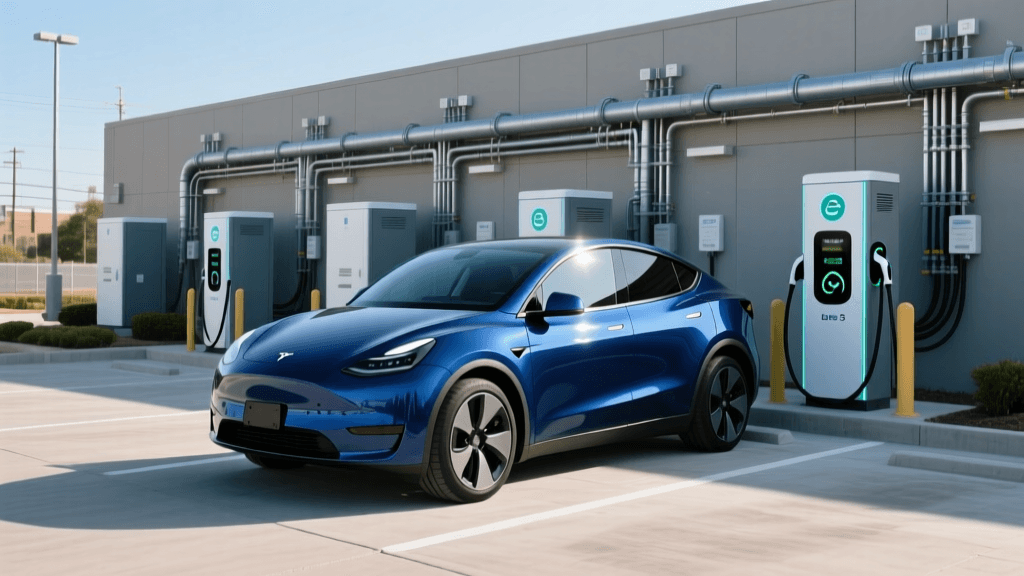
Commercial DCFC equipment generally falls into two categories: all-in-one pedestals and split-system power cabinets. For high-power charging hubs (150kW to 350kW+ per port), split systems are the industry standard. A centralized power cabinet converts AC grid power to DC, distributing it to multiple slender dispensers via heavy-gauge DC cables.
Key Equipment Considerations:
- Connector Standards: While CCS1 has been the historical standard for non-Tesla EVs, the rapid industry-wide adoption of the North American Charging Standard (NACS) means new commercial deployments must include NACS connectors or dual-cable dispensers to maximize vehicle compatibility and ensure high utilization rates.
- Cable Management: 350kW chargers require liquid-cooled cables to prevent overheating and allow for a thinner, more manageable cord. However, these cables are still heavier and stiffer than standard AC cords; utilize overhead cable management systems (retractors) to keep cables off the ground, preventing abrasion and snow burial.
- Acoustic Mitigation: Power cabinets utilize massive cooling fans that can exceed 70 to 80 decibels under full load. Site the cabinets strategically away from property lines, residential areas, or outdoor seating zones to comply with local noise ordinances and maintain a pleasant customer experience.
Phase 3: Civil Work, Trenching, and ADA Compliance
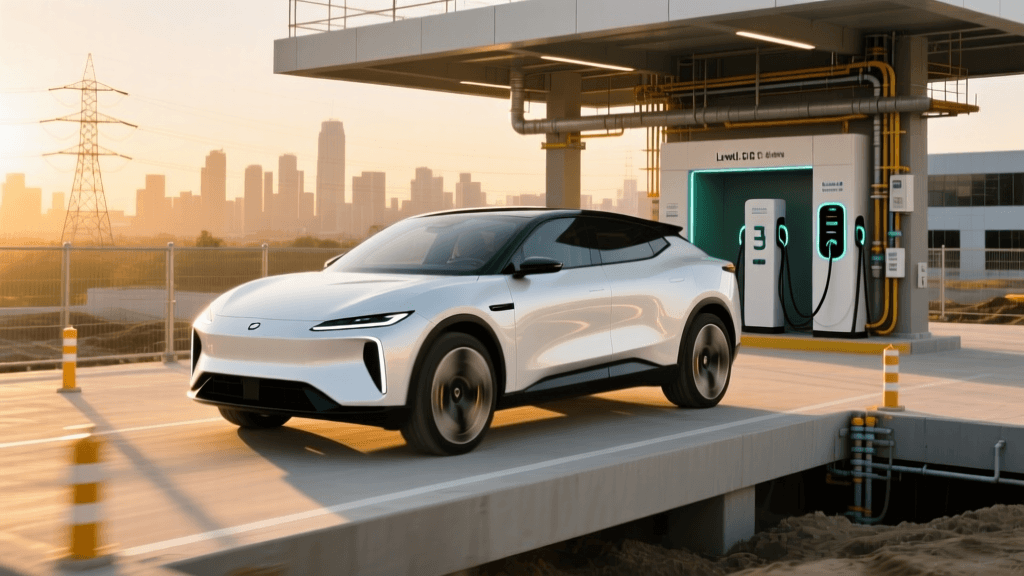
The physical footprint of a DCFC station requires rigorous civil engineering and strict adherence to local building codes. Power cabinets can weigh upwards of 2,500 pounds, necessitating reinforced concrete pads engineered to support the static load, resist seismic shifting, and elevate the equipment above the 100-year flood plain. Trenching for 480V three-phase power and fiber-optic communication lines typically requires a minimum depth of 36 inches, with warning tape and concrete encasement in high-traffic areas to prevent future excavation damage.
Furthermore, commercial installations must strictly adhere to the Americans with Disabilities Act (ADA). This involves much more than just painting a blue space and hanging a sign. Best practices dictate that at least one DCFC dispenser must feature an accessible route with a maximum running slope of 1:12, a clear floor space for wheelchair maneuvering, and a user interface (screen and credit card reader) mounted no higher than 48 inches from the ground. Additionally, commercial sites must install high-lumen, dark-sky compliant LED canopy lighting to ensure safety, visibility, and security for users charging late at night.
Commercial DCFC Installation Cost Breakdown
The capital expenditure for a commercial DCFC site varies wildly based on existing electrical capacity, local labor rates, and civil requirements. Below is an estimated cost breakdown for a standard two-dispenser, four-port 350kW charging hub, representing a typical highway-adjacent or retail corridor deployment.
| Cost Category | Estimated Range (USD) | Notes & Variables |
|---|---|---|
| DCFC Equipment (Cabinet + 2 Dispensers) | $80,000 - $130,000 | Varies by power output, brand, and screen size |
| Utility Make-Ready & Transformer | $40,000 - $150,000+ | Highly dependent on grid proximity and voltage |
| Civil Work, Trenching & Concrete | $25,000 - $60,000 | Includes directional boring, paving, and pads |
| Electrical Labor & Switchgear | $30,000 - $75,000 | Panelboards, wiring, and terminations |
| Permitting, Design & Engineering | $15,000 - $30,000 | Site plans, PE stamps, and city inspection fees |
| Total Estimated Project Cost | $190,000 - $445,000+ | Excludes ongoing software and network fees |
Phase 4: Network Integration and Commissioning
Once the hardware is physically installed and energized, the station must be integrated into a Charge Point Operator (CPO) network. Ensure your hardware is OCPP (Open Charge Point Protocol) 1.6J or 2.0.1 compliant. This open-standard communication protocol prevents vendor lock-in, allowing you to switch backend software providers without replacing the physical chargers. Network connectivity is equally vital; while cellular modems are standard, commercial hubs in rural or highway corridors should invest in dedicated fiber-optic lines or high-gain directional antennas to ensure uninterrupted telemetry.
Payment processing is another critical hurdle. Modern commercial DCFCs must feature embedded Point of Sale (POS) terminals that are PCI-compliant and capable of accepting tap-to-pay credit cards, RFID fleet cards, and mobile app initiations. Commissioning involves rigorous load testing, verifying the ground fault protection equipment (GFPE), and ensuring the system accurately reports state-of-charge data back to the network dashboard.
Expert Best Practices for Long-Term Reliability
Implement Predictive Maintenance: DCFCs experience high thermal stress, especially in extreme summer or winter climates. Utilize network software that monitors internal component temperatures, voltage anomalies, and fan speeds to dispatch technicians proactively before a catastrophic failure occurs.
Establish a Crash Mitigation Strategy: Commercial charging hubs are high-traffic environments with drivers frequently maneuvering heavy vehicles. Install heavy-duty steel bollards filled with concrete around power cabinets and dispensers to protect the multi-million-dollar infrastructure from accidental vehicle impacts.
Optimize for Demand Charges: Utilities often levy massive 'demand charges' based on the highest 15-minute power spike in a monthly billing cycle. Work with your CPO to implement automated battery energy storage systems (BESS) or smart-charge management software that throttles power slightly during peak grid hours to slash utility overhead and improve the site's return on investment.
Conclusion
Deploying a commercial Level 3 DC fast charging station is a major infrastructural investment that requires meticulous planning, deep utility partnerships, and strict adherence to civil and electrical codes. By prioritizing make-ready feasibility, ADA compliance, and OCPP network flexibility, site hosts can build robust, future-proof charging hubs that deliver exceptional uptime, serve the growing EV demographic, and drive long-term profitability in the rapidly expanding electric mobility sector.