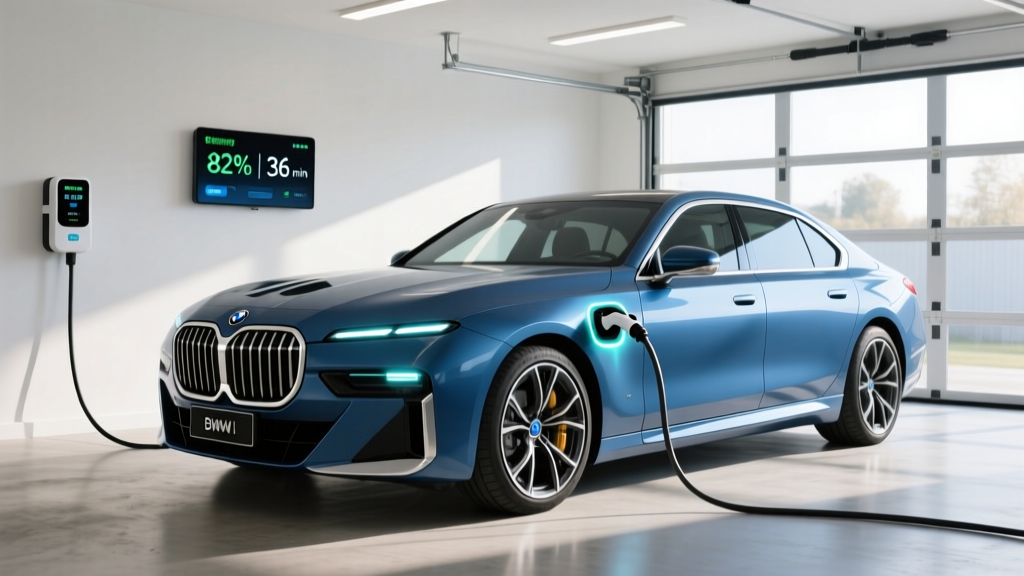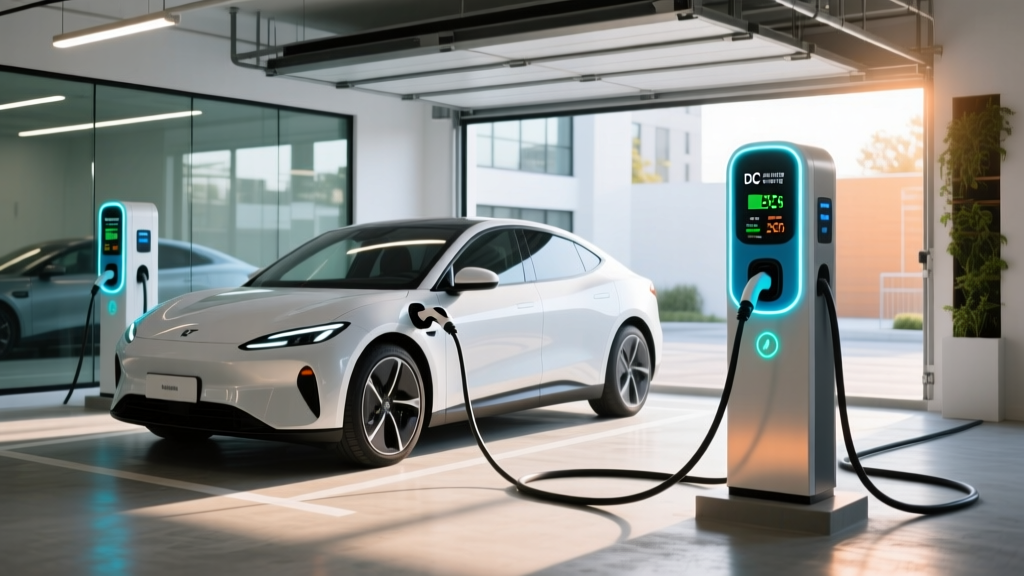
If you are shopping for an electric vehicle or already own one, the single most useful metric to master is the charging electric car cost per mile. Unlike gas cars where price-per-gallon dominates the conversation, EV economics hinge on a web of variables: your local electricity rate, the charger type you use, time-of-day pricing, and whether you are topping up at home or on the road. This guide dissects every cost layer, from Level 1 trickle charging to 350 kW DC fast charging, and shows you exactly where your dollars go.
The Three Charging Levels: Speed, Power, and What They Cost
Before we can talk dollars, we need to distinguish kW (kilowatts) — the rate at which energy flows, like water pressure — from kWh (kilowatt-hours) — the total energy delivered, like gallons in a bucket. You pay per kWh, but your charger's kW rating determines how long you wait. Here is how the three levels stack up in 2026:
| Level | Voltage | Typical kW | Miles of Range Added per Hour | Best Use Case |
|---|---|---|---|---|
| Level 1 (120V) | 120V AC | 1.0–1.4 kW | 3–5 miles | Overnight top-ups, PHEVs, low-mileage drivers |
| Level 2 (240V) | 240V AC | 7.2–19.2 kW | 25–70 miles | Daily home charging, workplace, destination |
| DC Fast Charging | 400–800V DC | 50–350 kW | 150–1,200+ miles (equivalent/hr) | Road trips, quick top-ups, commercial fleets |
For context, a 2026 Hyundai Ioniq 5 (84 kWh usable battery, NMC chemistry) charging at a 350 kW DC fast charger will add roughly 210 miles of EPA-rated range in about 18 minutes (10–80% State of Charge). That same car on a 48-amp Level 2 home charger (11.5 kW) needs about 7.5 hours for a full 0–100% charge — perfect for overnight.
How Much Does Charging an Electric Car Actually Cost Per Mile?
This is where EV ownership either shines or disappoints, depending entirely on your setup. The national average residential electricity rate in early 2026 sits around $0.17/kWh (U.S. EIA), but Time-of-Use (TOU) plans can drop that to $0.07–$0.10/kWh overnight. Public DC fast charging, meanwhile, averages $0.40–$0.55/kWh at networks like Electrify America and EVgo, with peak-hour rates sometimes exceeding $0.65/kWh.
| Scenario | Rate ($/kWh) | Vehicle Efficiency | Cost per Mile | Annual Cost (12,000 mi) |
|---|---|---|---|---|
| Home Level 2, off-peak TOU | $0.09 | 3.0 mi/kWh (e.g., Tesla Model 3) | $0.030 | $360 |
| Home Level 2, standard rate | $0.17 | 3.0 mi/kWh | $0.057 | $680 |
| Public Level 2 (ChargePoint, etc.) | $0.25 | 3.0 mi/kWh | $0.083 | $1,000 |
| DC Fast Charging (road trips) | $0.48 | 3.0 mi/kWh | $0.160 | $1,920 |
| Gas car comparison (28 MPG avg, $3.30/gal) | — | 28 MPG | $0.118 | $1,414 |
Home EV Charger Installation: Electrical Requirements and Costs
A dedicated Level 2 home charger is the single biggest factor in keeping your charging electric car cost low. But installation is not just buying a wallbox and plugging it in. Here is what a proper 2026 installation involves:
Electrical Specifications
- Circuit: Dedicated 240V circuit, typically 40A to 60A (breaker sized at 125% of continuous load, so a 48A charger needs a 60A breaker)
- Wire gauge: 6 AWG copper for 48A; 4 AWG for 60A circuits (varies by run length and local code)
- Connector: NEMA 14-50 receptacle or hardwired connection (hardwired is preferred for 48A+ to avoid receptacle overheating)
- GFCI protection: Required by NEC 2020 and later for receptacle-based EV chargers; hardwired units often have built-in ground-fault protection
- Permit: Required in most jurisdictions; inspector verifies wire gauge, breaker sizing, grounding, and GFCI compliance
Installation Cost Breakdown
| Component | Typical Cost Range | Notes |
|---|---|---|
| Level 2 charger hardware | $350–$750 | 40A–48A smart chargers; dumb units from $250 |
| Electrician labor (standard install) | $500–$1,500 | Short run from panel to garage; assumes 200A panel with spare capacity |
| Permit and inspection | $50–$250 | Varies by municipality |
| Panel upgrade (if needed) | $1,500–$4,000 | Required if existing panel is 100A or has no spare breaker slots; 200A service is standard for modern EV-owning homes |
| Total (no panel upgrade) | $900–$2,500 | Most homes with 200A panels fall here |
| Total (with panel upgrade) | $2,400–$6,500 | Older homes, 100A service, or heavy existing loads |
Some utilities offer rebates of $250–$1,000 for Level 2 installation, and the federal Alternative Fuel Vehicle Refueling Property Credit (IRC §30C) can cover 30% of equipment and installation costs up to $1,000 for home chargers placed in service — subject to income and census-tract eligibility. Check with a tax professional before claiming.
Connector Compatibility: NACS, CCS1, and CHAdeMO in 2026
The connector landscape has consolidated significantly. Tesla's North American Charging Standard (NACS) is now the dominant plug for new EVs sold in the U.S., with Ford, GM, Rivian, Volvo, Hyundai/Kia, and others adopting it for 2025–2026 models. CCS1 remains on many 2023–2024 vehicles, and CHAdeMO is effectively legacy (Nissan Leaf being the last major holdout).
| Connector | Brands Using It (2026 Models) | DC Fast Charger Availability | Adapter Needed? |
|---|---|---|---|
| NACS (Tesla-style) | Tesla, Ford, GM, Rivian, Hyundai, Kia, Volvo, Polestar, BMW, Mercedes | Tesla Supercharger (20,000+ stalls), plus Electrify America, EVgo adding NACS | CCS-to-NACS adapter for older CCS vehicles at Superchargers (~$200) |
| CCS1 | VW ID.4 (prior MY), some 2024 Hyundai/Kia, BMW i4 (prior MY) | Electrify America, EVgo, ChargePoint DC | NACS-to-CCS adapter for Tesla Superchargers (~$250) |
| CHAdeMO | Nissan Leaf (discontinued after 2025 MY), Mitsubishi Outlander PHEV (prior MY) | Declining; ~10% of DC stalls | No adapter; use CHAdeMO stations only |
For home Level 2 charging, the connector matters less because most home chargers ship with NACS or CCS1 plugs, and adapters are readily available. But for DC fast charging on road trips, confirming your vehicle's native connector and the network's plug type at your planned stops is essential.
Charging Time Examples: What to Expect for Common Battery Sizes
Charging time depends on battery capacity (kWh), the charger's power output (kW), and the vehicle's onboard charge acceptance curve. EVs do not charge at peak kW the entire session — the charge curve tapers significantly above 80% State of Charge to protect battery health. Here are real-world benchmarks:
- 2026 Tesla Model 3 Long Range (75 kWh usable, LFP battery): Peak 250 kW on V3 Supercharger. 10–80% in approximately 25 minutes. On a 48A Level 2 home charger (11.5 kW): 0–100% in ~7 hours.
- 2026 Hyundai Ioniq 5 (84 kWh usable, NMC): Peak 350 kW (800V architecture). 10–80% in approximately 18 minutes at a 350 kW station. On 48A Level 2: ~7.5 hours.
- 2026 Ford F-150 Lightning Extended Range (131 kWh usable, NMC): Peak 150 kW sustained, up to ~175 kW peak. 10–80% in approximately 45 minutes. On 80A Level 2 (19.2 kW): ~7 hours.
- 2026 Toyota Prius Prime PHEV (13.6 kWh usable): Level 1 (120V): ~4 hours. Level 2 (240V, 3.3 kW onboard): ~4 hours (limited by onboard charger).
Note that the F-150 Lightning's massive battery takes longer despite similar peak kW because it has nearly double the kWh to fill. Always think in terms of the ratio: battery kWh ÷ charger kW = approximate hours (adjusted for taper).
Best Home EV Chargers for 2026: Equipment Picks
ChargePoint Home Flex (NACS)
- Power output: Up to 11.5 kW (48A) on 60A circuit; adjustable down to 16A
- Connector: NACS (native); CCS adapter included
- Cable length: 23 feet
- Smart features: Wi-Fi, app scheduling, TOU optimization, Alexa integration, energy tracking
- Outdoor rating: NEMA 4 (weather-resistant for outdoor mounting)
- Price: ~$599
Emporia Level 2 Smart Charger
- Power output: Up to 11.5 kW (48A)
- Connector: NACS or J1772 (CCS) options
- Cable length: 24 feet
- Smart features: Solar integration, energy monitoring, TOU scheduling, load management with Emporia Vue panel monitor
- Outdoor rating: NEMA 4
- Price: ~$399 (best value pick)
Tesla Wall Connector
- Power output: Up to 11.5 kW (48A) on 60A circuit
- Connector: NACS native; J1772 adapter included for non-Tesla EVs
- Cable length: 24 feet
- Smart features: Wi-Fi, OTA updates, power sharing between two units on one circuit, vehicle-specific charge limits
- Outdoor rating: NEMA 3R (suitable for covered outdoor; less sealed than NEMA 4)
- Price: ~$475
Grizzl-E Smart (United Chargers)
- Power output: Up to 10 kW (40A) on 50A circuit
- Connector: NACS or J1772 options
- Cable length: 24 feet
- Smart features: OCPP-compatible, app control, load balancing
- Outdoor rating: NEMA 4 (built in Canada, rated to -40°F)
- Price: ~$549 (best for extreme cold climates)
Safety, Code, and Electrical Panel Considerations
Installing a Level 2 charger is electrical work that must comply with the National Electrical Code (NEC) and your local jurisdiction's amendments. Key safety requirements include:
- Dedicated circuit: EV chargers are continuous loads (operating 3+ hours), requiring a circuit rated at 125% of the charger's amperage. A 48A charger needs a 60A breaker and appropriately sized wire.
- GFCI protection: NEC 2020+ requires ground-fault circuit interrupter protection for receptacle-based EV charging circuits (e.g., NEMA 14-50). Hardwired chargers with integrated GFCI may satisfy this requirement.
- Panel capacity: Your electrician will perform a load calculation per NEC Article 220. If your home has a 200A panel with significant existing loads (electric range, dryer, HVAC, tankless water heater), adding a 48A EV circuit may push you over the limit — triggering a panel upgrade or requiring a smart load management device like the Emporia Vue or Tesla Gateway that dynamically throttles the charger when other loads spike.
- Outdoor installations: Use NEMA 4-rated equipment. Conduit and junction boxes must be rated for wet locations. The charger should be mounted at least 18 inches above grade per most local codes.
- Permit and inspection: Skipping the permit risks insurance claim denial in the event of an electrical fire. Most inspections cost $50–$150 and take 15–30 minutes.
Frequently Asked Questions
How much does it cost to install a home EV charger?
A standard Level 2 home charger installation runs $900–$2,500 total (equipment, electrician labor, and permit) if your electrical panel has sufficient capacity. If a panel upgrade from 100A to 200A is needed, expect $2,400–$6,500 total. The federal §30C tax credit may offset 30% of costs up to $1,000, subject to income and census-tract eligibility.
How fast will each charging level add range?
Level 1 (120V) adds 3–5 miles of range per hour. Level 2 (240V, 48A) adds 30–45 miles per hour for most EVs. DC fast charging at 150–350 kW can add 150–300 miles in 15–25 minutes, though the charge curve tapers above 80% SoC, making 10–80% the practical charging window.
Which connector or charger is compatible with my EV?
For 2026 models, most new EVs use NACS (Tesla's standard). Older 2023–2024 models may use CCS1. Check your vehicle's charge port or the manufacturer's spec sheet. For home charging, any Level 2 charger with the matching connector will work. For DC fast charging, verify the networks along your common routes have the correct plug type.
How much does charging cost per mile compared to gas?
At the U.S. average residential rate of $0.17/kWh and a vehicle efficiency of 3.0 mi/kWh, home charging costs roughly $0.057 per mile — about half the $0.118/mile cost of a 28 MPG gas car at $3.30/gallon. Off-peak TOU rates can drop EV cost to $0.03/mile. However, exclusive DC fast charging at $0.48/kWh pushes the cost to $0.16/mile, which exceeds most gas cars.
What electrical upgrades might I need for a home charger?
The most common upgrade is a panel replacement from 100A to 200A service ($1,500–$4,000). You may also need new conduit runs if the panel is far from the garage, a smart load management system if panel capacity is tight, or a utility meter socket upgrade if your existing one is outdated. A licensed electrician's load calculation will determine exactly what is required.
Is it cheaper to charge at home or use public chargers?
Home charging is almost always cheaper. Residential electricity at $0.09–$0.17/kWh yields a per-mile cost of $0.03–$0.06, while public DC fast charging at $0.40–$0.55/kWh yields $0.13–$0.18 per mile. Public Level 2 chargers at $0.20–$0.30/kWh fall in between. The financial case for EV ownership depends heavily on reliable home or workplace charging access.