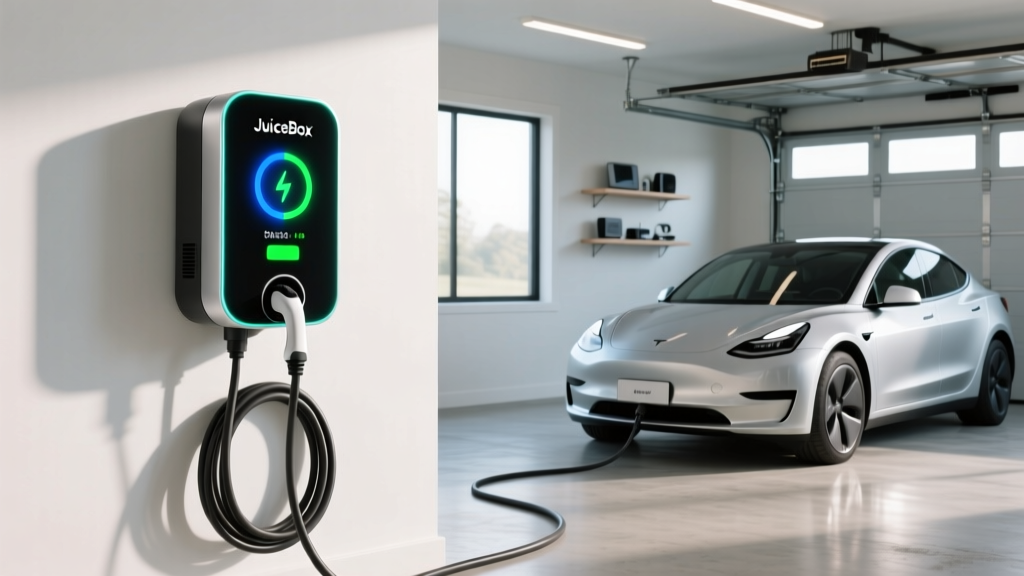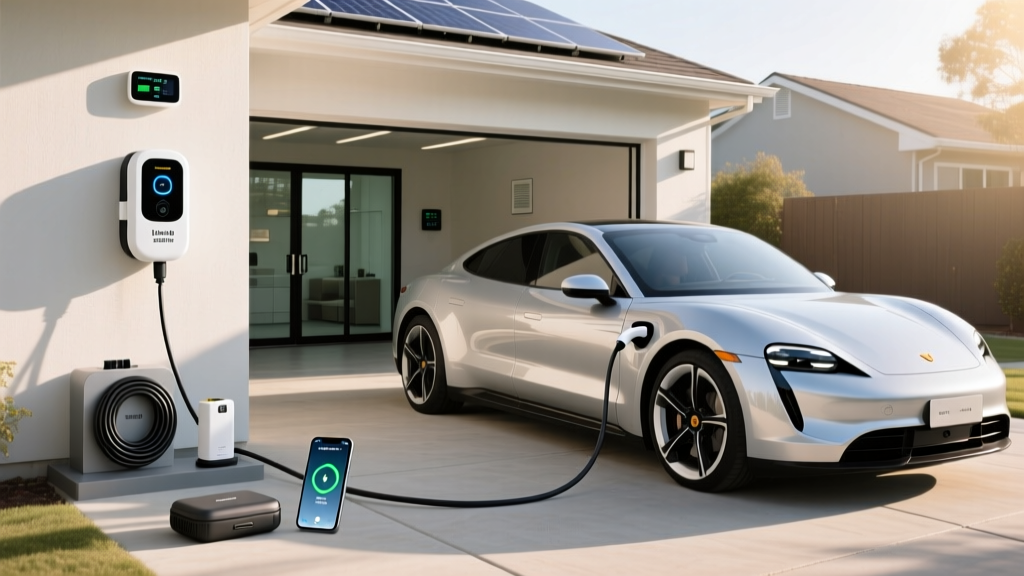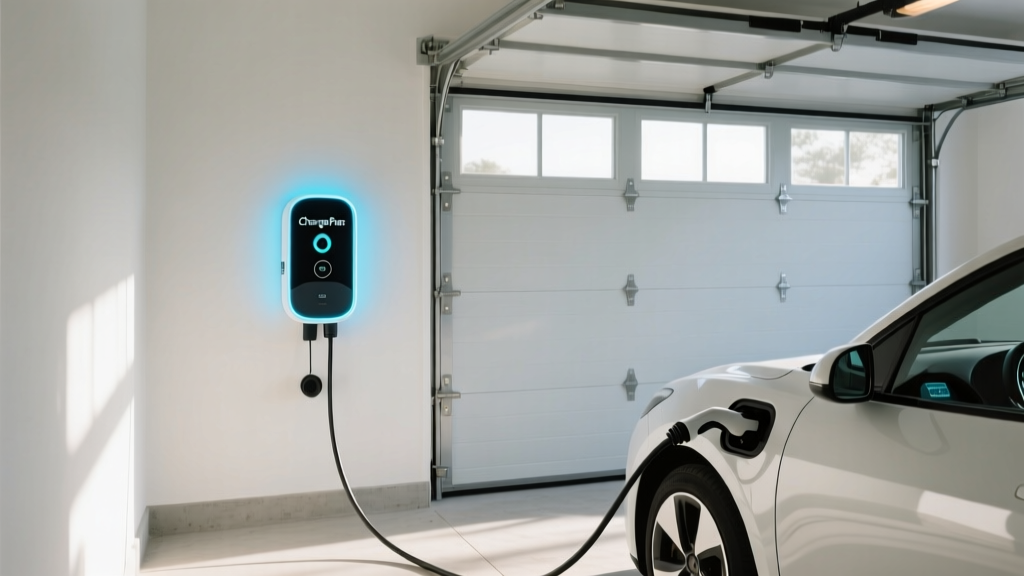
If you own or are shopping for an electric vehicle, home charging is the single biggest upgrade to daily EV ownership. The ChargePoint Home Flex is one of the most widely recommended Level 2 wall connectors on the market, offering up to 12 kW (50 amps) of power, a 23-foot cable, and robust app-based scheduling for off-peak utility rates. But buying the hardware is only half the equation — proper 240V electrical installation, connector compatibility with your EV, and understanding real charging speeds are what separate a seamless experience from a costly headache.
This guide covers everything you need to know about installing a ChargePoint home charger in 2026: electrical requirements, realistic installation costs, connector compatibility across NACS, CCS1, and CHAdeMO vehicles, and exactly how much range you'll add per hour of charging.
Understanding EV Charging Levels: Speeds in kW and Miles Per Hour
Before evaluating any home charger, you need to understand the three charging levels and what they deliver in practical terms. Power is measured in kilowatts (kW) — the rate at which energy flows into your battery. Energy capacity is measured in kilowatt-hours (kWh) — the total amount your battery holds. A 50 kW charger delivers energy roughly 7 times faster than a 7 kW charger.
| Level | Voltage | Power (kW) | Miles of Range Per Hour | Typical Use |
|---|---|---|---|---|
| Level 1 | 120V AC | 1.0–1.4 kW | 3–5 mi/hr | Emergency / overnight trickle |
| Level 2 | 240V AC | 3.3–19.2 kW | 12–75 mi/hr | Home / workplace daily charging |
| DC Fast Charge | 200–800V DC | 50–350 kW | 150–1,000+ mi/hr | Road trips / highway corridors |
For most EV owners, a Level 2 home charger like the ChargePoint Home Flex is the practical sweet spot. At its maximum 12 kW output (50A circuit), it adds roughly 35–45 miles of range per hour depending on your vehicle's efficiency. A vehicle with a 75 kWh battery (like the Ford Mustang Mach-E Extended Range) charging from 10% to 80% would take approximately 5–6 hours on a 12 kW Level 2 circuit — easily completed overnight while you sleep.
ChargePoint Home Flex: Equipment Specifications and Pricing
The ChargePoint Home Flex (model CPH50) remains one of the most versatile residential EV chargers available in 2026. Here is a precise breakdown of its hardware specifications:
- Max Power Output: 12 kW (50 amps) on a 60A dedicated circuit; configurable down to 16A (3.8 kW) for homes with limited panel capacity
- Voltage: 240V AC (NEMA 14-50 plug or hardwired)
- Cable Length: 23 feet (flexible, cold-rated)
- Connector: J1772 (standard for CCS1 vehicles); NACS adapter available separately for Tesla and NACS-equipped vehicles
- Wi-Fi / Smart Features: Yes — app-based scheduling, energy tracking, utility rate optimization, Alexa/Google Home integration
- Outdoor Rating: NEMA 4 (suitable for outdoor installation)
- UL Listed: Yes (UL 2594)
- Equipment Price: ~$549–$699 (varies by retailer and plug configuration)
The smart scheduling feature is the Home Flex's standout capability. If your utility offers time-of-use (TOU) rates, you can set the charger to begin charging only during off-peak windows — typically 10 PM to 6 AM — when electricity costs $0.08–$0.12/kWh instead of $0.20–$0.30/kWh during peak hours. Over a year of daily charging, this alone can save $200–$400.
Electrical Requirements and Installation Cost Breakdown
The ChargePoint Home Flex at full 12 kW output requires a dedicated 60-amp, 240-volt circuit. This is a non-negotiable electrical requirement. If your home's electrical panel lacks the spare capacity, you may face a panel upgrade — a significant but sometimes unavoidable cost.
What Your Electrician Will Evaluate
A licensed electrician will perform a load calculation on your existing electrical panel to determine if it can support a new 60A circuit. Key factors include:
- Panel amperage: Most modern homes have 200A service. Older homes (pre-1990s) may have 100A or even 60A panels — insufficient for a 60A EV circuit without an upgrade.
- Available breaker spaces: You need two adjacent slots for a 240V double-pole breaker.
- Wire run distance: The farther the charger is from the panel, the thicker (and more expensive) the copper wire required. A 50-foot run of 6 AWG copper costs significantly more than a 10-foot run.
- Permitting: Most jurisdictions require a permit and inspection for a new 240V circuit. Your electrician typically handles this.
| Component | Simple Install (Short Run) | Complex Install (Long Run / Panel Work) |
|---|---|---|
| ChargePoint Home Flex unit | $549–$699 | $549–$699 |
| Electrician labor (2–4 hrs) | $300–$600 | $800–$1,500 |
| Wire, conduit, breaker (6 AWG) | $100–$300 | $400–$800 |
| Permit and inspection | $50–$150 | $100–$250 |
| Panel upgrade (if needed) | $0 | $1,500–$3,500 |
| Total Estimated Cost | $1,000–$1,750 | $3,350–$6,750 |
For a straightforward install — panel in the garage, charger on the adjacent wall, 10–15 foot wire run — expect to pay roughly $1,000–$1,750 total. For homes requiring a long wire run through finished walls, a sub-panel installation, or a full 200A service upgrade, costs can climb to $4,000–$6,750. Always get at least two quotes from licensed electricians, and confirm they include permit costs in their estimate.
If a 60A circuit isn't feasible, the Home Flex can be configured via dip switches to operate at 40A (9.6 kW), 32A (7.7 kW), or even 16A (3.8 kW) — giving your electrician flexibility to work within your panel's constraints.
Connector Compatibility: NACS, CCS1, and CHAdeMO
The ChargePoint Home Flex ships with a J1772 connector — the standard plug for all non-Tesla EVs sold in North America through 2024. However, the North American charging landscape has shifted dramatically. Starting in 2025, most major automakers (Ford, GM, Rivian, Volvo, BMW, Hyundai, and others) transitioned to the NACS (North American Charging Standard) connector — the same plug Tesla has used since 2012.
| Connector Type | Vehicles (2025–2026 Models) | Home Flex Compatibility |
|---|---|---|
| J1772 / CCS1 | 2024 and earlier non-Tesla EVs; some 2025 models (VW ID.4, select others) | Direct plug — no adapter needed |
| NACS (Tesla plug) | Tesla (all years); 2025+ Ford, GM, Rivian, Hyundai, BMW, Volvo, Mercedes | Requires J1772-to-NACS adapter (~$100–$200) or purchase NACS-variant Home Flex |
| CHAdeMO | Nissan Leaf (legacy); largely discontinued for new vehicles | Direct plug (J1772 portion); CHAdeMO DC pins not used for Level 2 |
If you drive a 2025 or newer vehicle with a NACS port (such as the Ford F-150 Lightning, Chevrolet Equinox EV, or any Tesla), you have two options: purchase a J1772-to-NACS adapter, or order the Home Flex with a native NACS connector. ChargePoint now offers both configurations. The adapter route adds $100–$200 but gives you flexibility if you ever charge a J1772-equipped guest vehicle.
According to ChargePoint's product page, the NACS-variant Home Flex is priced identically to the J1772 version and carries the same 12 kW maximum output.
Cost to Charge: Home vs. Public vs. Gas Per Mile
One of the strongest economic arguments for home charging is the cost-per-mile advantage over gasoline and public DC fast charging. Here's a realistic comparison using 2026 average rates:
| Charging/Fuel Method | Rate | Cost Per Mile (250 Wh/mi EV) | Cost Per Mile (30 MPG Gas Car) |
|---|---|---|---|
| Home Level 2 (off-peak TOU) | $0.10/kWh | $0.025 | — |
| Home Level 2 (standard rate) | $0.16/kWh | $0.040 | — |
| Public Level 2 (ChargePoint network) | $0.25–$0.35/kWh | $0.063–$0.088 | — |
| DC Fast Charge (Electrify America) | $0.35–$0.55/kWh | $0.088–$0.138 | — |
| Gasoline (national avg) | $3.40/gallon | — | $0.113 |
At off-peak residential rates, home charging costs roughly $0.025 per mile — about one-quarter the cost of gasoline at $3.40/gallon for a 30 MPG vehicle. Even at standard residential rates ($0.16/kWh), you're paying $0.040/mile, still less than half the fuel cost of a comparable gas car.
Public DC fast charging, however, can approach or even exceed gasoline costs per mile. This is why home charging is the economic backbone of EV ownership. According to the U.S. Department of Energy's fueleconomy.gov, the average EV efficiency in 2025 is approximately 250–300 Wh per mile, which we've used in the calculations above.
For a driver covering 12,000 miles per year, the annual fuel savings of home charging (off-peak) vs. gasoline total roughly $1,050–$1,200. That payback can offset the entire cost of a ChargePoint Home Flex installation within 1–2 years.
Charging Time Examples: What to Expect with Common EV Batteries
Charging speed depends on both the charger's power output and the vehicle's onboard charger capacity. The ChargePoint Home Flex delivers up to 12 kW, but if your vehicle's onboard charger maxes out at 7.7 kW (common on base-trim EVs), you'll be limited to that lower rate regardless of the charger's capability.
Here are estimated 10–80% charging times for popular 2026 EVs on a 12 kW ChargePoint Home Flex:
- Tesla Model Y Long Range (75 kWh usable): ~5.5 hours (onboard charger: 11.5 kW)
- Ford Mustang Mach-E Extended Range (91 kWh usable): ~6.5 hours (onboard charger: 10.5 kW)
- Hyundai Ioniq 5 (77.4 kWh usable): ~5.5 hours (onboard charger: 10.9 kW)
- Chevrolet Equinox EV (85 kWh usable): ~6 hours (onboard charger: 11.5 kW)
- BMW i4 eDrive40 (81.5 kWh usable): ~5.8 hours (onboard charger: 11 kW)
All of these fall comfortably within an overnight charging window. If you arrive home at 7 PM with 10% battery and need to leave at 7 AM, a 12 kW Level 2 charger will fully replenish any of these vehicles. The practical implication: for daily driving of 30–60 miles, you'll rarely need to charge from 10% — most owners plug in nightly and start each morning with a full battery, much like charging a phone.
Safety, Code Compliance, and Installation Best Practices
Electrical safety is non-negotiable when installing a 240V, 50-amp circuit. Here are the critical code and safety considerations for your ChargePoint Home Flex installation:
- Dedicated circuit required: The Home Flex must be on its own dedicated double-pole breaker — it cannot share a circuit with other appliances (dryer, oven, HVAC).
- GFCI protection: The 2023 National Electrical Code (NEC) requires GFCI protection for all 240V EV charging outlets in garages and outdoor locations. Hardwired installations may have different requirements depending on your local jurisdiction. Confirm with your electrician.
- NEMA 4 outdoor rating: If installing outdoors, the Home Flex's NEMA 4 enclosure is rated for rain, dust, and ice. However, ChargePoint recommends a weatherproof cover for the connector holster in heavy-snow climates.
- Wire gauge: A 60A circuit requires 6 AWG copper wire (or 4 AWG aluminum). Do not allow an electrician to undersize the wire — this is a fire hazard.
- Hardwired vs. plug-in: Hardwired installations eliminate the NEMA 14-50 receptacle, which can be a failure point if frequently plugged/unplugged. For a permanent garage installation, hardwiring is generally preferred and may satisfy local code more easily.
Always hire a licensed, insured electrician. Verify their quote includes the permit, inspection, and a load calculation of your panel. According to the National Electrical Contractors Association, a proper EV charger installation should always include a documented load calculation to ensure your panel can handle the additional demand safely.
Frequently Asked Questions
How much does it cost to install a ChargePoint Home Flex charger?
Expect $1,000–$1,750 for a straightforward installation with a short wire run and no panel upgrades. Complex installations requiring long wire runs, sub-panels, or full panel upgrades (100A to 200A) can cost $3,350–$6,750. The charger unit itself costs $549–$699.
How fast will the ChargePoint Home Flex add range?
At its maximum 12 kW output, the Home Flex adds approximately 35–45 miles of range per hour, depending on your vehicle's efficiency (Wh per mile). A full 10–80% charge for a typical 75–90 kWh EV battery takes 5–7 hours overnight.
Is the ChargePoint Home Flex compatible with my Tesla or NACS-equipped EV?
Yes, but you need either the NACS-variant Home Flex (now available directly from ChargePoint) or a J1772-to-NACS adapter ($100–$200). All 2025+ Ford, GM, Rivian, Hyundai, BMW, and Volvo EVs use NACS connectors. The standard J1772 Home Flex works natively with 2024 and earlier non-Tesla EVs.
How does home charging cost compare to gasoline per mile?
At off-peak residential electricity rates ($0.10/kWh), home charging costs approximately $0.025 per mile for a typical EV. Gasoline at $3.40/gallon in a 30 MPG car costs $0.113 per mile — roughly 4.5 times more expensive. Annual savings for a 12,000-mile driver: approximately $1,050–$1,200.
What electrical upgrades might I need for a 60A circuit?
If your home has a 100A panel or lacks two adjacent breaker spaces, you may need a panel upgrade to 200A service ($1,500–$3,500). Older homes with 60A service almost certainly require a full upgrade. The ChargePoint Home Flex can also be configured to lower amperages (40A, 32A, or 16A) to work within your existing panel's capacity, though this reduces charging speed proportionally.