Why 300-Mile EVs Demand a Serious Charging Strategy
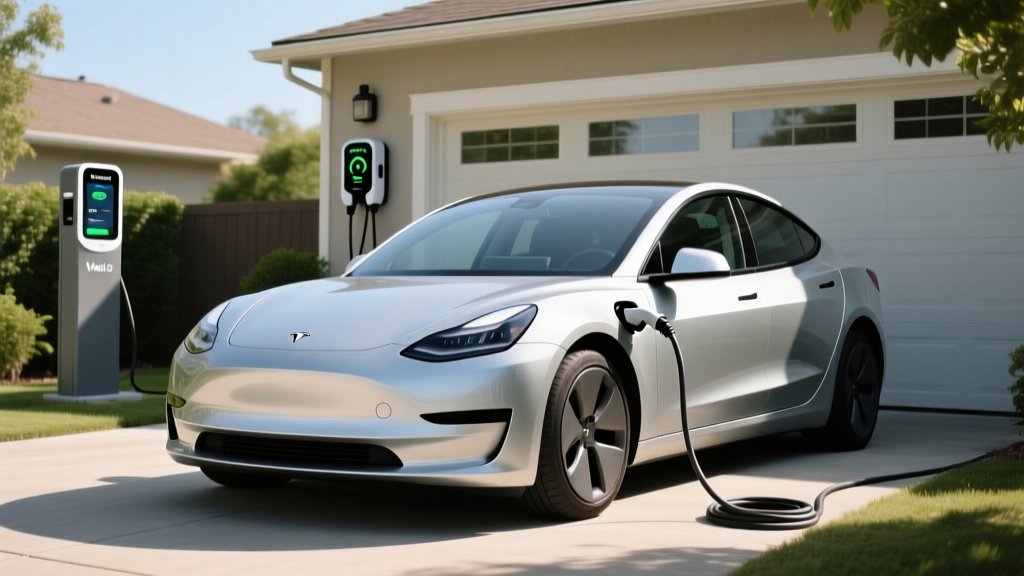
Buying an EV with 300 miles of EPA-rated range — like the 2026 Tesla Model 3 Long Range (363 mi EPA), Hyundai Ioniq 6 SE Long Range (361 mi EPA), or Chevrolet Equinox EV 3RS (319 mi EPA) — solves range anxiety on paper. But a large battery pack (typically 75–100 kWh usable) creates a new challenge: replenishing that energy quickly and affordably at home. A standard 120V outlet adds roughly 3–5 miles of range per hour, meaning a full charge for a 300-mile EV could take over 60 hours. That's not a charging strategy; it's a liability.
This guide breaks down exactly what it takes to charge 300-mile-range EVs at home and on the road — electrical requirements, real installation costs, connector compatibility, equipment picks, and cost-per-mile math — so your large-battery EV actually delivers on its promise.
Charging Levels Explained: Speeds in kW and Miles Per Hour
Before selecting equipment, understand the three charging tiers and what they deliver in real-world miles added per hour. Note: kW (kilowatts) measures power — the rate of energy delivery — while kWh (kilowatt-hours) measures energy capacity, like gallons in a tank. Never confuse the two.
| Level | Voltage | Power (kW) | Miles of Range Added/Hour | Best For |
|---|---|---|---|---|
| Level 1 | 120V AC | 1.0–1.9 kW | 3–5 mi/hr | Overnight trickle, PHEVs, emergencies |
| Level 2 | 240V AC | 3.3–19.2 kW | 12–75 mi/hr | Daily home charging, 300-mi EVs |
| DC Fast Charging | 200–800V DC | 50–350 kW | 150–1,000+ mi/hr (peak) | Road trips, rapid top-ups |
For a 300-mile EV with an ~85 kWh battery, a 48-amp (11.5 kW) Level 2 home charger adds roughly 35–42 miles of range per hour. A full 0–100% charge takes about 8–9 hours — ideal for overnight replenishment. On a 250 kW DC fast charger, the same battery can go from 10–80% in roughly 20–28 minutes, depending on the vehicle's charge curve and battery preconditioning.
Real-World Range Reality: A 300-mile EPA rating assumes mixed driving at moderate temperatures. Expect ~250–270 miles at sustained 75 mph highway speeds, and ~200–230 miles in sub-30°F winter conditions. Plan charging stops around 200 miles of real-world range to maintain a safety buffer and avoid the steep charge-curve taper above 80% SoC.
Home Level 2 Installation: Electrical Requirements and Costs
Installing a Level 2 home charger for a 300-mile EV isn't just about buying a wall unit. Your home's electrical panel must support the added load. Here's what's involved:
Electrical Specifications
- Circuit: Dedicated 240V circuit, typically 40A, 50A, or 60A depending on charger amperage
- Breaker sizing: NEC requires the breaker be rated 125% of continuous load — a 48A charger needs a 60A breaker
- Wire gauge: 6 AWG copper for 50A circuits; 4 AWG for 60A (varies by run length and local code)
- Panel capacity: Most homes need a 200A main panel minimum to add a 40–60A EV circuit alongside existing loads
Panel Upgrade Reality
Homes built before 2000 often have 100A or 150A main panels. Adding a 60A EV circuit to a maxed-out 100A panel requires a panel upgrade to 200A, which is a significant cost driver. Even some 200A panels lack physical breaker spaces, requiring a sub-panel installation. A licensed electrician will perform a load calculation (NEC Article 220) to determine if your panel can handle the addition.
| Component | Typical Cost Range | Notes |
|---|---|---|
| Level 2 Charger (hardwired, 48A) | $400–$750 | Smart Wi-Fi models at higher end |
| Electrician labor (standard install) | $600–$1,500 | Varies by panel-to-garage distance |
| Electrical materials (wire, conduit, breaker) | $150–$500 | Longer runs = higher cost |
| Permit and inspection | $50–$250 | Required in most jurisdictions |
| Panel upgrade (if needed) | $1,500–$3,500 | 100A→200A upgrade; not always needed |
| Total (no panel upgrade) | $1,200–$3,000 | Most common scenario |
| Total (with panel upgrade) | $2,700–$6,500 | Older homes, high-load panels |
The IRS §30C Alternative Fuel Vehicle Refueling Property Credit offers up to $1,000 (30% of cost, capped) for home charging equipment installed in eligible census tracts through 2032. Check your eligibility at the IRS site or with a tax professional, as the credit has location-based restrictions tied to low-income and non-urban census tracts.
Connector Compatibility: NACS, CCS1, and CHAdeMO
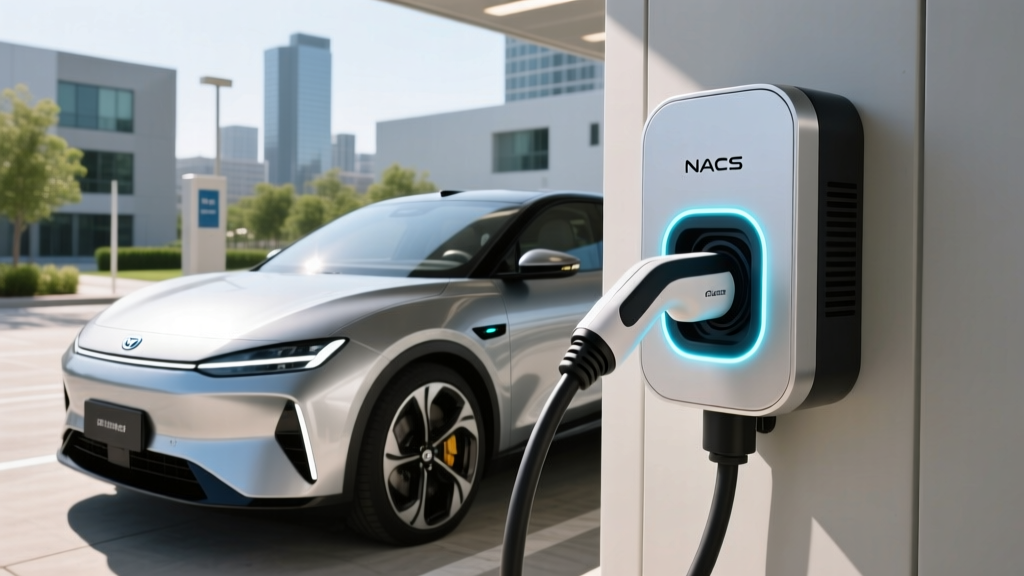
The North American EV charging connector landscape has consolidated significantly. Here's what fits your 300-mile EV in 2026:
| Connector | Brands Using It (2026) | DC Fast Charge Standard | Adapter Needed? |
|---|---|---|---|
| NACS (Tesla/J3400) | Tesla, Ford, GM, Rivian, Volvo, Polestar, Hyundai/Kia (2025+), Mercedes-Benz | Tesla Supercharger network open to all NACS vehicles | CCS-to-NACS adapter for older CCS vehicles (~$200–$300) |
| CCS1 (Combo) | Legacy VW ID.4, BMW iX (pre-2025), some Stellantis models | Electrify America, EVgo, ChargePoint DC stations | NACS-to-CCS adapter for Supercharger access |
| CHAdeMO | Nissan Leaf (discontinued), Mitsubishi Outlander PHEV | Limited network, declining availability | No practical adapter to CCS/NACS |
Home charger connector choice: Most Level 2 home chargers now ship with a NACS (J3400) connector as the default. If you own a CCS1-equipped vehicle, select a charger with a CCS connector or plan to use a J1772-to-NACS adapter (included with most NACS vehicles for AC charging). For future-proofing, NACS is the clear standard to install.
Charging Cost Per Mile: Home vs. Public vs. Gas
One of the strongest arguments for a 300-mile EV is fuel-cost savings — but the math varies dramatically depending on where you charge.
| Charging Scenario | Cost per kWh | Cost to Add 300 Miles* | Cost Per Mile |
|---|---|---|---|
| Home, off-peak utility rate | $0.08–$0.14 | $6.80–$11.90 | $0.023–$0.040 |
| Home, standard rate (no TOU) | $0.14–$0.20 | $11.90–$17.00 | $0.040–$0.057 |
| Public Level 2 (ChargePoint, etc.) | $0.25–$0.49 | $21.25–$41.65 | $0.071–$0.139 |
| DC Fast Charging (Electrify America, EVgo) | $0.35–$0.55 | $29.75–$46.75 | $0.099–$0.156 |
| Tesla Supercharger (varies by location/time) | $0.25–$0.40 | $21.25–$34.00 | $0.071–$0.113 |
| Gas car (28 MPG combined, $3.40/gal) | — | $36.43 | $0.121 |
*Assumes 85 kWh usable battery for 300 miles (~283 Wh/mi efficiency, typical for a mid-size EV sedan/crossover). Actual efficiency varies by model — the Hyundai Ioniq 6 achieves ~240 Wh/mi, while a Ford F-150 Lightning draws ~380 Wh/mi.
The takeaway: Charging at home on off-peak rates costs roughly 70–80% less per mile than gasoline. Even DC fast charging on road trips often matches or undercuts gas per mile — but only if you're strategic about network pricing and avoid peak-hour rates. For 300-mile EV owners who charge primarily at home, annual fuel savings of $1,200–$2,000 versus a comparable gas vehicle are typical, per fueleconomy.gov comparisons.
Charging Time Examples: 10–80% for Popular 300-Mile EVs
Peak kW ratings don't tell the whole story. The charge curve — how fast the battery accepts energy across the state-of-charge (SoC) range — determines real-world charging time. Batteries charge fastest between 10–50% SoC, then progressively taper to protect cell health. Here's what 10–80% looks like for popular 2026 models with 300+ mile range:
| Vehicle | Battery (kWh usable) | Peak DC Charge Rate | 10–80% Time (est.) | Level 2 (11.5 kW) 0–100% |
|---|---|---|---|---|
| 2026 Tesla Model 3 Long Range | ~79 kWh (NMC) | 250 kW | ~22 min | ~7.5 hrs |
| 2026 Hyundai Ioniq 6 SE LR | ~77.4 kWh (NMC) | 235 kW (800V architecture) | ~18 min | ~7.5 hrs |
| 2026 Chevrolet Equinox EV 3RS | ~85 kWh (NMC) | 190 kW | ~28 min | ~8.5 hrs |
| 2026 Tesla Model Y Long Range | ~81 kWh (NMC) | 250 kW | ~23 min | ~8 hrs |
| 2026 Rivian R1S Dual-Motor Max | ~128 kWh (NMC) | 200 kW | ~38 min | ~12 hrs |
Preconditioning matters: Tesla and Hyundai/Kia vehicles actively warm the battery when a DC fast-charger is set as your navigation destination. This preconditioning can reduce 10–80% time by 5–10 minutes in cold weather. Always navigate to the charger rather than just driving there — the thermal management system needs lead time to bring cells to optimal temperature (~95°F / 35°C).
Equipment Recommendations: Best Home Chargers for 300-Mile EVs
For a 300-mile EV, you want a Level 2 charger that can fully replenish the battery overnight (7–10 hours) with smart scheduling to hit off-peak utility rates. Here are top picks across budgets:
Tesla Wall Connector (Gen 4)
- Power output: Up to 11.5 kW (48A) on a 60A circuit
- Connector: NACS (J3400) native; J1772 adapter included
- Cable length: 24 feet
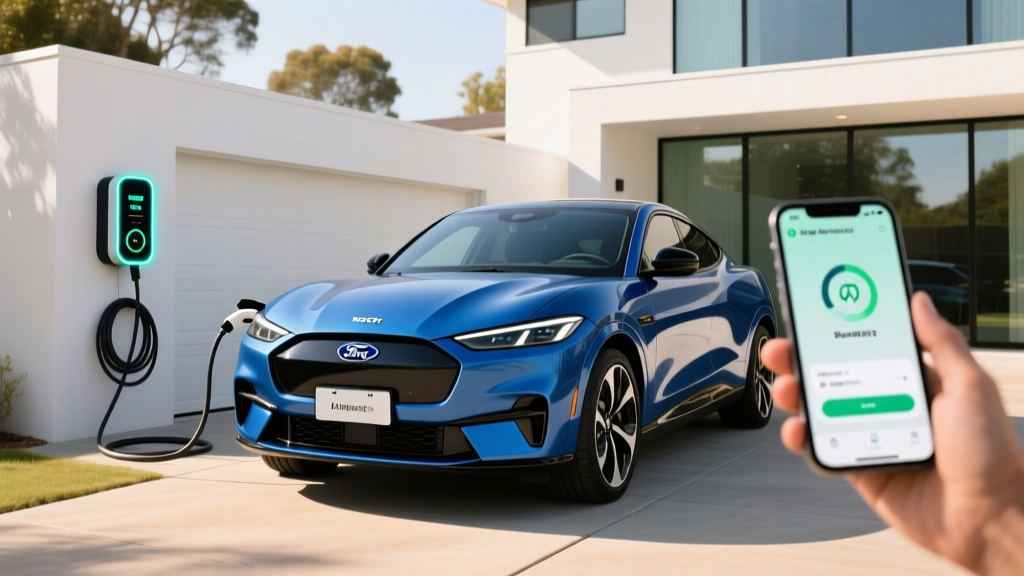
- Smart features: Wi-Fi, OTA updates, Power Sharing (link up to 6 units on one circuit), Tesla app integration, load management
- Price: ~$475
- Best for: Tesla owners and NACS-equipped vehicles; best value-to-performance ratio
ChargePoint Home Flex
- Power output: Up to 12 kW (50A) on a 60A circuit; configurable down to 16A for smaller circuits
- Connector: NACS (2025+ models); J1772 on older stock
- Cable length: 23 feet
- Smart features: Wi-Fi, Alexa/Google Home, detailed energy tracking, utility TOU scheduling, flexible amperage dip-switch settings
- Price: ~$599–$699
- Best for: Multi-EV households, non-Tesla owners wanting a robust app ecosystem
Emporia Level 2 EV Charger
- Power output: Up to 11.5 kW (48A) on a 60A circuit
- Connector: J1772 (use vehicle's J1772-to-NACS adapter for NACS EVs)
- Cable length: 24 feet
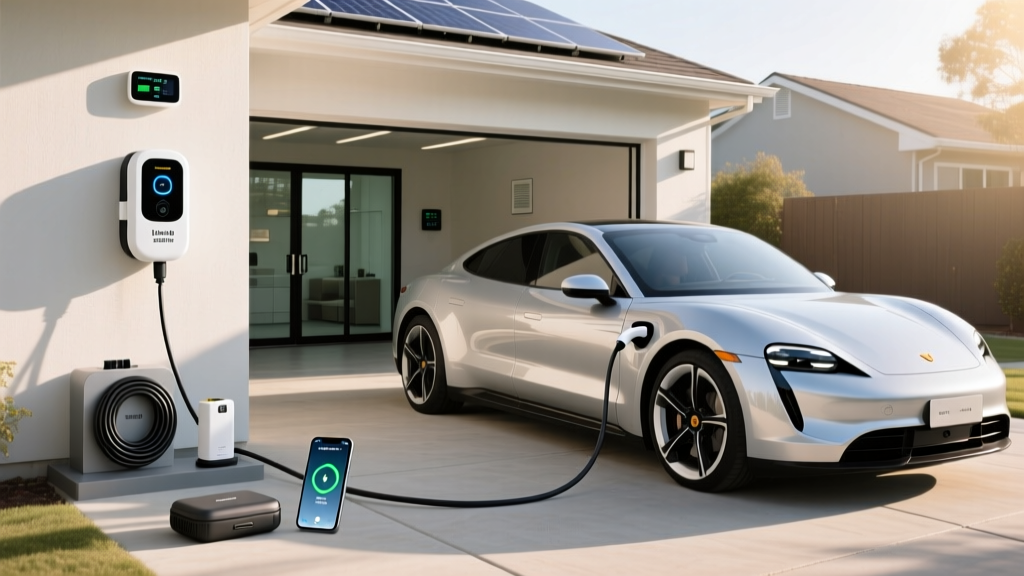
- Smart features: Wi-Fi, integrates with Emporia Vue energy monitor for whole-home solar/EV load tracking, TOU scheduling
- Price: ~$399
- Best for: Budget-conscious buyers with solar panels or energy monitoring setups
Grizzl-E Smart (United Chargers)
- Power output: Up to 10 kW (40A) on a 50A circuit
- Connector: J1772 or NACS (select at purchase)
- Cable length: 24 feet
- Smart features: Wi-Fi, OCPP-compatible (works with utility demand-response programs), IP67 outdoor rating, adjustable amperage
- Price: ~$449–$549
- Best for: Outdoor installations, harsh climates, utility-program participants
Safety and Electrical Code Considerations
EV charging is a high-draw, continuous electrical load — the NEC (National Electrical Code) treats it seriously. Key requirements for a compliant, safe installation:
- Dedicated circuit: Your EV charger must be on its own dedicated breaker — no sharing with other outlets or appliances
- GFCI protection: NEC 2023 and later require GFCI (Ground Fault Circuit Interrupter) protection for all EV charging receptacles. Hardwired installations may have different GFCI rules depending on jurisdiction — your electrician will confirm local amendments
- Outdoor rating: If your charger is installed outside (driveway, carport), the unit must be rated for outdoor use (NEMA 4 or IP65 minimum). All chargers listed above meet this standard
- Permitting: Most municipalities require an electrical permit for EV charger installation. The permit triggers a post-install inspection to verify code compliance — don't skip this step, as unpermitted work can void homeowner's insurance claims
- Load management: If your panel is near capacity, consider a smart charger with built-in load management (like the Tesla Wall Connector's Power Sharing feature) or a panel-level energy monitor that throttles charging when household demand spikes
Frequently Asked Questions
How much does it cost to install a home EV charger?
A typical Level 2 home charger installation costs $1,200–$3,000 when your electrical panel has adequate capacity. This includes the charger unit ($400–$750), electrician labor ($600–$1,500), materials ($150–$500), and permit ($50–$250). If your home needs a panel upgrade from 100A to 200A, add $1,500–$3,500, bringing the total to $2,700–$6,500. Always get a load calculation from a licensed electrician before committing.
How fast will each charging level add range to a 300-mile EV?
Level 1 (120V) adds about 3–5 miles per hour — essentially useless for daily 300-mile EV use. Level 2 (240V, 48A/11.5 kW) adds roughly 35–42 miles per hour, fully replenishing a 300-mile EV overnight in 7–9 hours. DC fast charging at 150–250 kW can add 150–300 miles in 20–30 minutes, making road trips practical. For daily driving, Level 2 is the essential home standard.
Which connector and charger is compatible with my EV?
In 2026, most new EVs — Tesla, Ford, GM, Hyundai, Kia, Rivian, Volvo — use the NACS (J3400) connector. Older models from VW, BMW, and some Stellantis brands still use CCS1. CHAdeMO is effectively discontinued for new vehicles. For home chargers, buy a NACS-equipped unit for current and future compatibility. If you own a CCS vehicle, use the manufacturer-supplied NACS-to-CCS adapter or select a charger with a CCS connector.
How much does charging cost per mile compared to gas?
Charging at home on off-peak rates costs roughly $0.02–$0.04 per mile, compared to about $0.12 per mile for a 28 MPG gas car at $3.40/gallon. That's a 70–80% savings per mile. Public DC fast charging ($0.35–$0.55/kWh) costs $0.10–$0.16 per mile — still competitive with gas but erasing the home-charging advantage. The economics strongly favor home charging as your primary strategy.
What electrical upgrades might I need for a home charger?
The most common upgrade is a panel capacity increase — homes with 100A or 150A main panels often need a 200A upgrade to safely add a 40–60A EV circuit. Other potential upgrades include: adding a sub-panel if breaker spaces are full, upgrading service entrance wiring, or installing a whole-home energy monitor for load management. A licensed electrician's load calculation (per NEC Article 220) will determine exactly what's required. Factor $1,500–$3,500 for a panel upgrade if needed.
Can I charge a 300-mile EV on a standard 120V outlet?
Technically yes, but practically no. A 120V Level 1 connection delivers roughly 1.4 kW, adding 3–5 miles per hour. Fully charging an 85 kWh battery from empty would take 60+ hours. Level 1 works as a supplement for PHEVs with small batteries or for occasional overnight top-ups of 30–40 miles, but it cannot serve as the primary charging method for a long-range BEV.
Does the federal tax credit cover home charger installation?
The IRS §30C Alternative Fuel Vehicle Refueling Property Credit covers 30% of home charging equipment and installation costs, up to $1,000. However, eligibility is restricted to residents of census tracts classified as low-income or non-urban. This is separate from the §30D new EV purchase credit. Consult a tax professional and verify your census tract eligibility on the IRS website before counting on this credit.
Sources: EPA range and efficiency data from fueleconomy.gov; IRS §30C and §30D credit rules from irs.gov; NEC electrical code requirements referenced via NFPA.org. All pricing and specifications reflect 2026 model-year data and are subject to change. Consult a licensed electrician for installation specifics and a tax professional for credit eligibility.