If you own or are shopping for an electric vehicle, understanding the CCS DC fast charger ecosystem is no longer optional — it's the backbone of road-trip readiness. The Combined Charging System (CCS1) connector has powered the majority of non-Tesla EVs for nearly a decade, but the rapid industry pivot to Tesla's North American Charging Standard (NACS) has left many buyers confused about compatibility, adapter needs, and which networks actually deliver the speeds they advertise.
This guide cuts through the noise with exact numbers: charge rates in kilowatts (kW), real-world 10–80% charging times, connector compatibility by brand, and what you'll actually pay per mile versus gasoline. Whether you drive a Hyundai Ioniq 5, Ford Mustang Mach-E, Chevrolet Equinox EV, or any other CCS-equipped vehicle, here's what you need to know to charge confidently in 2026.
What Is a CCS DC Fast Charger?
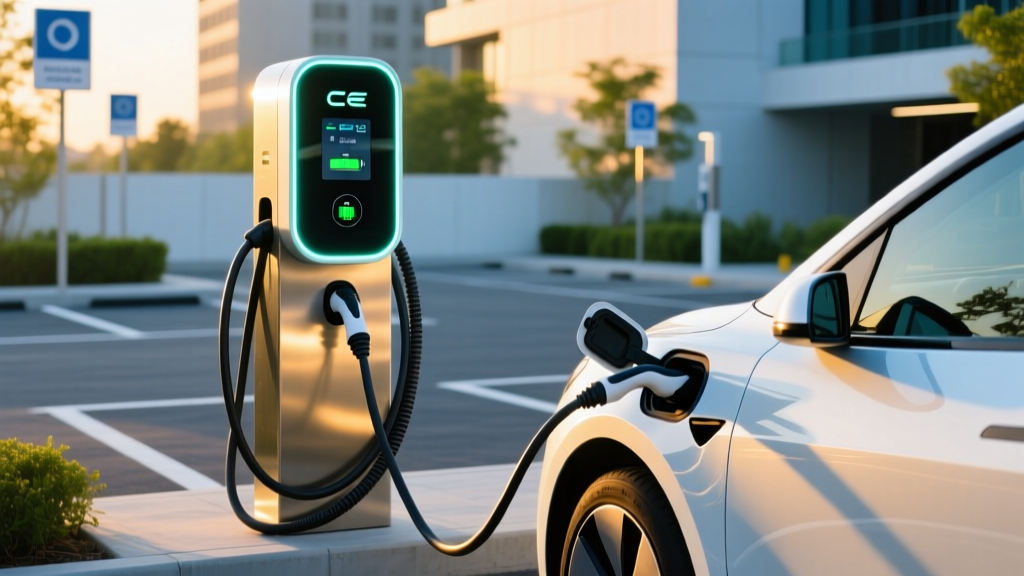
A CCS DC fast charger delivers direct current (DC) electricity at high power directly to your EV's battery, bypassing the vehicle's onboard charger. The CCS1 connector — standard on most non-Tesla EVs sold in North America from roughly 2015 through 2024 — combines the J1772 AC charging pins with two additional DC pins below, creating a single combo plug.
DC fast chargers are categorized by their peak power output in kilowatts (kW), which measures the rate of energy transfer. This is distinct from kilowatt-hours (kWh), which measures total energy stored in your battery. Think of kW as the speed of water flowing through a hose, and kWh as the total volume in the bucket. A 350 kW charger can theoretically push energy into your battery much faster than a 50 kW unit — but only if your vehicle's battery management system (BMS) can accept that rate.
kW (kilowatt) = Power (charge rate). A 150 kW charger delivers energy faster than a 50 kW charger.
kWh (kilowatt-hour) = Energy (battery capacity). A 77 kWh battery stores more total energy than a 58 kWh battery.
Charging speed depends on both: a 77 kWh battery charging at 150 kW will fill faster than at 50 kW, but peak rate is limited by the vehicle's maximum acceptance rate and the battery's state of charge.
Charging Levels Explained: Speeds and Range Added
EV charging falls into three tiers, each with dramatically different speeds and use cases. Here's how they compare:
| Level | Power (kW) | Voltage / Amperage | Miles of Range Added per Hour | Best Use Case |
|---|---|---|---|---|
| Level 1 | 1.2–1.9 kW | 120V / 12–16A | 3–5 miles | Overnight top-up, PHEVs |
| Level 2 | 3.3–19.2 kW | 240V / 16–80A | 12–75 miles | Daily home / workplace charging |
| DC Fast (CCS/NACS) | 50–400 kW | 200–900V DC | 150–1,200+ miles (equivalent rate) | Road trips, quick top-ups |
For practical purposes, DC fast charging is measured in minutes from 10% to 80% state of charge, not miles per hour. Here are real-world benchmarks for common battery sizes at a CCS DC fast charger:
- 58 kWh battery (e.g., VW ID.4 Standard) at 135 kW peak: 10–80% in ~30 minutes
- 77.4 kWh battery (e.g., Hyundai Ioniq 5) at 240 kW peak (800V architecture): 10–80% in ~18 minutes
- 91 kWh battery (e.g., Ford F-150 Lightning Extended) at 150 kW peak: 10–80% in ~41 minutes
- 85 kWh battery (e.g., Chevrolet Silverado EV) at 350 kW peak: 10–80% in ~20 minutes
Real-world caveat: Peak kW is not sustained kW. Every EV's charge curve tapers significantly above 80% SoC to protect the battery. A charger rated for 350 kW may only deliver that rate between roughly 10–40% SoC before stepping down. Charging from 80–100% can take as long as the 10–80% session. For road trips, the 10–80% window is where you want to operate.
CCS vs. NACS: The Connector Landscape in 2026
The biggest shift in EV charging since CCS was introduced is the industry-wide migration to NACS (North American Charging Standard), originally Tesla's proprietary connector. Beginning in 2024, Ford, GM, Rivian, Volvo, Polestar, and dozens of other automakers announced they would adopt NACS on new vehicles starting with 2025–2026 model years. This means the CCS connector is now a legacy standard — still widely supported, but no longer the future direction.
| Connector | Brands Using It (2026 Models) | Adapter Needed for Tesla Superchargers? | Adapter Needed for CCS Stations? |
|---|---|---|---|
| CCS1 | Hyundai, Kia, VW, BMW (pre-2026 models), older Ford/GM EVs | Yes — CCS-to-NACS adapter (~$200–$250) | No — native |
| NACS | Tesla (all), Ford (2025+), GM (2025+), Rivian (2025+), Volvo/Polestar (2025+) | No — native | Yes — NACS-to-CCS adapter (~$200–$300) |
| CHAdeMO | Nissan Leaf (legacy only; discontinued) | No practical adapter available | No — native (but stations are disappearing) |
If you're buying a new 2026 model-year EV from Ford, GM, Rivian, or Volvo/Polestar, it will ship with a NACS port. To use existing CCS-equipped public chargers (Electrify America, EVgo, many ChargePoint stations), you'll need a NACS-to-CCS adapter. Conversely, if you drive a CCS-equipped vehicle like a 2024 Hyundai Ioniq 5 or 2023 VW ID.4, you'll need a CCS-to-NACS adapter to access Tesla Superchargers that have opened to non-Tesla vehicles.
Most automakers are including adapters with new vehicle purchases or offering them at reduced cost through their dealer networks. Check with your specific manufacturer before purchasing a third-party adapter — Ford and GM have published adapter programs for their EV lineups.
Major CCS DC Fast Charger Networks: Reliability and Speed
Not all CCS DC fast chargers are created equal. Network reliability — the percentage of chargers that are actually operational when you arrive — varies significantly. Here's a breakdown of the major networks where you'll find CCS connectors:
Electrify America
The largest open CCS network in the U.S., with over 1,000 stations and 5,000+ individual chargers. Stations feature 150 kW and 350 kW units. Real-world reliability has improved since 2023 but still trails Tesla's Supercharger network. Expect roughly 85–90% uptime at major highway stations. Pricing averages $0.48–$0.56/kWh for Guest rates, or $0.36–$0.43/kWh with a Pass+ subscription ($4/month).
EVgo
Over 1,100 public fast-charging stations, predominantly 50–100 kW CCS units with newer 350 kW stalls being deployed. EVgo has partnerships with GM and Ford to deploy NACS chargers alongside CCS. Pricing averages $0.43–$0.52/kWh, with subscription plans reducing rates by ~15%.
ChargePoint
Primarily known for Level 2 destination charging, ChargePoint also operates CCS DC fast chargers at select locations, typically 50–125 kW. Reliability is location-dependent. Pricing varies by site owner.
Tesla Supercharger (Open to Non-Tesla)
Tesla has opened select Supercharger stations to non-Tesla EVs via the built-in "Magic Dock" CCS adapter at the stall. Availability is still limited to specific stations (roughly 200+ locations as of early 2026). Speeds range from 150–250 kW. Pricing is typically $0.44–$0.52/kWh for non-Tesla vehicles.
How Much Does Charging Cost Per Mile vs. Gas?
One of the strongest economic arguments for EVs is lower per-mile fuel cost, but the savings depend heavily on where and when you charge. Here's a data-driven comparison:
| Charging Scenario | Rate ($/kWh) | Cost per Mile* | Annual Cost (12,000 mi) |
|---|---|---|---|
| Home Level 2 (off-peak utility rate) | $0.08–$0.14 | $0.024–$0.042 | $288–$504 |
| Home Level 2 (standard rate) | $0.14–$0.20 | $0.042–$0.060 | $504–$720 |
| Public DC Fast (subscription rate) | $0.36–$0.45 | $0.108–$0.135 | $1,296–$1,620 |
| Public DC Fast (guest/retail rate) | $0.48–$0.60 | $0.144–$0.180 | $1,728–$2,160 |
| Gasoline (28 MPG avg, $3.40/gal) | — | $0.121 | $1,457 |
*Based on an EV efficiency of 3.3 miles/kWh (approximately 30 kWh/100 mi), representative of vehicles like the Tesla Model Y, Hyundai Ioniq 5, and Ford Mustang Mach-E. Source: fueleconomy.gov.
The takeaway: home charging at off-peak rates saves 65–80% per mile versus gasoline. Exclusive DC fast charging at guest rates, however, can actually exceed the cost of gas. The economics of EV ownership strongly favor those with reliable home or workplace Level 2 charging access.
Home Level 2 Charging: Installation Costs and Electrical Requirements
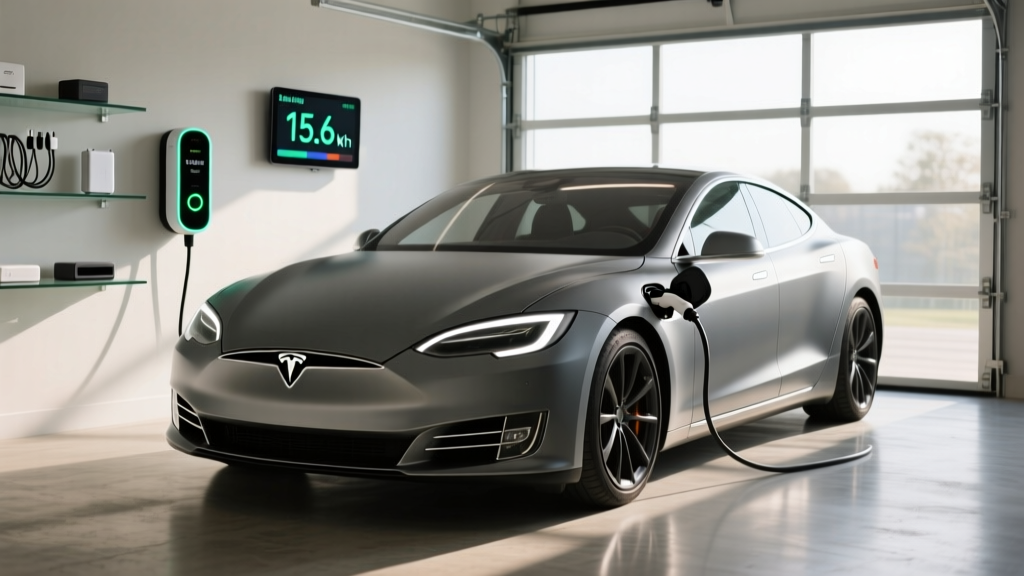
While this guide focuses on CCS DC fast charging for road trips, the foundation of practical EV ownership is a home Level 2 charger. Most EV owners do 80–90% of their charging at home, and understanding the installation process — including potential panel upgrades — is essential.
Electrical Requirements
A typical home Level 2 charger requires a 240V dedicated circuit, similar to an electric dryer or oven. The most common configurations:
- 40A circuit (delivers 9.6 kW): Requires a 50A breaker (NEC requires circuits be loaded to no more than 80% of breaker rating)
- 48A circuit (delivers 11.5 kW): Requires a 60A breaker
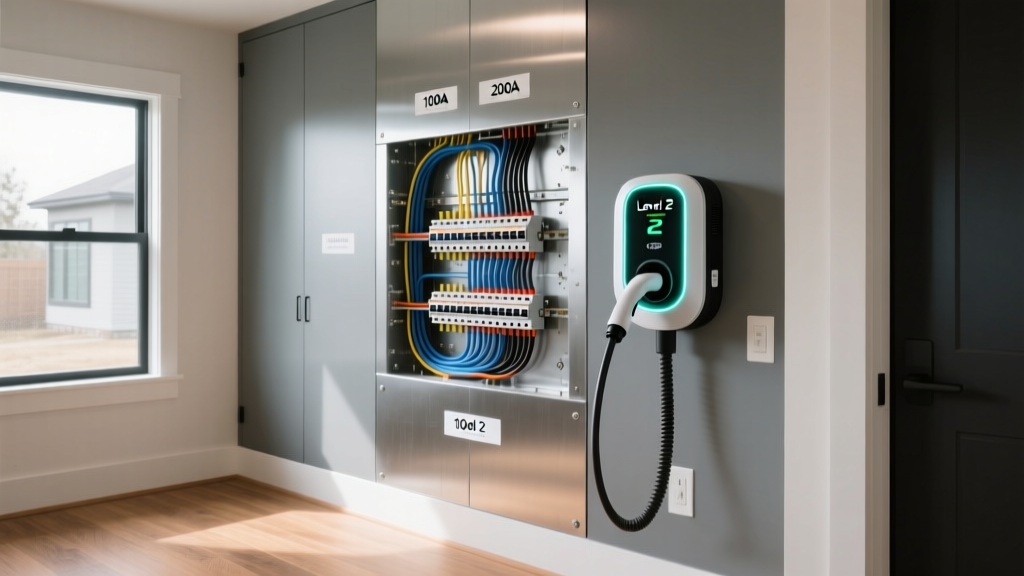
- 60A circuit (delivers 14.4 kW): Requires a 75A or 80A breaker — requires a 200A+ electrical panel with available capacity
Installation Cost Breakdown
| Component | Simple Install (Panel Nearby) | Complex Install (Long Run / Upgrade) |
|---|---|---|
| Level 2 charger equipment (hardwired or NEMA 14-50) | $400–$700 | $500–$1,000 |
| Electrician labor (2–8 hours at $75–$150/hr) | $300–$600 | $800–$2,500 |
| Permit and inspection | $50–$200 | $100–$300 |
| Electrical panel upgrade (100A → 200A, if needed) | $0 (not needed) | $1,500–$4,000 |
| Total | $750–$1,500 | $2,900–$7,800 |
Safety and Code Requirements
The National Electrical Code (NEC) mandates several safety provisions for EV charging installations:
- Dedicated circuit: Your EV charger must have its own dedicated breaker — no sharing with other outlets or appliances
- GFCI protection: NEC 2020 and later requires ground-fault circuit interrupter protection for all EV charging outlets (hardwired units typically include built-in GFCI)
- Outdoor rating: If your charger is installed outdoors, both the unit and the receptacle (if plug-in) must carry a NEMA 4 or NEMA 4X weatherproof rating
- Permit and inspection: Virtually all jurisdictions require an electrical permit and post-installation inspection — skipping this can void your homeowner's insurance coverage for electrical fires
For detailed electrical specifications, always consult a licensed electrician. Your final installation requirements depend on your home's specific wiring, panel capacity, and local code amendments.
Recommended Level 2 Home Chargers (2026 Picks)
While DC fast charging handles road trips, your daily charging will happen on a Level 2 home unit. Here are three proven options across price tiers:
ChargePoint Home Flex
Power Output: Up to 11.5 kW (48A, 240V)
Connector: J1772 (NACS adapter available)
Cable Length: 23 feet
Smart Features: Wi-Fi, app scheduling, Alexa integration, energy tracking
Price: ~$550–$650
Best For: Flexible amperage settings (can be configured from 16A to 48A via DIP switch to match your circuit)
Emporia Level 2 EV Charger
Power Output: Up to 11.5 kW (48A, 240V)
Connector: J1772
Cable Length: 24 feet
Smart Features: Wi-Fi, app control, solar integration, energy monitoring, load management
Price: ~$400–$500
Best For: Budget-conscious buyers who want smart features and solar-aware charging
Tesla Wall Connector
Power Output: Up to 11.5 kW (48A, 240V)
Connector: NACS (J1772 adapter included for non-Tesla EVs)
Cable Length: 24 feet
Smart Features: Wi-Fi, OTA updates, power sharing (link multiple units on one circuit), Tesla app
Price: ~$475
Best For: Tesla owners or NACS-equipped vehicles (Ford, GM, Rivian 2025+)
All three units support hardwired or NEMA 14-50 plug installation. Hardwired is generally preferred for 48A+ circuits because NEMA 14-50 receptacles are rated for 50A and some jurisdictions have flagged them for thermal concerns at sustained 48A loads.
Frequently Asked Questions
Can I use a CCS DC fast charger with my NACS-equipped 2026 EV?
Yes, but you'll need a NACS-to-CCS adapter. Most automakers transitioning to NACS (Ford, GM, Rivian, Volvo) offer adapters through their dealer networks, often at reduced cost or included with the vehicle. Third-party adapters from companies like Lectron and A2Z are also available for $200–$300. Always verify that the adapter supports DC fast charging (not just AC Level 2) and is rated for the kW speeds your vehicle can accept.
How fast will a CCS DC fast charger add range to my EV?
It depends on both the charger's output and your vehicle's maximum acceptance rate. A Hyundai Ioniq 5 (800V architecture, 240 kW peak acceptance) can add roughly 200 miles of range in 18 minutes at a 350 kW charger. A VW ID.4 (400V, 135 kW peak) will add about 150 miles in 30 minutes at the same station. Your vehicle's spec sheet lists the maximum DC charge rate in kW — you'll never exceed that, regardless of the charger's capability.
How much does it cost to install a home EV charger?
A straightforward Level 2 installation (panel has capacity, short wire run, no upgrade needed) typically costs $750–$1,500 including equipment, electrician labor, and permit. If your home needs an electrical panel upgrade (common in pre-2000 homes with 100A service), total costs can reach $2,900–$7,800. Always get a load calculation from a licensed electrician before committing.
Is DC fast charging bad for my EV battery?
Occasional DC fast charging is fine and well within the design parameters of modern battery management systems. However, exclusive reliance on DC fast charging — especially at high power (150+ kW) and in hot climates — can accelerate degradation slightly. Most manufacturers warranty their batteries for 8 years/100,000 miles with a minimum 70% capacity retention threshold. Data from Recurrent Auto shows that vehicles that primarily use Level 2 charging retain 2–3% more capacity over 5 years compared to those that primarily use DC fast charging. For daily use, Level 2 home charging remains the best practice.
Will CCS chargers disappear as NACS takes over?
Not in the near term. Millions of CCS-equipped EVs are already on the road, and networks like Electrify America, EVgo, and ChargePoint have committed to maintaining CCS connectors alongside new NACS deployments through at least 2030. Many new stations are being deployed with both CCS and NACS cables. However, the long-term trend clearly favors NACS — if you're buying a new EV in 2026, a NACS-equipped vehicle will have access to the largest and most reliable charging network (Tesla Superchargers) without an adapter.
What electrical upgrades might I need for home charging?
The most common upgrade is an electrical panel replacement from 100A to 200A service, which costs $1,500–$4,000 depending on your utility's requirements and local labor rates. You may also need a new conduit run if your panel is far from the garage (adding $500–$2,000 for long wire runs through walls or underground). Some utilities offer rebates or time-of-use rate plans that offset these costs — check with your local provider before scheduling installation.