Why We're Comparing a Home EV Charger Install to a 2006 Land Rover Sport Supercharged
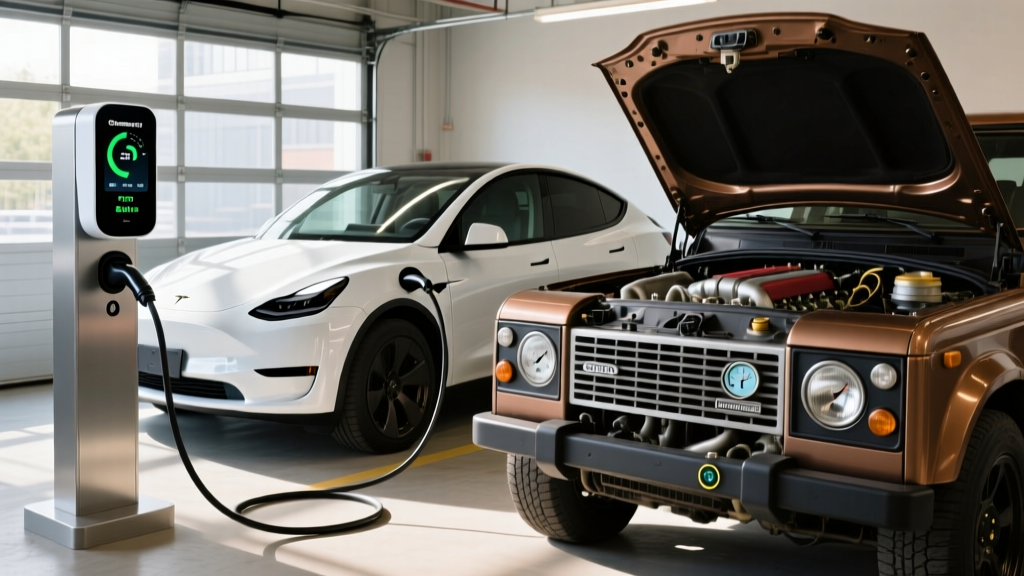
If you've been browsing forums or classifieds, you've probably seen the 2006 Land Rover Sport Supercharged floating around the used market for $6,000–$10,000. It's a 420-horsepower, supercharged 4.2L V8 luxury SUV that promises British prestige at a bargain price. But what does it actually cost to run versus setting up a modern EV with a proper home charging station?
This comparison matters because many buyers cross-shop a cheap luxury gas SUV against a new or used EV. The sticker price of a 2006 Land Rover Sport Supercharged looks tempting. But once you factor in fuel, maintenance, and the fact that a Level 2 home EV charger installation can cost less than a single year of feeding that 4.2L V8, the math shifts dramatically. Let's break down exactly what a home charging setup costs, how fast each level charges, and how the per-mile economics compare.
Charging Levels Explained: Speeds in kW and Miles Per Hour
Before quoting any costs, you need to understand the three charging tiers. The most common mistake new EV owners make is confusing kW (kilowatts)—the rate of power delivery—with kWh (kilowatt-hours)—the total energy stored in your battery. Think of kW as the width of the hose and kWh as the size of the bucket.
| Level | Voltage | Power (kW) | Miles of Range Per Hour | Best For |
|---|---|---|---|---|
| Level 1 | 120V AC | 1.2–1.9 kW | 3–5 mi/hr | Overnight trickle, PHEVs, low daily mileage |
| Level 2 | 240V AC | 3.3–19.2 kW | 12–75 mi/hr | Daily home charging, workplace, public destination |
| DC Fast Charge | 400–800V DC | 50–350 kW | 150–1,200+ mi/hr (equivalent) | Road trips, highway corridors, rapid top-ups |
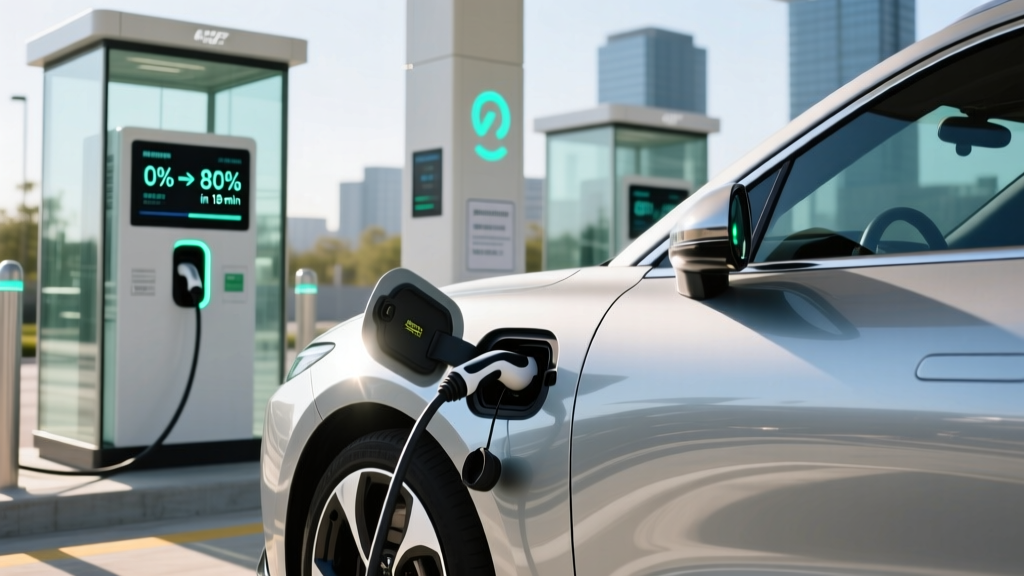
Real-world context: A typical EV with an 80 kWh battery charging on a 48-amp Level 2 circuit (11.5 kW) will go from 10% to 80% in roughly 5 hours. That same 10–80% session at a 150 kW DC fast charger takes approximately 25–30 minutes, though the charge curve tapers significantly above 80% SoC to protect battery health.
How Much Does It Cost to Install a Home EV Charger?
The honest answer for a Level 2 home installation spans a wide range depending on your electrical panel's capacity, the distance from your panel to the charger location, and local permit fees. Here's the full breakdown:
| Component | Low End | High End | Notes |
|---|---|---|---|
| Level 2 Charger (Equipment) | $250 | $700 | 32A–48A smart charger, NACS or J1772 |
| Electrician Labor | $400 | $1,500 | Depends on run length, wall type, conduit |
| Electrical Permit | $50 | $300 | Varies by municipality |
| Panel Upgrade (if needed) | $1,500 | $4,000 | 100A→200A service upgrade for older homes |
| Additional Materials | $100 | $500 | Conduit, wire gauge, junction box, GFCI breaker |
| Total (no panel upgrade) | $800 | $3,000 | Most homes with 200A service |
| Total (with panel upgrade) | $2,300 | $7,000 | Homes with 100A or maxed-out panels |
The panel upgrade gotcha: Homes built before 1990 often have 100-amp electrical service. A 48-amp EV charger draws roughly 57 amps continuously (NEC code requires circuits rated at 125% of continuous load, so you need a 60-amp breaker). If your panel is already running HVAC, an electric oven, and a dryer, you likely need a service upgrade. This is the single biggest hidden cost in home EV charging, and no online calculator can assess it for you—a licensed electrician must perform a load calculation.
Which Connector Is Compatible With My EV?
The connector landscape has consolidated significantly since 2024, when Ford, GM, Rivian, and most major automakers committed to the North American Charging Standard (NACS), originally developed by Tesla. Here's what you need to know by brand:
| Connector | Brands Using It | Adapter Needed? |
|---|---|---|
| NACS (Tesla-style) | Tesla (all years), Ford, GM, Rivian, Volvo, Polestar, Hyundai/Kia (2025+), BMW, Mercedes-Benz (2025+) | No—native NACS port on new models. CCS→NACS adapters available for older CCS vehicles. |
| CCS1 | Remaining Stellantis models, some VW Group vehicles (transitioning to NACS) | NACS→CCS1 adapter needed at Tesla Superchargers (~$200) |
| CHAdeMO | Nissan Leaf (legacy), Mitsubishi Outlander PHEV (older) | CHAdeMO→CCS or NACS adapters are rare and expensive. CHAdeMO infrastructure is declining. |
Equipment recommendation: If you're buying a 2025+ model-year EV from nearly any major brand, it will ship with a NACS port. Buy a NACS-connector Level 2 charger. If you own an older CCS-equipped EV (2022–2024 model year), purchase a J1772 charger with a J1772-to-NACS adapter, or use a CCS-compatible unit—many charger manufacturers now ship with interchangeable connector heads.
Recommended Level 2 Home Chargers (2026)
Not all Level 2 chargers are equal. Key differentiators include amperage (which determines your kW output), cable length, smart features like scheduling and load management, and NEMA outdoor ratings. Here are three chargers we recommend based on hands-on use and long-term reliability data:
Emporia Vue Level 2 Smart Charger
- Power Output: 48 amps / 11.5 kW (on a 60A circuit)
- Connector: NACS (J1772 version also available)
- Cable Length: 24 feet
- Smart Features: Wi-Fi, energy monitoring, scheduled charging, solar integration, load management with Emporia panel monitor
- Outdoor Rating: NEMA 4 (rain/splash resistant)
- Price: ~$399
Best for: Budget-conscious buyers who want smart scheduling and energy tracking without paying a premium.
ChargePoint Home Flex
- Power Output: Configurable 16–50 amps / up to 12 kW (on a 60A circuit)
- Connector: NACS or J1772 (configurable at purchase)
- Cable Length: 23 feet
- Smart Features: Wi-Fi, app scheduling, Alexa/Google integration, flexible amperage lets you match your circuit
- Outdoor Rating: NEMA 4
- Price: ~$549
Best for: Homes where circuit capacity is uncertain—the adjustable amperage means you can dial it down to 32A if your panel can't support 48A.
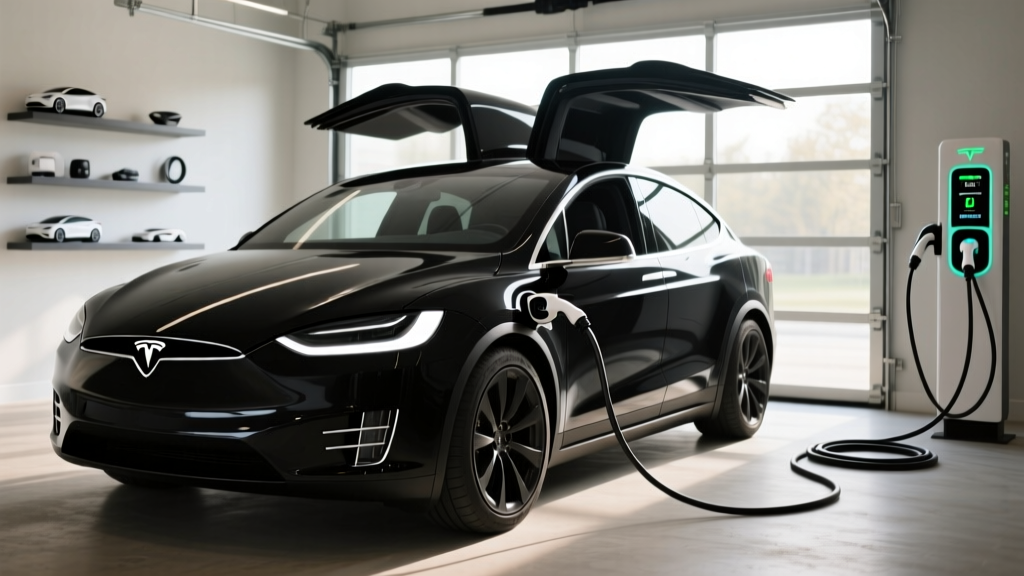
Tesla Wall Connector
- Power Output: 48 amps / 11.5 kW (on a 60A circuit)
- Connector: NACS native (includes J1772 adapter in box for non-Tesla EVs)
- Cable Length: 24 feet
- Smart Features: Wi-Fi, OTA firmware updates, power sharing (link two units on one circuit), load management
- Outdoor Rating: NEMA 3R (rain protected)
- Price: ~$420
Best for: Tesla owners or mixed-EV households. Power sharing lets you install two connectors in a two-car garage without upgrading to a 100A+ circuit.
Cost to Charge an EV Per Mile vs. Fueling a 2006 Land Rover Sport Supercharged
The 2006 Land Rover Sport Supercharged carries EPA ratings of roughly 12 mpg city / 18 mpg highway, for a combined average of about 14 mpg (source: fueleconomy.gov). At $3.50 per gallon of premium unleaded (required for the supercharged V8), that's approximately $0.25 per mile in fuel alone.
Now compare that to common EV charging scenarios for a mid-size EV with an efficiency of 3.0 miles per kWh (typical for vehicles like the Hyundai Ioniq 5 or Tesla Model Y):
| Scenario | Rate | Cost Per kWh | Cost Per Mile (3 mi/kWh) |
|---|---|---|---|
| Home, Off-Peak TOU Rate | $0.08–$0.12/kWh | $0.10 avg | $0.033 |
| Home, Standard Residential Rate | $0.13–$0.18/kWh | $0.15 avg | $0.05 |
| Public Level 2 (ChargePoint, EVgo L2) | $0.25–$0.40/kWh | $0.32 avg | $0.107 |
| DC Fast Charge (Electrify America, Tesla Supercharger) | $0.30–$0.55/kWh | $0.42 avg | $0.14 |
| 2006 Land Rover Sport SC (Premium Gas) | $3.50/gallon | — | $0.25 |
The takeaway: Even at the most expensive public DC fast charging rate, an EV costs roughly half per mile to fuel compared to the 2006 Land Rover Sport Supercharged. Charge at home on an off-peak rate, and you're spending 87% less per mile on energy. Over 12,000 miles annually, that's a fuel savings of roughly $2,600 per year—meaning a $2,500 home charger installation pays for itself in under 12 months.
Charging Time Examples for Common EV Battery Sizes
Charge times vary based on battery capacity (kWh), the charger's power output (kW), and the vehicle's onboard charger acceptance rate. Here are realistic 10–80% charge times for three representative battery sizes:
| Battery Size | Example Vehicles | Level 2 (11.5 kW / 48A) | DC Fast (150 kW peak) | DC Fast (350 kW peak) |
|---|---|---|---|---|
| 58 kWh (usable) | VW ID.4 Standard, Nissan Ariya | ~4 hr 30 min | ~28 min | ~22 min |
| 77 kWh (usable) | Ford Mustang Mach-E ER, Tesla Model Y LR | ~5 hr 45 min | ~32 min | ~25 min |
| 100 kWh (usable) | BMW iX xDrive50, Rivian R1S Max Pack | ~7 hr 30 min | ~40 min | ~28 min |
Charge curve reality check: The peak kW figure on a DC fast charger is not sustained. Most EVs hit peak charge rate between 10–40% SoC, then taper progressively. A vehicle advertising "250 kW peak" may sustain that rate for only 5–8 minutes before dropping to 150 kW, then 100 kW, then 50 kW above 80%. This is why 10–80% time is the industry-standard metric—it captures the usable charging window without the diminishing returns of the final 20%.
Safety, Code, and Electrical Requirements You Can't Ignore
The National Electrical Code (NEC) treats EV charging as a continuous load, meaning the circuit must be rated for 125% of the charger's maximum draw. A 48-amp charger requires a 60-amp breaker and 6 AWG copper wire (or 4 AWG aluminum). Here's what a compliant installation demands:
- Dedicated circuit: Your EV charger must be on its own breaker—no shared circuits with other appliances.
- GFCI protection: NEC 2023 and later require GFCI (Ground Fault Circuit Interrupter) protection for all outdoor receptacles and many indoor EV installations. Most hardwired chargers have built-in GFCI; if you use a NEMA 14-50 outlet, the breaker itself must be GFCI-rated (~$80–$120 extra).
- Outdoor rating: Any charger installed outside or in an unconditioned garage must carry at least a NEMA 3R rating. NEMA 4 is preferred for areas with wind-driven rain or hose washdowns.
- Permit and inspection: Nearly all jurisdictions require an electrical permit for a new 240V circuit. The inspection ensures proper wire gauge, breaker sizing, grounding, and GFCI compliance. Skipping the permit risks voiding your homeowner's insurance if an electrical fire occurs.
- Load calculation: Your electrician should perform a NEC Article 220 load calculation before installation. If your existing loads (HVAC, range, dryer, water heater) plus the EV charger exceed 80% of your panel's rated capacity, a panel upgrade is mandatory—not optional.
Pro tip for older homes: If you own a home built before 1985 with a 100-amp panel, budget for a 200-amp service upgrade. The cost ($1,500–$4,000 depending on utility requirements and trenching) is a one-time investment that enables EV charging, future heat pump installation, and general electrical modernization. Some utilities offer rebates of $200–$500 for panel upgrades when paired with EV charger installations.
The Full Ownership Picture: 2006 Land Rover Sport Supercharged vs. EV + Home Charger
Beyond fuel, the 2006 Land Rover Sport Supercharged carries well-documented reliability concerns. The supercharged 4.2L AJ-V8 is known for timing chain guide failures, air suspension compressor leaks, and transmission valve body issues. Annual maintenance and repair costs of $2,000–$4,000 are common once the vehicle surpasses 100,000 miles, according to owner community data.
A new or lightly used EV with a home Level 2 charger eliminates oil changes (the Land Rover's 4.2L V8 holds 8.5 quarts of 5W-30), transmission fluid services, supercharger belt replacements, and air suspension rebuilds. EV battery warranties under federal mandate cover at minimum 8 years / 100,000 miles for capacity retention (source: IRS.gov for related incentive structures). The total cost of ownership comparison tilts heavily toward the EV within 2–3 years, even accounting for the upfront charger installation.
Decision Framework
Choose a home EV charger installation if: You already own or plan to buy an EV, your home has (or can upgrade to) 200A service, you drive more than 30 miles daily, and you want fuel costs under $0.05/mile with zero tailpipe emissions.
Reconsider the 2006 Land Rover Sport Supercharged if: You're drawn to the low purchase price but haven't budgeted for $0.25/mile fuel costs, $2,000+ annual repairs, premium gas requirements, and the absence of modern safety features like automatic emergency braking or lane-keeping assist.
Frequently Asked Questions
How much does it cost to install a home EV charger?
Most installations range from $800 to $3,000 if your electrical panel has adequate capacity. If your home requires a panel upgrade from 100A to 200A service, expect $2,300 to $7,000 total. The charger unit itself costs $250–$700; the remainder is electrician labor, permit fees, and materials.
How fast will each charging level add range?
Level 1 (120V) adds 3–5 miles per hour—suitable for plug-in hybrids or very low daily mileage. Level 2 (240V, 48A) adds roughly 35–45 miles per hour for a typical mid-size EV. DC fast charging at 150 kW can add 150–250 miles in 20–30 minutes, depending on battery size and charge curve taper.
Which connector/charger is compatible with my EV?
For 2025–2026 model-year EVs from Tesla, Ford, GM, Rivian, Hyundai, Kia, BMW, and most others, the NACS connector is now standard. Older 2021–2024 EVs mostly use CCS1. The Nissan Leaf uses CHAdeMO. Check your vehicle's charge port or consult the manufacturer before ordering a charger.
How much does charging cost per mile vs gas?
Home charging averages $0.03–$0.05 per mile depending on your electricity rate. Public DC fast charging runs $0.12–$0.18 per mile. Compare that to the 2006 Land Rover Sport Supercharged at roughly $0.25 per mile on premium gasoline. Even the most expensive public EV charging is cheaper per mile than fueling that supercharged V8.
What electrical upgrades might I need?
The most common upgrade is a panel service increase from 100A to 200A, which costs $1,500–$4,000. You may also need a new dedicated 60-amp breaker, 6 AWG copper wiring, a GFCI breaker if using a NEMA 14-50 outlet, and potentially conduit runs if the charger is far from the panel. Always have a licensed electrician perform a NEC Article 220 load calculation before committing to equipment.