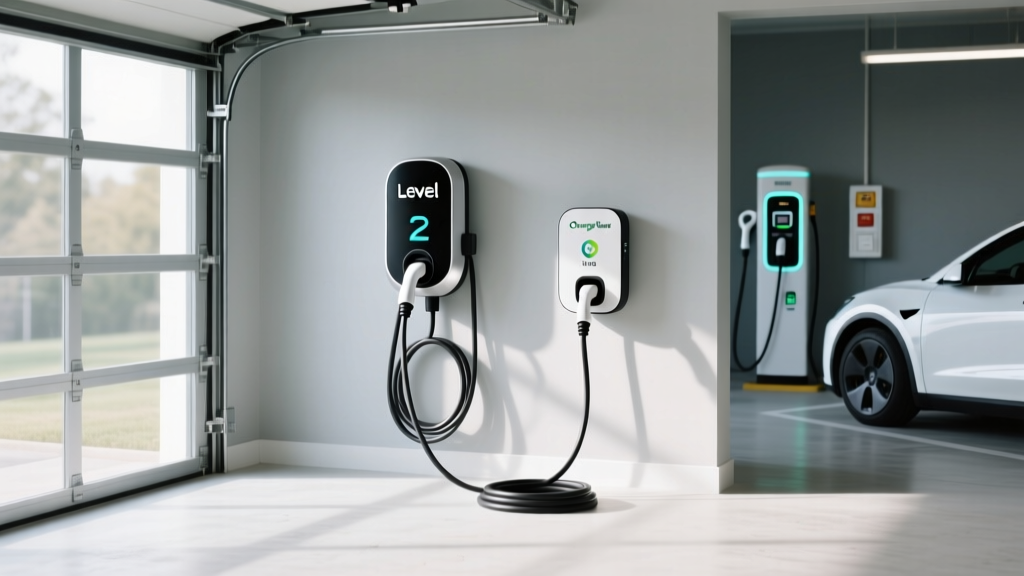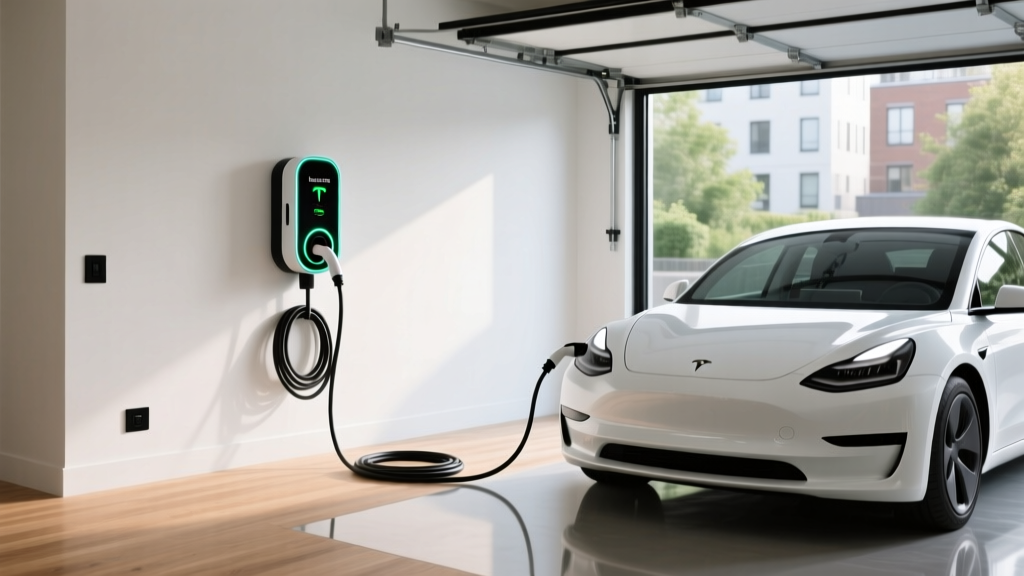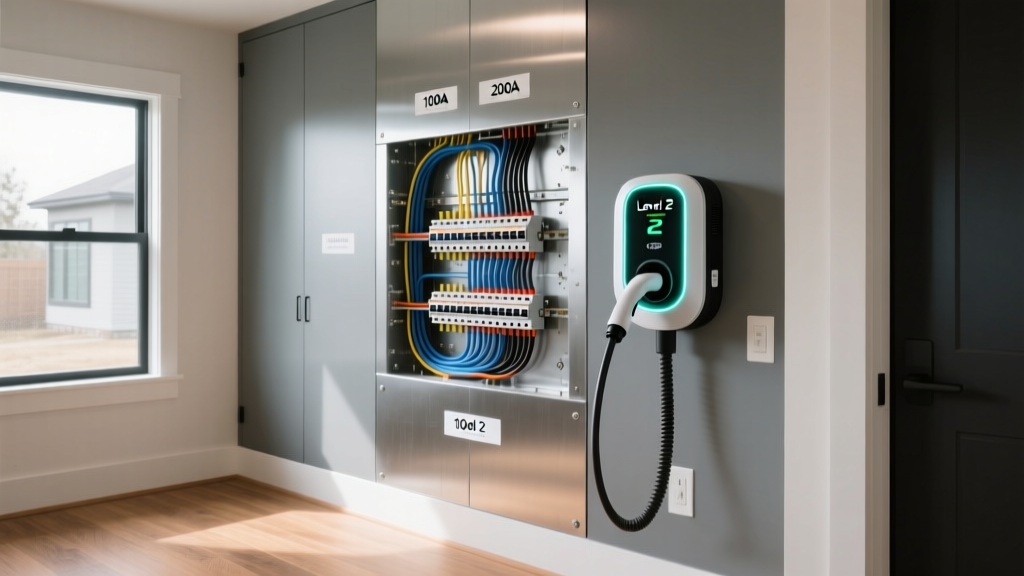
Plug in a Level 2 home charger and you are pulling 7.7 to 11.5 kW continuously for hours. For homes built before 2000 with 100-amp electrical service, that sustained draw is often the tipping point. The result: a surge in residential electrical panel upgrades from 100A to 200A, driven almost entirely by EV owners who need reliable, code-compliant home charging. In 2026, this upgrade has become one of the most common electrical service calls in suburban America — and one of the most misunderstood in terms of cost, timeline, and what it actually unlocks.
This guide breaks down the full picture: why 100A panels fall short for EV charging, what a 200A upgrade actually involves, how much you will pay (with real line-item numbers), which Level 2 chargers make the most of your new capacity, and how home charging costs compare to gas on a per-mile basis.
Why 100-Amp Panels Can't Keep Up With EV Charging
A 100-amp residential panel delivers a maximum of 24,000 watts (24 kW) across your entire home at 240 volts. In practice, the National Electrical Code (NEC) requires a continuous load to be derated to 80%, meaning your usable continuous capacity is closer to 19.2 kW. A typical home running central air conditioning (3.5–5 kW), an electric dryer (5 kW), an electric oven (2–5 kW), and miscellaneous loads (2–3 kW) can easily consume 14–18 kW simultaneously. Add a 48-amp Level 2 EV charger drawing 11.5 kW and you are over the panel's safe continuous limit.
Even a more modest 32-amp charger pulling 7.7 kW can trip the main breaker on a 100A panel during peak household usage — especially in summer when HVAC systems are running hard. This is not a theoretical concern; it is the most common reason electricians recommend a panel upgrade before installing a home EV charger.
kW (kilowatts) = power, or the rate of energy flow. Your charger's output is measured in kW. A 48-amp, 240V charger delivers 11.5 kW.
kWh (kilowatt-hours) = energy, or the total amount consumed over time. Your EV battery capacity is measured in kWh. A Tesla Model Y Long Range has a ~75 kWh usable battery.
Charging a 75 kWh battery at 11.5 kW takes roughly 6.5 hours from 0–100%.
Charging Levels Explained: Speeds, Power, and What Each Delivers
Before sizing your electrical upgrade, understand what each charging level demands from your panel and what it delivers to your vehicle.
| Level | Voltage / Amperage | Power (kW) | Miles of Range Added per Hour | 10–80% Time (75 kWh Battery) |
|---|---|---|---|---|
| Level 1 | 120V / 12A | 1.4 kW | 3–5 mi/hr | ~37 hours |
| Level 2 (32A) | 240V / 32A | 7.7 kW | 20–28 mi/hr | ~7 hours |
| Level 2 (48A) | 240V / 48A | 11.5 kW | 30–42 mi/hr | ~4.5 hours |
| DC Fast (150 kW) | 400V+ / Variable | 150 kW peak | ~500+ mi/hr (peak) | ~25–35 min |
| DC Fast (350 kW) | 800V / Variable | 350 kW peak | ~1,000+ mi/hr (peak) | ~18–22 min |
For most EV owners, a 48-amp Level 2 home charger on a 60-amp dedicated circuit is the sweet spot. It replenishes a typical 75 kWh battery overnight and adds roughly 30–42 miles of range per hour of charging — enough for even high-mileage commuters. However, this setup requires the electrical headroom that only a 200A panel can reliably provide in most homes.
DC fast charging is irrelevant to home electrical upgrades — those 150–350 kW stations are commercial installations on dedicated utility feeds. But understanding the full spectrum helps frame why home Level 2 is the daily workhorse.
The 100A to 200A Panel Upgrade: What It Actually Involves
Upgrading from a 100-amp to a 200-amp electrical panel is a significant but well-understood electrical project. Here is what the process typically entails:
- Load calculation: A licensed electrician performs an NEC Article 220 load calculation to confirm that a 200A panel is sufficient for your home's total demand plus the EV charger circuit.
- Utility coordination: Your electric utility may need to upgrade the service drop (overhead wires) or service lateral (underground conduit) to handle 200A. In some cases, the existing utility transformer and meter socket are already rated for 200A; in others, the utility must replace components.
- Panel replacement: The old 100A panel is removed and a new 200A panel (typically 40–42 circuit spaces) is installed. This often involves rerouting existing circuits.
- New EV circuit: A dedicated 60-amp, 240V circuit is run from the new panel to your charging location (garage or exterior wall), using 6 AWG copper wire for runs up to ~50 feet, or 4 AWG for longer runs to minimize voltage drop.
- Permit and inspection: The work must be permitted through your local building department and inspected after completion. This is non-negotiable for code compliance and insurance validity.
When You Might Not Need a Full Panel Upgrade
Not every 100A home requires a full upgrade. If your actual calculated load (excluding the EV charger) is well under 80A, a 32-amp Level 2 charger (7.7 kW) may fit within your existing capacity. Some electricians offer smart load-management systems — such as the Emporia Smart Load Center or Sense Energy Monitor integrated with compatible chargers — that dynamically throttle charger amperage when household demand spikes. This can let you install a Level 2 charger on a 100A panel without a full upgrade, though it may slow charging during peak usage hours.
Installation Cost Breakdown: Panel Upgrade + EV Charger
This is where many EV buyers get sticker shock. A panel upgrade is a separate cost from the charger installation, and both add up. Here is a realistic line-item breakdown based on 2026 national averages:
| Item | Low End | Typical | High End | Notes |
|---|---|---|---|---|
| Level 2 Charger (hardware) | $300 | $500–$650 | $750 | 32A–48A, Wi-Fi enabled |
| Electrical permit | $50 | $150 | $350 | Varies by municipality |
| Electrician labor (charger circuit only) | $400 | $800 | $1,500 | Depends on run length, wall type |
| 100A → 200A panel upgrade | $1,800 | $2,800 | $4,500 | Includes panel, labor, utility coordination |
| Utility service upgrade (if required) | $500 | $1,200 | $3,000+ | New meter, service drop, transformer |
| Total (charger + panel upgrade) | $2,550 | $4,250 | $7,100+ | Full project, permitted and inspected |
If your panel is already 200A and you only need the dedicated 60-amp circuit and charger, expect to pay $700–$2,000 total — a dramatically different number. This is why getting a professional load calculation first is critical before committing to a full panel replacement.
Connector Compatibility: Which Plug Does Your EV Need?
The connector landscape in 2026 has consolidated significantly, but you still need to verify compatibility before purchasing a home charger.
| Connector | Brands Using It | Adapter Needed for NACS Chargers? |
|---|---|---|
| NACS (North American Charging Standard) | Tesla (all), Ford (2025+), GM (2025+), Rivian, Hyundai/Kia (2026+), BMW, Volvo, Polestar, Mercedes-Benz (2026+) | No — native NACS |
| CCS1 (Combined Charging System) | Volkswagen, Audi, BMW (pre-2025), Honda, Nissan (Ariya), Subaru, Stellantis (Jeep, Dodge, Chrysler), Toyota (bZ4X pre-2026) | CCS1-to-NACS adapter ($150–$250) if charger is NACS |
| CHAdeMO | Nissan Leaf (legacy), Mitsubishi Outlander PHEV (legacy) | CHAdeMO adapters rare; use CHAdeMO-specific charger |
For home Level 2 charging, the J1772 connector was the universal standard for non-Tesla EVs for years. With the industry shift to NACS, most new Level 2 chargers sold in 2026 ship with either a NACS plug or a J1772 plug. If your EV uses NACS and your charger has J1772 (or vice versa), a simple adapter ($30–$80) resolves the mismatch. For public DC fast charging, the connector matters far more — NACS vehicles now access Tesla Supercharger networks directly, while CCS1 vehicles rely on Electrify America, EVgo, and ChargePoint networks.
Home Charger Equipment Recommendations (2026)
Here are four proven Level 2 home chargers that pair well with a 200A panel upgrade, spanning budget to premium:
Emporia Vue Level 2 Charger
Power: 48A / 11.5 kW (240V)
Connector: J1772 (NACS adapter included)
Cable length: 24 ft
Smart features: Wi-Fi, energy monitoring via Emporia app, solar integration, load management
Price: ~$399
Best for: Budget-conscious buyers who want energy monitoring and load-management capability on a 100A panel.
ChargePoint Home Flex
Power: Up to 50A / 12 kW (240V, adjustable 16A–50A)
Connector: J1772 or NACS (select at purchase)
Cable length: 23 ft
Smart features: Wi-Fi, ChargePoint app scheduling, Alexa integration, amperage adjustment
Price: ~$549
Best for: Flexibility — adjustable amperage lets you match the circuit to your panel capacity.
Tesla Wall Connector (Gen 4)
Power: 48A / 11.5 kW (240V)
Connector: NACS native (J1772 adapter available)
Cable length: 24 ft
Smart features: Wi-Fi, OTA updates, Power-Share (two units on one circuit), Tesla app integration
Price: ~$450
Best for: Tesla and NACS-native EV owners. Power-Share feature is ideal for two-EV households.
Grizzl-E Smart Level 2
Power: 40A / 9.6 kW (240V)
Connector: J1772 or NACS
Cable length: 24 ft
Smart features: Wi-Fi, OCPP-compatible, adjustable amperage (16A–40A), extreme-weather rated (-40°F)
Price: ~$499
Best for: Cold-climate owners and outdoor installations. Built in Canada with ruggedized housing.
Cost to Charge at Home vs. Gas: Per-Mile Economics
The financial case for home charging is compelling when you compare per-mile costs against gasoline. The exact numbers depend on your local electricity rate and the vehicle's efficiency, but here is a representative comparison:
| Scenario | Rate / Price | Vehicle Efficiency | Cost Per Mile |
|---|---|---|---|
| Home (off-peak, $0.12/kWh) | $0.12/kWh | 3.0 mi/kWh (100 MPGe) | $0.040/mi |
| Home (standard, $0.18/kWh) | $0.18/kWh | 3.0 mi/kWh | $0.060/mi |
| Public Level 2 ($0.30/kWh) | $0.30/kWh | 3.0 mi/kWh | $0.100/mi |
| DC Fast ($0.40/kWh) | $0.40/kWh | 3.0 mi/kWh | $0.133/mi |
| Gasoline ($3.50/gal, 30 MPG) | $3.50/gallon | 30 MPG combined | $0.117/mi |
| Gasoline ($3.50/gal, 22 MPG) | $3.50/gallon | 22 MPG combined | $0.159/mi |
At off-peak residential rates, home EV charging costs roughly $0.04–$0.06 per mile — less than half the cost of fueling a 30 MPG gas car. Even at standard (non-time-of-use) rates, home charging remains cheaper than gasoline for most vehicles. Public DC fast charging, however, can approach or exceed gas costs, which is precisely why home charging infrastructure is the economic linchpin of EV ownership.
For a driver covering 12,000 miles annually, the difference between home charging at $0.05/mi and fueling a 25 MPG gas car at $0.14/mi saves roughly $1,080 per year — enough to recoup a panel upgrade and charger installation within 3–4 years.
Safety, Code, and Permit Considerations
Electrical safety is not an area for shortcuts. Here are the code requirements and best practices that apply to a 200A panel upgrade with EV charger installation:
- Dedicated circuit: Your Level 2 charger must be on its own dedicated circuit — no sharing with other appliances. A 48A charger requires a 60A breaker; a 32A charger requires a 40A breaker (per NEC 80% continuous-load rule).
- GFCI protection: NEC 2023 and later require GFCI (Ground Fault Circuit Interrupter) protection for all EV charging outlets. Hardwired chargers may be exempt in some jurisdictions, but GFCI breakers are strongly recommended for all installations.
- Outdoor rating: If your charger is installed outdoors or in an unenclosed carport, it must carry a NEMA 4 (weatherproof) rating. All chargers recommended above meet this standard.
- Wire gauge: A 60A circuit requires minimum 6 AWG copper wire (THHN in conduit or NM-B in walls). Longer runs (>50 ft) may require 4 AWG to prevent voltage drop exceeding 3%.
- Hardwired vs. plug: Hardwired chargers (directly connected to the circuit, no plug) avoid the need for a 240V receptacle and are often preferred for permanent installations. NEMA 14-50 receptacles offer portability but must be installed with correct torque specs and GFCI protection.
- Permit requirement: Every jurisdiction requires an electrical permit for a panel upgrade and new 240V circuit. Unpermitted work can void home insurance claims and create problems during a future home sale.
Federal Tax Credits and Utility Rebates for Charging Equipment
The IRS §30C Alternative Fuel Vehicle Refueling Property Credit offers a tax credit of up to 30% of the cost of home EV charging equipment, capped at $1,000 for residential installations. This covers the charger hardware and installation labor, but notably does not cover the panel upgrade itself.
Key eligibility details for 2026:
- The credit applies to equipment placed in service at your primary residence.
- The home must be located in a qualifying census tract (low-income or non-urban area). The IRS publishes an eligible-tract locator tool.
- The credit is non-refundable — it can reduce your tax liability to zero but will not generate a refund beyond that.
- Many utility companies offer additional rebates of $200–$500 for installing a smart Level 2 charger, and some offer free or discounted time-of-use rate plans for EV owners.
For the panel upgrade itself, no federal tax credit currently applies, but some state energy programs and utilities offer partial rebates for service upgrades tied to electrification. Check with your local utility and state energy office for available programs. The U.S. Department of Energy's AFDC maintains a searchable database of state and utility incentives.
Frequently Asked Questions
How much does it cost to install a home EV charger?
If your electrical panel is already 200A, expect to pay $700–$2,000 total for a dedicated 60-amp circuit, permit, and Level 2 charger hardware. If you need a 100A to 200A panel upgrade, add $2,300–$5,500+ for a total project cost of $3,000–$7,100+ depending on utility requirements and wiring condition.
How fast will each charging level add range?
Level 1 (120V) adds 3–5 miles per hour. Level 2 at 32A adds 20–28 miles per hour. Level 2 at 48A adds 30–42 miles per hour. DC fast charging at 150 kW can add 150–200 miles in 20–25 minutes, though the charge rate tapers significantly above 80% state of charge.
Which connector and charger is compatible with my EV?
Check your vehicle's charge port. Most 2025+ EVs from Tesla, Ford, GM, Rivian, Hyundai, and Kia use the NACS connector. Most Volkswagen, Honda, Subaru, and Stellantis vehicles still use CCS1. CHAdeMO is limited to the legacy Nissan Leaf. For home Level 2, a J1772-to-NACS adapter ($30–$80) bridges any mismatch.
How much does charging cost per mile vs. gas?
Home charging at off-peak rates ($0.12/kWh) costs about $0.04/mile for a typical EV achieving 3 mi/kWh. Gasoline at $3.50/gallon in a 25 MPG vehicle costs $0.14/mile. Home charging is typically 60–70% cheaper per mile than gasoline.
What electrical upgrades might I need for an EV charger?
If your home has a 100-amp panel, you will likely need an upgrade to 200 amps to safely support a 48-amp Level 2 charger alongside normal household loads. Homes with 200A panels usually only need a new dedicated 60A circuit. In rare cases (very large homes with electric heat, pool equipment, etc.), a 320A or 400A service may be recommended. A licensed electrician's load calculation is the definitive answer.
Can I avoid a panel upgrade with a smart load-management system?
Yes, in some cases. Smart load-management systems like Emporia's or the Span smart panel monitor real-time household consumption and reduce charger amperage when other loads spike. This allows a Level 2 charger to coexist on a 100A panel, though charging will slow during high-demand periods. This approach works best for homes with moderate baseline loads and is not a substitute for a professional load calculation.