If you're coming from a supercharged 6.2L V8 Cadillac CTS-V — whether the 556-hp second-gen or the 640-hp third-gen — the leap to an electric vehicle raises practical questions that go far beyond horsepower. The CTS-V supercharged gets roughly 13–18 MPG combined depending on how heavy your right foot is, which means you're likely spending $3,000–$4,500 a year on premium fuel. An EV flips that equation entirely, but only if you understand the charging ecosystem before you buy.
This guide is written for performance-sedan enthusiasts evaluating the switch. We'll walk through charging levels, real installation costs, connector compatibility, and what you'll actually pay per mile compared to feeding that Eaton-supercharged LT V8.
Charging Levels Explained: Speeds, Power, and Real-World Range Added
The single most important distinction in EV ownership is the difference between kW (kilowatts) and kWh (kilowatt-hours). Think of it like plumbing: kW is the flow rate of water through the pipe; kWh is the total volume in the tank. Your EV's battery capacity is measured in kWh (energy stored), while chargers are rated in kW (power delivered). A 100-kWh battery charged at 10 kW takes 10 hours from empty to full — simple math, but frequently confused.
| Level | Voltage | Power (kW) | Miles of Range Added/Hour | Best Use Case |
|---|---|---|---|---|
| Level 1 | 120V AC | 1.0–1.9 kW | 3–5 mi/hr | Overnight top-up, PHEVs, emergencies |
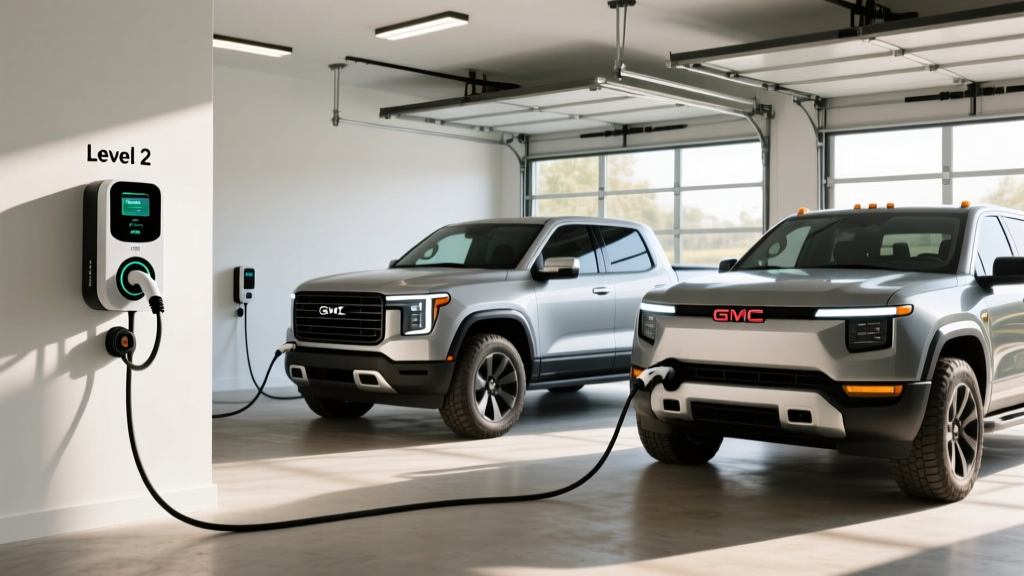
| Level 2 | 240V AC | 7.2–19.2 kW | 25–70 mi/hr | Daily home charging, workplace, hotels |
| DC Fast Charge | 400–800V DC | 50–350 kW | 150–1,000+ mi/hr (peak) | Road trips, highway corridors |
For a typical EV with a 75–100 kWh battery pack — say a Tesla Model S, Lucid Air, or Cadillac Lyriq — Level 2 home charging at 11.5 kW (48A on a 60A circuit) adds roughly 40–45 miles of range per hour. That means a full overnight session (8–10 hours) easily replenishes 300+ miles. DC fast charging peaks dramatically higher but tapers significantly above 80% state of charge — a 250-kW peak doesn't mean you sustain 250 kW for the entire session.
Home Charger Installation: Electrical Requirements, Costs, and Panel Upgrades
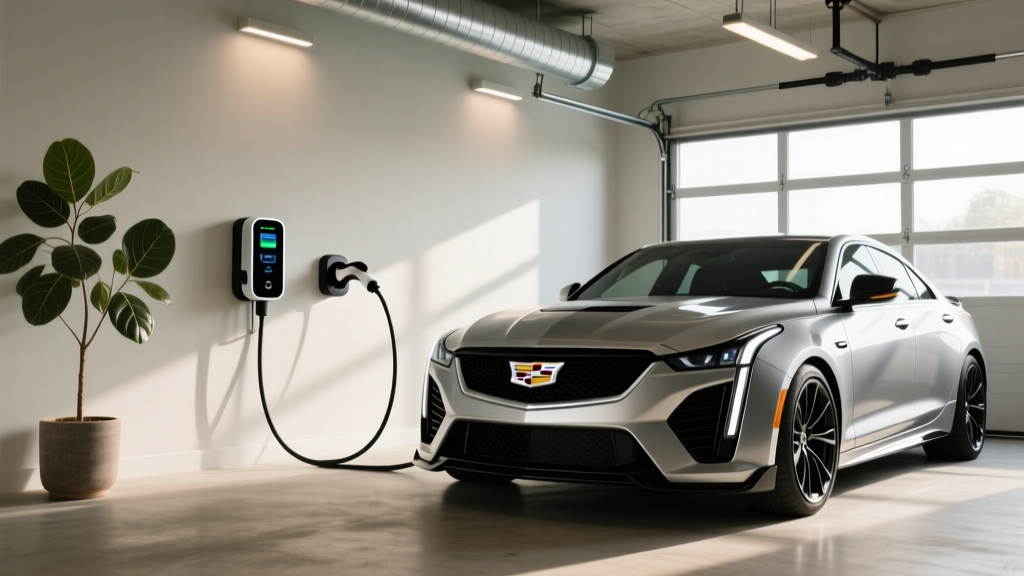
A dedicated Level 2 home charger requires a 240V circuit, identical in concept to what powers your electric dryer or oven. The most common setup is a NEMA 14-50 outlet on a 50-amp breaker, which supports chargers drawing up to 40 amps (the National Electrical Code requires continuous loads to be derated to 80% of breaker capacity). For faster charging, some homes can accommodate a 60-amp breaker supporting 48-amp continuous draw.
Electrical Panel Capacity: The Hidden Cost
Before anything else, check your main electrical panel. Most modern homes have a 200-amp main service, which typically supports a 50-amp EV circuit without issue. Older homes — especially those with 100-amp service — may require a panel upgrade to 200 amps, which adds $1,500–$3,500 to your project. If your panel is already near capacity (running central AC, electric heat, a dryer, and an oven), an electrician may recommend a load-management device like the Emporia Smart Load Management system ($150–$200) instead of a full panel swap.
| Component | Low End | High End | Notes |
|---|---|---|---|
| Level 2 Charger (hardware) | $350 | $750 | Wi-Fi smart chargers, 32A–48A |
| Electrician labor (outlet install) | $400 | $1,200 | Depends on run length, wall type |
| Permit & inspection | $50 | $250 | Varies by municipality |
| Panel upgrade (if needed) | $1,500 | $3,500 | 100A → 200A service upgrade |
| Conduit/wiring materials | $100 | $400 | Longer runs cost more |
| Total (no panel upgrade) | $900 | $2,600 | Typical garage install |
| Total (with panel upgrade) | $2,400 | $6,100 | Older homes with 100A service |
Always hire a licensed electrician familiar with EV charging installs. Permits are required in most jurisdictions, and skipping one can void your homeowner's insurance if a fire originates from unpermitted electrical work. According to NECA guidelines, a dedicated GFCI-protected circuit is recommended for outdoor installations, and any outdoor-rated charger must carry a NEMA 4 (weather-resistant) rating.
Connector Compatibility: NACS, CCS1, and CHAdeMO in 2026
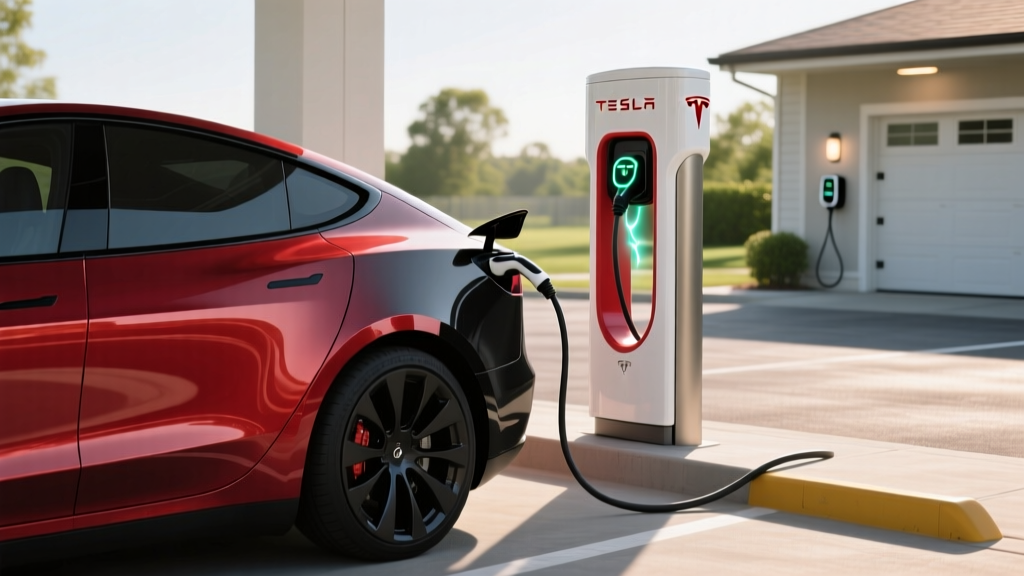
The connector landscape has consolidated significantly. As of 2026, the North American Charging Standard (NACS), developed by Tesla, is the dominant connector for new EVs. Ford, GM (including Cadillac), Rivian, Volvo, BMW, and most major automakers have adopted NACS on their 2025–2026 model-year vehicles. The older CCS1 (Combined Charging System) connector is still found on vehicles from the 2020–2024 model years, and CHAdeMO is essentially legacy, limited to older Nissan Leafs and Mitsubishi Outlander PHEVs.
| Connector | Brands Using It | DC Fast Charge Networks |
|---|---|---|
| NACS (Tesla) | Tesla, Cadillac, Ford, GM, Rivian, Volvo, BMW, Hyundai (2026+) | Tesla Supercharger, Electrify America (new stalls), EVgo |
| CCS1 | VW (ID.4 older), Hyundai/Kia (2024 and earlier), BMW (older i4/iX) | Electrify America, EVgo, ChargePoint |
| CHAdeMO | Nissan Leaf (legacy), Mitsubishi Outlander PHEV | Limited availability — declining |
If you're buying a used EV with a CCS1 port but want Supercharger access, a Tesla-approved CCS-to-NACS adapter (roughly $150–$250 from manufacturers like Lectron or A2Z) will work on most Supercharger V3/V4 stalls. Always verify adapter compatibility with your specific model before purchasing.
Charging Cost Per Mile: EV vs. the Supercharged 6.2L V8
Here's where the CTS-V comparison becomes stark. The third-generation CTS-V (2016–2019) with its 640-hp supercharged 6.2L LT4 V8 averages roughly 14 MPG combined on premium fuel. At $4.50/gallon (national average for premium in early 2026), you're paying approximately $0.32 per mile in fuel alone — and far more if you drive the car the way it was designed to be driven.
| Scenario | Cost/kWh or Gallon | Vehicle Efficiency | Cost Per Mile |
|---|---|---|---|
| Home Level 2 (off-peak utility rate) | $0.12/kWh | 3.0 mi/kWh (typical EV sedan) | $0.04/mi |
| Home Level 2 (standard rate) | $0.18/kWh | 3.0 mi/kWh | $0.06/mi |
| Public Level 2 (network pricing) | $0.30/kWh | 3.0 mi/kWh | $0.10/mi |
| DC Fast Charge (road trip) | $0.48/kWh | 3.0 mi/kWh | $0.16/mi |
| Cadillac CTS-V (premium gas, 14 MPG) | $4.50/gal | 14 MPG combined | $0.32/mi |
| Cadillac CTS-V (aggressive driving, 11 MPG) | $4.50/gal | 11 MPG | $0.41/mi |
Even at the most expensive DC fast-charging rates, an EV costs roughly half per mile compared to a supercharged CTS-V on premium. For a driver covering 12,000 miles per year, the annual fuel savings range from $2,400 (mostly DC fast charging) to $3,360 (mostly home charging). Over five years, that's $12,000–$16,800 in fuel savings alone — enough to offset the home charger installation and a significant portion of the vehicle price difference.
According to fueleconomy.gov, the average EV owner saves between $4,600 and $9,200 in fuel costs over the vehicle's lifetime compared to a gasoline equivalent. For performance-car owners switching from low-MPG vehicles, the savings skew toward the high end.
Charging Times for Common EV Battery Sizes
How long a charge takes depends on battery capacity (kWh), charger power (kW), and the vehicle's charge curve. Most EVs charge fastest between 10% and 50% state of charge, then taper progressively — by 80%, many vehicles are charging at half their peak rate or less. This is why manufacturers quote "10–80%" times rather than 0–100%.
| Battery Size | Example Vehicles | Level 2 (11.5 kW) 10–80% | DC Fast 10–80% |
|---|---|---|---|
| 60 kWh | Chevy Equinox EV, base Tesla Model 3 | ~3.5 hours | ~22–28 min (150 kW peak) |
| 82 kWh | BMW i4, VW ID.7, Tesla Model 3 LR | ~5 hours | ~25–32 min (200 kW peak) |
| 100 kWh | Cadillac Lyriq, Tesla Model S, Lucid Air | ~6 hours | ~20–30 min (250–350 kW peak) |
| 118 kWh | GMC Hummer EV, Chevy Silverado EV | ~7.5 hours | ~35–45 min (350 kW peak) |
The Cadillac Lyriq, for example — the closest spiritual successor to a CTS-V in Cadillac's current EV lineup — carries a 102-kWh (usable) Ultium battery. On a home Level 2 charger at 11.5 kW, a 10–80% session takes roughly 6 hours, easily handled overnight. On a 190-kW DC fast charger, the Lyriq achieves 10–80% in approximately 30 minutes, per Cadillac's official specifications.
Equipment Recommendations: Best Home Chargers for 2026
ChargePoint Home Flex
Power: Up to 12 kW (50A) adjustable
Connector: NACS (2025+ models) or J1772 with adapter
Cable: 23 ft
Smart features: Wi-Fi, scheduling, Alexa, energy dashboard
Price: ~$550
Best for: Flexible amperage settings, strong app ecosystem
Tesla Wall Connector (Gen 4)
Power: Up to 11.5 kW (48A)
Connector: NACS native
Cable: 24 ft
Smart features: Wi-Fi, OTA updates, power sharing (multi-unit)
Price: ~$475
Best for: Tesla/GM/Ford NACS owners seeking simplicity
Emporia Vue Level 2 Charger
Power: Up to 11.5 kW (48A)
Connector: J1772 (NACS adapter included)
Cable: 24 ft
Smart features: Energy monitoring, solar integration, load management
Price: ~$400
Best for: Budget-conscious buyers with solar panels
Grizzl-E Smart
Power: Up to 10 kW (40A)
Connector: J1772 (NACS version available)
Cable: 24 ft
Smart features: OCPP compatible, adjustable amperage, extreme cold rated (-40°F)
Price: ~$450
Best for: Cold-climate durability, outdoor installs
All four chargers above are hardwired or NEMA 14-50 plug compatible, UL-listed (or ETL-listed), and support scheduled charging to take advantage of off-peak utility rates. If your utility offers time-of-use (TOU) pricing, scheduling charges between 10 PM and 6 AM can drop your effective rate to $0.08–$0.12/kWh in many regions — bringing cost per mile down to $0.03 or less.
Safety, Code, and Practical Installation Tips
- Dedicated circuit required: Your EV charger must be on its own dedicated breaker — never share a circuit with other large appliances.
- GFCI protection: The 2023 NEC (and 2026 adopted codes in most states) requires GFCI protection for all outdoor receptacles, including NEMA 14-50 outlets used for EV charging. Hardwired chargers are often exempt from this requirement, which is one reason many electricians prefer hardwired installs.
- Outdoor rating: If mounting outside, ensure the charger carries a NEMA 4 or IP65 rating for weather resistance. Indoor-only units (NEMA 1) will fail prematurely when exposed to rain or humidity.
- Cable management: A 24-foot cable is the practical minimum for most garages. If your parking spot is farther from the panel, consider a wall-mounted holster positioned to avoid cable drag on the ground.
- Load management: If your panel is near capacity but you don't want to pay for a full upgrade, devices like the Emporia Smart Load Manager or Tesla Gateway can dynamically reduce charger amperage when other appliances are drawing power.
- Permit before you plug in: Most jurisdictions require an electrical permit for new 240V circuits. The permit fee is typically $50–$250, and an inspection ensures your install meets code — protecting both your safety and your home insurance coverage.
Frequently Asked Questions
How much does it cost to install a home EV charger?
A standard Level 2 home charger installation (NEMA 14-50 outlet or hardwired) costs $900–$2,600 including equipment, electrician labor, and permit — assuming your electrical panel has sufficient capacity. If a panel upgrade from 100A to 200A is needed, add $1,500–$3,500. The national average for a straightforward garage install is approximately $1,500.
How fast will each charging level add range?
Level 1 (120V) adds 3–5 miles per hour — adequate only for plug-in hybrids with small batteries or emergency trickle charging. Level 2 (240V, 11.5 kW typical) adds 35–45 miles per hour, fully replenishing most EVs overnight. DC fast charging adds 150–1,000+ miles per hour at peak rates, but tapers significantly after 80% state of charge, so real-world road-trip stops typically take 20–35 minutes for a 10–80% session.
Which connector and charger is compatible with my EV?
For 2025–2026 model-year vehicles from Cadillac, GM, Ford, Tesla, Rivian, BMW, and Volvo, the NACS connector is standard. Older EVs (2020–2024) from VW, Hyundai, and Kia typically use CCS1. Nissan Leaf owners have CHAdeMO. Check your vehicle's charge port or consult the manufacturer. For home Level 2 charging, all EVs accept either a native NACS connector or a J1772 connector with a J1772-to-NACS adapter (included with most newer vehicles).
How much does EV charging cost per mile compared to my CTS-V on premium gas?
At 14 MPG combined on $4.50 premium, a supercharged CTS-V costs roughly $0.32 per mile in fuel. An EV charged at home on off-peak rates ($0.12/kWh) costs about $0.04 per mile — an 8x savings. Even at public DC fast-charging rates ($0.48/kWh), the EV costs $0.16/mile, still half what the CTS-V demands. Over 12,000 miles/year, that's $2,400–$3,400 in annual savings.
What electrical upgrades might I need for a home charger?
The most common upgrade is a panel capacity increase from 100 amps to 200 amps, required in older homes that lack headroom for a dedicated 50-amp EV circuit. This costs $1,500–$3,500. You may also need a new conduit run from the panel to the garage ($100–$400 in materials), and some municipalities require a smart load-management device if total calculated load approaches panel capacity. Have a licensed electrician perform a load calculation before committing to any equipment purchase.