If you own a BMW i3 — or you're shopping for one on the used-EV market in 2026 — the most practical question isn't whether it's a "real" EV. It's this: how do you keep its modest battery full without spending a fortune or waiting around? The i3's 22–42 kWh battery pack (depending on model year) makes it one of the most charger-sensitive vehicles on the road, because every kilowatt-hour counts twice when your total capacity is small.
This guide breaks down exactly how far each i3 variant can go, how fast each charging level replenishes that range, what a Level 2 home installation actually costs in 2026, and which equipment works best with the i3's CCS1 (or older J1772/CCS combo) inlet. We'll use real numbers — kW, kWh, minutes, and dollars — not marketing filler.
BMW i3 Range by Model Year: EPA Stickers vs. Real-World Reality
BMW produced the i3 from 2014 through 2021. Because it's no longer sold new, the 2026 used market is where you'll find it. Battery chemistry is NMC (nickel-manganese-cobalt), and usable capacity grew significantly across three generations. Here's what the EPA rated each variant:
| Model Years | Battery (Usable kWh) | EPA Range (mi) | MPGe Combined | 0-60 mph |
|---|---|---|---|---|
| 2014–2016 (60 Ah) | 18.8 kWh | 81 mi | 124 MPGe | 7.0 sec |
| 2017–2018 (94 Ah) | 27.2 kWh | 114 mi | 118 MPGe | 7.0 sec |
| 2019–2021 (120 Ah) | 37.9 kWh | 153 mi | 113 MPGe | 6.9 sec |
If you're buying a used i3 in 2026, check the battery's State of Health (SoH) via the iDrive menu or an OBD-II scanner app like BimmerCode. A 2017 i3 at 85% SoH effectively has ~23 usable kWh, reducing real-world range proportionally. BMW's battery warranty was 8 years/100,000 miles for capacity below 70%, so most 2014–2016 models are now out of warranty, while 2019–2021 models may still have partial coverage.
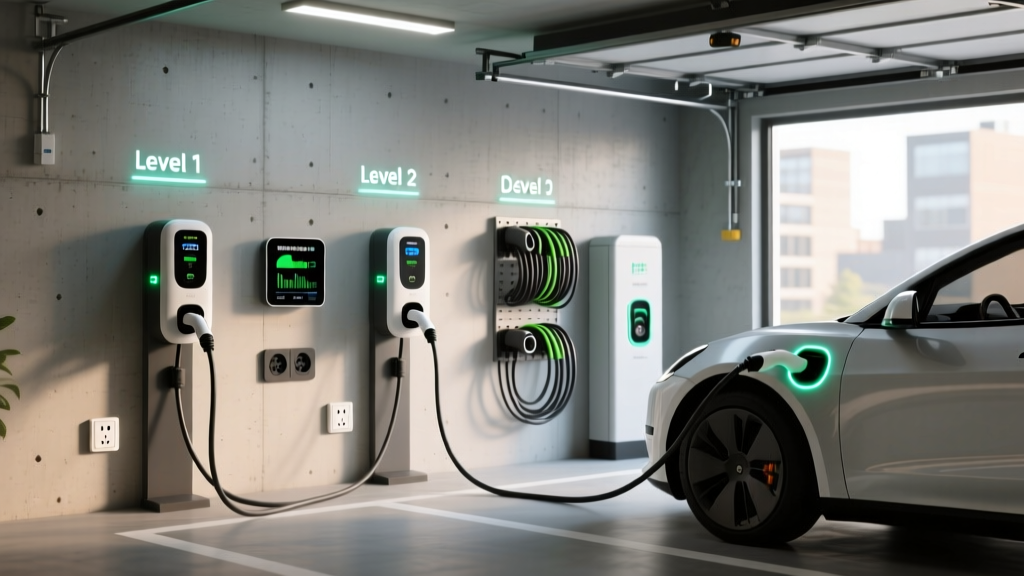
Charging Levels Explained: kW, Miles per Hour, and i3 Charge Times
The single most important distinction in EV charging: kW (kilowatts) measures power — how fast energy flows into the battery. kWh (kilowatt-hours) measures energy — the battery's total capacity. Think of kW as the flow rate of a hose and kWh as the size of the bucket. The i3's bucket is small (18.8–37.9 kWh usable), which means even modest kW rates fill it relatively quickly.
| Level | Voltage / Amps | Power (kW) | Miles of Range Added per Hour | i3 120 Ah: 10–80% Time |
|---|---|---|---|---|
| Level 1 (120V household) | 120V / 12A | ~1.4 kW | ~4–5 mi/hr | ~26 hours |
| Level 2 (240V home/public) | 240V / 32A | 7.4 kW | ~22–25 mi/hr | ~3.5 hours |
| Level 2 (240V, 48A circuit) | 240V / 40A | ~9.6 kW (i3 caps at 7.4–11 kW) | ~28–33 mi/hr | ~2.5–3 hours |
| DC Fast Charge (CCS) | 400V DC | Up to 50 kW | ~100–150 mi/hr (first 30 min) | ~35–42 min (10–80%) |
The i3's onboard charger is rated at 7.4 kW (single-phase, 32A) for most model years, with an optional 11 kW three-phase charger available in some markets (rare in the US). This means even if you install a 48A Level 2 station capable of 11.5 kW, the i3 will only draw 7.4 kW. Don't overspend on a high-amperage charger for an i3 — a 32A unit matches its hardware perfectly.
On DC fast charging, the i3's peak rate is approximately 47–50 kW, but it only sustains that rate up to roughly 50% State of Charge. Above 80%, the charge curve tapers aggressively to protect the NMC cells — expect the last 20% to take nearly as long as the first 50%. This is normal for NMC chemistry and why we quote 10–80% times rather than 0–100%.
Home Level 2 Installation: Electrical Requirements, Costs & Panel Upgrades
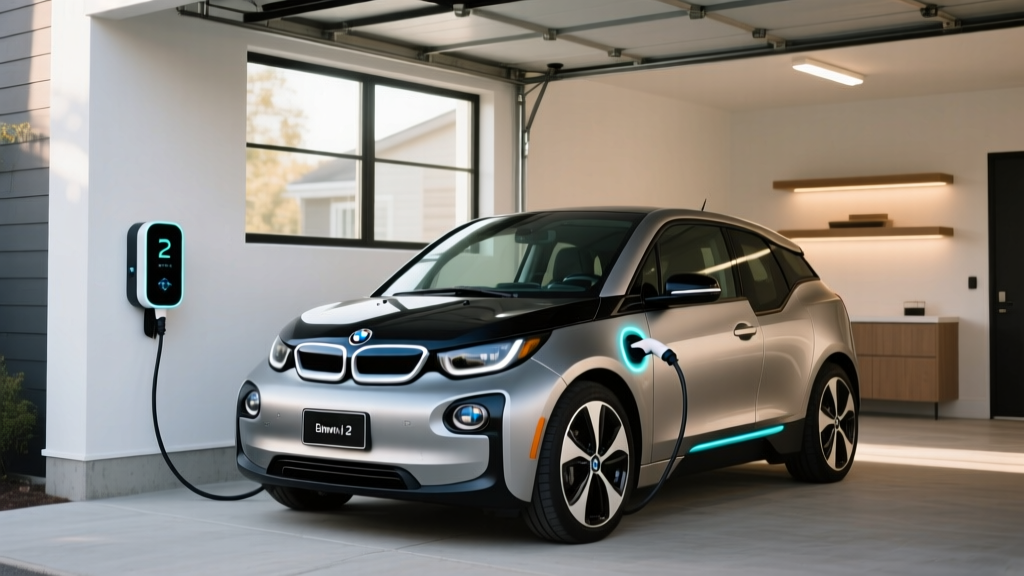
Charging at home is where the i3 makes the most sense. A Level 2 station at 7.4 kW fully replenishes even the 120 Ah model overnight — and costs a fraction of public DC charging. Here's what a 2026 installation actually requires and costs.
Electrical Requirements
A dedicated 240V circuit on a 40-amp breaker (which delivers 32A continuous, matching the i3's onboard charger limit) is the ideal setup. This uses a NEMA 14-50 outlet or a hardwired connection. Key code requirements per NEC Article 625:
- Dedicated circuit — no sharing with other appliances
- GFCI protection (required for 2020+ NEC adoptions; many jurisdictions now enforce this)
- If outdoors: NEMA 4-rated (weatherproof) enclosure and outlet cover
- Wire gauge: 6 AWG copper for a 40A breaker (some electricians prefer 4 AWG for future-proofing to 48A/60A breaker)
Installation Cost Breakdown
| Item | Cost Range |
|---|---|
| Level 2 EVSE equipment (32A, 240V) | $350 – $700 |
| Electrician labor (standard install, panel nearby) | $500 – $1,200 |
| Permit & inspection (municipal) | $50 – $250 |
| Electrical panel upgrade (100A → 200A, if needed) | $1,500 – $3,500 |
| Total (no panel upgrade) | $900 – $2,150 |
| Total (with panel upgrade) | $2,400 – $5,850 |
Some utilities offer rebates of $200–$500 for Level 2 installations, and the federal 30% Residential Clean Energy Credit (up to $1,000 for EVSE equipment + installation) was extended through 2025 under the Inflation Reduction Act — check with a tax professional whether it has been renewed for 2026, as incentive rules change frequently. Some states also offer separate charger-installation rebates; consult your state energy office or AFDC's state-law database.
Connector Compatibility: What Plugs Into the BMW i3?
The BMW i3 uses the SAE Combo (CCS1) connector for DC fast charging and the standard J1772 connector for Level 1 and Level 2 AC charging. CCS1 is the J1772 plug with two additional DC pins below it. Here's how the i3 fits into the broader 2026 connector landscape:
| Connector | Used By | i3 Compatible? | Adapter Needed? |
|---|---|---|---|
| J1772 (AC Level 1/2) | All non-Tesla EVs, including i3 | Yes — native | No |
| CCS1 (DC Fast) | BMW, VW, GM, Ford, Hyundai, most non-Tesla | Yes — native | No |
| NACS / Tesla (AC + DC) | Tesla, Ford (2025+), GM (2025+), Rivian, others adopting | With adapter | Yes — CCS-to-NACS adapter (~$150–$250) |
| CHAdeMO (DC Fast) | Nissan Leaf, Mitsubishi Outlander PHEV | No | N/A — different standard |
In 2026, the charging network is shifting toward NACS (Tesla's connector, now standardized as SAE J3400). Electrify America, EVgo, and ChargePoint are adding NACS cables alongside CCS1, but CCS1 remains widely available at public stations. If you plan to charge at Tesla Superchargers (which now welcome non-Tesla vehicles at select locations via the Tesla app), you'll need a CCS-to-NACS adapter. BMW does not provide one for the i3, but third-party options from brands like Lectron or A2Z are available.
Cost to Charge the BMW i3: Home vs. Public vs. Gas Comparison
The i3's small battery is a cost advantage: filling it is cheap. Here's what you'll actually spend across common scenarios, using the 120 Ah model (37.9 kWh usable, ~153 mi EPA range) as the baseline.
| Scenario | Rate ($/kWh) | Cost for Full Charge | Cost per Mile (EPA) | Equiv. Gas Cost at 30 MPG |
|---|---|---|---|---|
| Home (off-peak utility rate) | $0.09/kWh | $3.41 | $0.022/mi | $0.11/mi ($3.30/gal) |
| Home (national avg. residential) | $0.17/kWh | $6.44 | $0.042/mi | $0.11/mi ($3.30/gal) |
| Public Level 2 (ChargePoint, etc.) | $0.25–$0.39/kWh | $9.48–$14.78 | $0.062–$0.097/mi | — |
| DC Fast Charge (Electrify America) | $0.36–$0.56/kWh | $13.64–$21.22 | $0.089–$0.139/mi | — |
At home on off-peak rates, the i3 costs roughly 2 cents per mile to drive — about one-fifth the cost of a 30 MPG gas car at $3.30/gallon. Even at the national residential average of $0.17/kWh, you're paying 4 cents per mile. Public DC fast charging narrows the advantage significantly, and at peak rates above $0.50/kWh, you may approach the per-mile cost of a fuel-efficient hybrid. This is why home charging is the economic core of i3 ownership.
For the older 60 Ah (18.8 kWh) and 94 Ah (27.2 kWh) models, scale these costs down proportionally — a full home charge on the 60 Ah costs about $1.70 at off-peak rates, but you're also working with only 81 miles of range.
Best Level 2 Chargers for the BMW i3: Equipment Picks
Since the i3 caps at 7.4 kW (32A), you don't need a 48A charger — but buying a 40A unit gives you headroom for a future EV with a larger onboard charger. Here are three solid options available in 2026:
Emporia Level 2 EV Charger
- Power: 48A / 11.5 kW (i3 will draw 7.4 kW)
- Connector: J1772 (CCS1-compatible for AC)
- Cable: 24 ft
- Smart features: Wi-Fi, scheduling, energy monitoring via app, load management
- Price: ~$399
- Best for: Budget-conscious buyers who want smart scheduling and load management
ChargePoint Home Flex
- Power: Configurable 16A–50A (set to 32A for i3)
- Connector: J1772
- Cable: 23 ft
- Smart features: Wi-Fi, Alexa integration, detailed session tracking, NEMA 4 outdoor rating
- Price: ~$699
- Best for: Outdoor installs and those who want robust app analytics
Tesla Wall Connector (with J1772 adapter)
- Power: 48A / 11.5 kW (i3 will draw 7.4 kW)
- Connector: NACS native — use Tesla's J1772 adapter ($45) for i3
- Cable: 24 ft
- Smart features: Wi-Fi, power sharing between two units, OTA updates
- Price: ~$475 + $45 adapter
- Best for: Households that also own a Tesla or plan to switch to NACS
All three are UL-listed and meet NEC requirements. Hardwired installation is preferred for outdoor use (eliminates the NEMA outlet as a failure point), but a NEMA 14-50 receptacle offers portability if you move. For the i3 specifically, the Emporia at $399 is the best value — its 48A capacity is wasted on the i3 today but future-proofs your garage.
BMW i3 Charging FAQ
Can I charge a BMW i3 on a regular 120V outlet?
Yes, using the OEM Level 1 cord that came with the car. At ~1.4 kW, you'll add about 4–5 miles of range per hour. For a 120 Ah model, a full charge from empty takes roughly 26 hours. This is practical only as a backup or for very low daily mileage (under 20 miles/day). For daily use, Level 2 is strongly recommended.
Does the BMW i3 support DC fast charging?
Yes — all US-market i3 models came with CCS1 DC fast charging capability (standard from 2015 onward, optional on the earliest 2014 models). Peak rate is approximately 47–50 kW, with a 10–80% charge taking roughly 35–42 minutes depending on battery temperature and starting SoC. Always precondition the battery (via the iDrive climate timer or BMW Connected app) before DC charging in cold weather to avoid severely reduced charge rates.
How much does it cost to install a home charger for the BMW i3?
A standard 240V/40A Level 2 installation runs $900–$2,150 including the charger unit, electrician labor, and permit — assuming your electrical panel has sufficient capacity. If a panel upgrade from 100A to 200A is needed, add $1,500–$3,500. Always get a load calculation from a licensed electrician first, and check for utility rebates that can offset $200–$500 of the cost.
Is the BMW i3 a good used EV buy in 2026?
It depends on your use case. The 120 Ah model (2019–2021) with 153 miles EPA range is a capable city commuter with excellent efficiency (113 MPGe), a tight turning radius, and a premium interior. It's less suited for frequent road trips due to limited range and 50 kW DC charging. Used prices in 2026 range from roughly $12,000 (early 60 Ah) to $25,000 (late 120 Ah). Check battery SoH before purchasing — anything above 85% is healthy.
Can I use a Tesla Supercharger with my BMW i3?
Only at Tesla Supercharger stations that have been opened to non-Tesla vehicles (via the Tesla app), and only with a CCS-to-NACS adapter. As of 2026, Tesla's "Magic Dock" built-in adapter is available at select stations, eliminating the need for your own adapter at those locations. Coverage is growing but not universal — plan trips using the Tesla app's non-Tesla filter or apps like PlugShare.
What's the BMW i3 battery replacement cost?
Out of warranty, a replacement battery pack for the i3 costs approximately $10,000–$16,000 depending on the generation (60 Ah packs are cheaper but harder to source; 120 Ah packs command a premium). Third-party refurbishment services are emerging, offering cell-level replacement for $4,000–$7,000. Given the i3's used-market value, a battery failure on an early 60 Ah model may approach the car's total worth — factor this into your purchase decision.