If you're still driving a 2006 Pontiac Grand Prix GT Supercharged — that 260-hp, 3.8L V6 with the Eaton M90 blower — you already know what forced induction feels like. What you might not know is how completely different the "refueling" experience becomes when you trade that supercharger for a battery pack and an electric motor. No gas stations. No oil changes. But a whole new vocabulary of kW, kWh, NACS connectors, and 240-volt circuits.
This guide is built for drivers making exactly that transition: from a well-loved, supercharged midsize sedan to a modern battery-electric vehicle. We'll walk through every charging level, what your home electrical panel actually needs to support daily EV charging, which plugs fit which cars in 2026, and exactly what you'll pay per mile compared to filling that Grand Prix's 17.5-gallon tank with premium.
Why Charging Replaces the Supercharger Pit Stop
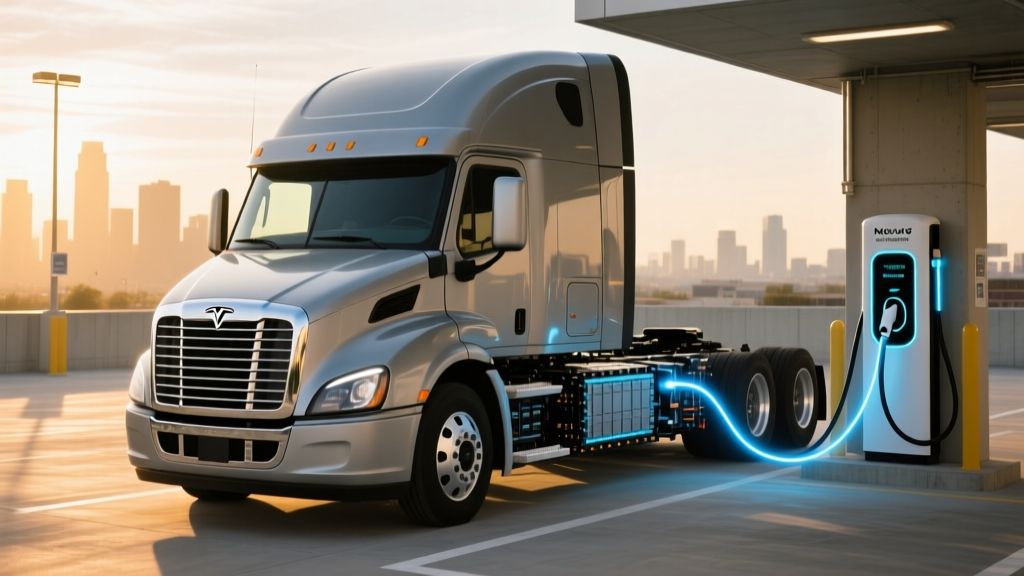
The 2006 Grand Prix GT Supercharged averages about 18 mpg city / 28 mpg highway per fueleconomy.gov. With a 17.5-gallon tank, that's roughly 315–490 miles between fill-ups, and a fill-up takes five minutes. An EV flips that script: you "refuel" mostly at home while you sleep, and the occasional road-trip DC fast charge takes 18–40 minutes depending on the vehicle's charge curve and the station's peak kW output.
The critical concept to internalize before buying any charger or EV: kW (kilowatts) measures power — how fast energy flows into the battery, like water pressure from a hose. kWh (kilowatt-hours) measures energy — the total amount stored, like gallons in a tank. A 75 kWh battery charged at 11.5 kW (a typical Level 2 home charger) takes roughly 6.5 hours from empty to full. That same battery on a 150 kW DC fast charger can go from 10% to 80% in about 25–30 minutes, though charging speed tapers significantly above 80% to protect battery health.
Charging Levels Explained: Speeds, Power, and Real-World Range Added
Every EV owner interacts with three charging tiers. Here's how they stack up in power output and practical range recovery:
| Level | Voltage | Power (kW) | Miles of Range Added Per Hour | Best Use Case |
|---|---|---|---|---|
| Level 1 | 120V AC | 1.0–1.4 kW | 3–5 mi/hr | Overnight top-offs, PHEVs, emergency backup |
| Level 2 | 240V AC | 7.2–19.2 kW | 25–75 mi/hr | Daily home charging, workplace, public destinations |
| DC Fast Charge | 400–800V DC | 50–350 kW | 150–1,000+ mi/hr (peak) | Road trips, highway corridors, rapid top-ups |
A few real-world charging time examples for common 2026 EV battery sizes on Level 2 (assuming an 11.5 kW / 48-amp home charger):
- Tesla Model Y (75 kWh usable, NMC): 10–80% in approximately 4.5 hours at home; 10–80% in ~18 minutes on a 250 kW V4 Supercharger (peak rate, tapering above 60%).
- Hyundai Ioniq 5 (77.4 kWh usable, NMC): 10–80% in roughly 5 hours on Level 2; 10–80% in ~18 minutes on a 350 kW Electrify America station thanks to its 800V architecture.
- Ford F-150 Lightning Extended Range (131 kWh usable, NMC): 10–80% in about 9 hours on Level 2 at 11.5 kW; 15–80% in ~41 minutes at a 150 kW DC charger.
- Chevrolet Equinox EV (85 kWh usable, NMC): 10–80% in roughly 5.5 hours on Level 2; 10–80% in ~30 minutes on a 150 kW DC fast charger.
Home Level 2 Charger Installation: Electrical Requirements and Costs
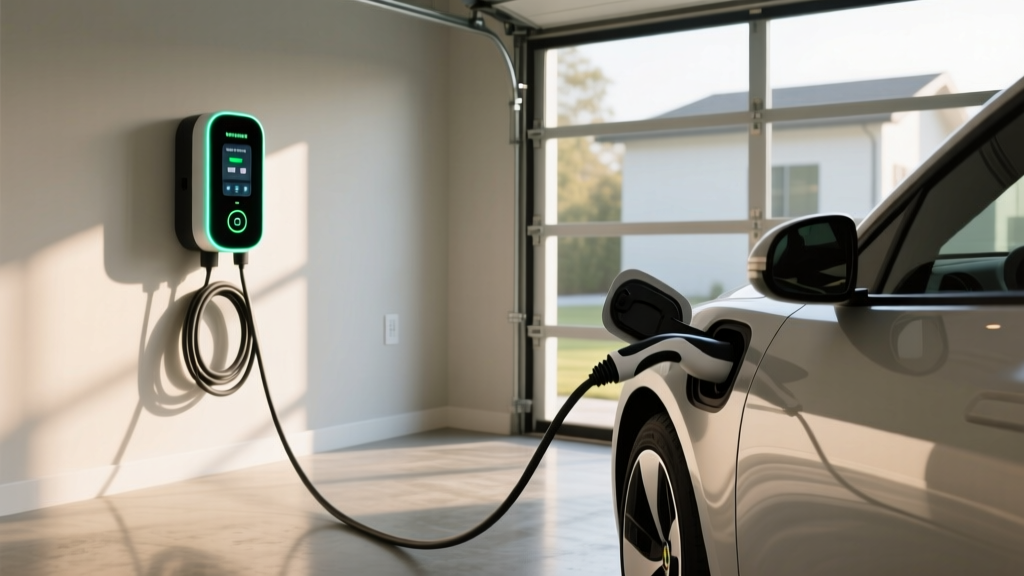
This is where your home's electrical infrastructure matters as much as the car. A proper Level 2 home charger requires a dedicated 240-volt circuit — the same type of outlet your electric dryer or oven uses. The most common residential setup is a NEMA 14-50 outlet on a 50-amp breaker, which safely delivers up to 40 amps (9.6 kW) continuous to the EV, per the National Electrical Code's 80% rule for continuous loads.
Here's the honest cost breakdown, because vague "it costs a few hundred dollars" estimates don't help anyone budget:
| Component | Typical Cost Range | Notes |
|---|---|---|
| Level 2 Charger (hardware) | $350–$750 | Smart Wi-Fi chargers (ChargePoint, Emporia, Wallbox) |
| Electrician labor | $500–$2,000 | Depends on run length from panel to garage/carport |
| Electrical permit | $50–$200 | Required in most jurisdictions; inspection included |
| Panel upgrade (if needed) | $1,500–$4,000 | Upgrading from 100A to 200A service for older homes |
| Conduit/wiring materials | $100–$500 | Varies by distance and whether conduit is exposed |
| Total (no panel upgrade) | $900–$3,450 | Most homes with 200A service and short runs |
| Total (with panel upgrade) | $2,400–$7,450 | Common in homes built before 1990 with 100A panels |
Installation Checklist: What Your Electrician Will Verify
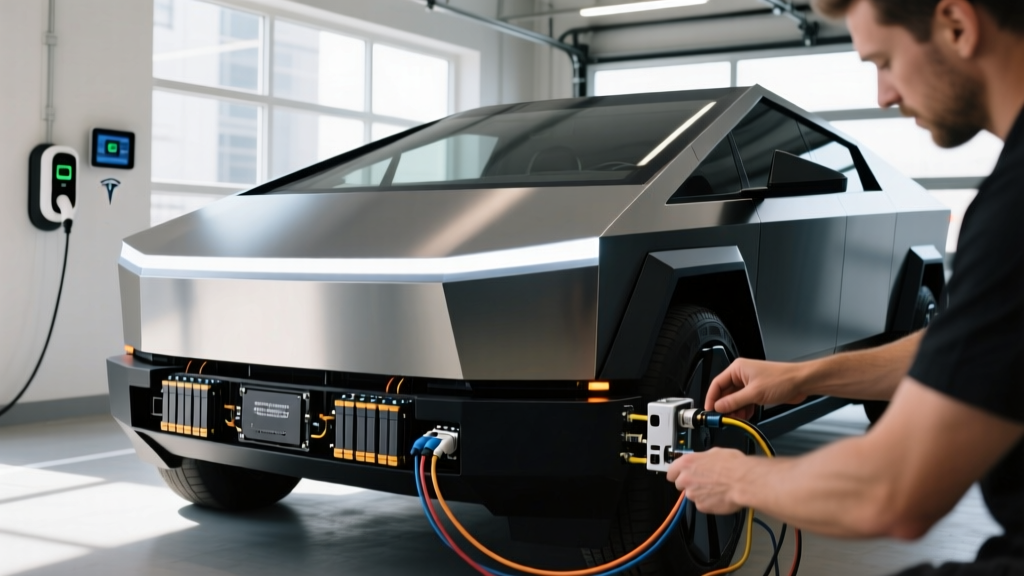
- Panel capacity: Available amperage after accounting for existing loads (NEC Article 220 load calculation).
- Dedicated circuit: EV charger must have its own breaker — never shared with other appliances.
- GFCI protection: Required for outdoor outlets per NEC 2020/2023; some hardwired installations may exempt this depending on local code.
- Wire gauge: 6 AWG copper for 50-amp circuits; 4 AWG for 60-amp circuits (common for 48-amp continuous chargers).
- Outdoor rating: If your charger is outdoors, both the outlet cover and charger unit must carry a NEMA 4 (weather-resistant) rating.
- Permit and inspection: Most municipalities require a permit and final inspection. Skip this and you risk voiding homeowner's insurance coverage for electrical fires.
Connector Compatibility: NACS, CCS1, and CHAdeMO in 2026
The connector landscape has consolidated dramatically. As of 2026, the North American Charging Standard (NACS) — originally Tesla's proprietary connector — is the dominant plug for new EVs. Ford, GM, Rivian, Volvo, Polestar, Hyundai, and others have adopted NACS for their 2025–2026 models. The CCS1 (Combined Charging System) connector is still found on older models and some current vehicles from Stellantis and Volkswagen-group brands. CHAdeMO is effectively legacy, surviving mainly on the Nissan Leaf, which remains one of the last holdouts.
| Connector | Brands Using It (2026) | DC Fast Charge Availability |
|---|---|---|
| NACS (Tesla-style) | Tesla, Ford, GM, Rivian, Hyundai, Kia, Volvo, Polestar, BMW, Mercedes | Tesla Superchargers (17,000+ stalls in US), Electrify America (select), EVgo |
| CCS1 | Volkswagen, Audi, Porsche (Taycan), some Stellantis models, Honda Prologue | Electrify America, EVgo, ChargePoint DC, Ionity (EU) |
| CHAdeMO | Nissan Leaf (legacy) | Declining — many stations removing CHAdeMO cables |
Adapter needs: If you own a CCS1-equipped EV and want access to Tesla Superchargers (now open to non-Tesla vehicles at many locations), you'll need a CCS-to-NACS adapter. Tesla sells one for ~$250, and third-party options from Lectron and A2Z are available for $150–$200. Conversely, NACS-equipped vehicles can use CCS stations with a NACS-to-CCS adapter. Always verify your adapter is rated for the maximum kW your vehicle can accept — a 150 kW-rated adapter on a 350 kW-capable car will bottleneck your charging speed.
Cost to Charge: Home vs. Public vs. Gas — The Per-Mile Breakdown
This is where the math gets satisfying, especially coming from a supercharged V6 that demands premium fuel. The 2006 Grand Prix GT Supercharged requires 91+ octane and averages about 22 mpg combined. At $4.00/gallon for premium (a reasonable 2026 national average), that's roughly $0.182 per mile in fuel alone.
| Scenario | Rate | Cost Per Mile (at 3 mi/kWh efficiency) |
|---|---|---|
| Home Level 2 — off-peak utility rate | $0.08–$0.12/kWh | $0.027–$0.040 |
| Home Level 2 — standard residential rate | $0.13–$0.18/kWh | $0.043–$0.060 |
| Public Level 2 (workplace, shopping) | $0.20–$0.35/kWh | $0.067–$0.117 |
| DC Fast Charge (Electrify America, EVgo) | $0.35–$0.55/kWh | $0.117–$0.183 |
| Tesla Supercharger (varies by location/time) | $0.25–$0.40/kWh | $0.083–$0.133 |
| 2006 Grand Prix GT SC (premium gas, 22 mpg) | $4.00/gallon | $0.182 |
The takeaway: home charging at off-peak rates saves roughly 75–85% per mile compared to premium gas. Even frequent DC fast charging on road trips roughly matches or slightly undercuts the Grand Prix's fuel cost — and you're never paying for oil changes, spark plugs, supercharger belt replacements, or transmission fluid.
For a driver covering 12,000 miles per year with 80% home charging at $0.14/kWh and 20% DC fast charging at $0.45/kWh, annual "fuel" cost comes to approximately $648. The Grand Prix GT Supercharged would spend about $2,182 on premium gas for the same mileage. That's a $1,534 annual fuel savings before factoring in reduced maintenance.
Recommended Home Level 2 Chargers for 2026
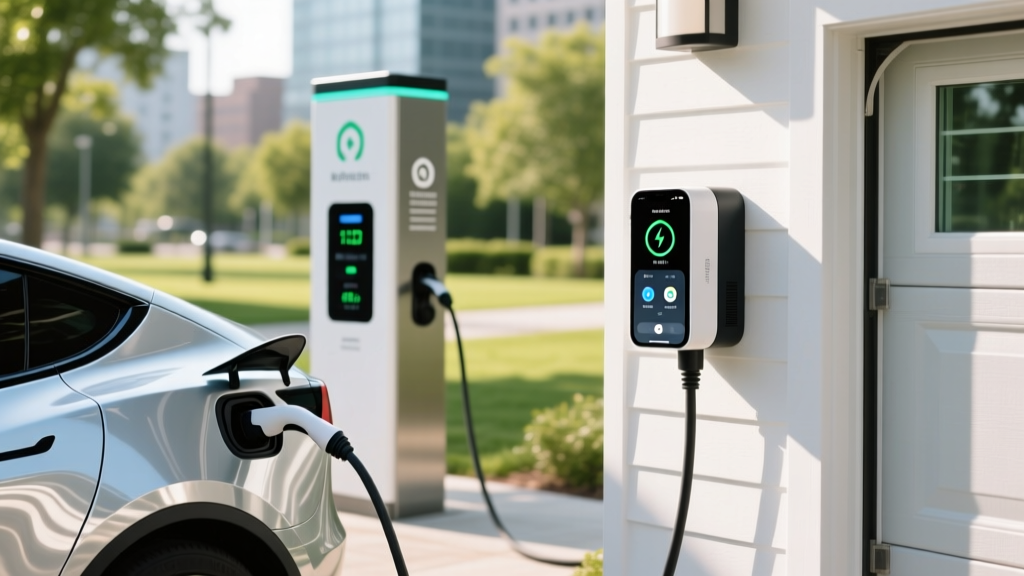
Not all Level 2 chargers are equal. Here are three proven units that cover different budgets and feature needs, all hardwired or NEMA 14-50 compatible:
Emporia Level 2 EV Charger — Best Value
- Power output: 48 amps (11.5 kW) on a 60-amp circuit
- Connector: NACS (J1772 adapter included)
- Cable length: 24 feet
- Smart features: Wi-Fi, energy monitoring via Emporia VUE integration, scheduled charging, solar-aware charging
- Price: ~$399
- Best for: Budget-conscious buyers who want full smart features and load management
ChargePoint Home Flex — Most Versatile
- Power output: Adjustable 16–50 amps (3.8–12 kW), configurable to match your circuit
- Connector: NACS or J1772 (select at purchase)
- Cable length: 23 feet
- Smart features: Wi-Fi, Alexa/Google Home integration, ChargePoint app scheduling, flexible amperage for older panels
- Price: ~$599
- Best for: Homes with limited panel capacity — you can dial it down to 32 amps (7.7 kW) on a 40-amp breaker
Tesla Wall Connector — Best for NACS Vehicles
- Power output: 48 amps (11.5 kW) on a 60-amp circuit
- Connector: NACS native (no adapter needed for Tesla, Ford, GM, Rivian, Hyundai NACS models)
- Cable length: 24 feet
- Smart features: Wi-Fi, over-the-air updates, power sharing (link two units on one circuit), load management
- Price: ~$475
- Best for: Households with one or more NACS-equipped EVs; seamless Tesla ecosystem integration
Charging on the Road: Public Networks and Practical Tips
For road trips — say, a 600-mile drive that your Grand Prix GT Supercharged would handle with one gas stop — plan for one or two DC fast-charge stops of 20–30 minutes each. The major US networks in 2026:
- Tesla Supercharger network: 17,000+ stalls in the US, now open to NACS-equipped non-Tesla EVs. Generally the most reliable network with the fewest broken stalls. Use the Tesla app or your vehicle's native navigation for routing.
- Electrify America: 4,000+ DC fast chargers, many at 350 kW. CCS1 and NACS connectors available. Membership plan ($4/month) reduces per-kWh rates significantly.
- EVgo: 3,500+ DC fast chargers. Mixed connector availability — check the app before you drive to a station.
- ChargePoint: Largest network by total ports (Level 2 and DC), but DC fast coverage is thinner than EA or Tesla.
Pro tip for charge-curve efficiency: Most EVs charge fastest between 10–60% state of charge (SoC), then taper significantly. Charging from 10–80% might take 25 minutes, but 80–100% can add another 30+ minutes. On road trips, charge to 80% and drive on — it's faster overall than waiting for a full battery.
Preconditioning matters: If your EV supports it (Tesla, Hyundai/Kia E-GMP, Ford, GM Ultium all do), navigate to your next DC fast charger using the car's built-in nav. This triggers battery preconditioning — warming the pack to optimal temperature for maximum charge acceptance. Skipping preconditioning, especially in cold weather, can cut your peak charge rate by 30–50%.
Federal Tax Credits and Incentives for Home Charging
The IRS Residential Clean Energy Credit (IRC §25D) covers 30% of the cost of home EV charging equipment and installation, up to $1,000, for equipment placed in service through 2032. This is separate from the §30D New Clean Vehicle Credit for the car itself (up to $7,500, subject to MSRP caps, buyer income limits, and battery-sourcing requirements).
Additionally, the Alternative Fuel Infrastructure Tax Credit (IRC §30C) was revived under the Inflation Reduction Act and provides up to 30% of installation costs (max $1,000 for residential) for charging equipment installed in qualifying census tracts. Check your address against the IRS-designated tract list — many suburban and rural areas qualify.
Many utilities also offer rebates of $250–$1,000 for purchasing a smart Level 2 charger and enrolling in a time-of-use rate plan. Contact your local utility before buying equipment.
Frequently Asked Questions
How much does it cost to install a home EV charger?
A typical Level 2 home charger installation costs $900–$3,450 if your electrical panel has sufficient capacity (200-amp service with available breaker slots). If you need a panel upgrade from 100A to 200A — common in homes built before 1990 — total costs range from $2,400 to $7,450. Always get a load calculation from a licensed electrician before committing.
How fast will each charging level add range?
Level 1 (120V standard outlet) adds 3–5 miles of range per hour — adequate for plug-in hybrids with small batteries but too slow for daily BEV use. Level 2 (240V) adds 25–75 miles per hour depending on amperage, easily replenishing a full day's driving overnight. DC fast charging adds 150–1,000+ miles per hour at peak rates, enabling 10–80% charges in 18–40 minutes depending on the vehicle.
Which connector or charger is compatible with my EV?
For 2026 models, most new EVs from Tesla, Ford, GM, Hyundai, Kia, Rivian, Volvo, and BMW use the NACS connector. Volkswagen-group vehicles and some Stellantis models still use CCS1. The Nissan Leaf uses CHAdeMO. Check your vehicle's charge port or owner's manual, and purchase a home charger with the matching connector. Adapters are available for cross-network DC fast charging.
How much does charging cost per mile vs gas?
Home charging at typical residential rates ($0.13–$0.18/kWh) costs $0.04–$0.06 per mile for an EV averaging 3 miles per kWh. Premium gasoline at $4.00/gallon in a 22-mpg vehicle like the 2006 Grand Prix GT Supercharged costs $0.18 per mile. Even the most expensive DC fast charging ($0.45–$0.55/kWh) comes in at $0.15–$0.18 per mile — roughly matching gas but with zero tailpipe emissions and no oil changes.
What electrical upgrades might I need?
The most common upgrade is a panel replacement from 100-amp to 200-amp service ($1,500–$4,000) in older homes. You'll also need a dedicated 50- or 60-amp breaker, properly gauged wiring (6 AWG or 4 AWG copper), and potentially a GFCI breaker if installing an outdoor outlet. Smart load-management devices can sometimes avoid a panel upgrade by dynamically sharing capacity between the EV charger and other high-draw appliances.