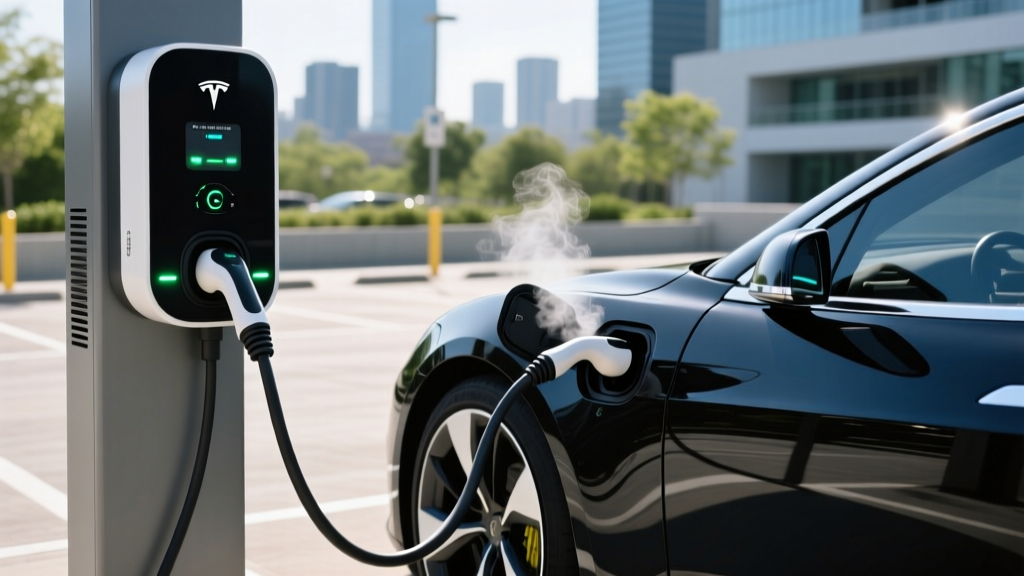
If you've ever pulled into a hotel after a 300-mile highway run only to find the EV chargers broken, occupied by a gas car, or limited to a 120V wall outlet, you understand why hotel charging infrastructure matters. As of early 2026, the major hotel parent brands — Marriott International, Hilton Worldwide, IHG Hotels & Resorts, Hyatt, and Wyndham — have taken very different approaches to on-property EV charging. Some have deployed thousands of Level 2 stations; others lean on partnerships with networks like ChargePoint and EVgo. This guide breaks down which brands lead, what charging speeds you'll actually find, and how to plan overnight stays without range anxiety.
Why Hotel Charging Matters for EV Road Trips
Destination charging fills a specific niche in the EV ecosystem. Unlike DC fast charging (which gets you back on the road in 20–30 minutes), hotel charging is about replenishing while you sleep. A typical overnight stay of 8–10 hours on a Level 2 charger can fully refill even a large 100+ kWh battery pack — meaning you wake up to a full "tank" every morning of your trip.
But not all hotel chargers are created equal. The difference between a 3.3 kW trickle and a 19.2 kW Level 2 unit can mean waking up to 60% or 100% state of charge (SoC). And the difference between a well-maintained network and an afterthought installation can mean the difference between a stress-free morning and a frantic search for a public charger at 6 AM.
Charging Levels Explained: What You'll Find at Hotels
Before comparing brands, let's establish what each charging level delivers. This is critical because hotel listings often say "EV charging available" without specifying the type.
| Level | Voltage | Power (kW) | Miles of Range Added per Hour | Typical Hotel Availability |
|---|---|---|---|---|
| Level 1 | 120V AC | 1.2–1.9 kW | 3–5 miles | Rare (standard outlet); avoid relying on this |
| Level 2 | 208–240V AC | 3.3–19.2 kW | 12–70 miles | Most common hotel offering; 6.6–11.5 kW typical |
| DC Fast Charge | 400–800V DC | 50–350 kW | 150–1,000+ miles | Uncommon at hotels; found at select highway-adjacent properties |
kW vs kWh — the critical distinction: kW (kilowatts) measures the rate of charging — like water pressure from a hose. kWh (kilowatt-hours) measures the total energy stored in your battery — like the size of the bucket. A 7.2 kW Level 2 charger running for 10 hours delivers roughly 72 kWh of energy, enough to fully charge a Tesla Model Y Long Range (75 kWh usable battery) or bring a Ford F-150 Lightning (98 kWh standard / 131 kWh extended) to about 75%.
Ranking the Best Hotel Parent Brands With EV Charging
Here's how the major hotel parent brands stack up on charging infrastructure, network partnerships, and reliability as of 2026.
1. Marriott International (Bonvoy) — Widest Network, Uneven Quality
Marriott operates over 8,500 properties across 30+ brands (Courtyard, Residence Inn, Ritz-Carlton, Westin, etc.) and has the largest absolute number of EV charging stations in the hotel industry. Through partnerships with ChargePoint and EVgo, Marriott has installed Level 2 chargers at thousands of North American locations, with select full-service properties adding DC fast chargers.
Typical setup: 2–8 Level 2 ports per property, mostly 6.6–7.2 kW (J1772 connector), with a growing number of 11.5–19.2 kW stations at newer builds. DC fast chargers (50–150 kW) appear at roughly 5% of locations, primarily highway-adjacent Courtyard and Fairfield properties.
Reality check: Because Marriott's portfolio ranges from a 50-room Fairfield Inn to a 500-room Ritz-Carlton, charger count and speed vary wildly. Always verify on the ChargePoint or PlugShare app before booking. Marriott's Bonvoy app does not consistently surface charger status.
2. Hilton Worldwide — Smartest Integration, ChargePoint Partnership
Hilton's partnership with ChargePoint, announced in 2022 and expanded through 2025, targets 20,000 Level 2 charging ports across 2,000+ Hilton properties (Hampton Inn, Hilton Garden Inn, DoubleTree, Conrad, etc.) by end of 2026. This is the most structured rollout in the industry.
Typical setup: 4–20 ChargePoint Level 2 ports, predominantly 7.2 kW (240V/30A) with NEMA 14-50 or hardwired J1772 connectors. Select Hilton Garden Inn and DoubleTree locations along major interstate corridors have added 125–175 kW DC fast chargers in parking areas.
Standout feature: Hilton's app and website now display charger availability and status at many properties, pulling data directly from ChargePoint's network API. You can filter Hilton searches by "EV charging" — a feature Marriott still lacks in its native app.
3. IHG Hotels & Resorts — Budget-Friendly, Growing Fast
IHG (Holiday Inn, Staybridge Suites, Candlewood Suites, Kimpton, InterContinental) has taken a franchisee-driven approach, with individual property owners deciding whether to install chargers. This means coverage is inconsistent but growing, particularly at Holiday Inn Express locations along I-80, I-40, and I-10 corridors.
Typical setup: 2–4 Level 2 ports at participating properties, usually 6.6–7.2 kW. DC fast charging is rare. Many IHG chargers are Blink or EVgo network stations.
4. Hyatt — Premium Focus, Sparse Coverage
Hyatt (Hyatt Place, Hyatt House, Grand Hyatt, Park Hyatt) has the smallest charging footprint among major brands but tends to install higher-quality equipment at the properties that do offer it. Expect 7.2–19.2 kW Level 2 at select urban and resort locations.
5. Wyndham Hotels & Resorts — Largest Property Count, Weakest Charging
Wyndham operates 9,000+ properties (Days Inn, Super 8, Ramada, La Quinta) but has the lowest percentage of properties with EV charging. When chargers exist, they're typically single 6.6 kW Level 2 units — adequate for overnight top-ups at low-occupancy properties but risky to rely on during peak travel seasons.
Connector Compatibility: Will Your EV Plug In at the Hotel?
Hotel chargers overwhelmingly use the J1772 connector (the standard Level 2 plug for all non-Tesla EVs sold before 2025). Here's what you need to know based on your vehicle:
| EV Brand/Model | Native Connector | Hotel J1772 Compatible? | Adapter Needed? |
|---|---|---|---|
| Tesla (all models, pre-2026) | NACS (Tesla proprietary) | Yes, with J1772-to-NACS adapter (included with most Teslas) | J1772-to-NACS adapter |
| Tesla (2026+ models) | NACS | Yes, same adapter | J1772-to-NACS adapter |
| Ford (Mach-E, F-150 Lightning 2025+) | NACS | Yes, with adapter | J1772-to-NACS adapter |
| Hyundai/Kia (Ioniq 5/6, EV6/9, 2025+) | NACS (2025+ models) or CCS1 (pre-2025) | Yes (NACS models need adapter; CCS1 models plug in directly) | Varies by model year |
| Chevrolet (Equinox EV, Blazer EV, Silverado EV) | NACS (2025+) | Yes, with adapter | J1772-to-NACS adapter |
| BMW, VW, Rivian (pre-2025) | CCS1 | Yes — J1772 is the top half of CCS1 | None |
| Nissan Leaf (all years) | CHAdeMO (DC) + J1772 (L2) | Yes — native J1772 for Level 2 | None |
Key takeaway for 2026: The industry-wide shift to NACS (North American Charging Standard, originally Tesla's connector) means newer EVs from Ford, GM, Hyundai, Kia, and others now ship with NACS ports. Hotel J1772 chargers will still work — but you'll need a J1772-to-NACS adapter. Most automakers include one; if yours didn't, a quality adapter from Tesla or Lectron costs $100–$180.
Overnight Charging Math: Will 8 Hours Be Enough?
Let's run the numbers for common EV battery sizes on typical hotel Level 2 chargers. These calculations assume charging from 10% to 80% SoC (the practical range most drivers target):
| Vehicle | Usable Battery (kWh) | 10→80% Energy Needed | Time at 7.2 kW | Time at 11.5 kW | Time at 19.2 kW |
|---|---|---|---|---|---|
| Tesla Model Y Long Range | 75 kWh | 52.5 kWh | ~7.3 hours | ~4.6 hours | ~2.7 hours |
| Hyundai Ioniq 5 (Long Range) | 77.4 kWh | 54.2 kWh | ~7.5 hours | ~4.7 hours | ~2.8 hours |
| Ford F-150 Lightning (Std Range) | 98 kWh | 68.6 kWh | ~9.5 hours | ~6.0 hours | ~3.6 hours |
| Chevrolet Silverado EV (Max Range) | 200 kWh | 140 kWh | ~19.4 hours | ~12.2 hours | ~7.3 hours |
Real-world note: Charging isn't perfectly linear. Level 2 charging holds a relatively steady rate through most of the SoC range, but you'll see slight tapering above 85–90%. For overnight hotel stays, the practical strategy is to plug in upon arrival and let the car manage the charge — most EVs allow you to set a target SoC (80% or 90%) and a departure time for preconditioning.
Cost to Charge at Hotels vs. Gas
Hotel charging economics vary enormously. Some properties offer free Level 2 charging as a guest amenity; others pass through network pricing or charge a flat overnight fee.
| Scenario | Cost per kWh | Cost to Add 200 Miles (avg EV at 3.5 mi/kWh) | Equivalent Gas Cost (28 MPG avg, $3.30/gal) |
|---|---|---|---|
| Free hotel Level 2 (included with stay) | $0.00 | $0.00 | $23.57 |
| Hotel Level 2 with pass-through pricing | $0.25–$0.40 | $14.29–$22.86 | $23.57 |
| Public Level 2 (nearby ChargePoint/EVgo) | $0.30–$0.55 | $17.14–$31.43 | $23.57 |
| DC Fast Charge (50–150 kW public) | $0.35–$0.60 | $20.00–$34.29 | $23.57 |
| Home Level 2 (national avg electricity) | $0.12–$0.18 | $6.86–$10.29 | $23.57 |
Bottom line: Free hotel charging saves $20–$35 per night versus gas. Even paid hotel Level 2 is generally cost-competitive with gas on a per-mile basis. DC fast charging at public stations is the most expensive option — sometimes exceeding gasoline cost per mile — which is precisely why overnight Level 2 at your hotel is the smarter road-trip strategy.
Planning Your EV Hotel Stay: A Practical Checklist
Before booking, run through these steps to avoid charging surprises:
- Search on PlugShare or ChargePoint first. Filter for your destination, check the connector type (J1772 vs NACS), verify the power output (kW), and read recent user reviews for reliability.
- Confirm with the hotel directly. Call the front desk and ask: How many chargers? Are they guest-only or public? Is there a fee? Are they currently operational?
- Have a backup plan. Identify the nearest DC fast charger (Tesla Supercharger, Electrify America, EVgo) within 10–15 minutes of the hotel in case the on-property chargers are down or occupied.
- Bring your adapter. If you drive a NACS-equipped EV (2025+ Tesla, Ford, GM, Hyundai/Kia), pack your J1772-to-NACS adapter. It's the EV equivalent of a international plug adapter — essential for travel.
- Set your car's charge limit. Most EVs let you cap charging at 80% or 90% and schedule departure preconditioning. This protects battery health and ensures a warm battery (and cabin) in cold weather.
What If You Want to Install a Home Charger Instead?
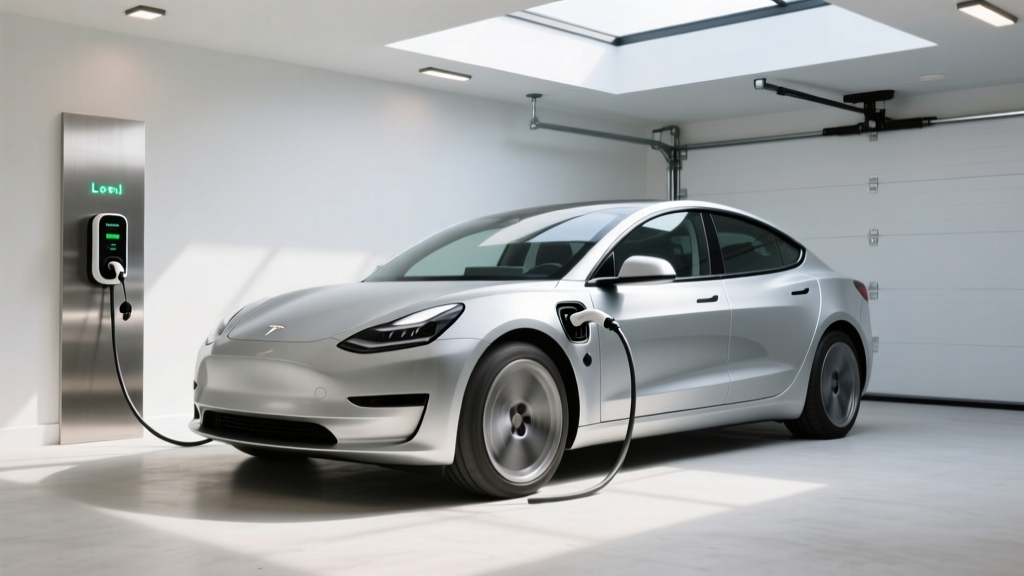
If you're reading this because hotel charging frustrations have pushed you toward installing a dedicated home Level 2 charger, here's what that project actually involves and costs in 2026.
Electrical Requirements
A home Level 2 charger requires a dedicated 240-volt circuit, similar to what powers an electric dryer or oven. Common configurations:
- 240V / 40A circuit → delivers up to 9.6 kW (most popular; covers 90% of EVs)
- 240V / 50A circuit → delivers up to 11.5 kW (optimal for large-battery EVs like the F-150 Lightning or Silverado EV)
- 240V / 60A circuit → delivers up to 14.4 kW (supported by some vehicles with dual onboard chargers)
Your electrical panel must have sufficient spare capacity. Most modern 200A panels can accommodate a 40–50A EV circuit. Older 100A panels may require an upgrade ($1,500–$3,500) — a cost many buyers overlook.
Installation Cost Breakdown
| Component | Cost Range | Notes |
|---|---|---|
| Level 2 charger hardware (smart Wi-Fi enabled) | $300–$700 | ChargePoint Home Flex, Emporia Vue, Wallbox Pulsar Plus |
| Electrician labor (run 240V line, mount unit) | $500–$2,000 | Depends on run distance from panel to garage/driveway |
| Electrical permit | $50–$200 | Required in most jurisdictions; varies by locality |
| Panel upgrade (if needed, 100A → 200A) | $1,500–$3,500 | Only needed for older homes with insufficient capacity |
| Total (no panel upgrade) | $850–$2,900 | Most homes fall in the $1,200–$1,800 range |
| Total (with panel upgrade) | $2,350–$6,400 | Older homes (pre-1990) more likely to need this |
Safety and Code Considerations
- Dedicated circuit: NEC (National Electrical Code) requires the EV charger to be on its own dedicated circuit — it cannot share with other appliances.
- GFCI protection: 2023 NEC update requires GFCI (Ground Fault Circuit Interrupter) protection for all EV charging outlets. Many smart chargers have built-in GFCI; hardwired units may need a GFCI breaker.
- Outdoor rating: If installing outdoors, ensure the charger carries a NEMA 4 (weather-resistant) rating. Units like the ChargePoint Home Flex and Wallbox Pulsar Plus are rated for outdoor use.
- Qualified electrician: Always use a licensed electrician familiar with EV charger installations. Ask for a load calculation on your panel before committing to a circuit size. Refer to NECA or your local building department for licensed professionals.
Recommended Home Level 2 Chargers
If you're investing in a home charger to avoid relying on hotel infrastructure, these are the top picks for 2026:
| Charger | Max Power Output | Connector | Cable Length | Smart Features | Price (MSRP) |
|---|---|---|---|---|---|
| ChargePoint Home Flex | 12 kW (50A) adjustable | J1772 (NACS adapter available) | 23 ft | Wi-Fi, app scheduling, Alexa, load sharing | $549 |
| Emporia Level 2 EV Charger | 11.5 kW (48A) | J1772 | 24 ft | Wi-Fi, energy monitoring, solar integration | $399 |
| Wallbox Pulsar Plus | 11.5 kW (48A) | J1772 | 25 ft | Wi-Fi, Bluetooth, app control, outdoor rated | $599 |
| Tesla Wall Connector | 11.5 kW (48A) | NACS (native Tesla) | 24 ft | Wi-Fi, OTA updates, power sharing, load management | $425 |
| Grizzl-E Smart | 10 kW (40A) | J1772 | 24 ft | Wi-Fi, OCPP, extreme cold rated (-40°F) | $549 |
Our pick for most buyers: The ChargePoint Home Flex at $549 offers adjustable amperage (16A–50A), letting you match the circuit your electrician installs without buying a different unit. The 23-foot cable reaches most garage configurations, and the ChargePoint app's scheduling feature lets you charge during off-peak utility hours (often $0.08–$0.12/kWh vs. $0.25–$0.40 peak).
Frequently Asked Questions
How much does it cost to install a home EV charger?
A typical home Level 2 installation costs $850–$2,900 total (equipment + electrician + permit) if your electrical panel has sufficient capacity. Homes needing a panel upgrade from 100A to 200A should budget $2,350–$6,400. The charger hardware itself runs $300–$700; electrician labor is the largest variable at $500–$2,000 depending on the distance from your panel to the charging location.
How fast will each charging level add range?
Level 1 (120V) adds roughly 3–5 miles of range per hour — essentially useless for daily driving but fine for plug-in hybrids with small batteries. Level 2 (240V) adds 12–70 miles per hour depending on amperage (3.3–19.2 kW). DC Fast Charging at 50–350 kW can add 150–1,000+ miles per hour, but actual speed depends on your vehicle's charge acceptance rate and the charging curve taper above 80% SoC.
Which connector or charger is compatible with my EV?
For Level 2 charging (hotels and home), the J1772 connector is the universal standard. All CCS1-equipped EVs accept J1772 natively (it's the top half of the CCS plug). NACS-equipped vehicles (all Teslas, plus 2025+ Ford, GM, Hyundai, Kia models) need a J1772-to-NACS adapter, which most automakers include. For DC fast charging, the connector depends on your vehicle: NACS (Tesla Superchargers, increasingly open to other brands), CCS1 (Electrify America, most public networks), or CHAdeMO (Nissan Leaf only, being phased out).
How much does EV charging cost per mile vs. gas?
At home on average US electricity rates ($0.16/kWh), an efficient EV getting 3.5 miles per kWh costs roughly $0.046 per mile — about 60–70% less than a 28 MPG gas car at $3.30/gallon ($0.118/mile). Public Level 2 at $0.35/kWh costs ~$0.10/mile. DC fast charging at $0.48/kWh costs ~$0.137/mile — slightly more than gas. Hotel charging that's included free with your stay is the cheapest "fuel" you'll find on a road trip.
What electrical upgrades might I need for a home charger?
The most common upgrade is adding a 240V dedicated circuit from your existing panel — straightforward in homes with 200A service and spare breaker slots. Older homes with 100A panels or fully loaded breaker boxes may need a panel upgrade ($1,500–$3,500). Some utilities offer time-of-use (TOU) rate plans that pair with smart chargers for off-peak savings. A licensed electrician should perform a load calculation before you commit to a charger amperage. Check ENERGY STAR's certified EV charger list for utility-rebate-eligible equipment.
Are hotel EV chargers reliable enough to plan a road trip around?
Hotel chargers are generally reliable but should never be your only plan. Network uptime for ChargePoint and EVgo Level 2 stations averages 90–95%, meaning a 1-in-10 chance a specific port may be offline. Always have a backup DC fast charger identified within 10–15 minutes of your hotel. Properties with 4+ ports are more reliable than those with just 1–2, since one offline unit won't strand you.
The Bottom Line for EV Travelers
Hilton currently offers the best-integrated hotel EV charging experience in 2026, with transparent in-app availability data and a rapidly expanding ChargePoint partnership. Marriott has the largest raw charger count but inconsistent quality across its massive portfolio. IHG is the sleeper pick for budget travelers along major interstates.
Regardless of brand, the winning strategy is the same: book properties with confirmed Level 2 charging (7.2 kW minimum), bring your J1772 or NACS adapter, and always map a backup DC fast charger. For daily driving at home, a $1,200–$1,800 Level 2 installation pays for itself within 12–18 months in fuel savings versus gasoline — and makes every morning feel like waking up at a hotel with free charging.