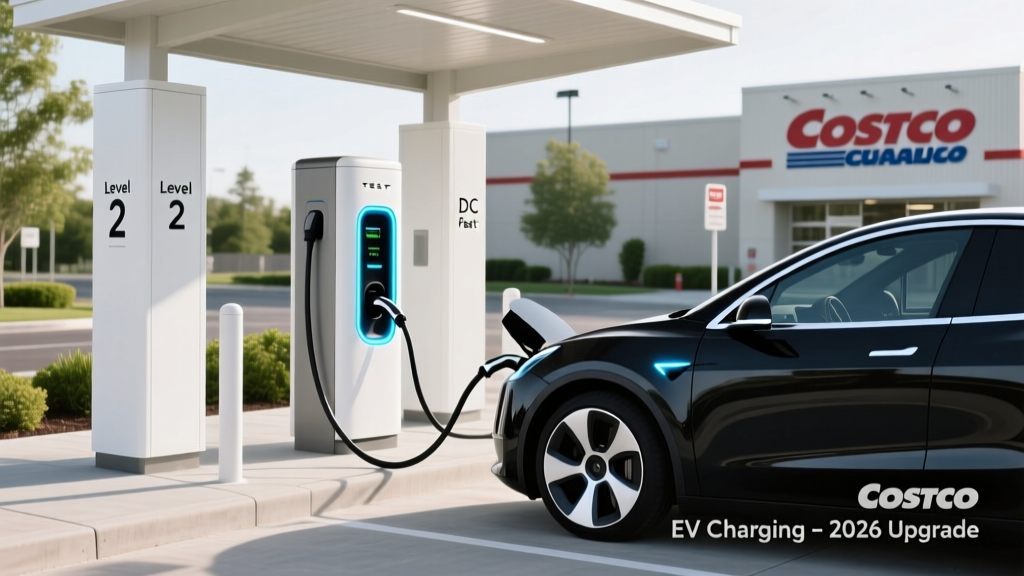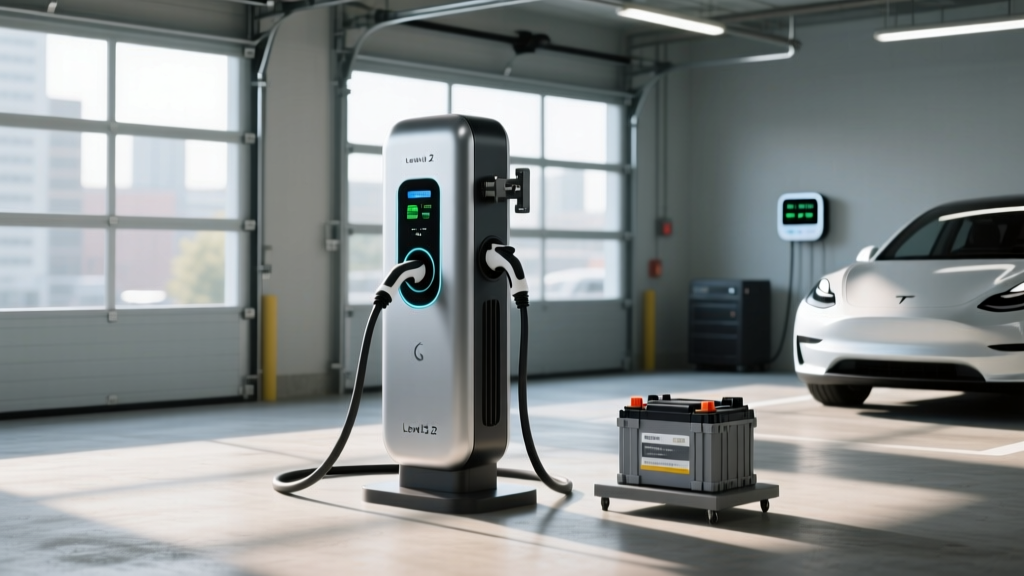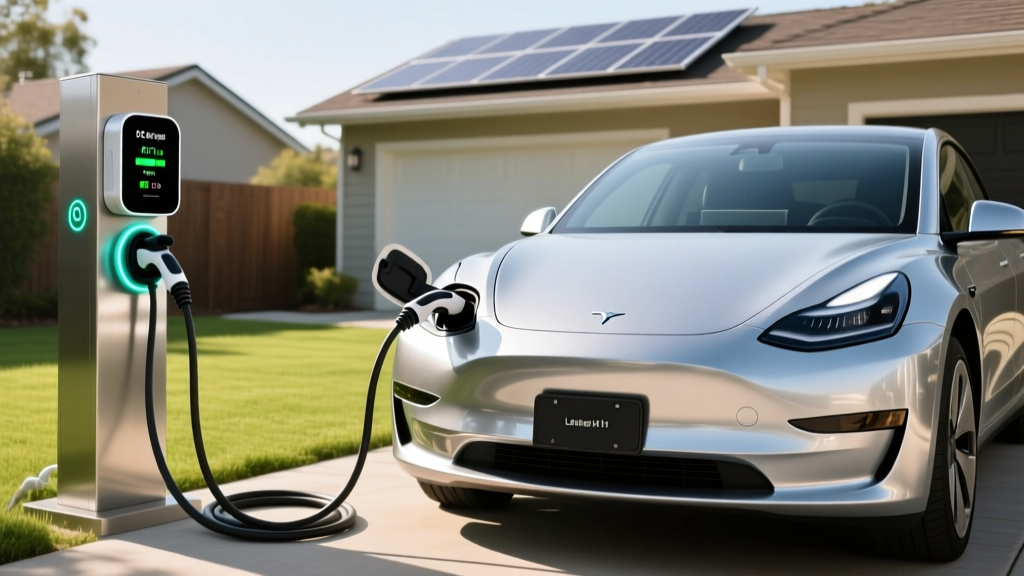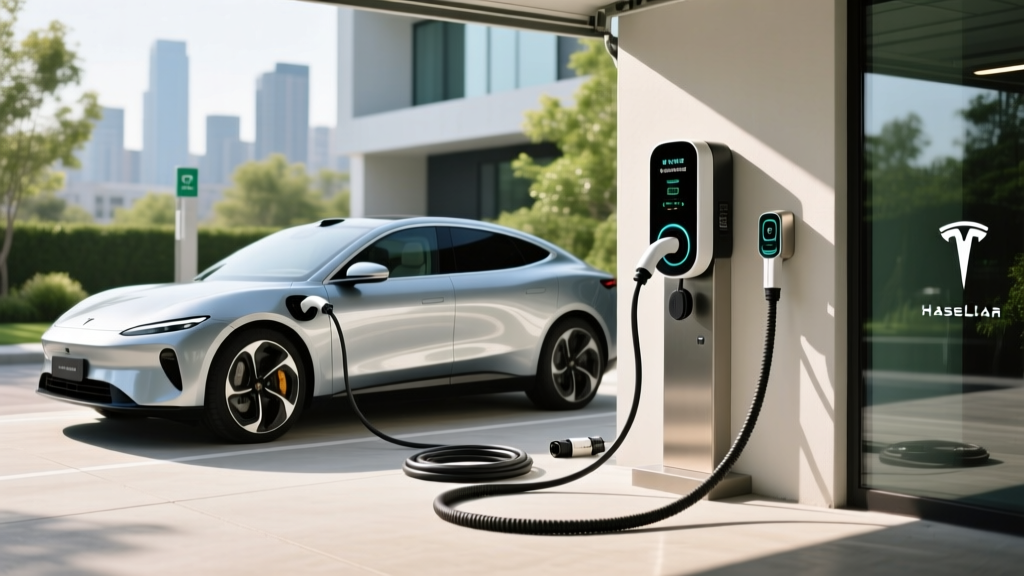
Why the Supercharging Network Changes the Public-Charging Equation
For years, Tesla's Supercharging network was the walled garden of EV fast charging — reliable, abundant, and exclusive. As of 2026, that wall has largely come down. Through the North American Charging Standard (NACS) adoption and Tesla's open-access rollout, drivers of Ford, Rivian, Hyundai, Kia, GM, and other non-Tesla EVs can now plug into thousands of V3 and V4 Superchargers across North America using either a native NACS port or a certified adapter. The result: the most dependable public DC fast-charging network is increasingly available to nearly every EV on the road.
But access is only half the equation. To actually use public fast charging efficiently — and to handle the majority of your charging at home where it's cheapest — you need to understand the interplay of charging levels, connector types, home electrical requirements, and real-world costs. This guide breaks down every variable with exact numbers, so you can budget, spec, and plan without guesswork.
Charging Levels Explained: kW, Speed, and Real-World Times
The single most important distinction in EV charging is between kW (kilowatts), which measures power — the rate at which energy flows — and kWh (kilowatt-hours), which measures energy capacity, the size of your battery. Think of kW as the diameter of a hose and kWh as the size of the bucket. A bigger hose (higher kW) fills the bucket faster, but the bucket size (kWh) determines how far you can drive.
| Level | Voltage / Phase | Power (kW) | Miles of Range Added per Hour | Typical Use Case |
|---|---|---|---|---|
| Level 1 | 120V AC / Single | 1.0–1.9 kW | 3–5 mi/hr | Overnight top-up; PHEV-friendly |
| Level 2 | 240V AC / Single | 3.3–19.2 kW | 12–75 mi/hr | Home daily charging; workplace |
| DC Fast (Level 3) | 400–800V DC | 50–350 kW | 150–1,200 mi/hr (peak) | Road trips; Superchargers & public stations |
A few practical realities those numbers don't show on their own:
- Level 2 at home (most common: 11.5 kW / 48A) adds roughly 35–44 miles of range per hour, enough to fully replenish most EVs overnight in 6–9 hours.
- DC fast charging is not linear. A charger rated at 250 kW will only sustain peak power in the 10–50% state-of-charge (SoC) window. Above 80%, the charge curve tapers sharply to protect the battery — expect the final 10% (80–90%) to take nearly as long as the first 40% (10–50%). This is why manufacturers quote 10–80% times, not 0–100%.
- Cold batteries charge slower. If your EV's battery is below ~60°F and hasn't been preconditioned (warmed via navigation routing to the charger), expect peak DC fast-charge rates to drop 30–50% until thermal management catches up.
Charging Time Reality Check: For a typical 75 kWh battery (e.g., Tesla Model Y, Ford Mustang Mach-E Extended Range), a 10–80% session takes roughly 18–25 minutes at a V3 Supercharger (250 kW peak) under ideal conditions. At a 50 kW CHAdeMO station, the same session takes 65–80 minutes. Plan road trips around the fast charger, not the slow one.
Connector Compatibility: NACS, CCS, CHAdeMO, and Adapter Strategy
The connector landscape has consolidated significantly since 2023, when Ford and GM led the industry-wide shift to NACS. By 2026, virtually every new EV sold in North America ships with a native NACS charge port. Legacy CCS1 vehicles (model years 2020–2024 primarily) remain on the road in large numbers, and CHAdeMO persists on older Nissan Leafs and Mitsubishi Outlander PHEVs.
| Connector | Brands / Models | Supercharger Access | Adapter Needed? |
|---|---|---|---|
| NACS (native) | Tesla (all), Ford (2025+), GM (2025+), Rivian (2025+), Hyundai/Kia (2026+), Volvo/Polestar | Yes — plug directly into V3/V4 Superchargers | No |
| CCS1 | Ford (2021–2024), GM (2022–2024), VW ID.4, Hyundai Ioniq 5 (2022–2025), Kia EV6 (2022–2025), BMW iX | Yes — via OEM-supplied or aftermarket NACS adapter | Yes (NACS-to-CCS1 adapter, typically $200–$300 or included by OEM) |
| CHAdeMO | Nissan Leaf (2011–2025), Mitsubishi Outlander PHEV (older gens) | No — CHAdeMO adapters for Superchargers are not available | N/A — rely on Electrify America, EVgo CHAdeMO stations |
Key adapter note: If you drive a CCS1-equipped EV, confirm that your OEM provides a NACS adapter (Ford and GM shipped them to existing owners; Rivian and others followed). Third-party adapters from companies like Lectron and A2Z are also available, but verify they support DC fast charging at the full rated power — some adapters cap at Level 2 speeds only. When using any adapter at a Supercharger, expect a slight reduction in peak charge rate (typically 5–15%) due to the additional connection resistance.
Home Charger Installation: Electrical Requirements and Real Costs
Home Level 2 charging is where EV ownership economics shine — but installation costs vary enormously depending on your home's electrical panel, the distance from panel to charger location, and local permitting requirements.
What Your Electrician Will Assess
- Panel capacity: A Level 2 charger drawing 48 amps requires a dedicated 60-amp circuit (NEC code requires circuits rated at 125% of continuous load). If your home has a 100-amp or older panel already near capacity, you may need a panel upgrade to 200 amps — a significant added cost.
- Wire run distance: Longer runs from panel to charger location mean heavier-gauge wire (typically 6 AWG copper for 48A/60A circuits) and higher material costs.
- Permitting: Most jurisdictions require an electrical permit and inspection for a new 240V circuit. Costs range from $50 to $300 depending on your municipality.
- Outlet vs. hardwired: A NEMA 14-50 outlet offers portability (you can take the charger when you move), but hardwired installations are often preferred for 48A+ circuits and may be required by some local codes.
| Component | Simple Install (panel nearby, 200A service) | Complex Install (long run or panel upgrade) |
|---|---|---|
| Level 2 Charger Equipment | $400–$700 | $400–$700 |
| Electrician Labor (2–4 hrs simple / 6–10 hrs complex) | $300–$800 | $900–$2,500 |
| Materials (wire, conduit, breaker) | $100–$300 | $300–$800 |
| Permit & Inspection | $50–$200 | $100–$300 |
| Panel Upgrade (if needed: 100A → 200A) | $0 | $1,500–$3,500 |
| Total Estimated Cost | $850–$2,000 | $3,200–$7,800 |
The wide range is real, not a hedge. A homeowner with a modern 200-amp panel and a garage adjacent to the utility room might pay under $1,000 all-in. A 1960s home with a 100-amp panel, requiring an upgrade plus a 60-foot wire run through finished walls to an outdoor carport, can easily exceed $5,000. Always get at least two quotes from licensed electricians and confirm they have specific EV charger installation experience — the NEC continuous-load rules for EVSE are a common stumbling block for generalists.
Safety and Code Essentials
- Dedicated circuit: Your Level 2 charger must be on its own dedicated circuit — never shared with other appliances.
- GFCI protection: NEC 2020 and later require GFCI protection for EVSE outlets in garages. Some chargers have built-in GFCI; confirm with your electrician to avoid nuisance tripping.
- Outdoor rating: If your charger is installed outside, it must carry a NEMA 4 or IP65 weatherproof rating. All major chargers listed below meet this standard.
- Utility rebates: Many utilities offer $250–$1,000 rebates for home charger installation, and some provide time-of-use (TOU) rate plans that cut overnight charging costs significantly. Check with your local utility before scheduling the install.
Level 2 Charger Equipment: What to Buy in 2026
The home charger market has matured, and several units stand out for reliability, smart features, and value. Below are four widely recommended models spanning different budgets and feature sets.
| Charger | Max Power | Connector | Cable Length | Smart Features | Approx. Price |
|---|---|---|---|---|---|
| Tesla Wall Connector (Gen 4) | 11.5 kW (48A) | NACS (native) | 24 ft | Wi-Fi, OTA updates, load sharing, power metering | $450 |
| ChargePoint Home Flex | 12 kW (50A, configurable) | NACS or J1772 (config at purchase) | 23 ft | Wi-Fi, app scheduling, Alexa, utility DR programs | $550–$650 |
| Emporia Vue Level 2 | 11.5 kW (48A) | J1772 (NACS adapter available) | 24 ft | Wi-Fi, energy monitoring, solar integration, TOU scheduling | $400 |
| Grizzl-E Smart | 10 kW (40A) | J1772 or NACS | 24 ft | Wi-Fi, OCPP support, extreme cold rated (-40°F) | $450–$550 |
Our pick for most NACS-equipped EV owners: The Tesla Wall Connector Gen 4 at $450 offers the best combination of price, power, and native NACS compatibility. If you own a CCS1 vehicle and plan to keep it, the ChargePoint Home Flex configured with a J1772 connector (use your car's CCS inlet) is the more versatile choice, especially if your utility participates in ChargePoint's demand-response programs for additional savings.
Cost to Charge: Home vs. Public vs. Gas — The Real $/Mile Numbers
The financial case for EV charging hinges on where you charge. Home electricity at residential rates is dramatically cheaper than public DC fast charging, and both are typically cheaper per mile than gasoline. Here's the math using a midsize EV averaging 3.0 miles per kWh (roughly the efficiency of a Model Y, Ioniq 5, or Mach-E) and a gas car averaging 28 MPG combined.
| Scenario | Rate | Cost per kWh | Cost per Mile (at 3.0 mi/kWh) |
|---|---|---|---|
| Home — Off-Peak TOU Rate | $0.08–$0.12/kWh | $0.10 avg | $0.033 |
| Home — Standard Residential Rate | $0.14–$0.18/kWh | $0.16 avg | $0.053 |
| Public Level 2 (workplace, retail) | $0.20–$0.35/kWh | $0.28 avg | $0.093 |
| DC Fast — Supercharger V3 (avg) | $0.28–$0.42/kWh | $0.35 avg | $0.117 |
| DC Fast — Electrify America / EVgo | $0.35–$0.55/kWh | $0.45 avg | $0.150 |
| Gasoline — Regular Unleaded | $3.40/gal avg | — | $0.121 (at 28 MPG) |
The takeaway: If you charge at home on off-peak rates — which the vast majority of EV owners do for daily driving — your fuel cost is roughly $0.03/mile, or about one-quarter the cost of gasoline. Even at Supercharger V3 rates, you're paying roughly what a gas car costs per mile. The economics break down only if you rely exclusively on expensive public DC fast charging without a home or workplace option.
For a driver covering 12,000 miles per year, home off-peak charging costs approximately $400 annually vs. $1,450 for gasoline — a savings of over $1,000 per year. That said, apartment dwellers and street parkers without home charging access face a real cost disadvantage, and this remains one of the most significant barriers to equitable EV adoption.
Supercharging Network Access for Non-Tesla EVs: How It Works in 2026
Tesla's Supercharger network now exceeds 6,500 stations and 65,000 individual chargers across North America, with V3 stalls (250 kW peak) forming the backbone and V4 stalls (up to 350 kW with integrated CCS/NACS cabling) expanding at high-traffic corridors. Here's what non-Tesla drivers need to know:
- NACS-native vehicles (Ford F-150 Lightning 2025+, GM Ultium vehicles 2025+, Rivian R1S/R1T 2025+): Plug directly into any Supercharger. Use the Tesla app or your vehicle's built-in navigation to locate and activate sessions.
- CCS1 vehicles with OEM adapter (Ford Mach-E 2021–2024, VW ID.4, Hyundai Ioniq 5 pre-2026): Connect your NACS adapter to the Supercharger cable, then plug into your CCS port. Expect peak charge rates of 150–200 kW depending on your vehicle's onboard charge acceptance.
- Payment: Non-Tesla vehicles use the Tesla app for activation and payment at most stations. Pricing is typically displayed per kWh, and some locations offer off-peak discounts.
- Stall availability: Tesla has opened a substantial portion of its network to non-Tesla vehicles, but not all stations are open-access. Check the Tesla app or Tesla's Supercharger map to confirm which locations accept non-Tesla EVs in your area.
Frequently Asked Questions
How much does it cost to install a home EV charger?
A straightforward Level 2 home charger installation with an existing 200-amp panel typically costs $850–$2,000 all-in (equipment, electrician, permit). If your home needs a panel upgrade from 100A to 200A, total costs can reach $3,200–$7,800. Always get multiple quotes and verify your electrician's experience with EVSE-specific NEC requirements.
How fast will each charging level add range?
Level 1 (120V) adds 3–5 miles per hour — adequate only for PHEVs with small batteries. Level 2 (240V, 48A typical) adds 35–44 miles per hour, fully recharging most EVs overnight. DC fast charging at 150–250 kW can add 150–300 miles in a 20–30 minute session (10–80% SoC), but rates taper significantly above 80%.
Which connector or charger is compatible with my EV?
Check your vehicle's charge port: if it's NACS (the smaller, Tesla-style connector), you can use Tesla Superchargers and any NACS-equipped public station natively. If it's CCS1 (the larger, oval connector with two DC pins below), you'll need a NACS adapter for Supercharger access. CHAdeMO vehicles (older Nissan Leaf, Mitsubishi) cannot use the Supercharging network and should rely on Electrify America or EVgo stations. Consult your owner's manual or the EPA's fueleconomy.gov database for your specific model's charging specs.
How much does charging cost per mile vs. gas?
Home charging on off-peak rates averages $0.03–$0.04 per mile — roughly one-quarter the cost of gasoline at $3.40/gal in a 28 MPG car ($0.12/mile). Public DC fast charging on the Supercharging network averages $0.10–$0.12/mile, roughly equivalent to gas. The cost advantage of EVs is maximized with consistent home charging access.
What electrical upgrades might I need for a home charger?
The most common upgrade is a panel increase from 100 amps to 200 amps, required when your existing panel lacks capacity for a new 60-amp dedicated circuit. Other potential upgrades include adding a sub-panel closer to the charger location (to reduce wire-run costs), replacing an outdated fuse box with a modern breaker panel, or upgrading the service drop from the utility. Your electrician's load calculation will determine whether an upgrade is necessary — don't skip this step.
Is the federal tax credit available for home charger installation?
The IRS residential clean energy credit previously covered up to 30% of home EVSE equipment and installation costs (up to $1,000). However, this specific EVSE credit expired at the end of 2021 and has not been reinstated as of 2026. The §30D clean vehicle credit (up to $7,500) applies to qualifying EV purchases, not charger installations. Check with a tax professional and the IRS website for the latest rules, and investigate your state and utility for local rebates that may offset installation costs.