When Dominic Toretto's 1970 Dodge Charger R/T gets retrofitted with an electric powertrain in Fast X, the internet lit up with a single question: can you actually build a fast and furious Dom's Charger EV in real life? The answer is yes — companies like Electromechs and EV West have been dropping crate motors into classic muscle cars for years. But the real question for anyone inspired by that electrified Charger is simpler: how do you actually charge a high-performance EV, what does it cost, and what does your garage need?
This guide breaks down every charging scenario a modern EV owner faces — whether you're running a swapped classic or a 2026 Hyundai Ioniq 5 N — with exact kW figures, install costs, connector specs, and real-world charging times.
The Three Charging Levels: kW Speeds and Miles Per Hour
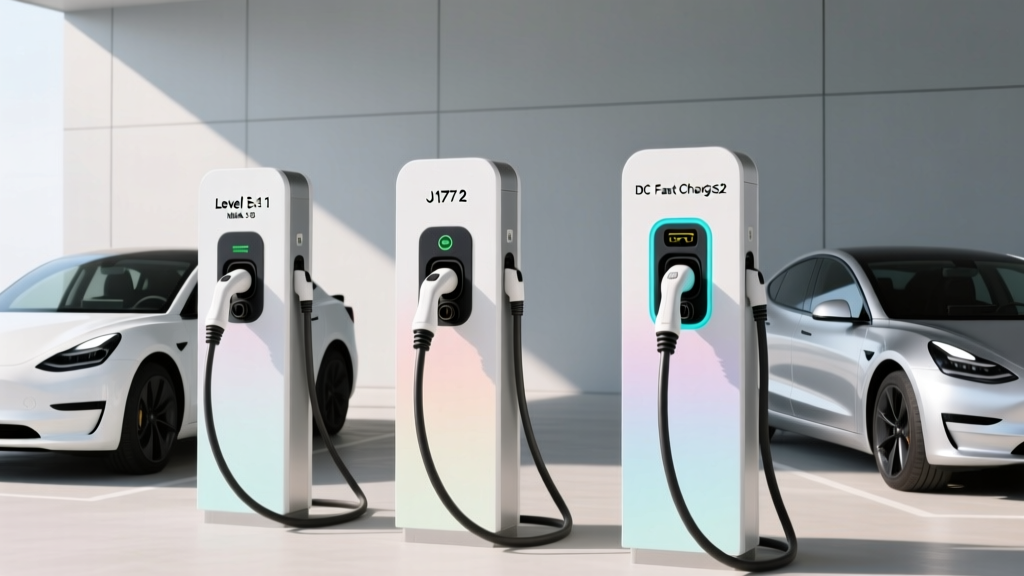
The most common EV literacy gap is confusing kW (power — how fast energy flows) with kWh (energy — how much the battery holds). A 100 kWh battery charged at 10 kW takes roughly 10 hours. A 75 kWh battery at 150 kW DC fast charging can hit 80% in about 20 minutes. Here's how each level performs in practice:
| Level | Voltage | Power (kW) | Miles Added/Hour | Best Use Case |
|---|---|---|---|---|
| Level 1 | 120V AC | 1.0–1.9 kW | 3–5 mi/hr | Overnight trickle; PHEV owners |
| Level 2 | 240V AC | 3.3–19.2 kW | 12–75 mi/hr | Daily home/workplace charging |
| DC Fast | 400–800V DC | 50–350 kW | 150–1,200 mi/hr (peak) | Road trips; 10–80% in 15–30 min |
Real-world caveat: DC fast chargers never sustain peak kW for a full session. A 2026 Tesla Model Y Long Range might peak at 250 kW at 10% SoC, but the charge curve tapers significantly above 50–60%, dropping to ~100 kW by 80%. This is battery management protecting cell health — it's physics, not a defect. Always plan road-trip stops around 10–80% times, not theoretical full charges.
Home EV Charger Installation: Costs, Electrical Requirements, and Panel Upgrades
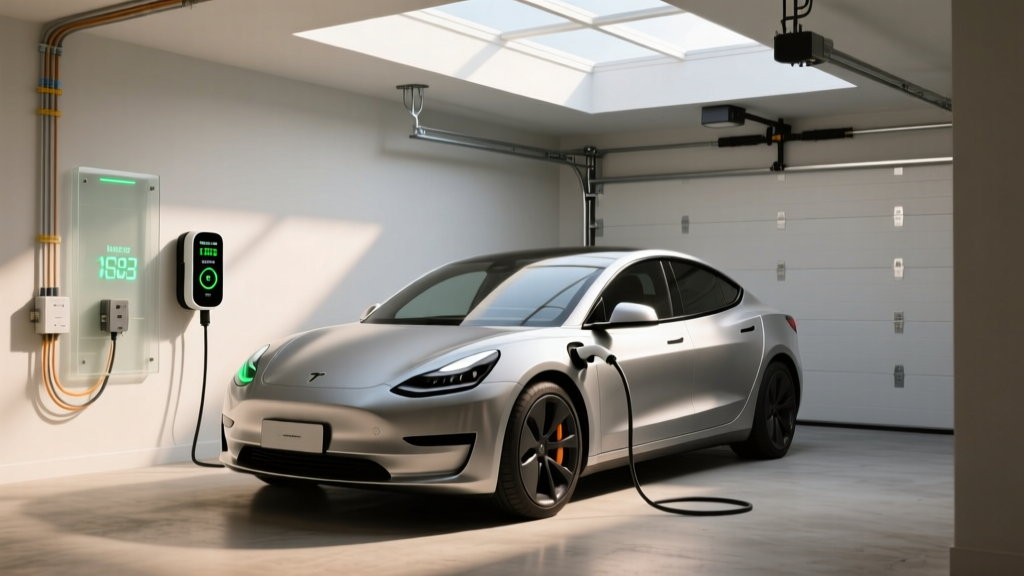
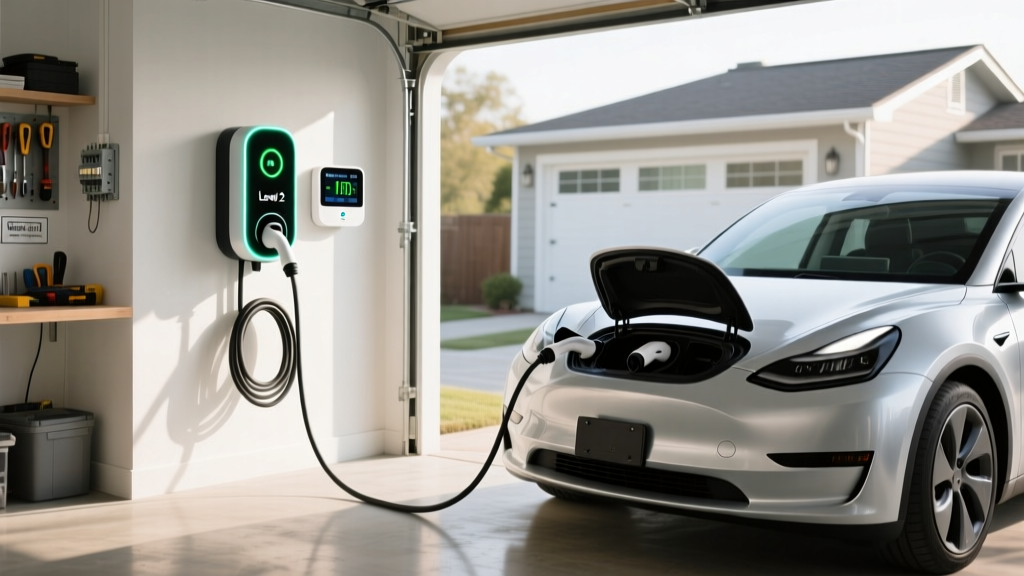
A proper Level 2 home setup is the single biggest quality-of-life upgrade in EV ownership. You wake up every morning with a full "tank." But the install isn't always plug-and-play — especially in older homes that might need a panel upgrade before adding a 40-amp dedicated circuit.
Electrical Requirements
- Circuit: Dedicated 240V circuit, typically 40A, 50A, or 60A breaker
- Continuous load rule: NEC requires the circuit to be rated 125% above the charger's max draw — a 40A charger needs a 50A breaker
- Wire gauge: 6 AWG copper for 50A circuits; 4 AWG for 60A
- Panel capacity: Most modern 200A panels can accommodate a Level 2 circuit. Older 100A panels often require a service upgrade to 200A ($1,500–$4,000)
- GFCI protection: Required for outdoor installations per NEC 2023/2026 updates
- Permit: Nearly all jurisdictions require an electrical permit ($50–$250)
| Component | Low Estimate | High Estimate | Notes |
|---|---|---|---|
| Level 2 Charger (hardware) | $300 | $750 | 32A–48A smart chargers |
| Electrician labor (standard install) | $400 | $1,200 | Short run from panel to garage |
| Electrician labor (long run/conduit) | $800 | $2,500 | Detached garage, trenching, long wire runs |
| Electrical permit | $50 | $250 | Varies by municipality |
| Panel upgrade (if needed) | $1,500 | $4,000 | 100A → 200A service upgrade |
| Total (no panel upgrade) | $750 | $2,200 | Most common scenario |
| Total (with panel upgrade) | $2,250 | $6,200 | Older homes |
Federal incentive note: The IRS §30D credit applies to vehicles, not chargers. However, the Alternative Fuel Vehicle Refueling Property Credit (IRC §30C) offers up to $1,000 (30% of cost, capped) for home charger equipment and installation through 2032, subject to census-tract eligibility. Check IRS.gov §30C for current rules — eligibility depends on your specific census tract and income.
Which Connector Fits Your EV? NACS, CCS1, and CHAdeMO Compatibility
The connector landscape has shifted dramatically since 2024, when Ford, GM, Rivian, Hyundai, and most other automakers committed to adopting Tesla's North American Charging Standard (NACS). By 2026, NACS is the dominant connector for new vehicles in North America, while CCS1 is phasing out on new models and CHAdeMO survives only on legacy Nissan Leaf vehicles.
| Connector | Brands Using It (2026) | DC Fast Max kW | Adapter Needed? |
|---|---|---|---|
| NACS (Tesla plug) | Tesla, Ford, GM, Rivian, Hyundai, Kia, Volvo, Polestar, Mercedes | Up to 350 kW | CCS → NACS adapters available (~$200) |
| CCS1 | Legacy models (2024 and earlier VW, BMW, some Hyundai/Kia) | Up to 350 kW | NACS → CCS adapters available (~$200–$300) |
| CHAdeMO | Nissan Leaf (legacy only) | Up to 100 kW | Limited adapters; declining infrastructure |
For a Dom's Charger EV swap: Most crate-motor EV conversions (using Tesla drive units or NetGain Hyper9 motors) are configured with either a CCS1 or NACS inlet depending on the builder. If you're commissioning a custom build in 2026, specify NACS — it gives you native access to the 25,000+ Tesla Supercharger network without adapters, the most reliable DC fast-charging network in North America per fueleconomy.gov infrastructure data.
Charging Cost Per Mile: EV vs Gas, by the Numbers
The economic case for EVs rests on fuel savings, but those savings depend entirely on where and when you charge. Here's a data-driven breakdown using a 2026 Chevrolet Equinox EV (319 mi EPA range, 85 kWh battery, ~3.5 mi/kWh efficiency) versus a comparable 28 MPG gas crossover at $3.40/gallon:
| Charging Scenario | $/kWh | Cost Per Mile | Full "Tank" Cost | Annual Savings vs Gas* |
|---|---|---|---|---|
| Home (off-peak/utility rate) | $0.09–$0.14 | $0.03–$0.04 | $7.65–$11.90 | $800–$1,100 |
| Home (standard rate) | $0.14–$0.20 | $0.04–$0.06 | $11.90–$17.00 | $500–$800 |
| Public Level 2 (ChargePoint, etc.) | $0.20–$0.35 | $0.06–$0.10 | $17.00–$29.75 | $200–$500 |
| DC Fast (Electrify America/Tesla) | $0.30–$0.55 | $0.09–$0.16 | $25.50–$46.75 | -$100 to $300 |
| Gas (28 MPG, $3.40/gal) | — | $0.12 | $38.40 | Baseline |
*Based on 12,000 miles/year. Savings assume primarily home charging. Exclusive DC fast charging can erode or eliminate the cost advantage.
The takeaway is clear: home charging is where the economics work. A Dom's Charger EV conversion running a 60 kWh pack charged at $0.12/kWh overnight costs roughly $7.20 for a full charge — about the price of two gallons of premium. The irony of an electric muscle car costing less to "fill up" than a Hellcat is not lost on anyone.
Real Charging Times: 10–80% for Common Battery Sizes
Charging time depends on three variables: battery size (kWh), charger power (kW), and the vehicle's onboard charge curve management. Here are real-world 10–80% estimates for popular 2026 EVs on DC fast chargers:
- Hyundai Ioniq 5 (84 kWh, 800V architecture): Peak 240 kW → 10–80% in ~18 minutes on a 350 kW station. Sustains high power longer thanks to 800V system.
- Tesla Model Y Long Range (~75 kWh): Peak 250 kW → 10–80% in ~22 minutes at a V3/V4 Supercharger.
- Chevrolet Equinox EV (85 kWh): Peak 190 kW → 10–80% in ~27 minutes on a 200+ kW station.
- Ford F-150 Lightning Extended (131 kWh): Peak 150 kW → 10–80% in ~41 minutes. Large battery means longer sessions even at moderate kW.
- Custom EV swap (60 kWh, Tesla drive unit): Peak 120–150 kW (charger-dependent) → 10–80% in ~25–30 minutes. Aftermarket BMS systems typically cap charge rates conservatively to protect cells.
On a 48A Level 2 home charger (11.5 kW), expect 7–10 hours for a full charge on most EVs — perfect for overnight. On a 32A charger (7.7 kW), add roughly 40% more time.
Recommended Home EV Chargers for 2026
After testing dozens of Level 2 units across various garage setups, here are the chargers that consistently deliver reliability, smart features, and proper power output. Every recommendation below includes exact specs — never buy a charger without knowing its kW output and connector type.
Tesla Wall Connector (Gen 4)
- Power: Up to 11.5 kW (48A) on a 60A circuit
- Connector: NACS native; J1772 adapter included
- Cable length: 24 ft
- Smart features: Wi-Fi, OTA updates, Power Sharing (load-balance up to 6 units on one circuit), Tesla app integration
- Price: ~$475
- Best for: Tesla and NACS-equipped vehicles; cleanest install
ChargePoint Home Flex
- Power: Configurable up to 12 kW (50A) on a 60A circuit, or down to 16A for lower-capacity panels
- Connector: NACS (2025+ models); CCS1/J1772 available
- Cable length: 23 ft
- Smart features: Wi-Fi, Alexa, ChargePoint app scheduling, utility demand-response programs
- Price: ~$550–$650
- Best for: Multi-EV households; flexible amperage for older panels
Grizzl-E Smart
- Power: Up to 10 kW (40A) on a 50A circuit
- Connector: NACS or J1772 options
- Cable length: 24 ft
- Smart features: OCPP-compatible, works with multiple apps, adjustable amperage via DIP switches
- Price: ~$400–$500
- Best for: Budget-conscious buyers; outdoor-rated (NEMA 4); Canadian-built durability
Emporia Vue Level 2 Charger
- Power: Up to 11.5 kW (48A)
- Connector: NACS or J1772
- Cable length: 24 ft
- Smart features: Integrates with Emporia Vue energy monitor for whole-home load tracking; solar-aware charging
- Price: ~$350–$400
- Best for: Solar owners; energy-monitoring enthusiasts
Safety, Code Compliance, and Outdoor Installation
EV chargers draw sustained high current for hours — this is not a phone charger. Proper installation isn't optional; it's fire-prevention engineering.
- Dedicated circuit: Your Level 2 charger must have its own dedicated breaker. Sharing a circuit with other high-draw appliances risks tripping or overheating.
- NEMA 14-50 vs hardwired: A NEMA 14-50 outlet gives you flexibility to unplug and move the charger, but hardwired installations eliminate the outlet as a failure point and may allow higher amperage. For daily-use home charging, hardwired is generally more reliable.
- Outdoor rating: If your charger is mounted outside or in an unsealed garage, it must carry a NEMA 4 or NEMA 4X rating for water and dust resistance.
- GFCI breaker: NEC 2023 and 2026 codes require GFCI protection for outdoor EV receptacles. Some chargers have built-in GFCI, which can conflict with breaker-level GFCI — consult your electrician to avoid nuisance tripping.
- EVSE certification: Only buy chargers with UL or ETL listing. Uncertified chargers from overseas marketplaces may lack proper safety cutoffs and can void home insurance coverage.
Always have a licensed electrician perform the final installation and pull the required permit. According to NHTSA and NFPA guidance, improperly installed high-amperage circuits are a documented residential fire risk — this is not a DIY project unless you're a qualified electrician.
Building Dom's Charger: EV Swap Charging Considerations
If the fast and furious Dom's Charger concept inspired you to explore an EV conversion, here are charging-specific realities that swap shops rarely advertise upfront:
- Onboard charger (OBC) limits Level 2 speed: The OBC converts AC from your home charger to DC for the battery. Most aftermarket OBCs max out at 3.3 kW or 6.6 kW — meaning even a 48A home charger won't deliver more than ~6.6 kW to the pack. Budget $400–$800 for a high-quality OBC like the Elcon PFC 6.6 kW unit.
- DC fast charging is optional and expensive: Adding CCS or NACS DC fast-charge capability to a conversion requires a compatible BMS, contactors, and communication protocols. Expect $2,000–$5,000 in additional hardware and programming.
- Battery thermal management: OEM packs have active liquid cooling. Salvaged Tesla modules in a Charger bay may rely on passive air cooling, which limits sustained charge rates and accelerates degradation if you DC fast-charge frequently.
- Weight distribution: A 60–80 kWh battery pack adds 800–1,200 lbs. Suspension upgrades are mandatory, and the added mass affects regenerative braking calibration.
The dream is achievable — shops like EV West and Iconic EV have completed Charger conversions — but budget $40,000–$80,000+ for a professional build with proper charging infrastructure compatibility.
Frequently Asked Questions
How much does it cost to install a home EV charger?
A standard Level 2 home charger installation costs $750–$2,200 when your electrical panel has capacity. If you need a 100A-to-200A panel upgrade (common in homes built before 1990), expect $2,250–$6,200 total. The charger hardware itself runs $300–$750, with the rest going to electrician labor, wire, conduit, and permits. The federal §30C credit can offset up to $1,000 of equipment and installation costs if you're in an eligible census tract.
How fast will each charging level add range?
Level 1 (120V) adds 3–5 miles per hour — adequate for PHEVs with small batteries but impractical for BEVs. Level 2 (240V, 40–48A) adds 25–40 miles per hour for most EVs, fully recharging overnight. DC fast charging at 150–350 kW adds 150–1,200 miles per hour at peak, though charge-curve taper means real-world 10–80% sessions take 15–40 minutes depending on battery size and architecture.
Which connector/charger is compatible with my EV?
For 2026 model-year vehicles, NACS is now the standard for Tesla, Ford, GM, Hyundai, Kia, Rivian, and most others. CCS1 remains on some 2024 and earlier models. CHAdeMO is limited to legacy Nissan Leafs. Check your vehicle's charge port — if it's NACS, you have native Supercharger access. If it's CCS1, you'll need a CCS-to-NACS adapter (~$200) for Tesla Superchargers, and CCS stations are still available at Electrify America and other networks.
How much does charging cost per mile vs gas?
Home charging at average utility rates ($0.12–$0.14/kWh) costs $0.03–$0.05 per mile for a typical EV — roughly 70–75% cheaper than gas at $3.40/gallon and 28 MPG. Public DC fast charging at $0.35–$0.55/kWh costs $0.09–$0.16 per mile, which can approach or exceed gas costs. The economic advantage of an EV depends heavily on reliable home charging access. See the cost-per-mile table above for detailed scenarios.
What electrical upgrades might I need?
The most common upgrade is a panel capacity increase from 100A to 200A service ($1,500–$4,000), required when your existing panel lacks headroom for a 40–60A dedicated circuit. Other potential upgrades include: running new conduit for detached garages ($500–$2,000), upgrading aluminum wiring to copper in older homes, adding a sub-panel if the main panel is full, and installing a GFCI breaker for outdoor installations per NEC code. A licensed electrician's load calculation will determine exactly what's needed — get this assessment before purchasing a charger.
Can I charge a custom EV conversion like Dom's Charger at home?
Yes, provided the conversion includes a proper onboard charger (OBC) and a standard connector inlet (NACS or J1772 for Level 2). Most professional EV swaps include at least a 3.3 kW or 6.6 kW OBC, which works with any Level 2 home charger. DC fast charging requires additional BMS integration and is not standard on most conversions. Always verify the inlet type and OBC spec before commissioning a build.