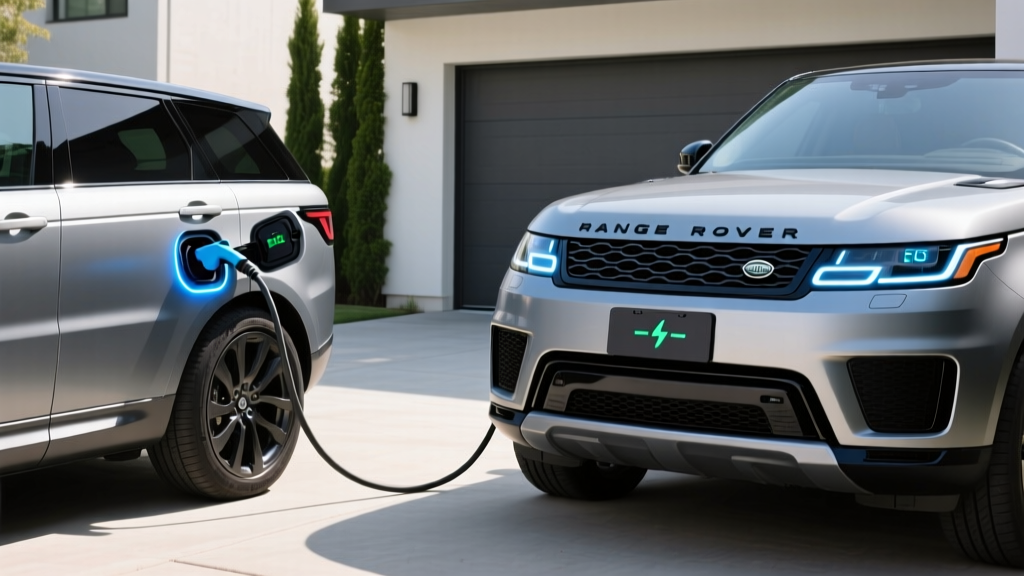
If you're considering trading a thirsty luxury SUV like the 2018 Range Rover Sport Supercharged for an electric vehicle, the single biggest ownership shift isn't the drivetrain — it's how you "refuel." The 2018 Range Rover Sport Supercharged returns roughly 17 MPG combined on its 5.0L supercharged V8, meaning a 15,000-mile year at $3.50/gallon costs around $3,088 in fuel alone. A comparable EV charged primarily at home can cut that to $600–$900. But realizing those savings requires understanding charging levels, home electrical requirements, and connector compatibility.
This guide walks through every practical aspect of EV charging — from Level 1 trickle charging to DC fast charging — while benchmarking costs and times against what you're used to at the gas pump with the Range Rover Sport Supercharged.
Charging Levels Explained: Speeds in kW and Miles Per Hour
EV charging falls into three categories, defined by power delivery in kW (kilowatts, a measure of power — the rate of energy flow). The battery itself stores energy in kWh (kilowatt-hours). Think of kW as the flow rate of a hose and kWh as the size of the bucket. This distinction matters for every calculation below.
| Level | Voltage / Amps | Power (kW) | Miles of Range Added Per Hour | Typical Use Case |
|---|---|---|---|---|
| Level 1 | 120V / 12A | 1.4 kW | 3–5 miles | Overnight top-up, PHEVs, low-mileage drivers |
| Level 2 | 240V / 32–48A | 7.7–11.5 kW | 25–44 miles | Daily home charging, workplace, shopping centers |
| DC Fast (Level 3) | 400–800V DC | 50–350 kW | 150–1,200+ miles (equivalent rate) | Road trips, highway corridors, rapid top-ups |
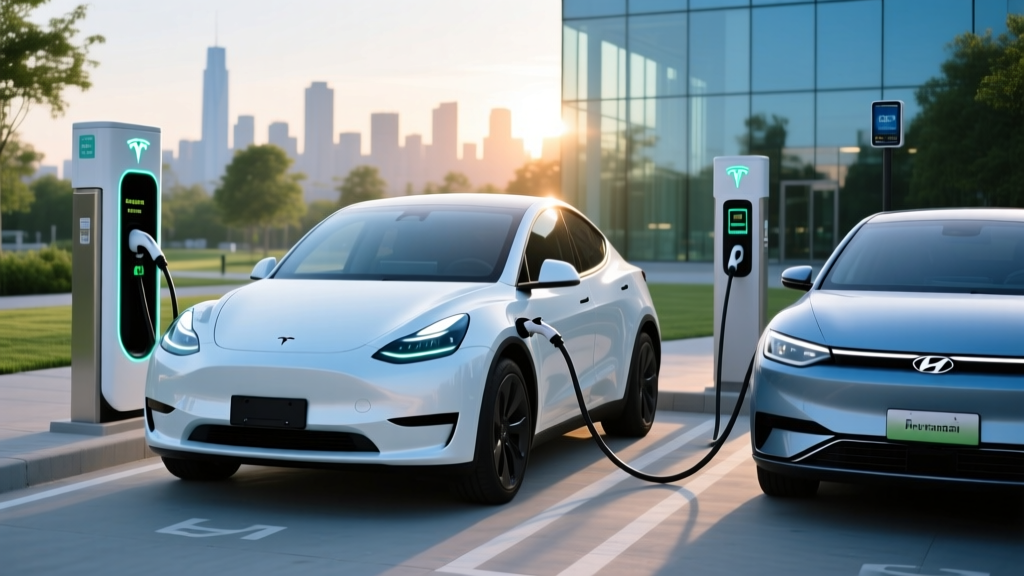
A typical EV with an 80 kWh battery (think Tesla Model Y Long Range or Hyundai Ioniq 5) charging on Level 2 at 11.5 kW will go from 10% to 80% in roughly 5–6 hours. That same 10–80% session on a 250 kW DC fast charger takes approximately 18–25 minutes, though sustained power tapers significantly above 80% state of charge (SoC) to protect battery health. Peak kW ratings are just that — peak. Expect average sustained rates to be 60–75% of the advertised peak during a real session.
Home EV Charger Installation: Electrical Requirements and Costs
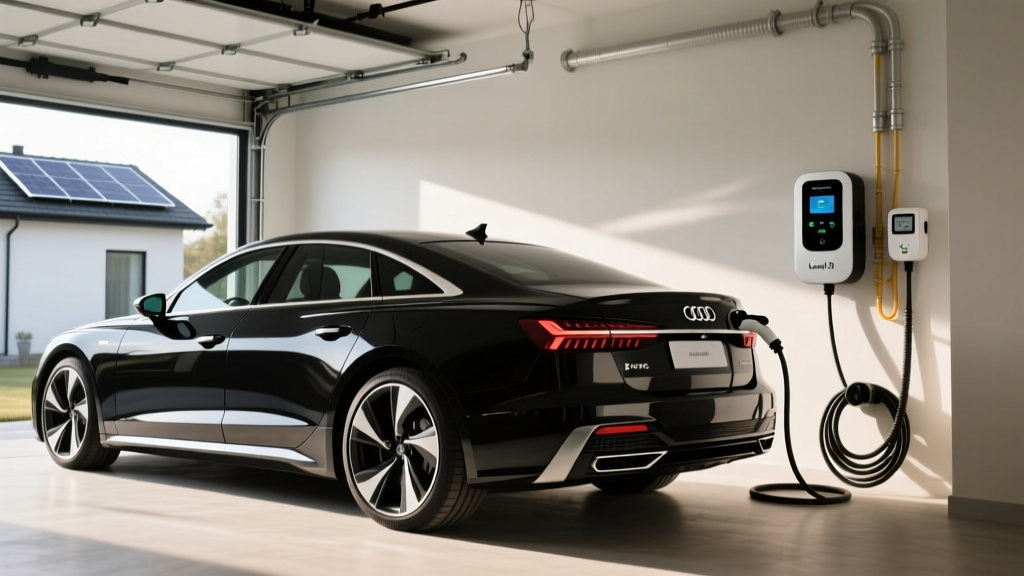
Most EV owners do 80% or more of their charging at home on Level 2. Installing a dedicated 240V circuit is the gateway to convenient, low-cost daily charging — but the total cost depends heavily on your home's electrical panel capacity and the distance from the panel to your charging location.
Core Electrical Requirements
- Circuit: A dedicated 40A or 50A breaker (for 32A or 40A continuous charging, respectively; NEC requires circuits rated 125% of continuous load)
- Wire: 6 AWG copper for 50A circuits; 8 AWG for 40A
- Outlet vs. hardwired: NEMA 14-50 outlet offers portability; hardwired units allow higher amperage and eliminate GFCI nuisance-trip issues common with 14-50 receptacles
- Panel capacity: You need sufficient spare amperage on your main panel. A 200A panel with existing heavy loads (electric range, dryer, HVAC) may be tight
Panel Upgrade Reality
Homes built before 1990 often have 100A or 150A main panels. Adding a 50A EV circuit to an already-loaded 100A panel may require a panel upgrade to 200A, which adds $1,500–$3,500 to your project. Some utilities offer load-management devices (like the Emporia VUE or Span smart panel) that allow EV charging without a full upgrade by dynamically reducing charge rate when other large loads activate.
| Component | Low Estimate | High Estimate | Notes |
|---|---|---|---|
| Level 2 charger unit (hardware) | $350 | $750 | 32A–48A smart chargers |
| Electrician labor (standard install) | $400 | $1,200 | Short run, same wall as panel = cheaper |
| Permit and inspection | $50 | $250 | Varies by municipality |
| Electrical panel upgrade (if needed) | $1,500 | $3,500 | 100A → 200A service upgrade |
| Total (no panel upgrade) | $800 | $2,200 | Most homes with 200A panels |
| Total (with panel upgrade) | $2,300 | $5,700 | Older homes with 100A service |
The federal Residential Clean Energy Credit does not cover EV chargers for most taxpayers after 2022, though some state and utility rebates still apply. Check the AFDC state law database for local incentives that can knock $200–$1,000 off your install.
Connector Compatibility: NACS, CCS, and CHAdeMO
The North American charging connector landscape has consolidated significantly since 2023, when Ford, GM, Rivian, Volvo, and others committed to adopting the North American Charging Standard (NACS), originally developed by Tesla. As of the 2025–2026 model years, nearly all new EVs sold in the US ship with a native NACS port. CCS1 vehicles from earlier model years (2020–2024) remain on the road and require adapters for Tesla Supercharger access.
| Connector | Physical Form | Vehicles Using It | Network Access | Adapter Needed? |
|---|---|---|---|---|
| NACS (J3400) | Compact, 5-pin | All Tesla vehicles; 2025+ Ford, GM, Rivian, Volvo, Polestar, others | Tesla Supercharger, Electrify America, EVgo (expanding) | None for NACS-native vehicles |
| CCS1 (Combo) | Larger, 7-pin (AC+DC) | 2024 and earlier GM, Ford, VW, Hyundai, Kia, BMW, Mercedes | Electrify America, EVgo, ChargePoint DC | NACS-to-CCS adapter (~$150–$250) for Supercharger access |
| CHAdeMO | Round, multi-pin | Nissan Leaf (all years), Mitsubishi Outlander PHEV (legacy) | Limited and declining | No widely available adapter to NACS/CCS |
If you own a home Level 2 charger, most units use a J1772 connector for AC charging. Tesla vehicles include a J1772-to-NACS adapter in the glovebox. For DC fast charging, always verify your vehicle's native connector and whether the networks in your area support it before purchasing an adapter.
Charging Cost Per Mile: EV vs. 2018 Range Rover Sport Supercharged
The 2018 Range Rover Sport Supercharged with its 5.0L supercharged V8 (518 hp, 0–60 in 5.0 seconds) achieves an EPA-rated 17 MPG combined. At 15,000 miles per year and $3.50/gallon, that's approximately $3,088 annually in fuel. Let's compare that to EV charging scenarios across a typical 80 kWh battery EV getting 3.0 miles/kWh (around 100 MPGe).
| Scenario | Rate | Cost Per Mile | Annual Cost (15,000 mi) | Savings vs. Range Rover |
|---|---|---|---|---|
| Home off-peak (utility time-of-use) | $0.10/kWh | $0.033 | $500 | $2,588/yr |
| Home standard rate (national avg) | $0.16/kWh | $0.053 | $800 | $2,288/yr |
| Public Level 2 (ChargePoint, etc.) | $0.30/kWh | $0.10 | $1,500 | $1,588/yr |
| DC fast charging (EA, EVgo) | $0.48/kWh | $0.16 | $2,400 | $688/yr |
| 2018 Range Rover Sport SC (17 MPG) | $3.50/gal | $0.206 | $3,088 | — |
Even exclusive DC fast charging — the most expensive EV scenario — undercuts the Range Rover Sport Supercharged by nearly $700/year. An EV owner charging 80% at home off-peak and 20% on DC fast chargers for road trips would spend roughly $700–$850 annually, saving over $2,200 per year versus the V8. Over a five-year ownership cycle, that's $11,000+ in fuel savings alone.
For current gas prices, the EPA fueleconomy.gov database provides verified MPG figures for any model year, including the 2018 Range Rover Sport's 14 city / 22 highway / 17 combined rating.
Recommended Home Level 2 Chargers (2025–2026)
Not all Level 2 chargers are created equal. Here are three proven units that cover different budgets and installation scenarios, all with NACS compatibility or adapters available.
ChargePoint Home Flex (Best Overall)
- Power: Up to 11.5 kW (48A) on a 60A circuit; configurable down to 16A
- Connector: NACS native (2025+ models) or J1772 with included adapter
- Cable length: 23 feet
- Smart features: Wi-Fi, scheduled charging, Alexa/Google integration, energy tracking
- Price: ~$550–$650
- Best for: Most homes; flexible amperage means it works on 20A–60A circuits
Tesla Wall Connector (Best for NACS Vehicles)
- Power: Up to 11.5 kW (48A) on 60A circuit
- Connector: NACS native
- Cable length: 24 feet
- Smart features: Wi-Fi, over-the-air updates, power sharing (two units on one circuit), Tesla app integration
- Price: ~$425–$475
- Best for: Tesla owners and NACS-native vehicles; cleanest aesthetic
Emporia Level 2 EV Charger (Best Budget)
- Power: Up to 11.5 kW (48A) on 60A circuit
- Connector: J1772 (NACS adapter available)
- Cable length: 24 feet
- Smart features: Wi-Fi, solar integration with Emporia VUE, time-of-use scheduling, load management
- Price: ~$350–$400
- Best for: Budget-conscious installs; solar households wanting integrated energy management
Regardless of which unit you choose, ensure it is UL-listed (or ETL-listed) for safety certification. Energy Star certification is a bonus that ensures minimal standby power draw. Avoid unbranded chargers from online marketplaces lacking independent safety testing.
Safety, Code, and Installation Best Practices
EV charging involves sustained high-current draw — unlike a dryer that cycles on and off, an EV charger can pull maximum current for 8+ hours straight. This places unique demands on your electrical system.
- Dedicated circuit: Your EV charger must be on its own dedicated breaker. Sharing a circuit with other outlets or appliances is a code violation and a fire risk.
- GFCI protection: NEC 2020 and later requires GFCI protection for outdoor receptacles. However, GFCI breakers on NEMA 14-50 outlets are a known source of nuisance tripping with some EV chargers. Many electricians recommend hardwiring the charger to eliminate this issue.
- Outdoor rating: If your charger is installed outdoors (garage-exterior wall, carport, driveway post), ensure both the unit and any receptacle carry a NEMA 4 or IP65 weather rating.
- Continuous load derating: The NEC defines EV charging as a continuous load. A 40A charger requires a 50A breaker and wire rated for 50A. Never undersize the breaker.
- Permit and inspection: Most jurisdictions require an electrical permit for new 240V circuits. Skipping the permit risks insurance claim denial in the event of an electrical fire. Permit fees typically range from $50–$250.
Always hire a licensed electrician — not a general contractor — for EV charger installation. Ask specifically whether they have experience with EV circuits, as the continuous-load requirements and GFCI nuances are unfamiliar to some residential electricians.
Charging Time Examples for Common EV Battery Sizes
How long a charge session takes depends on battery size (kWh), charger power (kW), and the vehicle's onboard charge acceptance rate. Below are real-world estimates for popular battery sizes, assuming a 10%–80% charge window (charging above 80% slows dramatically due to cell-balancing and thermal management — plan your sessions accordingly).
| Battery Size | Example Vehicles | Level 2 (11.5 kW) | DC Fast (150 kW peak) | DC Fast (250 kW peak) |
|---|---|---|---|---|
| 60 kWh usable | Chevy Equinox EV, base Tesla Model 3 | ~3.5 hours | ~22 min | ~18 min |
| 80 kWh usable | Tesla Model Y LR, Hyundai Ioniq 5 | ~5 hours | ~28 min | ~20 min |
| 100 kWh usable | Tesla Model S, Rivian R1S, GMC Sierra EV | ~6.5 hours | ~35 min | ~25 min |
| 130 kWh usable | GMC Hummer EV, Silverado EV Max Range | ~8.5 hours | ~45 min | ~35 min |
Note that the 130+ kWh batteries in heavy trucks like the Hummer EV take substantially longer to charge. If you're switching from a Range Rover Sport Supercharged to a large electric SUV, factor in that the larger battery means longer DC fast sessions on road trips — but also that home Level 2 charging overnight will easily replenish even a 100 kWh battery by morning.
Frequently Asked Questions
How much does it cost to install a home EV charger?
A standard Level 2 home installation (48A charger, 60A circuit, short wire run from a 200A panel) typically costs $800–$2,200 including equipment, electrician labor, and permit. If your home requires a panel upgrade from 100A to 200A, add $1,500–$3,500, bringing the total to $2,300–$5,700. Always get at least two quotes from licensed electricians and verify the quote includes permitting.
How fast will each charging level add range?
Level 1 (120V) adds roughly 3–5 miles of range per hour — adequate for plug-in hybrids with small batteries but impractical for full EVs. Level 2 (240V) adds 25–44 miles per hour depending on amperage, which fully replenishes most EVs overnight. DC fast charging adds 150–300+ miles in 20–30 minutes at peak rates, though speeds taper significantly above 80% state of charge.
Which connector and charger is compatible with my EV?
For 2025–2026 model-year vehicles, most new EVs use the NACS (J3400) connector. Older vehicles (2024 and earlier from non-Tesla brands) typically use CCS1. Nissan Leaf uses CHAdeMO. Check your vehicle's charge port or owner's manual. For home Level 2 charging, J1772 is the standard AC connector, and Tesla includes a J1772-to-NACS adapter with every vehicle.
How much does EV charging cost per mile vs. gas?
At the national average residential electricity rate of ~$0.16/kWh and an EV efficiency of 3.0 mi/kWh, home charging costs about $0.053/mile. The 2018 Range Rover Sport Supercharged at 17 MPG combined and $3.50/gallon costs $0.206/mile. That's roughly a 75% reduction in fuel cost per mile when charging at home. Even public DC fast charging at $0.48/kWh ($0.16/mile) undercuts the Range Rover.
What electrical upgrades might I need for a home charger?
The most common upgrade is a panel capacity increase from 100A or 150A to 200A, which costs $1,500–$3,500. Other potential needs include: a new conduit run if the charger is far from the panel (long wire runs increase material cost), a sub-panel in the garage, or a load-management device if you want to avoid a full panel upgrade. Homes with 200A+ service and short runs from panel to garage typically need no upgrades beyond the dedicated circuit itself.
Can I charge my EV on a regular 120V outlet?
Yes — this is Level 1 charging. It delivers about 1.4 kW and adds 3–5 miles of range per hour. For a driver covering 30–40 miles daily with access to overnight charging, Level 1 can work, especially with a PHEV. But for a full EV with an 80+ kWh battery, a complete Level 1 recharge from empty would take 50+ hours. Most EV owners find Level 1 insufficient as a primary charging method.
The Bottom Line: Making the Switch from a Supercharged V8
The 2018 Range Rover Sport Supercharged delivers thrilling performance — 518 horsepower, a supercharger whine, and genuine off-road capability. But its 17 MPG combined means fuel costs exceeding $3,000 per year for average drivers. Transitioning to an EV with a properly installed home Level 2 charger can reduce your "fuel" spend to under $900 annually while providing the convenience of starting every morning with a full "tank."
The upfront investment of $800–$2,200 for a home charger installation pays for itself in fuel savings within the first year for most drivers. Before purchasing an EV, get a quote from a licensed electrician for your specific home, verify your panel capacity, and choose a UL-listed charger matched to your vehicle's connector. The math overwhelmingly favors electrification on operating cost — the key is ensuring your home electrical system is ready to support it.