If you're cross-shopping a used 2016 Range Rover Supercharged against a new electric SUV, the sticker price is only the opening move. The 2016 Supercharged packs a 5.0-liter supercharged V8 producing 510 horsepower, a 0-60 time around 5.1 seconds, and an EPA combined fuel economy of just 16 MPG. At current fuel prices, that luxury performance comes at a steep per-mile cost — one that modern EVs with Level 2 home charging can undercut dramatically.
This guide breaks down the real fueling economics of the 2016 Range Rover Supercharged versus owning and charging a modern EV in 2026, including exactly what it costs to install a home charger, what each charging level delivers, and how the per-mile math stacks up.
The 2016 Range Rover Supercharged: Fuel Cost Baseline
Before we get into EV charging infrastructure, let's establish what the 2016 Range Rover Supercharged actually costs to fuel. According to fueleconomy.gov, the 2016 Supercharged earns an EPA rating of 14 city / 19 highway / 16 combined MPG on premium unleaded (required).
- Engine: 5.0L supercharged V8, 510 hp, 461 lb-ft
- EPA Fuel Economy: 14/19/16 MPG (city/hwy/combined)
- Fuel Type: Premium unleaded (91+ octane)
- Tank Capacity: 27.7 gallons
- Cost to Fill: ~$110-$130 (at $4.00-$4.70/gal premium)
- Cost per Mile (at $4.30/gal): ~$0.27/mile
At a national premium average around $4.30 per gallon in early 2026, you're paying roughly 27 cents per mile in fuel alone. Over 15,000 annual miles, that's about $4,050 per year in gasoline. Now let's see how EV charging compares — and what it takes to set up.
EV Charging Levels Explained: Speeds, Power, and Range Added
Understanding EV charging starts with one critical distinction: kW (kilowatts) measures power — the rate of energy delivery, like water pressure from a hose. kWh (kilowatt-hours) measures energy — the total amount stored in the battery, like gallons in a tank. You'll never confuse them again if you remember: kW is speed, kWh is volume.
| Level | Voltage | Power (kW) | Miles of Range Added per Hour | Typical Use |
|---|---|---|---|---|
| Level 1 | 120V AC | 1.2–1.9 kW | 3–5 mi/hr | Overnight trickle; PHEVs and low-mileage drivers |
| Level 2 | 240V AC | 7.2–19.2 kW | 25–65 mi/hr | Home daily charging; workplace; public AC stations |
| DC Fast Charging | 400–800V DC | 50–350 kW | 150–1,200+ mi/hr (peak) | Road trips; 10-80% in 15–30 minutes |
Real-world note: DC fast charging speeds are peak rates, not sustained. A vehicle rated for 250 kW peak will typically sustain that rate only between roughly 10-40% state of charge (SoC), then taper progressively. A "10-80% in 18 minutes" claim assumes optimal battery preconditioning and a charger capable of delivering the vehicle's peak rate consistently. In cold weather without preconditioning, that same session might stretch to 30+ minutes.
Charging Time Examples for Common Battery Sizes
| Battery Size | Example Vehicles | Level 2 (11.5 kW) 10-80% | DC Fast 10-80% (peak rate) |
|---|---|---|---|
| 60 kWh usable | Chevy Equinox EV, base Model 3 | ~4.5 hours | ~22 min (at 150 kW peak) |
| 82 kWh usable | BMW iX, Model 3 Long Range | ~6 hours | ~25 min (at 250 kW peak) |
| 100 kWh usable | F-150 Lightning Ext., Rivian R1S | ~7.5 hours | ~28 min (at 300+ kW peak) |
Home EV Charger Installation: Requirements, Costs, and Panel Upgrades
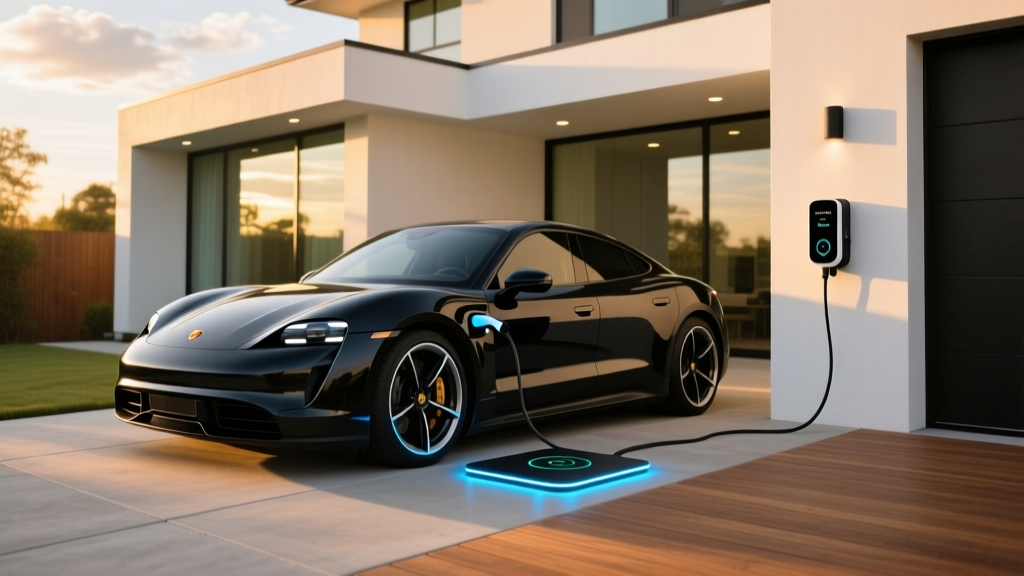
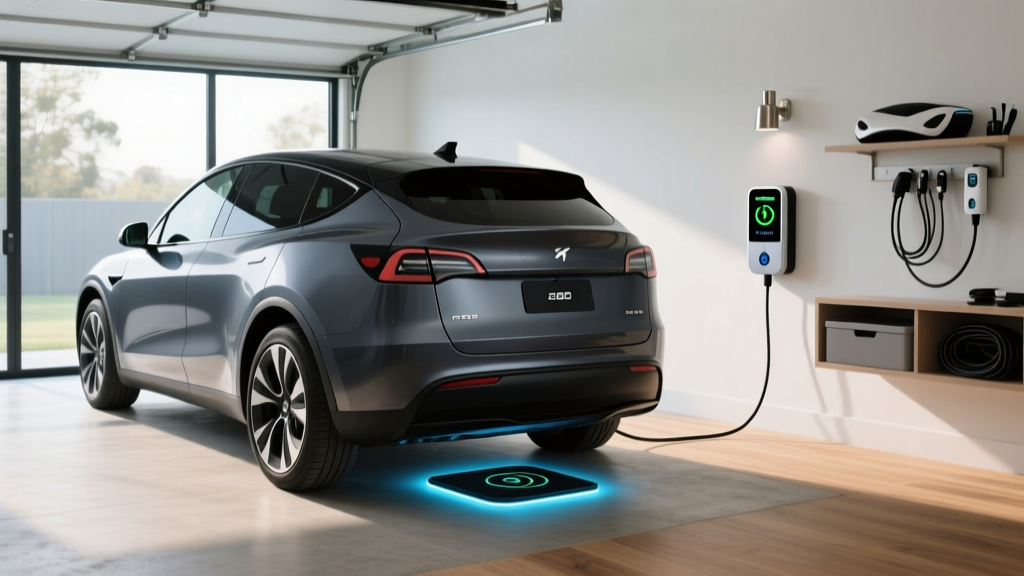
Installing a Level 2 home charger is the single biggest infrastructure decision an EV buyer makes. It's also where costs vary the most depending on your home's electrical panel, the distance from panel to charger location, and local permitting.
Electrical Requirements
A typical Level 2 home charger requires a dedicated 240V circuit, similar to what an electric dryer or oven uses. The most common setup is a 40-amp or 50-amp circuit with a NEMA 14-50 outlet, or a hardwired connection (which many electricians prefer for continuous loads, and which the National Electrical Code requires for circuits above 50 amps in many jurisdictions).
- 40A circuit: Delivers up to 9.6 kW (32A continuous) — sufficient for most EVs overnight
- 50A circuit: Delivers up to 11.5 kW (40A continuous) — faster fills, future-proofs for larger batteries
- 60A circuit: Delivers up to 14.4 kW (48A continuous) — needed for vehicles like the F-150 Lightning or Hummer EV that accept high AC rates
Installation Cost Breakdown
| Component | Low Estimate | High Estimate | Notes |
|---|---|---|---|
| Level 2 Charger (Equipment) | $350 | $700 | Smart Wi-Fi chargers with 25ft cable |
| Electrician Labor | $400 | $1,500 | Depends on panel proximity and wall type |
| Electrical Permit | $50 | $250 | Varies by municipality |
| Conduit/Wiring Materials | $100 | $500 | Longer runs cost more |
| Panel Upgrade (if needed) | $1,500 | $4,000 | 100A → 200A service upgrade for older homes |
| Total (no panel upgrade) | $900 | $2,950 | |
| Total (with panel upgrade) | $2,400 | $6,950 |
Safety and Code Considerations
- Dedicated circuit: Your EV charger must be on its own breaker — never shared with other appliances
- GFCI protection: Required for outdoor installations per NEC 2023/2026 codes; many modern chargers include built-in GFCI
- Outdoor rating: If mounting outside, ensure the charger carries a NEMA 4 or IP65 weather rating
- Cable management: Choose a charger with at least 20-25 feet of cable to reach your vehicle's charge port regardless of parking orientation
- Load management: Some smart chargers (e.g., Emporia, Wallbox) offer load-balancing features that monitor your panel's total draw and reduce charging rate if other appliances kick on — useful if your panel is near capacity
Charging Costs: Home vs. Public vs. Gas — The Per-Mile Showdown
Here's where the 2016 Range Rover Supercharged comparison gets stark. We'll compare fuel cost per mile against charging cost per mile across three common scenarios.
| Scenario | Rate | Cost per Mile (EV at 3.5 mi/kWh) | Cost per Mile (2016 RR at 16 MPG) |
|---|---|---|---|
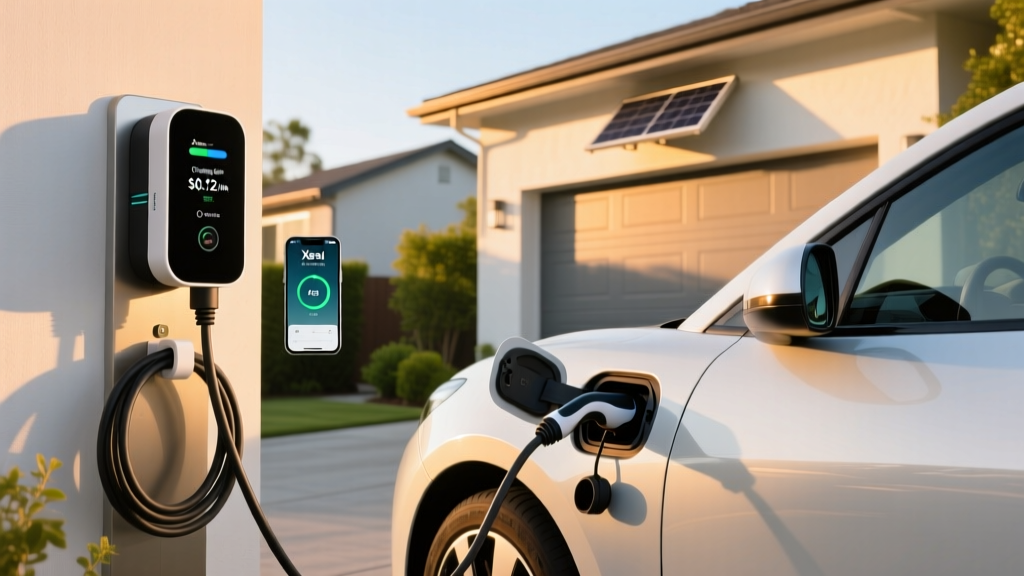
| Home charging (off-peak utility rate) | $0.12/kWh | $0.034 | $0.27 (premium at $4.30/gal) |
| Home charging (standard rate) | $0.18/kWh | $0.051 | $0.27 |
| Public Level 2 (ChargePoint, etc.) | $0.30/kWh | $0.086 | $0.27 |
| DC Fast Charging (Electrify America, Tesla) | $0.48/kWh | $0.137 | $0.27 |
The EV's advantage is most pronounced with home charging. Public DC fast charging narrows the gap considerably, and in some high-cost markets (California peak rates at certain networks), occasional DC sessions can briefly approach the per-mile cost of an efficient hybrid — though still well below the Supercharged's 27 cents.
Connector Compatibility: NACS, CCS1, CHAdeMO, and Adapters
As of 2026, the North American EV connector landscape has consolidated significantly around the North American Charging Standard (NACS), originally developed by Tesla and now adopted by nearly every major automaker. Here's what you need to know:
| Connector | Brands Using It Natively | Adapter Needed? |
|---|---|---|
| NACS (Tesla standard) | Tesla (all), Ford, GM, Rivian, Volvo, Polestar, Hyundai/Kia (2025+), BMW (2025+), Mercedes (2025+) | None for Tesla Superchargers; CCS adapter may be needed for older non-Tesla DC stations |
| CCS1 | VW/ID.4 (pre-2026), some Stellantis models, legacy non-Tesla EVs | NACS-to-CCS adapter (~$150-$200) needed for Tesla Superchargers |
| CHAdeMO | Nissan Leaf (legacy only — discontinued for US market) | Limited network; no adapter to NACS available for DC fast charging |
For home Level 2 charging: All non-Tesla EVs sold in the US use a J1772 connector for AC charging. Tesla includes a J1772 adapter with every vehicle. Conversely, most third-party Level 2 chargers ship with J1772 connectors; Tesla owners use the included adapter. Some newer chargers now ship with a NACS connector option for direct Tesla compatibility.
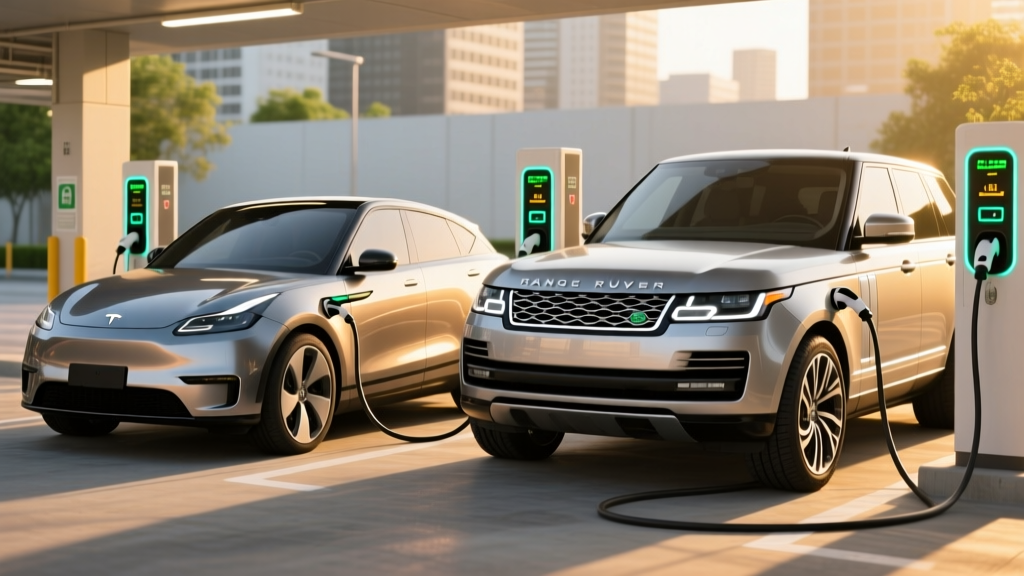
For DC fast charging in 2026: The majority of new public DC fast chargers being deployed now include NACS cables alongside CCS1. Electrify America, EVgo, and ChargePoint have been adding NACS connectors at new and retrofitted stations. If you drive a CCS1-equipped EV, a NACS-to-CCS adapter (available from Tesla, Ford, and third parties like Lectron) ensures access to the expanding Supercharger network.
Recommended Home Level 2 Chargers for 2026
Based on reliability data, charging performance, and smart features, these are the Level 2 chargers we recommend for home installation:
Emporia Vue EV Charger
- Power Output: 48A / 11.5 kW (on 60A circuit)
- Connector: J1772 (NACS adapter available)
- Cable Length: 24 feet
- Smart Features: Wi-Fi, energy monitoring via Emporia Vue panel integration, load management, solar-aware charging
- Price: ~$399
- Best For: Homes with Emporia energy monitoring; budget-conscious buyers wanting full smart features
ChargePoint Home Flex
- Power Output: Configurable 16A-50A / up to 12 kW
- Connector: J1772 (NACS version available)
- Cable Length: 23 feet
- Smart Features: Wi-Fi, app scheduling, Alexa integration, flexible amperage to match your circuit
- Price: ~$549
- Best For: Flexibility across circuit sizes; strong app ecosystem
Tesla Wall Connector
- Power Output: 48A / 11.5 kW (on 60A circuit)
- Connector: NACS native (J1772 adapter included)
- Cable Length: 24 feet
- Smart Features: Wi-Fi, over-the-air updates, power sharing between two units, Tesla app integration
- Price: ~$450
- Best For: Tesla owners and NACS-native EVs; multi-Tesla households
Wallbox Pulsar Plus
- Power Output: 40A / 9.6 kW (on 50A circuit)
- Connector: J1772 (NACS version available)
- Cable Length: 25 feet
- Smart Features: Wi-Fi + Bluetooth, Eco-Smart solar integration, Power Sharing for dual installs
- Price: ~$499
- Best For: Compact form factor; solar-charging households
All four chargers are UL-listed (or ETL-listed to UL standards), carry NEMA 4 outdoor ratings, and support scheduled charging to take advantage of off-peak utility rates — a critical feature for minimizing your per-mile cost.
The Ownership Math: 2016 Range Rover Supercharged vs. a Modern Electric SUV
Let's put the full picture together. We'll compare five-year energy costs for the 2016 Range Rover Supercharged against a representative 2026 EV SUV — the Hyundai Ioniq 5 (Long Range AWD, EPA 290 miles, 84 kWh battery, NACS connector, starting at ~$48,500 before incentives).
| Cost Factor | 2016 Range Rover Supercharged | 2026 Hyundai Ioniq 5 LR AWD |
|---|---|---|
| Energy Source | Premium gasoline | Electricity (home + public mix) |
| Efficiency | 16 MPG combined | 3.1 mi/kWh (112 MPGe combined) |
| Average Energy Rate | $4.30/gal (premium) | $0.15/kWh (blended home/public) |
| Annual Energy Cost | $4,031 | $726 |
| 5-Year Energy Cost | $20,156 | $3,629 |
| 5-Year Savings (EV) | $16,527 | |
That $16,500 energy savings over five years doesn't account for the EV's lower maintenance burden (no oil changes, no supercharger belt service, fewer brake replacements due to regenerative braking), or the §30D federal tax credit which — depending on battery sourcing, your income, and the vehicle's MSRP — can provide up to $7,500 at point of sale for eligible new EVs. The 2016 Range Rover Supercharged, purchased used, qualifies for no federal purchase incentive.
The Supercharged does retain an advantage in one area: towing. Its 7,716-lb tow rating and V8 torque delivery remain competitive for heavy trailer use, where EV range drops significantly under load. If you regularly tow 5,000+ lbs over long distances, the Supercharged's refueling convenience still has merit — though newer electric trucks like the F-150 Lightning and Rivian R1T are closing that gap.
Frequently Asked Questions
How much does it cost to install a home EV charger?
A standard Level 2 home charger installation with a 240V/50A circuit typically runs $900 to $2,950 including the charger unit ($350-$700), electrician labor ($400-$1,500), materials ($100-$500), and permits ($50-$250). If your home needs an electrical panel upgrade from 100A to 200A service, add $1,500-$4,000. Get at least two quotes from licensed electricians, and check with your utility — many offer rebates of $200-$500 for smart charger installations.
How fast will each charging level add range?
Level 1 (120V) adds 3-5 miles of range per hour — fine for plug-in hybrids with small batteries but impractical for full-size EVs. Level 2 (240V) adds 25-65 miles per hour depending on the vehicle's onboard charger acceptance rate, fully recharging most EVs overnight in 6-10 hours. DC fast charging adds 150-1,200+ miles per hour at peak rate, delivering a 10-80% charge in 15-30 minutes depending on the vehicle's peak kW capability and battery preconditioning.
Which connector/charger is compatible with my EV?
For 2026 model-year vehicles, nearly all new EVs now use the NACS connector natively (Tesla, Ford, GM, Hyundai, Kia, BMW, Rivian, Volvo). Older EVs from 2020-2024 may still have CCS1. The Nissan Leaf used CHAdeMO but is no longer sold new in the US. For home Level 2 charging, all EVs can use J1772 chargers (Tesla includes an adapter). For DC fast charging, verify your vehicle's port type and purchase a NACS-to-CCS adapter if needed — they cost $150-$200 and unlock access to Tesla's Supercharger network.
How much does charging cost per mile vs. gas?
Home charging at $0.12/kWh (off-peak) costs about 3.4 cents per mile for an EV averaging 3.5 miles per kWh. Even public DC fast charging at $0.48/kWh works out to about 13.7 cents per mile. Compare that to the 2016 Range Rover Supercharged at 27 cents per mile on premium gasoline. The EV costs 50-87% less per mile depending on your charging mix.
What electrical upgrades might I need?
The most common upgrade is a panel capacity increase. Homes with 100A service may need to upgrade to 200A to accommodate a 40-50A dedicated EV circuit alongside existing loads. Some homes also need a new conduit run from the panel to the garage or driveway, which adds material and labor costs. In rare cases, the utility may need to upgrade the service drop to your home. A licensed electrician can perform a load calculation to determine whether your current panel has sufficient headroom — this assessment typically costs $100-$200 and is worth doing before you commit to an EV purchase.