If you've found yourself searching whether the 2011 Jaguar XF 5.0 supercharged does it have lsd, you're likely evaluating a used luxury sport sedan and weighing its mechanical grip against modern alternatives. The short answer: the 2011 XF 5.0 Supercharged (X250 generation, 470 hp AJ-V8 Gen III) came equipped with an electronic limited-slip differential (eLSD) as part of Jaguar's Dynamic Stability Control system, not a traditional mechanical clutch-type LSD. It uses brake-based torque vectoring and selective braking on the inside rear wheel to simulate LSD behavior. While effective for its era, it does not provide the same proactive locking force as a Torsen or clutch-pack unit found in dedicated performance cars.
But if you're cross-shopping a supercharged V8 Jaguar against a modern electric vehicle, the ownership conversation extends far beyond differential type. This guide breaks down the real running costs of both worlds — and provides a comprehensive EV home charging setup guide if you're considering making the switch.
2011 Jaguar XF 5.0 Supercharged: LSD, Drivetrain & Efficiency Baseline
The 2011 XF 5.0 Supercharged produced 470 horsepower and 424 lb-ft of torque from its 5.0-liter supercharged V8, routed through a 6-speed ZF automatic to the rear wheels. The electronic LSD system worked in concert with Jaguar's Adaptive Dynamics to manage traction, but owners should understand its limitations compared to a mechanical unit.
Engine: 5.0L Supercharged V8, 470 hp, 424 lb-ft
Drivetrain: Rear-wheel drive, electronic LSD via DSC
EPA Fuel Economy: 15 city / 21 highway / 17 combined MPG
Fuel Tank: 18.4 gallons
Estimated Range: ~313 miles per tank
Fuel Cost (at $3.50/gal): ~$0.206/mile
At 17 MPG combined and current national fuel averages, the XF costs roughly $0.21 per mile in fuel alone — before factoring in premium fuel requirements (the 5.0 SC requires 91+ octane), higher insurance premiums for a supercharged luxury sedan, and the maintenance burden of a 15-year-old complex powertrain.
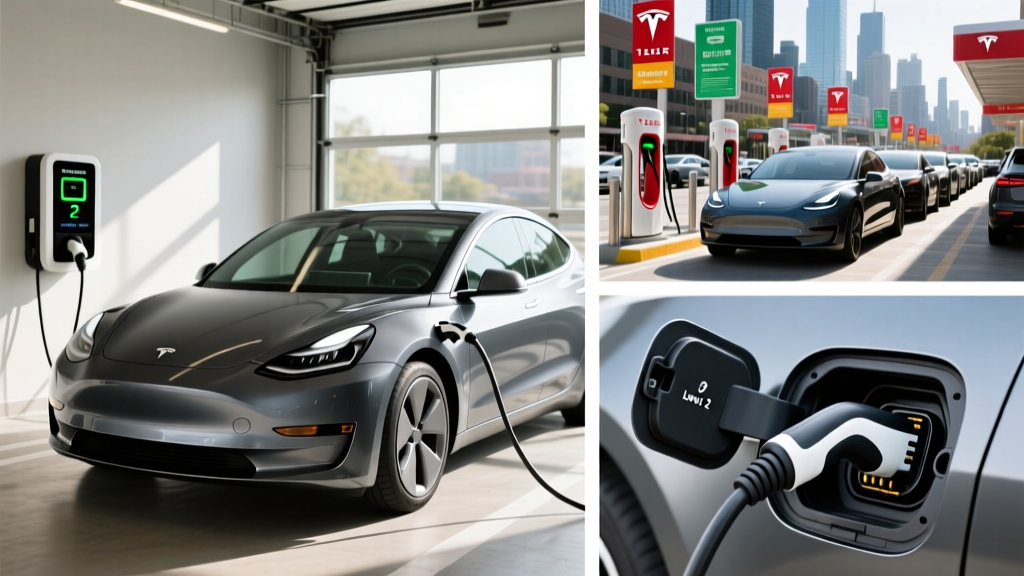
EV Charging Levels Explained: kW, Speed, and Range Added
Before installing a home charger, you need to understand the three charging tiers. A critical distinction: kW (kilowatts) measures power — the rate of energy delivery, like water pressure from a hose. kWh (kilowatt-hours) measures energy — the total amount stored in your battery, like the size of the bucket. A 10 kW charger delivers 10 kWh of energy in one hour.
| Level | Voltage / Amps | Max Power (kW) | Miles of Range / Hour | Best For |
|---|---|---|---|---|
| Level 1 | 120V / 12A | 1.4 kW | 3–5 mi/hr | Overnight top-ups, PHEVs |
| Level 2 | 240V / 32–48A | 7.7–11.5 kW | 25–44 mi/hr | Daily home charging |
| DC Fast | 200–800V DC | 50–350 kW | 150–1,000+ mi/hr | Road trips, quick top-ups |
For context, a modern EV like the Hyundai Ioniq 5 (84 kWh usable battery, EPA range 303 miles) charging on a 48A Level 2 station at 11.5 kW would go from 10% to 80% in roughly 5.5 hours — easily accomplished overnight. On a 350 kW DC fast charger, that same 10–80% session takes approximately 18 minutes, though real-world charge curves taper significantly above 80% State of Charge (SoC).
Home EV Charger Installation: Electrical Requirements & Costs
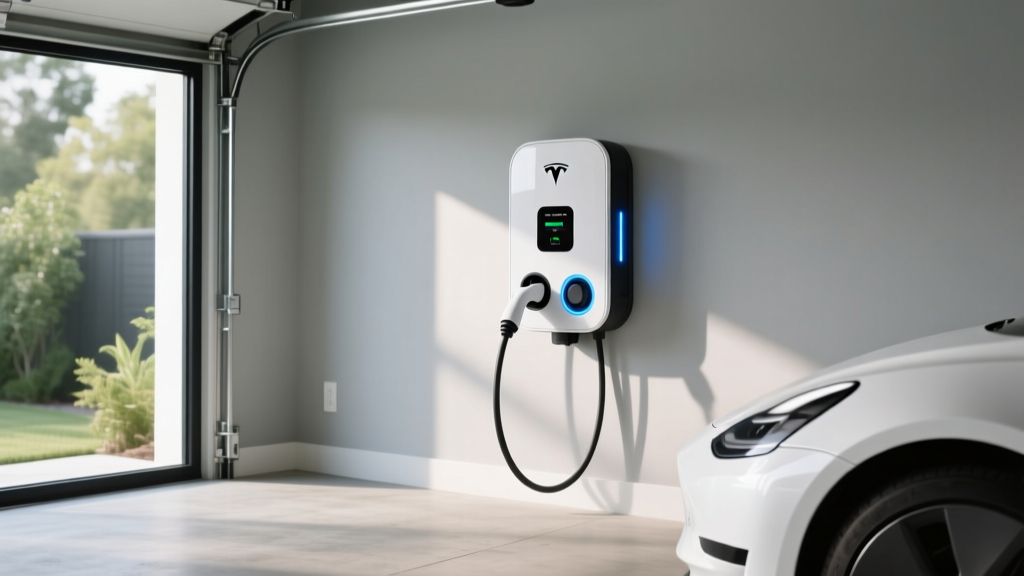
Installing a Level 2 home charger is the single most impactful upgrade an EV owner can make. Here's what it actually requires and costs in 2026.
Electrical Requirements
A typical Level 2 charger requires a 240V dedicated circuit — the same type of outlet your electric dryer or oven uses. Most homeowners install a NEMA 14-50 outlet (50A circuit, delivering up to 40A continuous to the vehicle) or hardwire the charger directly to a 60A breaker for 48A continuous delivery.
Panel capacity matters. Your electrical panel has a total amperage rating (typically 100A or 200A in modern homes). An electrician will perform a load calculation per NEC Article 220 to determine if your panel can support an additional 40–48A circuit. Homes with 100A panels often require a panel upgrade to 200A, which is a significant added cost.
Installation Cost Breakdown
| Component | Simple Install (Near Panel) | Complex Install (Long Run / Upgrade) |
|---|---|---|
| Level 2 Charger (Equipment) | $350–$700 | $350–$700 |
| Electrician Labor | $300–$600 | $1,000–$2,500 |
| Electrical Permit | $50–$150 | $50–$200 |
| Panel Upgrade (if needed) | N/A | $1,500–$3,500 |
| Conduit / Wiring Materials | $50–$100 | $200–$600 |
| TOTAL | $750–$1,550 | $3,100–$7,500 |
Permit and Code Requirements
Nearly all jurisdictions require an electrical permit for a new 240V circuit. Your electrician should pull this permit — avoid any contractor who suggests skipping it, as unpermitted work can void home insurance claims and cause issues at sale. Key code requirements include:
- Dedicated circuit: The EV charger must have its own breaker — no sharing with other appliances
- GFCI protection: NEC 2020 and later require GFCI protection for all 240V receptacles in garages (hardwired chargers are exempt from this specific requirement)
- Outdoor rating: If installing outside, the charger must carry a NEMA 4 or NEMA 4X weather-resistance rating
- Wire gauge: 6 AWG copper for 50A circuits; 4 AWG for 60A circuits (your electrician will spec this)
Connector Compatibility: NACS, CCS, and CHAdeMO in 2026
The North American charging connector landscape has consolidated significantly. As of the 2025–2026 model years, nearly every automaker has adopted or committed to the North American Charging Standard (NACS), originally developed by Tesla. Here's where things stand:
| Connector | Native Vehicles | Adapter Needed? |
|---|---|---|
| NACS (Tesla) | Tesla (all), Ford (2025+), GM (2025+), Rivian (2025+), Hyundai/Kia (2025+), Volvo/Polestar, Fisker | No (native); CCS→NACS adapter ~$150–$250 for older CCS vehicles |
| CCS1 | Legacy (2024 and older Ford, GM, Hyundai, VW, BMW); some 2025 models during transition | NACS→CCS adapter needed for Tesla Superchargers |
| CHAdeMO | Nissan Leaf (discontinued 2025); Mitsubishi Outlander PHEV | Limited adapter options; network declining |
For home Level 2 charging, the J1772 connector remains the standard plug on most home chargers. Tesla vehicles include a J1772-to-NACS adapter in the glovebox. If you buy a NACS-native vehicle (2025+), many new home chargers now ship with NACS connectors, or you can purchase a NACS-equipped wall unit directly.
Level 2 Home Charger Recommendations (2026)
Here are four proven Level 2 chargers for home use, selected for reliability, safety certifications, and real-world performance:
Power: Up to 11.5 kW (48A)
Connector: J1772 (NACS adapter included)
Cable: 23 ft
Smart Features: Wi-Fi, app scheduling, utility integration
Price: ~$549
Best for: Flexible amperage settings, utility demand-response programs
Power: Up to 11.5 kW (48A)
Connector: NACS native
Cable: 24 ft
Smart Features: Wi-Fi updates, power sharing (multiple units), load management
Price: ~$475
Best for: Tesla/NACS-native owners, multi-charger garages
Power: Up to 10 kW (40A)
Connector: J1772 (NACS version available)
Cable: 24 ft
Smart Features: OCPP-compatible, adjustable amperage, extreme cold rated (-40°F)
Price: ~$449
Best for: Cold climates, rugged outdoor installs, budget-conscious buyers
Power: Up to 11.5 kW (48A)
Connector: J1772
Cable: 24 ft
Smart Features: Energy monitoring, solar integration, load balancing with home panel
Price: ~$399
Best for: Solar homes, energy-monitoring enthusiasts, value pick
Charging Cost Per Mile: EV vs the Jaguar XF 5.0 Supercharged
This is where the comparison becomes stark. Let's calculate what it actually costs to "fuel" each vehicle on a per-mile basis.
| Scenario | Jaguar XF 5.0 SC (17 MPG, Premium) | Ioniq 5 AWD (29 kWh/100mi) |
|---|---|---|
| Home Charging (off-peak, $0.12/kWh) | N/A | $0.035/mile |
| Home Charging (standard, $0.17/kWh) | N/A | $0.049/mile |
| Public Level 2 ($0.30/kWh) | N/A | $0.087/mile |
| DC Fast Charging ($0.45/kWh) | N/A | $0.131/mile |
| Premium Gasoline ($4.10/gal) | $0.241/mile | N/A |
The bottom line: Even at the most expensive DC fast-charging rates, the EV costs roughly half per mile compared to the supercharged Jaguar. At home off-peak rates, the EV is 85% cheaper per mile in energy costs. Over 15,000 annual miles, that's a difference of roughly $2,700–$3,100 per year in fuel savings alone.
Charging Time Examples: What to Expect with Common Battery Sizes
Charging time depends on battery size (kWh), the charger's power output (kW), and the vehicle's onboard charger limit. Here are real-world estimates for popular 2026 EVs from 10% to 80% SoC:
- Chevrolet Equinox EV (85 kWh, NMC): 11.5 kW Level 2 → ~5.2 hrs | 150 kW DC → ~28 min
- Tesla Model Y (75 kWh, LFP rear-drive): 11.5 kW Level 2 → ~4.5 hrs | 250 kW DC → ~22 min
- Hyundai Ioniq 5 (84 kWh, NMC): 10.9 kW Level 2 → ~5.3 hrs | 350 kW DC → ~18 min
- Ford F-150 Lightning (131 kWh ext. range): 11.5 kW Level 2 → ~8.1 hrs | 150 kW DC → ~55 min
- BMW i4 eDrive40 (81.5 kWh, NMC): 11 kW Level 2 → ~5.1 hrs | 200 kW DC → ~31 min
Frequently Asked Questions
Does the 2011 Jaguar XF 5.0 Supercharged have a limited-slip differential?
Yes, but it's an electronic limited-slip differential (eLSD), not a mechanical unit. It uses the car's Dynamic Stability Control system to brake the inside rear wheel under cornering load, effectively transferring torque to the outside wheel. It does not provide a true locking function like a Torsen or clutch-type LSD. For most road driving, it's adequate; for track use, its intervention can feel delayed compared to a mechanical system.
How much does it cost to install a home EV charger?
A straightforward Level 2 installation (panel nearby, short wire run, no panel upgrade) typically costs $750–$1,550 total including equipment, electrician labor, and permit. Complex installations requiring long conduit runs, trenching, or a 200A panel upgrade can range from $3,100–$7,500. Always get a load calculation from a licensed electrician before committing.
How fast will each charging level add range?
Level 1 (120V standard outlet) adds 3–5 miles of range per hour — suitable for plug-in hybrids or very low daily mileage. Level 2 (240V) adds 25–44 miles per hour depending on amperage and vehicle efficiency, fully replenishing most EVs overnight. DC fast charging adds 150–1,000+ miles per hour at peak rate, enabling 10–80% charges in 18–55 minutes depending on battery size and peak charge rate.
Which connector/charger is compatible with my EV?
For 2025–2026 model-year vehicles, most new EVs use the NACS connector natively. Older (2024 and prior) non-Tesla EVs typically use CCS1. The Nissan Leaf uses CHAdeMO. For home Level 2 charging, most chargers ship with a J1772 plug, which works with all EVs (Tesla includes an adapter). Check your vehicle's charge port before purchasing a hardwired NACS-only unit.
How much does EV charging cost per mile vs gas?
Home charging at off-peak rates ($0.12/kWh) costs approximately $0.03–$0.05 per mile for a typical EV. Even expensive DC fast charging ($0.45/kWh) costs roughly $0.12–$0.14 per mile. Compare this to the 2011 Jaguar XF 5.0 Supercharged at 17 MPG combined on premium fuel ($4.10/gal): $0.24 per mile. The EV saves $2,500–$3,000 annually in energy costs at 15,000 miles/year.
What electrical upgrades might I need for a home charger?
The most common upgrade is a 200A electrical panel if your home currently has a 100A service. This costs $1,500–$3,500 and is the single biggest variable in installation cost. You may also need a new dedicated breaker slot, upgraded service wire from the utility, or a sub-panel if the charger is far from the main panel (detached garage). A licensed electrician's load calculation per NEC Article 220 will determine your exact requirements.
Sources: EPA Fuel Economy — 2011 Jaguar XF | IRS §30D Clean Vehicle Credit | NFPA National Electrical Code