The Global Gigafactory Boom: Shifting from Asia to the West
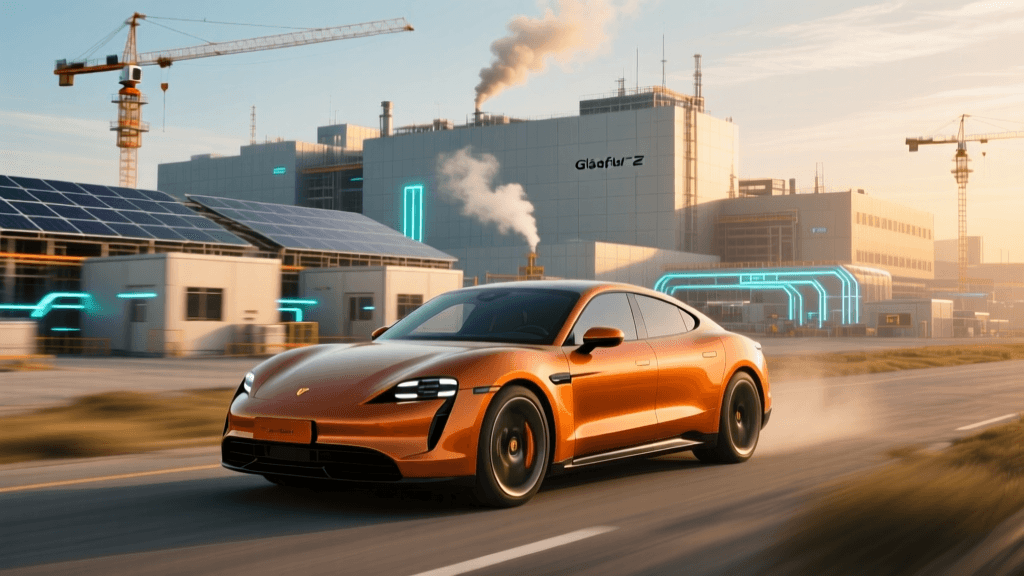
The electric vehicle (EV) landscape is undergoing a seismic shift in manufacturing geography. For the past decade, East Asia—specifically China, South Korea, and Japan—maintained a near-monopoly on lithium-ion battery cell production. However, the future trends and industry outlook for battery technology point toward a massive decentralization of capacity. Driven by aggressive climate policies, national security concerns, and lucrative tax incentives, North America and Europe are currently experiencing an unprecedented gigafactory construction boom. This localized capacity expansion is not just a geopolitical maneuver; it is a fundamental restructuring of the automotive supply chain that will directly impact EV availability, battery chemistry options, and ultimately, the price you pay for your next electric vehicle.
According to data highlighted in the International Energy Agency's Global EV Outlook, announced battery manufacturing capacity is projected to outpace global EV demand by a significant margin by the end of the decade. This looming oversupply is transitioning the industry from a era of constrained battery availability to one of intense price competition among cell manufacturers. For the automotive industry, this means the historical bottleneck of battery cell procurement is rapidly dissolving, paving the way for cheaper, more abundant EVs across all market segments.
Major Factory Announcements and Capacity Expansions
To understand the scale of this expansion, we must look at the specific gigafactory announcements that are currently reshaping the North American and European battery maps. Automakers are increasingly forming joint ventures with established cell manufacturers to secure dedicated capacity and qualify for localized production tax credits.
| Joint Venture / Company | Location | Target Capacity (GWh) | Primary Chemistry | Estimated Production Start |
|---|---|---|---|---|
| BlueOval SK (Ford & SK On) | Kentucky, USA | 129 GWh | NMC / NMCA | 2025 - 2026 |
| BlueOval Battery Park (Ford & CATL) | Michigan, USA | 35 GWh | LFP | 2026 |
| LG Energy Solution | Arizona, USA | 36 GWh | NMC (Cylindrical) | 2025 |
| Northvolt Six | Quebec, Canada | 60 GWh | NMC / LFP | 2026 |
| Stellantis & CATL | Castellón, Spain | 50 GWh | LFP | 2026 |
These facilities represent hundreds of billions of dollars in capital expenditure. The Department of Energy's Loans Programs Office has been instrumental in accelerating this domestic build-out, providing billions in conditional loans to onshore the critical mineral refining and cell manufacturing processes that were previously outsourced.
The LFP Revolution in North America
One of the most critical future trends emerging from these factory announcements is the aggressive introduction of Lithium Iron Phosphate (LFP) battery manufacturing in North America and Europe. Historically, LFP was almost exclusively manufactured in China due to its reliance on localized supply chains and lower profit margins compared to Nickel Manganese Cobalt (NMC). However, LFP's inherent advantages—lower cost, zero reliance on cobalt or nickel, superior thermal stability, and a longer cycle life—have made it the undisputed king of standard-range and entry-level EVs.
Ford’s partnership with CATL in Michigan and Stellantis’s joint venture with CATL in Spain are landmark moments for LFP commercialization outside of Asia. As these gigafactories come online between 2025 and 2027, we expect to see a massive proliferation of sub-$35,000 electric vehicles equipped with LFP packs, effectively neutralizing the price premium that has historically kept EVs out of reach for budget-conscious consumers.
How Capacity Expansions Impact EV Buyers: Actionable Advice
What does this macro-level industrial expansion mean for the individual consumer? The transition from a supply-constrained market to a capacity-rich market provides several strategic advantages for your next vehicle purchase.
1. Timing Your Next EV Purchase for Maximum Value
If you are currently shopping for an EV, understanding the gigafactory timeline is crucial. The massive capacity expansions announced today will not yield immediate price drops. Cell manufacturing involves complex ramp-up phases, yield-rate optimizations, and supply chain validations. Industry experts generally agree that the true economic benefits of these new North American and European gigafactories will materialize between late 2025 and 2027. If you can delay your purchase to the 2026 model year, you will likely benefit from intense price wars as multiple new cell suppliers compete for automaker contracts, resulting in lower MSRP figures and higher dealer incentives.
2. Navigating Battery Chemistries (LFP vs. NMC)
As localized factories split their production between LFP and NMC chemistries, buyers must adjust their ownership habits based on the cell type in their vehicle.
- If you buy an LFP-powered EV (Standard Range): LFP batteries are incredibly robust and do not suffer from the same degradation risks when held at high states of charge. Actionable advice: Charge your LFP battery to 100% at least once a week to allow the Battery Management System (BMS) to properly calibrate the cells. LFP is ideal for daily commuting and urban driving.
- If you buy an NMC/NMCA-powered EV (Long Range/Performance): These chemistries offer higher energy density, making them necessary for 300+ mile range vehicles and heavy towing. However, they degrade faster when kept at 100%. Actionable advice: Set your daily charge limit to 80% and only charge to 100% immediately before embarking on a long road trip.
3. Leveraging Localized Production for Tax Credits
The expansion of domestic gigafactories is directly tied to the US Inflation Reduction Act (IRA) Section 30D Clean Vehicle Credit. To qualify for the full $7,500 tax credit, an EV's battery components must be manufactured or assembled in North America, with critical minerals sourced from the US or free-trade partners. As the Kentucky, Michigan, and Arizona gigafactories reach full operational capacity, a significantly wider array of EV models will instantly qualify for these incentives. Before purchasing, always verify the specific battery origin of the exact trim level you are buying, as automakers frequently source cells from multiple global suppliers for the same vehicle model depending on current supply chain constraints.
Future Outlook: Oversupply or Strategic Reserve?
Looking toward the end of the decade, the sheer volume of announced gigawatt-hour (GWh) capacity has led some analysts to predict a severe battery oversupply. While nameplate capacity (the theoretical maximum output of a factory) is indeed staggering, effective capacity (the actual yield of high-quality, automotive-grade cells) is often 20% to 30% lower during the first few years of a factory's operation. Furthermore, the Environmental Protection Agency's guidelines on EV batteries and broader environmental regulations are pushing the industry toward advanced battery recycling. The gigafactories of the late 2020s will not just be assembling new cells; they will increasingly integrate closed-loop recycling facilities on-site to recover lithium, nickel, and cobalt from end-of-life packs.
Ultimately, the current wave of battery cell factory announcements and capacity expansions is a necessary growing pain for the EV industry. It marks the transition of electric mobility from a niche, supply-starved market into a mature, high-volume industrial powerhouse. For the consumer, this translates to a future defined by shorter wait times, diverse battery chemistry options tailored to specific driving needs, and a steady, unavoidable decline in the cost per kilowatt-hour of EV ownership.