The Boom in Second-Life Grid Storage: News and Context
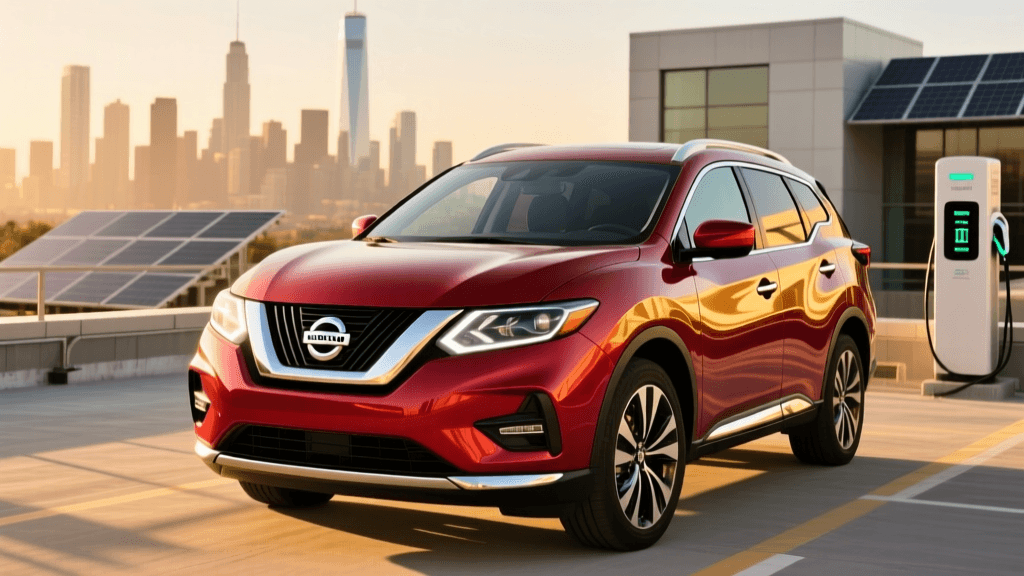
As the first major generation of electric vehicles reaches retirement age, a massive wave of lithium-ion battery packs is entering the secondary market. Rather than facing immediate shredding and recycling, these degraded but highly functional packs are finding a lucrative second life in stationary grid storage and residential solar applications. Recent industry developments highlight this shift; for example, commercial integrators are now deploying multi-megawatt-hour facilities utilizing repurposed modules. According to industry reports covered by PV Magazine, facilities like the B2U Storage Solutions plant in California have successfully deployed 17 MWh systems using recycled Nissan Leaf batteries, proving the commercial viability of this circular economy model.
However, transitioning a high-voltage automotive battery pack into a stationary 48V or high-voltage DC-coupled solar storage system is not a simple plug-and-play endeavor. Integrators, DIY solar enthusiasts, and commercial installers frequently encounter severe communication, balancing, and thermal management issues. The National Renewable Energy Laboratory (NREL) has long noted that while second-life batteries offer significant cost advantages, their heterogeneous degradation states require rigorous troubleshooting and advanced Battery Management System (BMS) tuning. Below, we explore the most common problems encountered when repurposing EV batteries for grid storage and provide actionable, technical solutions to resolve them.
1. Troubleshooting BMS Communication and CAN Bus Lockouts
The Problem: Original Equipment Manufacturer (OEM) battery packs, such as those from the Nissan Leaf, Chevrolet Volt, or Tesla Model S, rely on complex Controller Area Network (CAN) bus communication. When removed from the vehicle, the OEM BMS often detects a 'crash' or 'missing ECU' state and physically opens the main contactors, locking out the battery. Furthermore, stationary hybrid inverters (like Victron Quattro or OutBack Radian) expect standard Modbus or specific CAN protocols (like Pylontech or BYD), which OEM automotive BMS units do not natively speak.
The Solution:
- Emulate the Vehicle ECU: You must spoof the original vehicle's CAN messages to keep the contactors closed. Use open-source hardware like the EVTV CAN interface or a custom Arduino/Teensy setup programmed with the specific vehicle's CAN ID matrix. For Nissan Leaf Gen 1 and Gen 2 modules, sending the standard 10ms and 100ms heartbeat messages on the EV-CAN bus is mandatory to prevent the BMS from opening the relays.
- Verify Termination Resistors: A common reason for intermittent CAN bus dropout in custom-built second-life racks is missing termination resistors. Use a multimeter to measure the resistance across the CAN-High and CAN-Low pins. You should read exactly 60 ohms. If you read 120 ohms, you are missing a termination resistor at one end of the bus. If you read near 0 ohms, there is a short circuit in your wiring harness.
- Protocol Translation Bridges: To communicate with modern solar inverters, integrate a CAN-to-Modbus bridge or a secondary BMS master (such as the REC MasterQ or SimpBMS). These devices read the raw OEM CAN data, translate the State of Health (SoH), State of Charge (SoC), and cell voltage limits, and output standard Pylontech-compatible CAN or Modbus RTU to the solar inverter.
2. Solving Cell Imbalance and Internal Resistance Drift
The Problem: Unlike new server-rack batteries where cells are factory-matched, second-life EV modules consist of cells that have experienced varying degrees of degradation based on their physical location in the original car (e.g., center cells get hotter and degrade faster than edge cells). When wired in parallel or series, cells with higher Internal Resistance (IR) will heat up excessively and drag down the entire string's usable capacity, causing the BMS to trigger premature low-voltage or high-voltage cut-offs.
The Solution:
- AC Milliohm Testing: Do not rely solely on voltage to match used cells. You must use an AC Internal Resistance Meter (such as the YR1035+ or a professional Hioki tester). Measure the IR of every individual module or cell. For a reliable second-life grid bank, reject any cell that deviates more than 15% from the median IR of your batch, or any NMC cell showing an IR above 5 milliohms.
- Capacity Testing and Grouping: Perform a full charge/discharge cycle at a 0.5C rate using a programmable DC electronic load (like a Junsi iCharger or a specialized module tester). Group cells into 'matched sets' where the total capacity variance is within 3-5%. Place the weakest matched sets in the center of your parallel strings where cooling is typically most efficient.
- Top-Balancing Protocol: Before final assembly, wire all modules in parallel and charge them slowly (at 0.1C or lower) to the absolute maximum safe voltage (e.g., 4.20V for Nissan Leaf NMC chemistry, or 3.65V if you are utilizing LFP chemistry from a decommissioned transit bus). Let them sit at this voltage until the charging current drops to near zero. This ensures the BMS starts its operational life with a perfectly balanced baseline.
3. Mitigating Thermal Runaway Risks in Degraded Packs
The Problem: As lithium-ion cells age, the Solid Electrolyte Interphase (SEI) layer thickens, increasing internal resistance. Higher resistance translates directly to increased heat generation during charge and discharge cycles. Second-life batteries are significantly more prone to thermal runaway if subjected to the high C-rates typical of automotive use. The U.S. Department of Energy's ReCell Center emphasizes that thermal management is the most critical safety factor in extending the operational lifespan of retired EV batteries.
The Solution:
- Derate the C-Rate: Never charge or discharge a second-life NMC pack at the 1C or 2C rates it was designed for in a vehicle. For stationary solar storage, limit your continuous charge/discharge rate to 0.25C or a maximum of 0.5C. This drastically reduces heat generation and extends the remaining cycle life by thousands of cycles.
- Implement Active Thermal Cutoffs: Program your BMS or inverter with conservative thermal limits. While new EV batteries might tolerate 45°C to 50°C, set your second-life system's high-temperature cut-off to 35°C or 40°C. Install redundant K-type thermocouples directly on the cell busbars and inside the module casing, wired to a secondary safety relay that can physically disconnect the inverter if temperatures spike.
- Busbar and Contact Maintenance: Oxidation on reused aluminum or copper busbars creates massive localized heat spots. Clean all contact surfaces with a wire brush and apply a conductive antioxidant compound (like NO-OX-ID A-Special) before torquing the busbars to the manufacturer's exact specification. Use a thermal imaging camera during the first 48 hours of operation to identify and tighten any loose, heat-generating connections.
System Comparison: Second-Life NMC vs. New LFP Server Racks
When designing a grid storage system, integrators must weigh the upfront savings of second-life EV batteries against the ease of installation and safety of new Lithium Iron Phosphate (LFP) server-rack batteries. Below is a technical comparison to aid in system design and troubleshooting expectations.
| Feature | Second-Life EV NMC (e.g., Nissan Leaf) | New Server-Rack LFP (e.g., EG4, SOK) |
|---|---|---|
| Cost per kWh (Approx.) | $70 - $95 (Excluding custom BMS/enclosure) | $130 - $160 (Turnkey) |
| BMS Integration | High Complexity (Requires CAN spoofing/emulation) | Low Complexity (Native Pylontech/Victron protocol) |
| Thermal Stability | Lower (Prone to thermal runaway if mismanaged) | High (Inherently stable chemistry) |
| Remaining Cycle Life | 1,500 - 3,000 cycles (Depends on prior degradation) | 6,000+ cycles (Factory guaranteed) |
| Maintenance Level | High (Requires manual IR testing, cell matching) | Low (Plug-and-play, auto-balancing) |
Final Commissioning Checklist for Grid Integration
Before connecting your second-life battery bank to the grid-tied inverter, run through this critical troubleshooting checklist to prevent catastrophic equipment failure:
- Isolation Test: Use a megohmmeter (Megger) to verify there is no continuity between the high-voltage DC bus and the battery enclosure ground. A reading below 1 megaohm indicates a pinched wire or leaking module.
- Pre-Charge Circuit Verification: Ensure your pre-charge resistor circuit is functioning. Closing the main contactors against a large inverter capacitor bank without pre-charging will weld the contactors shut and destroy the BMS. Verify the pre-charge sequence takes between 2 to 5 seconds before the main relay engages.
- Software Limit Margins: Set your inverter's low-voltage disconnect (LVD) at least 0.2V per cell higher than the BMS's hard cut-off. The BMS should only act as a failsafe; the inverter should handle all routine operational limits to prevent hard BMS disconnects that can cause voltage spikes and blow inverter FETs.
By applying rigorous diagnostic protocols and respecting the unique electrochemical realities of retired automotive cells, integrators can safely unlock the massive grid-storage potential of second-life EV batteries, turning automotive waste into a cornerstone of the renewable energy transition.