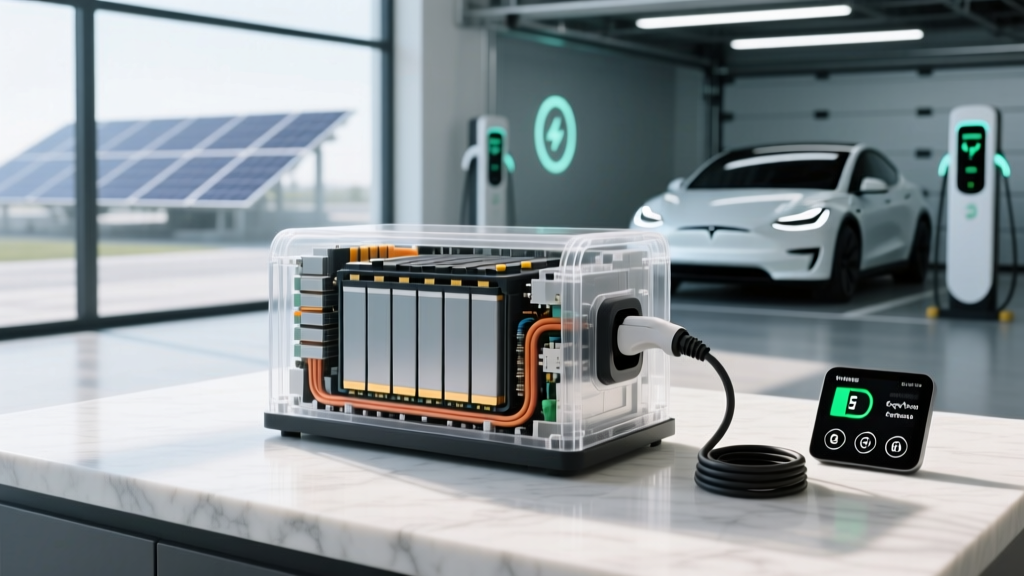
When new EV owners ask "what charges the battery in a car," they're usually picturing a single battery. In reality, every modern electric vehicle carries two: a high-voltage traction battery (typically 50–100+ kWh) that propels the car, and a small 12V auxiliary battery that powers electronics and wake-up circuits. This guide focuses squarely on the traction battery — the expensive, heavy, chemistry-dense component that defines an EV's range, charging speed, and long-term ownership cost.
Understanding what charges it, how it degrades, and what it costs to replace separates informed EV buyers from those who panic at the first range-bar drop. Let's break down the engineering, the economics, and the real-world data.
What Actually Charges an EV's Traction Battery
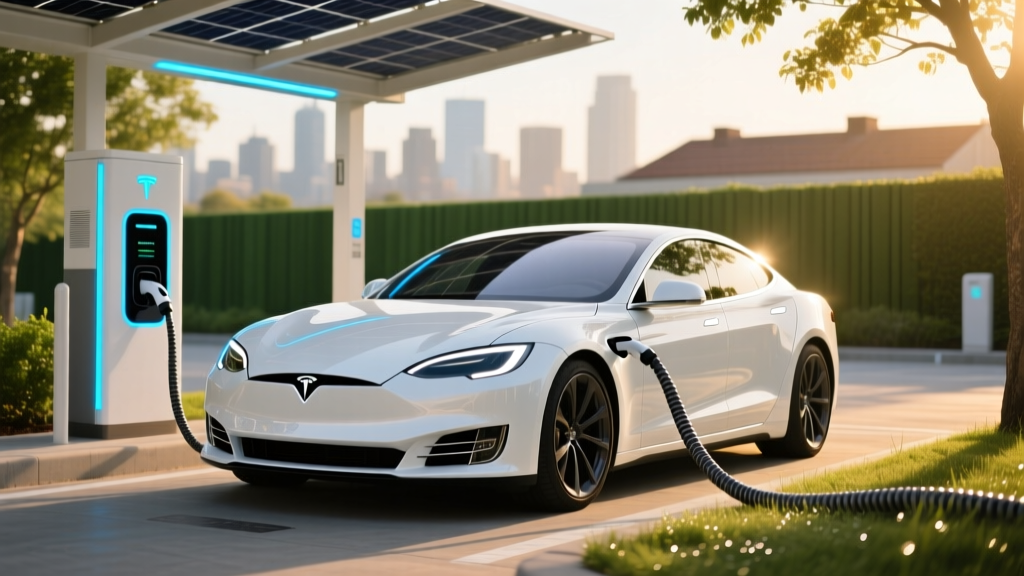
The high-voltage traction battery stores electrical energy in lithium-ion cells and is charged through three primary pathways:
- External charging (Level 1, Level 2, DC Fast Charging): Grid electricity flows through an onboard charger (for AC) or directly into the battery (for DC) at rates from 1.4 kW (a standard 120V outlet) to 350+ kW (a high-power DC fast charger).
- Regenerative braking: When you lift off the accelerator or brake, the electric motor reverses into a generator, converting kinetic energy back into stored electricity. This typically recovers 15–30% of energy in stop-and-go driving, adding a few miles of range per session.
- Thermal preconditioning (indirect): While not a "charge" source, battery thermal management systems use grid power while plugged in to warm or cool cells, preserving effective capacity and enabling faster charging — a critical distinction in cold climates.
The onboard charger converts AC from Level 1 or Level 2 sources into DC the battery can store. Most 2026 EVs ship with 11.5 kW onboard chargers; some (like the Ford F-150 Lightning Pro Power) support up to 19.2 kW. DC fast chargers bypass the onboard charger entirely, feeding DC straight into the battery management system (BMS) at far higher power levels.
LFP vs NMC vs NCA: Which Chemistry Is in Your EV?
The two dominant lithium-ion chemistries in 2026 EVs are LFP (lithium iron phosphate) and NMC/NCA (nickel manganese cobalt / nickel cobalt aluminum). Tesla, Ford, Rivian, and BYD have all shifted entry-level trims to LFP, while performance and long-range trims retain NMC or NCA for higher energy density. Here's how they compare:
| Attribute | LFP (LiFePO₄) | NMC / NCA |
|---|---|---|
| Energy density | 160–180 Wh/kg (lower) | 220–300 Wh/kg (higher) |
| Typical cycle life | 3,000–5,000+ cycles | 1,000–2,000 cycles |
| Cold-weather performance | Weaker below 32°F; needs preconditioning | Better low-temp output |
| Thermal stability | Excellent — less prone to thermal runaway | Good, requires more BMS management |
| Cost per kWh (2026) | ~$90–$110 | ~$130–$160 |
| Recommended SoC habit | Can charge to 100% daily | 80% daily; 100% only for trips |
| Typical vehicles (2026) | Tesla Model 3 RWD, Model Y RWD, Ford Mustang Mach-E Select, Rivian Standard | Tesla Long Range, Hyundai Ioniq 5 Long Range, BMW iX, Porsche Taycan |
Which is better? Neither — it depends on ownership style. If you charge at home nightly and prioritize longevity and lower cost, LFP wins. If you need maximum range per kWh and live in a cold climate, NMC/NCA is the better fit. According to IEA Global EV Outlook data, LFP's global market share surpassed 40% in 2025 and continues climbing in 2026.
How Long Do EV Batteries Actually Last?
The short answer: most EV batteries outlast the car they're installed in. The long answer requires looking at real degradation data rather than manufacturer marketing.
Geotab's analysis of over 10,000 EVs shows the average lithium-ion traction battery loses approximately 2.3% of capacity per year under typical use. After 10 years, that compounds to roughly 80–85% State of Health (SoH) — still well above the threshold most warranties guarantee. Recurrent Auto's 2025 fleet data reinforces this: Tesla Model 3 and Model Y packs average 88% SoH at 100,000 miles, while Chevy Bolts (with their aggressive thermal management) often show 90%+ at the same mileage.
Here's what typical degradation curves look like across major platforms:
| Mileage | Average SoH | Notes |
|---|---|---|
| 25,000 mi | 96–98% | Initial steepest drop, then plateaus |
| 50,000 mi | 93–96% | Linear degradation phase |
| 100,000 mi | 88–92% | Most vehicles still within warranty |
| 150,000 mi | 84–88% | Approaching warranty threshold |
| 200,000+ mi | 78–85% | Still functional; range reduction noticeable |
Important context: an EV with 80% SoH on a 300-mile EPA-rated pack still delivers ~240 miles of range — plenty for the vast majority of daily driving. Battery replacement before 150,000 miles is statistically rare outside of manufacturing defects covered under warranty.
Battery Warranty Terms: What's Actually Covered
Federal law mandates a minimum 8-year / 100,000-mile warranty on EV traction batteries for emissions-related compliance, and every major automaker in 2026 matches or exceeds this. The critical number to watch is the capacity retention threshold — the SoH level below which the manufacturer must replace or repair the pack.
| Manufacturer | Duration | Mileage | Capacity Threshold |
|---|---|---|---|
| Tesla (Model 3/Y LFP) | 8 years | 100,000 mi | 70% |
| Tesla (Long Range/Performance) | 8 years | 120,000 mi | 70% |
| Hyundai / Kia | 10 years | 100,000 mi | 70% |
| Ford (F-150 Lightning, Mach-E) | 8 years | 100,000 mi | 70% |
| GM (Ultium-based) | 8 years | 100,000 mi | 70% |
| Rivian | 8 years | 175,000 mi | 70% |
| BMW / Mercedes | 8 years | 100,000 mi | 70% |
Warranties cover defects and abnormal degradation below the threshold. They do not cover damage from collisions, flooding, or unauthorized modifications. If your 2026 Ioniq 5 shows 68% SoH at 80,000 miles, Hyundai will replace or refurbish the pack at no cost. Normal wear (say, 85% SoH at 100,000 miles) is not a warranty claim.
EV Battery Replacement Cost: When and How Much
Out-of-warranty battery replacement is the number one fear among prospective EV buyers — and the most misunderstood. Here's the data-driven reality:
| Vehicle / Pack Size | Battery Cost (Parts) | Labor + Install | Total Range |
|---|---|---|---|
| Tesla Model 3 RWD (60 kWh LFP) | $8,000–$11,000 | $2,000–$3,500 | $10,000–$14,500 |
| Tesla Model Y Long Range (82 kWh NMC) | $12,000–$16,000 | $2,500–$4,000 | $14,500–$20,000 |
| Hyundai Ioniq 5 (77.4 kWh) | $11,000–$15,000 | $2,500–$4,000 | $13,500–$19,000 |
| Ford F-150 Lightning Extended (131 kWh) | $18,000–$25,000 | $3,500–$5,500 | $21,500–$30,500 |
| Chevy Silverado EV (200+ kWh) | $25,000–$35,000 | $4,000–$6,000 | $29,000–$41,000 |
Several factors work in owners' favor:
- Most packs are never replaced. Data from Recurrent Auto shows fewer than 2% of EVs in their 15,000-vehicle sample needed out-of-warranty battery replacement through 2025.
- Module-level repair is increasingly common. Many packs allow individual module replacement for $1,500–$5,000 rather than full-pack swaps.
- Refurbished packs are entering the market. Certified refurbished replacements cost 40–60% less than new OEM packs.
- Per-kWh costs continue falling. BloombergNEF data shows battery pack prices declining from $141/kWh in 2023 to roughly $115/kWh in 2025, with further reductions expected through 2026.
The realistic scenario: if you buy a 2026 EV and drive it for 10 years / 150,000 miles, your battery will likely retain 80%+ capacity, still be within or just past warranty, and never need replacement. If you're buying a used EV past 120,000 miles, a pre-purchase battery health check is essential.
Factors That Accelerate (or Slow) Battery Degradation
Not all miles are equal when it comes to battery wear. Research from the National Renewable Energy Laboratory (NREL) and real-world fleet data identify these primary degradation accelerators:
- Frequent DC fast charging above 150 kW: Occasional use is fine; daily reliance on 250–350 kW chargers increases cell stress. Tesla's own data suggests exclusively Supercharged vehicles show ~0.5–1% additional annual degradation versus home-charged vehicles.
- Sustained high State of Charge (NMC/NCA): Storing an NMC pack at 100% for days accelerates electrolyte decomposition. LFP packs tolerate 100% storage far better.
- Deep discharges below 10%: Regularly running the battery to near-empty stresses the anode. The BMS reserves a buffer (typically 2–5% at the bottom), but repeated deep cycles still add wear.
- Extreme heat exposure: Prolonged ambient temperatures above 95°F without active cooling degrade cells faster. Liquid-cooled packs (standard on nearly all 2026 EVs) mitigate this significantly.
- Cold charging without preconditioning: Charging a cold LFP or NMC pack below 32°F at high rates can cause lithium plating. Preconditioning (automatic on most EVs when a charger is set in navigation) prevents this.
Battery Care Best-Practice Checklist
- Set daily charge limit to 80% for NMC/NCA; 100% is fine for LFP
- Use Level 2 home charging as your primary method
- Reserve DC fast charging for road trips, not daily commuting
- Enable preconditioning when navigating to a fast charger
- Avoid leaving the vehicle at 0% or 100% SoC for extended periods (weeks)
- Park in shade or a garage during extreme summer heat when possible
- Install manufacturer app updates — BMS firmware improvements can extend pack life
How to Check Your EV's Battery State of Health
State of Health (SoH) represents remaining capacity as a percentage of the pack's original rated capacity. A new 80 kWh pack at 95% SoH effectively holds 76 kWh. Here's how to monitor it:
- In-vehicle displays: Tesla's app (under Battery Health), Hyundai's EV menu, and BMW's iDrive all show estimated SoH or degradation percentage. Ford's MyFordPass includes a battery health indicator for 2025+ models.
- OBD-II diagnostic tools: Devices like the OBDLink SX paired with apps such as Leaf Spy (Nissan), Scan My Tesla, or Car Scanner can read BMS-reported SoH, cell voltage variance, and cycle counts.
- Third-party services: Companies like Recurrent and AVILOO offer battery health certificates based on telematics data — increasingly requested for used EV sales.
- Dealer diagnostics: A service center can run a full capacity test, typically requiring a controlled discharge/charge cycle that takes 2–4 hours.
Track SoH quarterly, not daily. Short-term fluctuations of 1–2% are normal and reflect temperature and recent driving patterns, not permanent degradation. The trend over 6–12 months is what matters.
Emerging Battery Tech: Solid-State and Silicon Anodes
Two technologies dominate forward-looking battery discussion, and both deserve honest timeline context:
Solid-state batteries replace the liquid electrolyte with a solid material (sulfide, oxide, or polymer), promising higher energy density (potentially 400–500 Wh/kg), faster charging, and improved safety. Toyota has announced solid-state-equipped EVs for 2027–2028, Samsung SDI targets 2027, and QuantumScape is in limited prototype validation with Volkswagen. However, manufacturing scalability remains the bottleneck. Realistic consumer availability: 2028–2030 for premium models, mid-2030s for mainstream pricing.
Silicon anode technology replaces graphite anodes with silicon-dominant composites, boosting energy density by 20–40% without the manufacturing overhaul of solid-state. Sila Nanotechnologies (partnered with Mercedes and Panasonic) and Group14 (partnered with Porsche) are shipping silicon-anode cells in limited 2025–2026 production. Expect broader adoption in 2027+ model-year performance vehicles.
Neither technology is available in a vehicle you can buy today. Any article claiming otherwise is ahead of reality. For 2026 buyers, LFP and NMC/NCA remain the proven, well-characterized options with extensive real-world track records.
Frequently Asked Questions
Does regenerative braking fully recharge an EV battery?
No. Regen recovers kinetic energy during deceleration and typically adds 1–5 miles of range per braking event in city driving. It cannot replace external charging — think of it as efficiency recovery, not a charging source. On long downhill grades, sustained regen can add 10–20 miles, but this is situational.
Can I replace just one module instead of the whole battery?
Often, yes. Many 2026 packs (Hyundai E-GMP, GM Ultium, Tesla structural packs) are modular. If a single module fails or degrades disproportionately, a qualified EV service center can replace it for $1,500–$5,000 depending on the vehicle. Full-pack replacement is typically reserved for widespread cell degradation or physical damage.
Does the §30D federal tax credit apply to battery replacements?
No. The IRS §30D credit applies only to the purchase of a new clean vehicle, not aftermarket components or battery replacements. However, battery replacement costs may be partially covered by extended warranties or service contracts purchased at the time of vehicle acquisition.
Will my EV battery degrade faster in Arizona or Florida heat?
Slightly, but modern liquid-cooled packs handle heat well. Data from Recurrent shows hot-climate EVs lose roughly 0.3–0.5% more capacity annually versus temperate-climate vehicles. The bigger degradation risk is cold-climate fast charging without preconditioning than sustained heat exposure in a vehicle with active thermal management.
Is it safe to charge my LFP battery to 100% every night?
Yes. LFP chemistry is structurally stable at full charge and actually benefits from periodic 100% charges for BMS cell-balancing accuracy. Tesla, Ford, and Rivian all recommend regular 100% charging for their LFP-equipped trims. This is a key advantage over NMC/NCA, where 80% daily limits extend longevity.
What happens to old EV batteries?
Most retired traction batteries enter "second-life" applications — stationary energy storage for solar installations, grid balancing, or commercial backup power — where 70–80% SoH is perfectly adequate. After second life, recycling facilities (Redwood Materials, Li-Cycle, Cirba Solutions) recover 95%+ of lithium, cobalt, nickel, and copper for new battery production. According to U.S. Department of Energy data, the domestic recycling supply chain scaled substantially through 2024–2026.