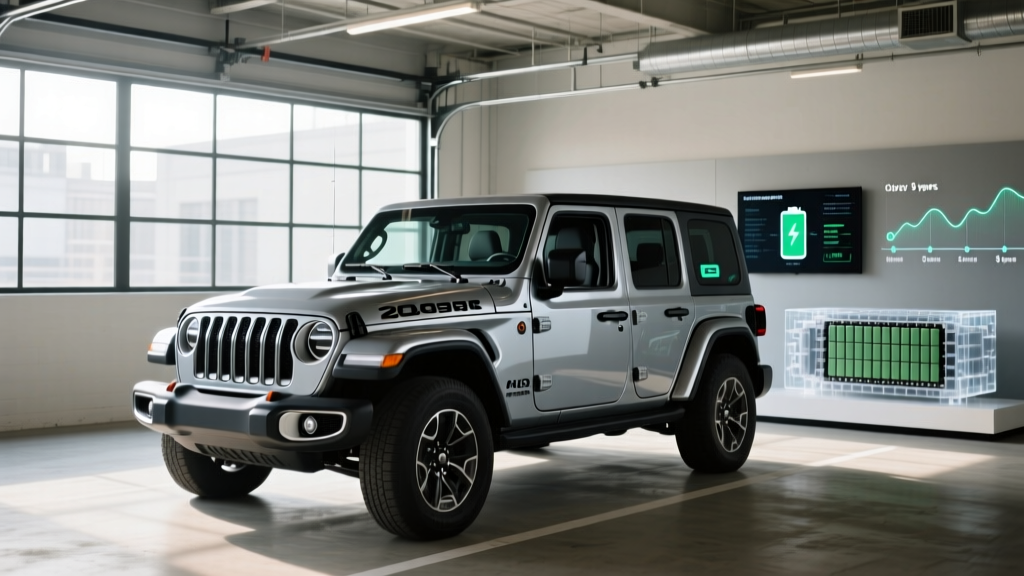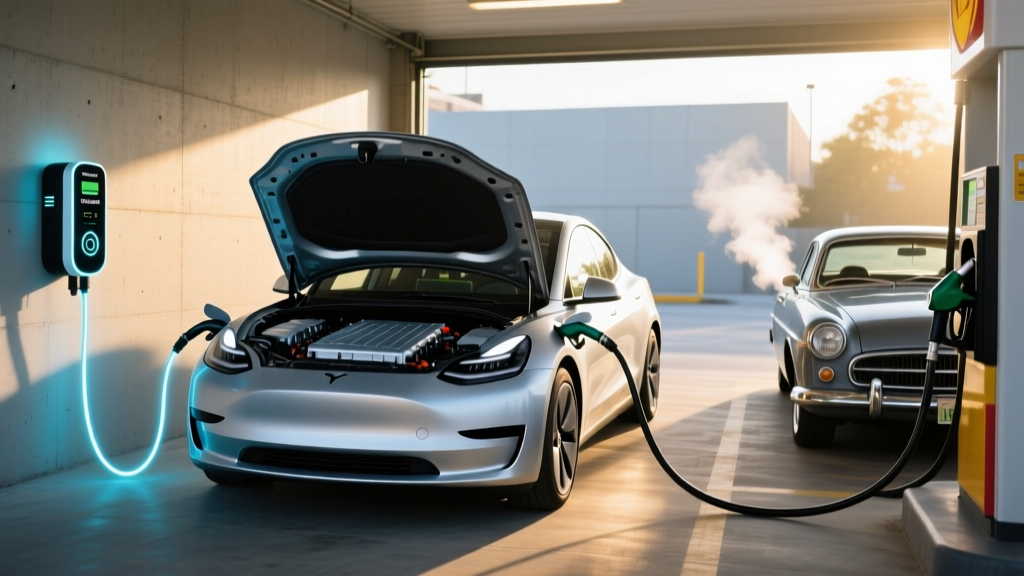
If you've ever typed "how long to let a car run to charge battery" into a search engine, you're likely coming from a gasoline-car mindset — where a dead 12V battery means firing up the engine and letting the alternator replenish it for 20 or 30 minutes. That question makes perfect sense for internal combustion vehicles. But when it comes to electric vehicles, the answer is fundamentally different, and understanding why reveals a lot about how EV battery systems actually work.
This guide breaks down how EV batteries charge (spoiler: the car doesn't need to "run"), how long modern lithium-ion and lithium iron phosphate packs last, what degradation actually looks like in real-world data, and what it costs if you ever need a replacement. Whether you own a 2026 Tesla Model 3, a Chevrolet Equinox EV, or a Ford Mustang Mach-E, the battery chemistry and care principles below apply.
Why "Letting the Car Run" Doesn't Apply to EVs
In a gasoline car, the alternator converts mechanical energy from the engine into electrical energy to recharge the 12V auxiliary battery. Idling the engine for 15–30 minutes after a jump-start is standard advice because the alternator needs time and RPMs to push enough current back into the battery.
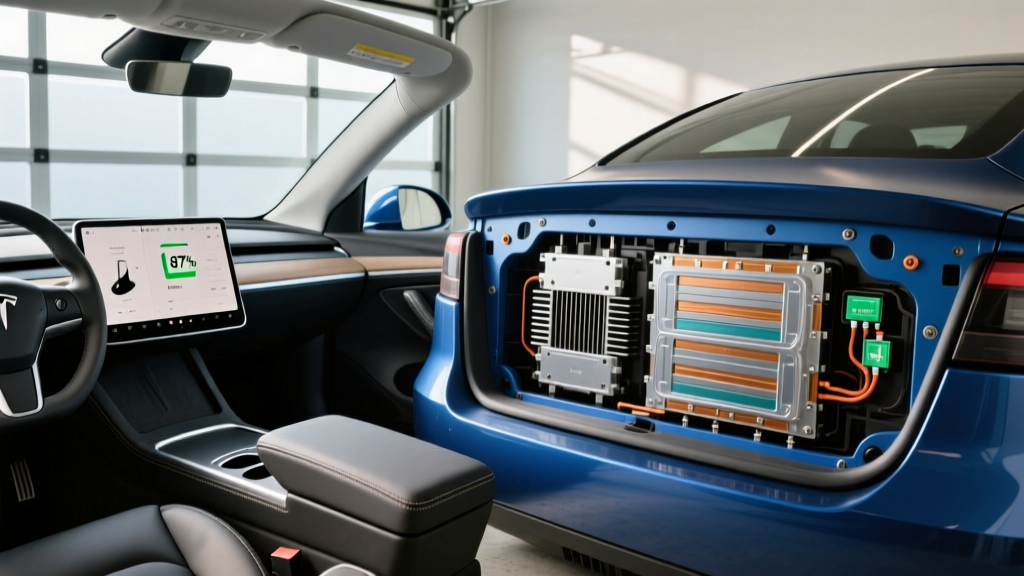
Electric vehicles flip this architecture entirely. An EV has two battery systems:
- High-voltage traction battery (typically 400V–800V, ranging from ~50 kWh to 120+ kWh): This powers the electric motors and is charged exclusively by plugging into an external power source — a Level 1 household outlet, a Level 2 home or public charger, or a DC fast charger.
- 12V auxiliary battery (usually a small lead-acid or lithium 12V unit): This powers the vehicle's computers, lights, door locks, and infotainment — just like in a gas car. It is maintained by a DC-DC converter that draws from the traction battery whenever the vehicle is powered on or in standby.
The critical distinction: you cannot recharge an EV's traction battery by letting the car sit running. There is no alternator, no engine, and no mechanism to generate electricity internally. The traction battery only gains charge from an external electrical source or through regenerative braking while driving (which recovers a small percentage of kinetic energy).
If your EV's 12V auxiliary battery dies — which can happen if the vehicle sits unplugged for weeks and the DC-DC converter doesn't activate — the solution is a 12V jump-start or trickle charger, just like a conventional car. But that 12V battery is separate from the high-voltage pack that actually propels the vehicle.
How EV Batteries Actually Charge: Levels and Speeds
Since idling doesn't charge an EV, understanding the actual charging methods is essential. Here's what EV owners use in practice:
| Charging Level | Power (kW) | Miles of Range per Hour | Typical Use Case | 10–80% Time (typical) |
|---|---|---|---|---|
| Level 1 (120V household outlet) | 1.0–1.4 kW | 3–5 mi/hr | Overnight top-ups, emergencies | 40–70+ hours |
| Level 2 (240V home/public) | 7.2–19.2 kW | 25–60 mi/hr | Daily home charging, workplace | 4–10 hours |
| DC Fast Charging | 50–350 kW | 150–1,000+ mi/hr | Road trips, rapid top-ups | 15–45 minutes |
A few important nuances that affect real-world charging speed:
- Charge curve taper: DC fast chargers deliver peak power only between roughly 10–50% State of Charge (SoC). Above 80%, charging slows dramatically to protect battery health. A vehicle that charges at 250 kW peak may drop to 40 kW above 80%. This is why most road-trip strategies target 10–80% charges rather than filling to 100%.
- Preconditioning matters: Most modern EVs (Tesla, Hyundai/Kia E-GMP, GM Ultium-based models) precondition the battery — warming or cooling it to the optimal temperature window before fast charging. Skipping preconditioning in cold weather can cut charging speed by 40–60%.
- kW vs. kWh: Kilowatts (kW) measure the rate of power delivery — like water flow through a hose. Kilowatt-hours (kWh) measure total energy stored — like the size of the tank. A 75 kWh battery charged at 150 kW doesn't fill in 30 minutes because the rate tapers.
Battery Chemistry Showdown: LFP vs NMC/NCA
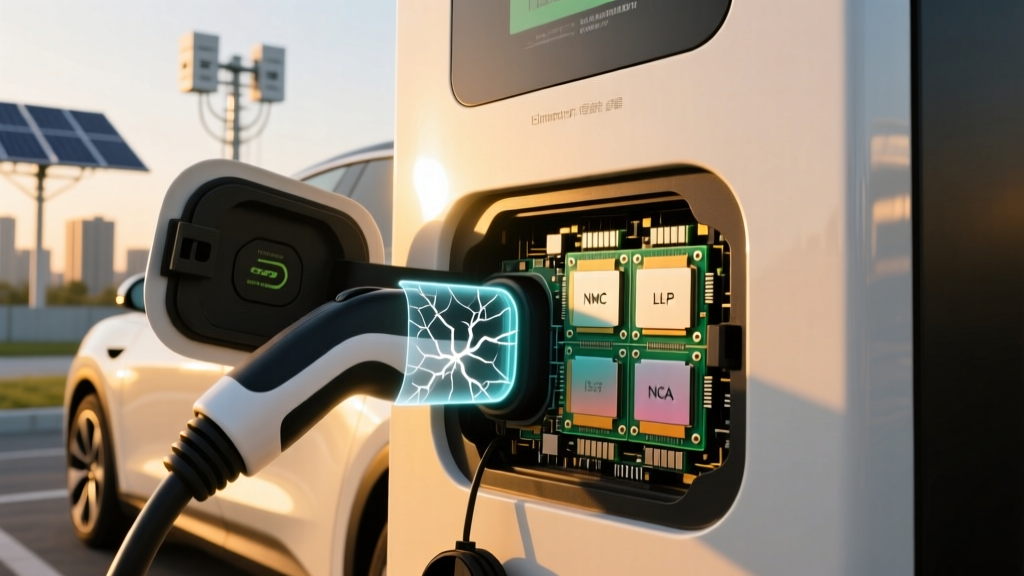
Not all EV batteries are built the same. The two dominant chemistries in 2026 vehicles are Lithium Iron Phosphate (LFP) and Nickel Manganese Cobalt / Nickel Cobalt Aluminum (NMC/NCA). Your vehicle's chemistry affects range, longevity, cold-weather performance, and even how you should charge it daily.
| Attribute | LFP (Lithium Iron Phosphate) | NMC/NCA (Nickel-based) |
|---|---|---|
| Energy Density | Lower (~150–180 Wh/kg cell-level) | Higher (~220–300 Wh/kg cell-level) |
| Cycle Life | 3,000–6,000+ cycles to 80% capacity | 1,000–2,500 cycles to 80% capacity |
| Cold-Weather Performance | Weaker — more range loss below freezing | Better low-temperature discharge |
| Daily Charging Recommendation | Can charge to 100% regularly | Best kept at 80% daily; 100% for trips only |
| Cost | Lower — no cobalt or nickel | Higher — commodity-sensitive materials |
| Typical Applications | Tesla Model 3 RWD, standard-range models, many Chinese-market EVs | Long-range and performance trims, larger SUVs and trucks |
Which is better? It depends on your use case. LFP batteries are the longevity champions — they tolerate daily 100% charging and deliver thousands more charge cycles before meaningful degradation. If you commute daily, charge at home, and don't need maximum range, LFP is arguably the better ownership experience. NMC/NCA batteries offer higher energy density, meaning more range in the same physical package, making them preferable for long-range variants and larger vehicles where weight and space matter. However, they degrade faster if routinely charged to 100% and stored at high SoC.
For 2026 models, manufacturers like Tesla, BYD, and Ford (in the base Mustang Mach-E Select) use LFP for standard-range trims, while NMC dominates in extended-range and performance configurations. According to fueleconomy.gov, the 2026 Tesla Model 3 RWD with its LFP pack achieves an EPA-estimated 341 miles of range, while the NMC-equipped Long Range AWD variant reaches 363 miles — illustrating the energy density trade-off.
How Long Do EV Batteries Actually Last? Real Degradation Data
The fear of a sudden, expensive battery death is one of the most persistent barriers to EV adoption. The data tells a far less dramatic story.
Modern EV batteries are engineered to outlast the typical ownership period of the vehicle. Here's what real-world degradation data shows:
- Year 1–2: Most EVs lose 1–3% of total capacity. This initial drop is normal and related to SEI (solid electrolyte interphase) layer formation on the anode.
- Year 3–5 (50,000–100,000 miles): Degradation typically plateaus at around 5–8% total loss. A vehicle originally rated for 300 miles EPA might deliver 278–285 miles at this stage.
- Year 8–10 (100,000–200,000 miles): Average degradation of 10–15%. Data aggregated from fleet studies by Recurrent Auto across tens of thousands of vehicles shows most packs retain 85–90% of original capacity at the 8-year mark.
- 200,000+ miles: Many NMC packs retain 75–85% capacity. LFP packs in similar mileage brackets often show 85–92% retention due to their superior cycle life.
Outright battery failure (a pack that ceases to function) is rare. What does occasionally happen — particularly in earlier-generation EVs from the 2011–2017 era — is individual cell or module degradation that causes range loss or imbalance. Modern battery management systems (BMS) actively balance cells and manage temperature, significantly reducing this risk.
According to data from the U.S. Department of Energy and fleet analyses, fewer than 2–3% of EVs have required battery replacement outside of warranty coverage through the first decade of mass EV adoption.
What Does the EV Battery Warranty Cover?
Federal law in the United States mandates that EV batteries carry a minimum warranty of 8 years or 100,000 miles (whichever comes first). In California Air Resources Board (CARB) states — which include California, New York, Massachusetts, Oregon, Washington, and several others — the requirement extends to 10 years or 150,000 miles.
| Manufacturer | Warranty Period | Mileage Limit | Capacity Retention Threshold |
|---|---|---|---|
| Tesla (Model 3/Y RWD with LFP) | 8 years | 100,000 miles | 70% |
| Tesla (Model 3/Y Long Range/Performance) | 8 years | 120,000 miles | 70% |
| Hyundai/Kia (E-GMP platform) | 10 years | 100,000 miles | 70% |
| General Motors (Ultium-based EVs) | 8 years | 100,000 miles | 70% (some trims 60% for commercial) |
| Ford (Mustang Mach-E, F-150 Lightning) | 8 years | 100,000 miles | 70% |
| Volkswagen (MEB platform) | 8 years | 100,000 miles | 70% |
What the warranty actually means: If your battery's usable capacity drops below the stated threshold (typically 70% of original) within the warranty period, the manufacturer will repair or replace the pack at no cost. This doesn't mean you get a brand-new battery — it means the pack will be restored to at least the threshold capacity, often through module-level replacement.
What voids the warranty: Damage from collisions, flooding, or improper modifications (aftermarket battery tampering) is excluded. Normal degradation below the threshold within the warranty window is covered. Always check your specific owner's manual and consult the IRS §30D guidelines if you're also tracking federal tax credit eligibility, as battery sourcing requirements can affect credit qualification independently of warranty terms.
EV Battery Replacement Cost: What to Expect
If your battery degrades below warranty thresholds after the coverage period expires — or if it suffers physical damage — replacement costs vary significantly by vehicle, battery size, and chemistry.
| Vehicle Class / Example | Battery Size (kWh) | Estimated Replacement Cost (parts + labor) | Typical When Needed |
|---|---|---|---|
| Compact EV (e.g., Chevrolet Bolt EV/EUV) | 60–65 kWh | $9,000–$14,000 | 200,000+ mi or 12+ years (if at all) |
| Mid-size sedan/crossover (e.g., Tesla Model 3, Hyundai Ioniq 5) | 75–84 kWh | $12,000–$18,000 | 200,000+ mi or 12+ years |
| Large SUV/truck (e.g., Ford F-150 Lightning, Rivian R1T) | 98–135 kWh | $18,000–$30,000+ | 200,000+ mi or 15+ years |
| Luxury EV (e.g., Mercedes EQS, BMW iX) | 90–120 kWh | $20,000–$35,000 | 200,000+ mi or 12+ years |
Context matters enormously here. The average age of a vehicle on U.S. roads is roughly 12.6 years (per S&P Global Mobility data). Most EVs with current-generation battery packs will see their batteries outlast the vehicle's useful economic life. Battery costs per kWh have fallen from over $1,100/kWh in 2010 to approximately $125–$140/kWh at the cell level in 2025–2026, and replacement costs continue to trend downward as manufacturing scales and recycling infrastructure matures.
Additionally, module-level repairs are increasingly available. Rather than replacing an entire pack, some shops and mobile technicians can identify and swap degraded modules for $2,000–$6,000, restoring most of the lost capacity.
Factors That Accelerate Battery Degradation
While modern BMS hardware and software do an excellent job protecting battery health, owner habits still influence the rate of degradation. The primary stressors for lithium-ion cells are heat, extreme SoC states, and high-current charging.
- Avoid sustained 100% SoC: For NMC/NCA batteries, set your daily charge limit to 80%. Reserve 100% for road trips and charge to full just before departure. LFP batteries tolerate 100% better and manufacturers often recommend periodic full charges for calibration.
- Don't store at 0%: Storing an EV with a near-empty battery for weeks can cause copper dissolution on the anode. If storing long-term, leave the vehicle plugged in at 50% SoC.
- Minimize DC fast-charging frequency: Occasional fast charging is fine — road trips won't kill your battery. But daily reliance on 150+ kW DC charging accelerates degradation compared to Level 2 charging. Studies suggest exclusive fast-charging can add 1–3% additional capacity loss over 100,000 miles versus Level 2-only charging.
- Precondition before fast charging: Use your vehicle's navigation-routed preconditioning (available on Tesla, Hyundai, GM, and others) to bring the battery to optimal temperature before arriving at a DC charger. This improves charge speed and reduces thermal stress.
- Park in shade or a garage in extreme heat: Prolonged exposure to ambient temperatures above 100°F (38°C) with a high SoC accelerates electrolyte decomposition. A cool garage is the best battery insurance in hot climates.
- Don't obsess over cold-weather range loss: EVs lose 20–40% of range in sub-freezing conditions due to increased internal resistance and cabin heating demands. This is temporary — capacity returns when temperatures rise. Using seat heaters and a heat pump (standard on many 2026 models) reduces the impact.
Monitoring Battery Health: How to Check State of Health (SoH)
State of Health (SoH) is the metric that tells you what percentage of the battery's original capacity remains usable. Unlike a simple range estimate, SoH accounts for the battery's actual energy storage capability independent of temperature or driving conditions.
Here's how owners can check SoH in practice:
- In-vehicle diagnostics: Some manufacturers (notably Tesla, BMW, and Mercedes) provide SoH or battery health indicators in the service menu or mobile app. Tesla's app, for instance, shows estimated range at 100% which can be cross-referenced against the original EPA figure.
- OBD-II diagnostic tools: Third-party tools like the OBDLink SX paired with apps such as ABRP (A Better Route Planner) or LeafSpy (for Nissan Leaf owners) can read detailed battery telemetry including SoH, cell voltage variance, and pack temperature.
- Dealer service check: Most dealerships can run a battery health report during routine service visits. This is especially useful before purchasing a used EV — request a printed SoH report.
- Recurrent and similar services: Companies like Recurrent offer battery health reports that compare your pack's degradation against a fleet database of identical vehicles, providing context on whether your degradation is normal, better, or worse than average.
For used-EV buyers, a SoH check is as critical as a compression test on a used gas car. A 2022 model showing 92% SoH at 45,000 miles is well within normal expectations. The same model at 78% SoH would warrant a warranty claim investigation.
What's Next: Solid-State and Silicon Anode Batteries
If you're researching EV batteries, you've likely seen headlines about solid-state batteries promising 500+ mile ranges and 10-minute charging. Here's a realistic, data-grounded assessment of where these technologies stand as of 2026:
- Solid-state batteries: These replace the liquid electrolyte with a solid material, offering higher energy density, faster charging potential, and improved safety (no flammable electrolyte). Toyota has announced limited production of solid-state EVs targeted for 2027–2028, with initial deployment in low-volume, premium models. Samsung SDI and QuantumScape are also in advanced testing phases. Realistically, broad market availability in mainstream vehicles remains 4–7 years away. Manufacturing scale and cost are the primary bottlenecks — current solid-state cells cost significantly more than equivalent NMC cells.
- Silicon-dominant anodes: Companies like Sila Nanotechnologies and Group14 are replacing graphite anodes with silicon-based composites, increasing energy density by 20–40% at the cell level. These are already appearing in limited applications (the Mercedes G-Class 580e uses a silicon-anode battery from Group14). Expect broader adoption in premium EVs by 2027–2028, with cost reductions enabling mainstream use by the early 2030s.
- Sodium-ion batteries: CATL and BYD have begun producing sodium-ion packs for lower-cost, shorter-range applications. These offer lower energy density than LFP but use abundant, cheap materials. They're appearing in Chinese-market city EVs and energy storage but are unlikely to replace lithium-ion in U.S. long-range vehicles within this decade.
These technologies are genuinely promising but remain in the announced or limited-production stage. For buyers choosing an EV today, current-generation LFP and NMC batteries represent mature, well-understood technology with extensive real-world longevity data.
Frequently Asked Questions
How long do EV batteries last in years and miles?
Most modern EV batteries are designed to retain 70–85% of original capacity at 200,000 miles or 12–15 years. Data from fleet studies shows the majority of packs outlast the vehicle's economic lifespan. Outright failure is rare — gradual capacity loss of 1–2% per year is the norm.
How much does an EV battery cost to replace?
Replacement costs range from approximately $9,000 for smaller packs (60 kWh) to $30,000+ for large truck/SUV packs (130+ kWh), including labor. However, battery replacement is uncommon — fewer than 3% of EVs have needed replacement outside warranty. Costs continue to decline as cell prices fall and module-level repair becomes more available.
What does the EV battery warranty cover?
Federal minimum is 8 years/100,000 miles with a 70% capacity retention threshold. CARB states extend this to 10 years/150,000 miles. If your battery drops below the threshold within the warranty period, the manufacturer repairs or replaces it at no cost. Physical damage and aftermarket modifications are excluded.
How do I check and maximize my EV battery health?
Check SoH through your vehicle's app, OBD-II diagnostic tools, dealer service reports, or third-party services like Recurrent. Maximize health by limiting daily charge to 80% (NMC/NCA), avoiding extreme heat storage at high SoC, preconditioning before DC fast charging, and minimizing exclusive reliance on fast charging for daily needs.
LFP vs NMC — which battery chemistry is better?
LFP offers superior cycle life (3,000–6,000 cycles), lower cost, and tolerance for daily 100% charging, making it ideal for commuters and daily drivers. NMC/NCA provides higher energy density (more range per pound), better cold-weather performance, and is standard in long-range and performance trims. Neither is universally better — the right choice depends on your driving patterns, climate, and range needs.
Can I charge my EV by letting it idle or "run"?
No. EVs have no alternator or internal combustion engine. The traction battery charges only through an external electrical connection (Level 1, Level 2, or DC fast charger) or marginally through regenerative braking while driving. Idling an EV does not add range to the traction battery.