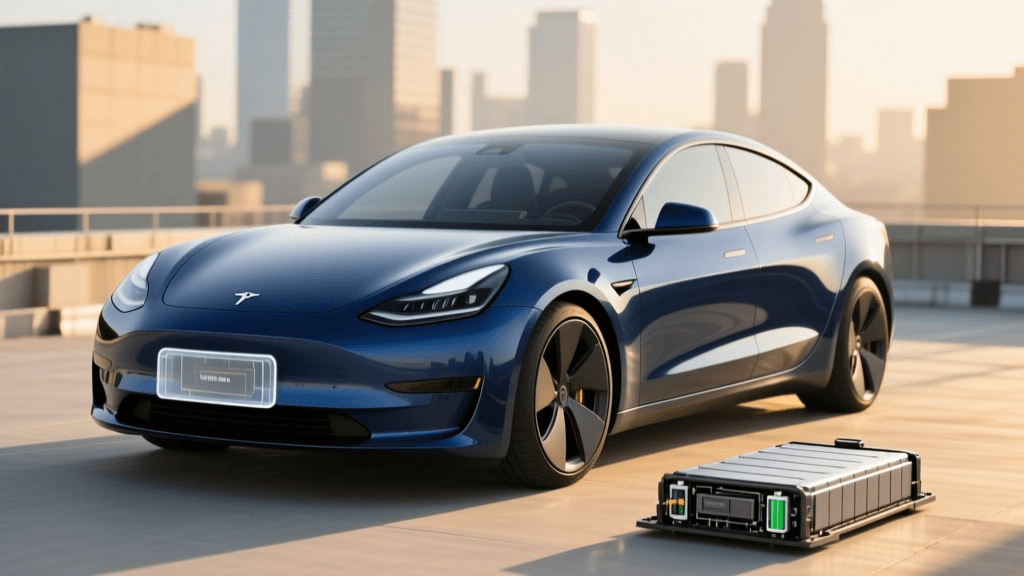
Introduction to Used EV Battery Health
Purchasing a used electric vehicle (EV) requires a fundamentally different evaluation process than buying a traditional internal combustion engine (ICE) vehicle. While ICE buyers focus on engine compression, transmission shifts, and oil leak histories, EV buyers must center their attention on the high-voltage battery pack. The battery is the single most expensive component in an electric vehicle, often accounting for 30% to 40% of the car's total value. According to the U.S. Department of Energy's Alternative Fuels Data Center, modern lithium-ion battery packs are designed to last the lifetime of the vehicle, but their capacity inevitably degrades based on chemistry, thermal management, and charging habits.
For used EV buyers, relying solely on the dashboard's estimated range is a critical mistake. Dashboard estimates fluctuate based on recent driving efficiency, ambient temperature, and cabin climate control usage. To make an informed, financially sound purchase, buyers must adopt a data-driven approach to assess the battery's true State of Health (SoH). This comprehensive guide provides a data-driven checklist, comparing diagnostic methodologies and detailing the exact metrics you need to pull before signing the bill of sale.
The Core Metrics: Understanding SoH, DoD, and Cycle Counts
Before diving into the physical inspection, it is vital to understand the three primary data points that define battery health:
- State of Health (SoH): This is the ultimate metric for used EV buyers. SoH is a percentage representing the battery's current maximum capacity compared to its original factory capacity. For example, if a 75 kWh battery pack has an SoH of 88%, its actual usable capacity is now 66 kWh. According to Argonne National Laboratory's battery research, lithium-ion degradation is non-linear; batteries typically experience a steeper drop in SoH during the first 20,000 miles before leveling off into a slow, predictable decline.
- Depth of Discharge (DoD): This refers to how deeply the battery has been regularly drained. Vehicles frequently discharged to 0% and charged to 100% (100% DoD) will exhibit faster degradation than those kept between 20% and 80%.
- Equivalent Full Cycles: One cycle equals a full 100% to 0% discharge. A vehicle might have 2,000 partial charges, but the BMS (Battery Management System) tracks the equivalent full cycles. Most modern liquid-cooled NMC (Nickel Manganese Cobalt) batteries are rated for 1,500 to 2,000 full cycles before reaching 80% SoH.
Data Comparison: OBD2 Scanners vs. Dealership Diagnostics vs. Telematics
How do you actually extract the SoH data? The vehicle's dashboard will not show you the SoH percentage. You must use external diagnostic tools. Below is a data-driven comparison of the three primary assessment methods available to used EV buyers.
| Assessment Method | Equipment Required | Estimated Cost | Data Granularity | Pros & Cons |
|---|---|---|---|---|
| OBD2 Scanner + App | Bluetooth ELM327 OBD2 Dongle + Smartphone App (e.g., Car Scanner, Leaf Spy) | $25 - $60 | High (Cell-level voltage, exact SoH, cycle count) | Pros: Immediate, cheap, highly detailed. Cons: Requires buyer to bring hardware to the test drive. |
| Dealership Diagnostic | OEM proprietary scan tools operated by a certified technician | $100 - $175 | Highest (OEM certified health certificate) | Pros: Official record, catches hidden BMS faults. Cons: Expensive, requires scheduling, sellers may refuse the trip. |
| Telematics / Third-Party API | Connected Car App (e.g., Recurrent, Tessie, OEM App) | Free - $15/mo | Medium (Algorithmic SoH based on historical charge data) | Pros: Shows historical degradation trends. Cons: Requires current owner's login credentials to access. |
For the independent used car buyer, the OBD2 Scanner method offers the highest return on investment. By purchasing a high-quality OBD2 dongle (such as the OBDLink MX+ or Vgate iCar Pro) and pairing it with an EV-specific app, you can pull live BMS data directly from the car's CAN bus network during a test drive.
The Ultimate Data-Driven Battery Assessment Checklist
When you arrive to inspect the used EV, follow this strict, data-driven checklist to evaluate the high-voltage battery pack.
Step 1: The 100% SoC Calibration Test
Ask the seller to charge the vehicle to 100% State of Charge (SoC) prior to your arrival. Note that daily charging limits are usually set to 80% to preserve battery health, so a 100% charge is strictly for diagnostic purposes. Once at 100%, check the dashboard's estimated range. Compare this number to the vehicle's original EPA-estimated range. If a 2018 Tesla Model 3 Long Range (original EPA 310 miles) shows an estimated range of only 230 miles at 100% SoC, the battery has suffered significant degradation, or the BMS is out of calibration and requires a deep discharge/recharge cycle to recalibrate.
Step 2: OBD2 Cell Delta Analysis
Plug your OBD2 scanner into the port (usually located under the driver's side dashboard) and open your diagnostic app. Navigate to the 'Cell Voltages' screen. A battery pack is made up of dozens of individual modules. The BMS works to keep the voltage of all modules balanced. Look at the Cell Voltage Delta—the difference between the highest voltage cell and the lowest voltage cell.
- Healthy Pack: Delta is under 0.03V (30 millivolts).
- Acceptable Pack: Delta is between 0.03V and 0.05V.
- Warning Sign: Delta exceeds 0.05V. This indicates weak modules struggling to hold a charge.
- Dealbreaker: Delta exceeds 0.10V. The pack has a defective module group and will likely trigger a 'Service Battery' warning or fail a state inspection.
Step 3: The DC Fast Charge Throttle Test
Taking the car to a DC Fast Charger is a mandatory stress test. Plug the vehicle into a 50kW or 150kW+ charger and monitor the charge curve via the infotainment screen or your OBD2 app. A healthy battery will accept its peak charging rate (e.g., 150kW) up to about 50-60% SoC, after which the BMS will taper the speed to protect the cells. If the car immediately throttles down to a very low kW rate (e.g., under 20kW) while the battery is below 50% SoC, it indicates severe internal resistance, thermal management failure, or a heavily degraded pack that the BMS is actively restricting to prevent thermal runaway. As noted by FuelEconomy.gov's EV Technology overview, thermal management systems are critical to maintaining fast-charge capabilities over a vehicle's lifespan.
Step 4: VIN Check for Battery Recalls and Replacements
Run the Vehicle Identification Number (VIN) through the NHTSA database and the manufacturer's specific recall portal. Many early EVs, such as the Chevrolet Bolt EV and Hyundai Kona Electric, underwent massive, multi-billion-dollar battery recall campaigns due to manufacturing defects causing battery fires. You must verify if the recall software patch was applied or, more importantly, if the vehicle received a brand-new replacement battery pack. A Bolt EV with a documented 2022 battery replacement is actually a highly desirable purchase, as it resets the battery's lifespan and SoH back to 100%.
Model-Specific Degradation Data Analysis
Not all EV batteries degrade at the same rate. The chemistry and the thermal management system play massive roles. Here is a data comparison of average SoH at 100,000 miles for three popular used EV models:
- Tesla Model 3 (Liquid-Cooled NCA/NMC): Excellent thermal management keeps degradation low. Data shows average SoH at 100,000 miles is between 90% and 93%. These packs routinely exceed 300,000 miles before hitting the 80% SoH threshold.
- Nissan Leaf (Passive Air-Cooled LMO/NMC): The lack of active liquid cooling makes the Leaf highly susceptible to heat-induced degradation, especially in warmer climates. It is common to see 2013-2017 Leaf models with an SoH of 70% to 78% at 80,000 miles. Buyers must demand a 'Leaf Spy' report showing the 'Health Bars' (out of 12) before purchasing.
- Chevrolet Bolt EV (Liquid-Cooled NMC): Post-recall models feature heavily revised battery modules. Pre-recall models that haven't been serviced should be avoided. Serviced models show near 100% SoH regardless of odometer reading due to the replacement.
Warranty Transfer and Out-of-Pocket Cost Analysis
Understanding the financial risk of a degraded battery requires analyzing warranty coverage. By federal mandate in the United States, all EV high-voltage batteries must carry a minimum warranty of 8 years or 100,000 miles, whichever comes first. In states that follow California's ULEV/CARB regulations (such as New York, Massachusetts, and California itself), that mandate extends to 10 years or 150,000 miles.
Crucially, the battery warranty is tied to the VIN, not the original owner. It automatically transfers to subsequent buyers. However, you must read the fine print: the warranty only triggers if the battery capacity falls below a specific threshold, usually 60% to 70% SoH, or if it suffers a catastrophic failure. A battery at 75% SoH, while disappointing, will not be replaced under warranty.
If you purchase an out-of-warranty used EV and the battery fails, the out-of-pocket costs are staggering. A replacement battery for a Nissan Leaf averages $6,500 to $9,000. For a Tesla Model S or Model X, refurbished replacement packs from third-party shops like Electrified Garage range from $12,000 to $16,000, while OEM Tesla service center quotes can exceed $22,000. This financial exposure is exactly why performing the OBD2 cell delta test and pulling the exact SoH percentage is non-negotiable during the used car inspection process.
Conclusion
Buying a used EV can be an incredible way to access premium performance and zero-emission driving at a fraction of the original MSRP. However, the financial viability of the purchase hinges entirely on the health of the high-voltage battery. By ignoring the dashboard guessometer and instead relying on hard data—extracting the SoH percentage, measuring the cell voltage delta via OBD2, and analyzing the DC fast-charge curve—you eliminate the guesswork. Equip yourself with the right diagnostic tools, understand the specific degradation curves of the model you are targeting, and use this data-driven checklist to secure a reliable, long-lasting electric vehicle.