The Financial Reality of EV Battery Degradation
When an electric vehicle (EV) battery degrades beyond acceptable limits or suffers a catastrophic cell failure outside of the manufacturer's warranty window, owners are faced with a daunting financial decision. The cost of replacement can sometimes exceed the residual value of the vehicle itself. However, the narrative that a single bad cell requires a complete, $15,000 battery pack replacement is not always accurate. To make the most financially sound decision, EV owners must understand the critical cost and value breakdown between full pack replacement and module-level repair.
According to the U.S. Department of Energy's Alternative Fuels Data Center, modern EV batteries are designed to last the lifetime of the vehicle, but localized cell failures, thermal events, or manufacturing anomalies can still occur. When they do, understanding the internal architecture of your specific EV's battery is the first step toward minimizing out-of-pocket repair costs.
Understanding EV Battery Architecture: Modules vs. Packs
To evaluate repair costs, you must first understand how high-voltage batteries are constructed. An EV battery 'pack' is not a single, monolithic block of energy. In most traditional EV architectures, the pack is an enclosure that houses multiple 'modules.' Each module contains a specific number of individual lithium-ion cells wired in series and parallel, along with localized cell-monitoring sensors.
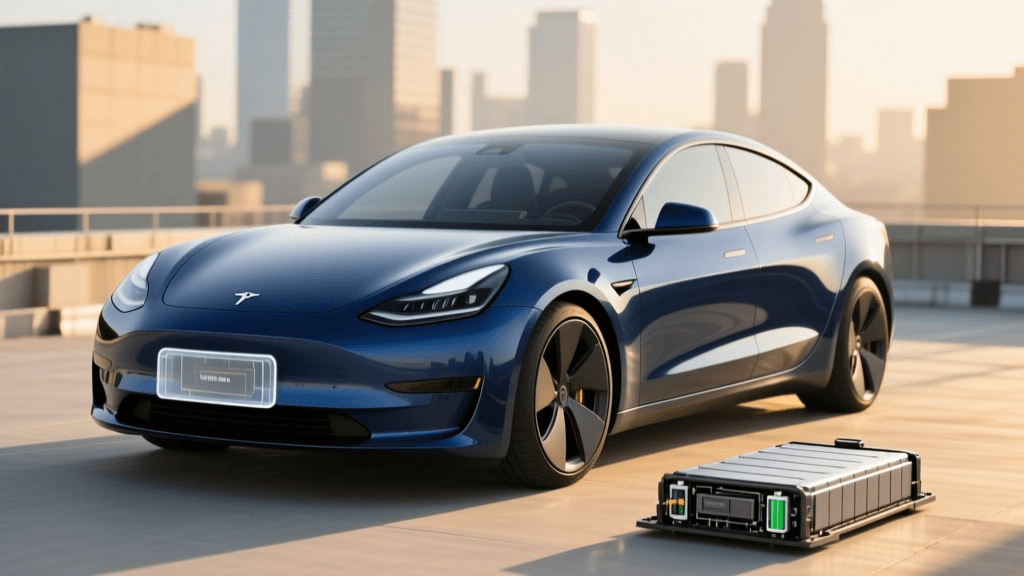
For example, a 60 kWh battery pack might be divided into 10 separate modules. If a single cell within one module develops an internal short circuit or experiences abnormal voltage sag, the entire module may be flagged by the Battery Management System (BMS) as faulty. In vehicles with modular designs, independent EV repair shops can open the pack, remove the single defective module, and replace it without disturbing the remaining healthy modules. However, newer vehicles utilizing Cell-to-Pack (CTP) or structural battery architectures (like the Tesla 4680 structural pack or BYD Blade Battery) eliminate modules entirely, making localized repair nearly impossible and mandating full pack replacement in the event of internal damage.
The Cost Breakdown: Full Pack Replacement
Replacing the entire battery pack is the most comprehensive solution, effectively resetting the vehicle's range and health metrics to factory specifications. However, it is also the most expensive route.
- Parts Cost: Depending on the capacity and chemistry (LFP vs. NMC), a new OEM battery pack typically ranges from $8,000 for smaller 40 kWh packs to over $20,000 for large 100+ kWh long-range packs.
- Labor Cost: Full pack replacement involves dropping the battery using specialized high-voltage lifts, disconnecting high-voltage and coolant lines, and swapping the unit. Labor generally runs between $1,200 and $2,500.
- Programming & Calibration: The new pack must be digitally married to the vehicle's BMS and gateway modules, adding 2 to 4 hours of dealership-level diagnostic time.
While expensive, a full pack replacement guarantees uniform cell aging, perfect voltage balancing, and a complete restoration of original range. It is the only viable option for vehicles suffering from widespread, generalized degradation where the overall State of Health (SoH) has dropped below 70%.
The Cost Breakdown: Module-Level Replacement
Module replacement is a targeted surgical strike. It is highly cost-effective but comes with significant technical caveats. If a diagnostic scan reveals that only one module is suffering from severe voltage deviation while the rest of the pack remains healthy, swapping just that module can save thousands of dollars.
- Parts Cost: Individual OEM modules typically cost between $800 and $2,500, depending on the vehicle. Aftermarket or salvaged tested modules can drop this cost to $400 - $1,000.
- Labor Cost: This is where module replacement gets complicated. The technician must open the battery enclosure, which requires breaking factory seals, safely discharging capacitors, and draining coolant. Labor for module replacement often ranges from $1,500 to $3,000 due to the meticulous safety protocols and resealing requirements.
- Consumables: New thermal interface paste, enclosure sealants, and replacement coolant are mandatory, adding $200 to $400 to the bill.
As noted by FuelEconomy.gov, the Battery Management System continuously monitors individual cell voltages to ensure safety and efficiency. If a replacement module is not properly balanced to match the existing pack, the BMS will restrict the entire pack's performance to match the lowest-performing cell group, negating the financial value of the repair.
Data Table: Module vs. Full Pack Replacement Comparison
| Vehicle Model | Battery Architecture | Full Pack Cost (Parts + Labor) | Single Module Cost (Parts + Labor) | Best Value Scenario |
|---|---|---|---|---|
| Chevrolet Bolt EV (60 kWh) | Modular (10 modules) | $14,000 - $16,500 | $2,200 - $3,800 | Module (if overall SoH > 85%) |
| Nissan LEAF (40 kWh) | Modular (24 modules) | $8,500 - $10,000 | $1,200 - $2,000 | Module (highly accessible) |
| Tesla Model S (90 kWh) | Modular (16 modules) | $15,000 - $19,000 | $2,500 - $4,200 | Module (for localized faults) |
| Tesla Model 3 (Structural) | Cell-to-Pack / Structural | $13,000 - $16,000 | N/A (Not modular) | Full Pack Replacement Only |
The Hidden Cost: Cell Balancing and Capacity Matching
The greatest risk in the 'Cost & Value Breakdown' of module replacement is the necessity of capacity matching. Lithium-ion batteries operate in series circuits; the total usable capacity of the pack is strictly limited by the weakest module. If you install a brand-new module with 100% capacity alongside 8-year-old modules sitting at 82% capacity, the BMS will cap the new module at 82% to prevent overcharging and thermal runaway.
To extract maximum value from a module replacement, specialized EV shops use advanced diagnostic tools to perform 'bottom balancing' and 'top balancing.' In some cases, technicians will source a used, tested module that perfectly matches the degraded state of your existing pack, rather than installing a brand-new one. This counterintuitive approach ensures voltage harmony across the pack and prevents the BMS from throwing secondary fault codes, ultimately providing a smoother, more reliable driving experience.
Diagnostic Thresholds: When to Choose Which Option
Deciding between a module swap and a full pack replacement requires a deep-dive diagnostic scan. Here is the general value matrix used by high-voltage technicians:
Choose Module Replacement When:
- The overall pack State of Health (SoH) is above 85%.
- Only one or two modules show severe voltage deviation (e.g., dropping below 3.0V under load while others stay above 3.4V).
- The vehicle has suffered localized physical damage or coolant intrusion affecting only one section of the battery tray.
- The cost of the vehicle does not justify a $15,000 full pack investment, but you want to keep it running for another 3-5 years.
Choose Full Pack Replacement When:
- The overall pack SoH has dropped below 75%, indicating generalized, systemic degradation.
- Multiple modules across different zones of the pack are showing elevated internal resistance.
- The vehicle utilizes a structural or Cell-to-Pack (CTP) architecture where modular repair is physically impossible.
- You plan to keep the vehicle for another decade and want the security of a new, unified battery warranty.
Warranty Implications and Resale Value
From a value perspective, it is crucial to remember the federal mandate regarding EV warranties. In the United States, automakers are required to warrant the battery pack against excessive capacity loss for a minimum of 8 years or 100,000 miles (10 years/150,000 miles in CARB states). 'Excessive loss' is typically defined as falling below 60% to 70% of original capacity. Always verify your warranty status before authorizing any out-of-pocket repairs.
If you proceed with an out-of-warranty module repair, be aware that third-party module replacements may void the remaining OEM warranty on the rest of the pack. Furthermore, when selling the vehicle, a full OEM pack replacement carries a premium on the used market, whereas a third-party module repair may require you to provide detailed service records to assure prospective buyers of the vehicle's safety and reliability.
Conclusion: Making the Right Financial Choice
The choice between EV battery module replacement and full pack replacement is not merely about finding the cheapest immediate fix; it is about aligning the repair with the vehicle's overall lifecycle value. Module replacement offers a phenomenal return on investment for localized faults in otherwise healthy, modular battery packs, saving owners upwards of $10,000. However, for vehicles with systemic degradation or modern structural batteries, a full pack replacement remains the only viable path to restoring the vehicle's original range and safety parameters. By understanding your vehicle's specific architecture and demanding thorough cell-level diagnostics, you can navigate this complex repair landscape with financial confidence.